



Mental Illness Can Kill...You
Confrontations with emotionally disturbed subjects put officers’ lives at risk.

Thanks to the forced release of mentally ill patients from various mental health facilities, many officers have found themselves talking someone out of killing himself; out of killing others; or out of getting themselves killed through that orchestrated fad known as “suicide by cop.” Beyond being the title of a Van Halen CD, “51-50” is the California Welfare and Institutions Code by which officials are allowed to take psychologically compromised individuals into protective custody.
But one problem with trying to take emotionally disturbed persons into custody is that cops can find themselves getting hurt—or killed—attempting to dissuade these people from acts of violence against themselves or others. Officer Ken Wrede of the West Covina (Calif.) Police Department was such a man. Although he had justification to shoot a deranged man who’d wrestled a shotgun from his patrol car, Wrede didn’t, setting the stage for the man to take the officer’s life. Wrede’s failure wasn’t unique. Newcastle (Calif.) Police Department Officer Richard Herzog’s fight with a naked and deranged man over Herzog’s gun was simultaneously a fight for life. One which Herzog lost.
Another problem is that in trying to defend himself or his partner, an officer may end up taking the very life he’s trying to save. One of the criteria by which the Los Angeles Sheriff’s Department evaluates officer-involved shootings is “a reverence for human life.” One would hope that officers’ reverence for human lives would include their own. But the whole “shoot/don’t shoot” question gets various answers. And the issue becomes more complex once the media’s portrayal of events is factored in.
Never shy at the prospect of putting officer-involved shootings in the limelight, the news media also has a habit of calling these incidents into question, and none more quickly than those involving the psychologically compromised. This reality, unfortunately, often causes officers to second guess their actions.
When it comes to dealing with 51- 50s, we as law enforcement officers have our hands tied and our work cut out for us. Not only do nearly half of those diagnosed as being schizophrenic or bipolar refuse to recognize their illness, but, because of this, many also refuse to take their medication. In fairness, these people’s relatives often try to get them placed in facilities better suited to tend to their needs. But thanks to “snake pit” stereotypes, many mental health facilities fell out of public and government favor, suffered funding cuts, and closed shop. Many of their patients ended up in little more than “half-way” homes.
The de-institutionalization that began in the 1950s is something officers are paying for today. Unable to dispense psychotropic drugs or practice psychiatry, cops are sometimes confined to using force to prevent greater acts of violence, only to have the local news media take them to task for their supposed lack of compassion.
As 51-50s are often impervious to pain, what may work in incapacitating any other suspect might not do a thing to someone suffering from delusions.
L.A. Sheriff’s Department deputies, for example, shot a knife-wielding man seven times with bean-bag projectiles before having to shoot him with their Berettas. In another incident, news stations carried extensive coverage of a man with a hatchet resisting Bakersfield (Calif.) Police Department officers and their K-9. Cameras rolled as numerous shotgun-projected bean bags bounced off the man with all the efficacy of beanie babies.
It’s been acknowledged that domestic calls are among the most dangerous for officers, and the emotional component is a strong reason why. Currently, state governments nationwide are weighing their financial options when it comes to funding the various bureaucratic entities for which they are responsible. So until the Los Angeles County health system sues Van Halen for “51-50” royalties and local law enforcement agencies win the lottery, all they can do is sweat out those inevitable cuts that will come in addition to those already made.
In the meantime, we can expect more incidents involving cops vs. mentally ill subjects to take place. Precedence promises it, compromised state budgets foster it, and a growing population of displaced wards assures it.
More Patrol

Streamlight Portable Scene Light III Wins 2026 OH&S New Product of the Year Award
Streamlight’s Portable Scene Light III has won the 2026 Occupational Health & Safety (OH&S) New Product of the Year Award in the Lighting category.
Read More →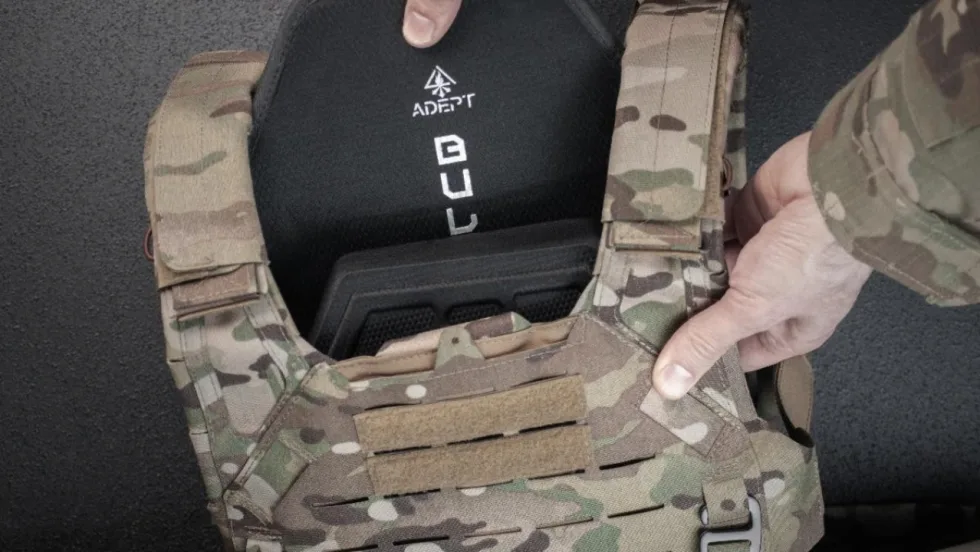
Adept Armor Introduces Two New Rifle Plates
Adept Armor has launched two new Level IV ballistic plates, the Emperor and the Archon Mark 2, which brings Adept Armor’s new Quatroid ceramic to the high-threat, performance-value center of the range at 5.2 pounds.
Read More →
POLICE Product Test: Benchmade Bailout
The Benchmade Bailout is a slim, lightweight carry knife with a deep-ride pocket clip and comes in a variety of blade steels and scales. Here is a detailed review of the Taiga Green Bailout, released earlier this year.
Read More →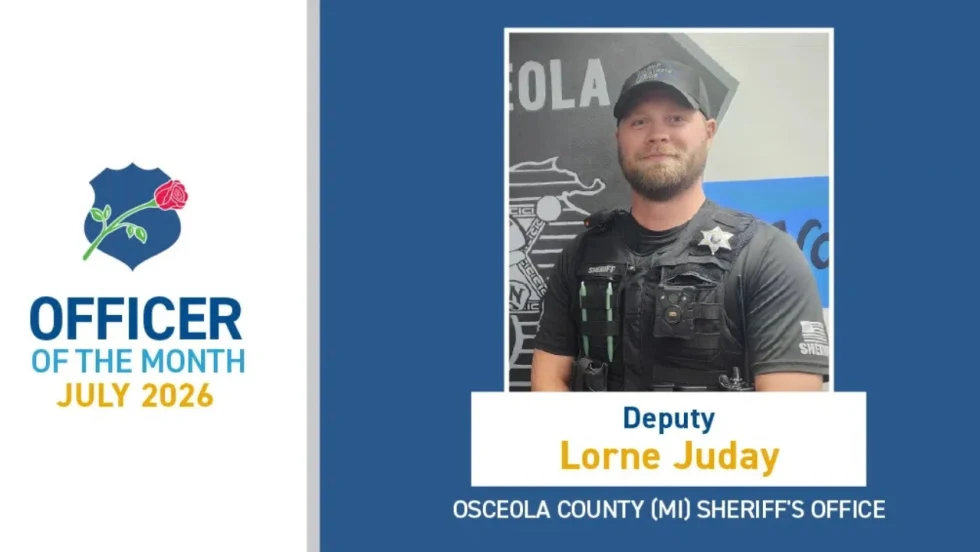
NLEOMF Announces July 2026 Officer of the Month
NLEOMF honored a Michigan deputy sheriff as the July 2026 Officer of the Month for rescuing a trapped driver from a burning vehicle following a Fourth of July crash.
Read More →
Streamlight to Showcase Newest Lighting Products at National Safety Council’s Safety Congress & Expo 2026
Streamlight will showcase its latest lights, including the Portable Scene Light III and the LiteBox 1Million, at the 2026 National Safety Council (NSC) Safety Congress & Expo.
Read More →
The 2027 World Police & Fire Games Set for Perth, Australia
The 2027 World Police & Fire Games (WPFG) will take place in Perth, Western Australia, from Friday, March 12 through Sunday, March 21, 2027.
Read More →
5.11 Partners with National Fallen Firefighters Foundation to Support #ForThe343
5.11 has joined the nationwide movement honoring the 343 New York City Fire Department firefighters lost on Sept. 11, 2001.
Read More →
Team Wendy Announces Title Sponsorship of the Jorge Pastore Foundation
Team Wendy’s 3-year partnership with the Jorge Pastore Foundation expands access to programs that strengthen those who serve.
Read More →
National Law Enforcement Memorial and Museum Hosting 9/11 25th-Year Commemoration Ceremony
The National Law Enforcement Memorial and Museum is hosting a 9/11 25th Year Commemoration Ceremony on Sept. 11 at 4 p.m.
Read More →
National Law Enforcement Officers Memorial Fund Announces June 2026 Officers of the Month
The National Law Enforcement Officers Memorial Fund (NLEOMF) named 15 officers of the Chico Police Department (California) as the Officers of the Month for June 2026 for their roles in responding to an active-shooter incident at a public library.
Read More →