



Looking Back: Bad Habits, Cuffing, and Use of Force
In past October issues of POLICE we've covered officer safety on various levels, including how lazy tactics can get you hurt, how to secure subjects properly, and how to protect yourself from lawsuits over use of force.

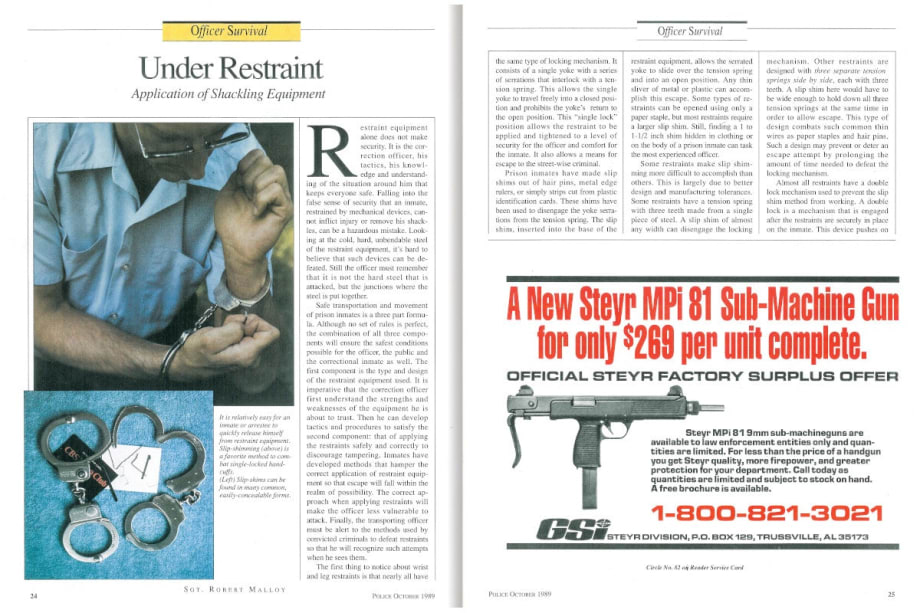
Shackling equipment for transporting inmates is made to be secure, but this article reminds officers that "restraint equipment alone does not make security."
Image: POLICE Magazine scan
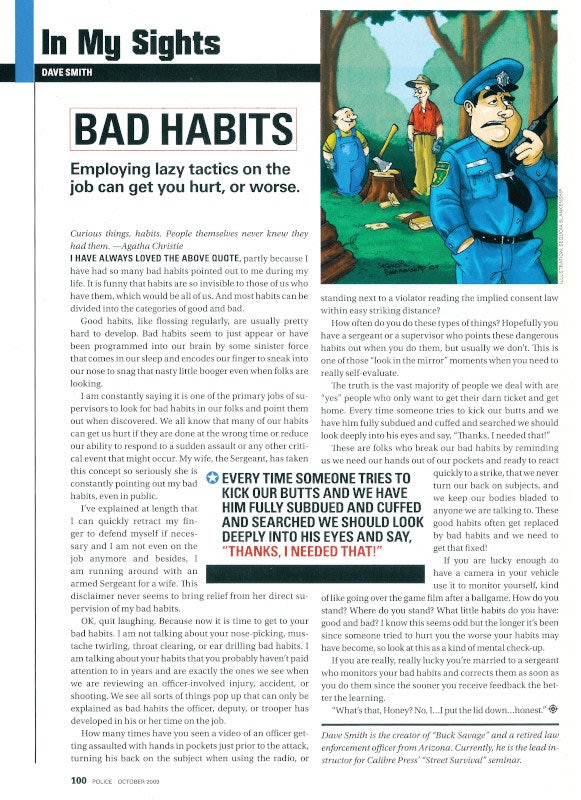
Dave Smith reminds readers that it's important to be on the lookout for bad habits in yourself, including turning your back on a subject while using your radio or phone.
Image: POLICE Magazine scan; Illustration: Sequoia Blankenship
In past October issues of POLICE we've covered officer safety on various levels, including how lazy tactics can get you hurt, how to secure subjects properly, and how to protect yourself from lawsuits over use of force. Here's a look at the pages of POLICE 10, 20, and 30 years ago.
2009
Bad Habits
Being lax on duty can cause injury or even death. In this installment of his In My Sights column, Dave Smith reminds readers that it's important to be on the lookout for bad habits in yourself. This includes turning your back on a subject while using your radio or phone and "standing next to a violator reading the implied consent law within easy striking distance."
You don't want to leave yourself vulnerable to attack. So it should be remembered that when supervisors point out officers' unsafe bad habits it's helpful and potentially lifesaving. Smith notes that subjects can make officers aware of their bad habits by taking advantage of openings to attack them. He jokingly suggests that "Every time someone tries to kick our butts and we have him fully subdued and cuffed and searched we should look deeply into his eyes and say, 'Thanks, I needed that!'"
1999
Don't Make Yourself a Target for Excessive Force Litigation
This article opens with the statement that "many police officers are beginning to fear civil litigation more than a deadly encounter" and goes on to refer to "this litigious climate," which sounds very like the current state of affairs for law enforcement officers. Although I'd say today's climate goes way beyond anything officers could have imagined 20 years ago.
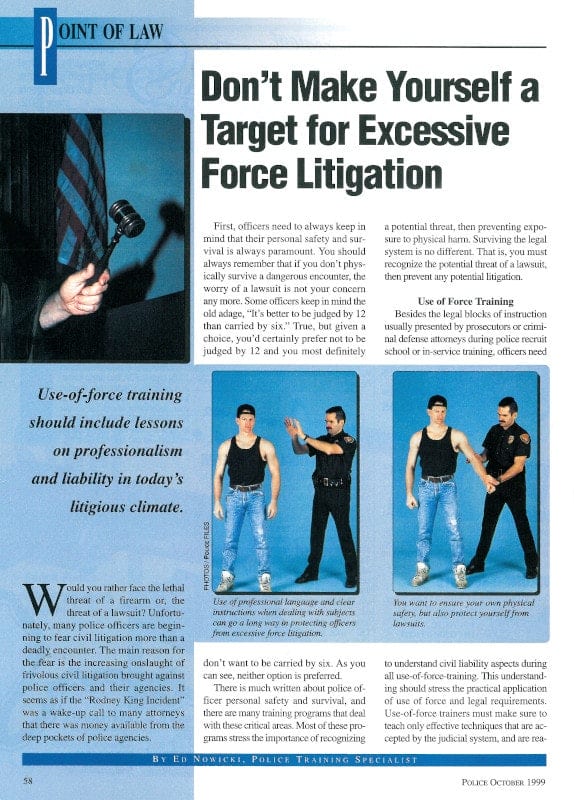
A caption in the article does a good job of summing up the thrust of the article: "You want to ensure your own physical safety, but also protect yourself from lawsuits."
Image: POLICE Magazine scan
The author warns that using unprofessional language when dealing with a subject could be detrimental to a case even if the use of force was reasonable because it casts the officer in a bad light. So he recommends incorporating into use-of-force training a focus on professional language as well as clear instructions when dealing with subjects so there is no question about an officer's professionalism. He also notes that training should only include use-of-force techniques that are effective and accepted by the judicial system.
A caption in the article does a good job of summing up the thrust of the article: "You want to ensure your own physical safety, but also protect yourself from lawsuits."
1989
Under Restraint
Shackling equipment for transporting inmates is made to be secure, but this article reminds officers that "restraint equipment alone does not make security," and they must be knowledgeable, use sound tactics, and maintain situational awareness to keep themselves and others safe.
According to the article, the three components for safe transportation of inmates include the type and design of the restraint equipment used, applying the restraints safely and correctly to discourage tampering, and being alert to the methods used by criminals to defeat restraints so they can be recognized. It's noted that "it is relatively easy for an inmate or arrestee to quickly release himself from restraint equipment," so officers must be ever vigilant.
Melanie Basich is managing editor for POLICE/PoliceMag.com.
More Patrol

Adept Armor Introduces Two New Rifle Plates
Adept Armor has launched two new Level IV ballistic plates, the Emperor and the Archon Mark 2, which brings Adept Armor’s new Quatroid ceramic to the high-threat, performance-value center of the range at 5.2 pounds.
Read More →
POLICE Product Test: Benchmade Bailout
The Benchmade Bailout is a slim, lightweight carry knife with a deep-ride pocket clip and comes in a variety of blade steels and scales. Here is a detailed review of the Taiga Green Bailout, released earlier this year.
Read More →
NLEOMF Announces July 2026 Officer of the Month
NLEOMF honored a Michigan deputy sheriff as the July 2026 Officer of the Month for rescuing a trapped driver from a burning vehicle following a Fourth of July crash.
Read More →
Streamlight to Showcase Newest Lighting Products at National Safety Council’s Safety Congress & Expo 2026
Streamlight will showcase its latest lights, including the Portable Scene Light III and the LiteBox 1Million, at the 2026 National Safety Council (NSC) Safety Congress & Expo.
Read More →
The 2027 World Police & Fire Games Set for Perth, Australia
The 2027 World Police & Fire Games (WPFG) will take place in Perth, Western Australia, from Friday, March 12 through Sunday, March 21, 2027.
Read More →
5.11 Partners with National Fallen Firefighters Foundation to Support #ForThe343
5.11 has joined the nationwide movement honoring the 343 New York City Fire Department firefighters lost on Sept. 11, 2001.
Read More →
Team Wendy Announces Title Sponsorship of the Jorge Pastore Foundation
Team Wendy’s 3-year partnership with the Jorge Pastore Foundation expands access to programs that strengthen those who serve.
Read More →
National Law Enforcement Memorial and Museum Hosting 9/11 25th-Year Commemoration Ceremony
The National Law Enforcement Memorial and Museum is hosting a 9/11 25th Year Commemoration Ceremony on Sept. 11 at 4 p.m.
Read More →
National Law Enforcement Officers Memorial Fund Announces June 2026 Officers of the Month
The National Law Enforcement Officers Memorial Fund (NLEOMF) named 15 officers of the Chico Police Department (California) as the Officers of the Month for June 2026 for their roles in responding to an active-shooter incident at a public library.
Read More →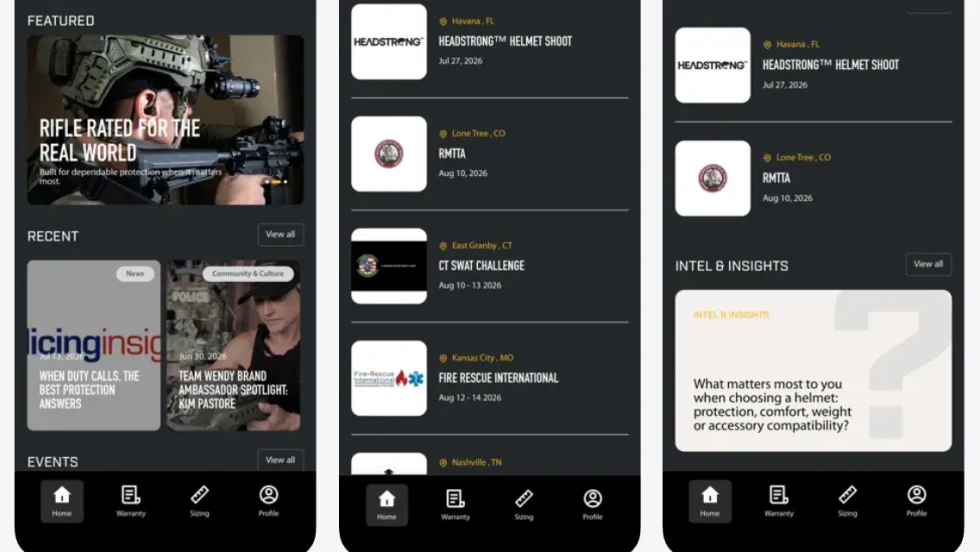
Team Wendy App Creates New Digital Hub for Helmet Owners
The Team Wendy Community App provides one location for warranty registration, size-fit tools, product updates, and community connection. For helmet owners, the new app creates a simpler path to the information and tools that matter most.
Read More →