



Less-Lethal Weapon Options
At present, less-lethal weapons are a fact of life. It's hard to find an agency that doesn't use at least one in one form or another. With technology advances being what they are, there are more options today than ever before. Let's look at some of the available technologies and how they make a difference.

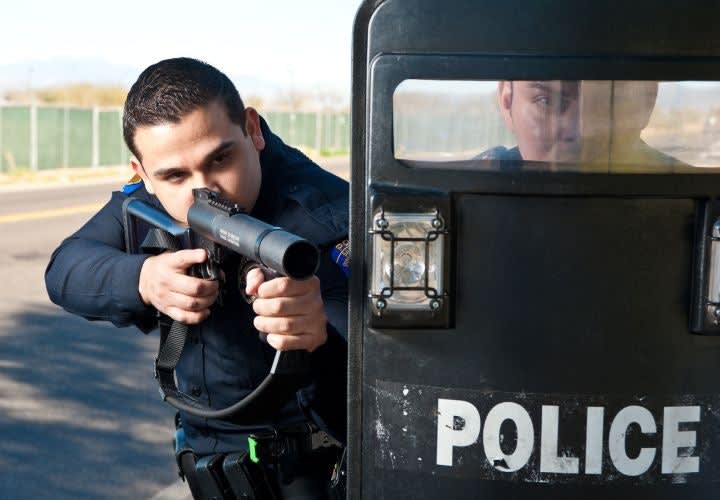
Photo: Mark W. Clark
Editor's note: View our related photo gallery, "Less-Lethal Options."
Though using deadly force is justified under the right set of conditions, saving a life is the top priority for any law enforcement agency. The concept of using a less-lethal weapon to meet this goal is not new in law enforcement and probably started in the mid-19th century with the first issued wooden club or baton.
However, the U.S. Supreme Court ruling in Tennessee v. Garner (1985) brought about a change in philosophy that moved agencies closer to accepting the less-lethal weapon as an everyday tool. Agencies started looking for options that incorporated distraction, disorientation, and incapacitating effects that could keep officers at a safe distance, still allow them to do their jobs, and allow capture of a suspect without using deadly force.
At present, less-lethal weapons are a fact of life. It's hard to find an agency that doesn't use at least one in one form or another. For example, Oleoresin Capsicum (OC) sprays are so commonplace that no one usually questions their use. With technology advances being what they are, there are more options today than ever before. Let's look at some of the available technologies and how they make a difference.
Light As a Less-Lethal Weapon
Intense beams of light and flashing strobes have been used to distract and disorient people for years. It's no secret that flashing a bright light into someone's face will temporarily disorient them. However, old school practices were more about using a light to help you move or search than anything else.
The new school of thought is to use light as a less-lethal weapon. The light is used to confuse, disable, and dominate your suspect. Powerful small flashlights that can be carried on your belt and produce 200 lumens or more (along with a built in strobe capability) are now used in room clearing to search out, make contact with, and control a suspect. I have participated in training where the suspect knew a contact team was coming. The suspect could see the flashing light approaching, but could never determine its origin or where the officer was. Before he could act, it was over. The confusion created is like something out of a science fiction movie because the suspect never sees where you are; he can only guess where you've been. If he looks into the light, it's so bright that he has to turn away.
My agency was fortunate to have Ken Good, former Navy Seal and an innovator in this field, conduct training for us a few years back. He told us, "You must learn to use light as a tool to paint a false picture or to overwhelm your opponent's senses." It's something to explore if your agency doesn't use the technique already. You can find various schools of thought on the subject under the category of low-light training.
Chemical Agents
The most widespread less-lethal weapons are chemical agents dispersed in aerosol form. The three most widely used are CS, OC, or a combination of both. Regardless of what type you use, the effects are about the same; the suspect feels pain, burning, and irritation of exposed mucous membranes and skin. Some agents target the eyes to compromise vision. Others target the suspect's mouth, nose, and throat in order to adversely affect breathing.
It has been my experience that a combination of CS and OC in a water base is the most effective agent to use. The CS affects the suspect's breathing while the OC burns and shuts down vision. The water base helps with faster decontamination and any fears associated with conducted electrical weapons.
It's a good idea to understand the effects of the agent you use. You should find the right balance that will help shut down a suspect's resistance but one that won't incapacitate him or her for more than 15 to 20 minutes. Anything longer than that, you are being counterproductive. You also have to consider transfer effects when handling the suspect, so you don't want to use anything that will affect you for very long either.
When using any type of chemical agent, you have to watch for adverse reactions to the suspect and have medical assistance nearby. Another consideration is the booking process at a correctional facility. In my area, they will not take a suspect that's been sprayed until he or she has been medically cleared. It's a good idea to work things out with your correctional facilities so that clearance can be obtained in the field by paramedics rather than you having to go see an emergency room doctor. The use of chemical agents has declined with the advent of Conducted Electrical Weapons (CEW), such as those from TASER International.
Conducted Electrical Weapons
The most recent data I can find estimated that there are more than 11,000 agencies that use Conducted Electrical Weapons (CEWs). CEWs work by sending electronic pulses throughout the body that interfere with the communication between the brain and the muscles. They overwhelm the normal communication network, causing involuntary muscle contractions and impairment of motor function. I dare to say it's the most popular option at the patrol level second only to some type of OC spray. It's an effective tool in the right hands within 15 feet from a suspect. The problem I have with CEWs is not found in their effect but in their overuse.
Critics of the weapon, like Amnesty International, are quick to point out that in the United States there have been 500 documented deaths after a CEW was deployed. Though most deaths can be explained away due to other factors, some feel CEWs should be limited in their use to violent unarmed resistance.
I feel a CEW can become a crutch when an officer lacks skills. CEWs are not infallible; they do malfunction and suspects have been known to defeat them. Statistics reveal that they are only successful approximately 60% of the time. An officer still needs to train in combatives and hands-on controlling techniques.
It's my opinion that over confidence in the CEW has led to a false sense of security among certain officers and created an officer safety issue. No device will ever completely remove the need to go hands on, as suspects have a tendency not to handcuff themselves. The use of CEWs remains a controversial topic and will continue to spur debate as its popularity among agencies continues to rise.
Projectile Weapons
Another long standing group of less-lethal weapons are those that fire some type of blunt force round. The round is designed to cause pain but not penetrate the skin. It transfers and disperses its kinetic energy into its target. The most common rounds are those fired from a shotgun. The projectiles themselves come in a bean-bag form or fire some type of rubberized bullet. The main problem with the bean-bag type is range and accuracy. The problem with both is that they can also cause great bodily harm or death if they strike in the wrong place. Though these rounds cause pain, they may not incapacitate right away. You have to be ready to move in quickly and take advantage of the opportunity they create.
Next we have specific launchers designed to fire a host of specialty rounds including chemical agents. The most widely used models fire rounds in the 37mm to 40mm range. To give you a sense of scale, a shotgun round is in the 18mm range. These launchers are either single or multiple shot weapons. I am most familiar with a multiple shot 40mm launcher and have deployed it many times as a supervisor. Each time it was deployed, the suspect either became incapacitated or gave up shortly thereafter because he didn't want to get hit again.
My suggestion to any agency looking for some type of launcher would be to focus on a multiple-shot version, as follow-up shots are easier to make. Manufacturers offer a short range and long range round so one has to make sure the operator is dialed in to the right range. As with anything to do with high liability areas, training and practice are key components of any weapons system.
Launchable Pepper Projectiles
It was just a matter of time before someone realized that paint ball carbines and pistols could have an application in law enforcement. It was in the late 1990s that they popped up on the radar. Instead of shooting paint balls, they shoot a type of OC pepper-spray pellet instead. Such projectiles contain pepper powder in hard frangible spheres that have a wide operating temperature range and can be deployed with specialized launchers. In contrast, paintballs are made from soft gelatin material and are highly sensitive to changes in temperature.
Most agencies use pepper-spray pellets for crowd control, but they can also be used for controlling uncooperative or violent suspects. The impact of the pepper-spray pellets produces pain, and the subsequent release of the encased powder form of OC has effects similar to those of any other use of OC.
Because of their range, pepper-spray pellet projectiles provide a great way to target one person in the crowd or to gain control of someone who is resisting. Examples of people resisting include someone trying to commit suicide by cop or a mentally ill person making threats with a knife. The effective range for a point target is 60 feet and for an area target is 150 feet. The pepper-spray pellet concept has made its way into shotgun munitions as well.
Certain Risks
The whole less-lethal concept is flawed in the sense that there is no right way to describe it. "Less-lethal" does not mean "not lethal," as any less-lethal weapon has the potential to be deadly. Even a strobe light can cause someone with epilepsy to have a seizure and then fall and hit his or her head and die. In December 2012, TASER released this statement:
"TASER has changed the generic term describing our handheld products from Electronic Control Device (ECD) to Conducted Electrical Weapon (CEW). We feel Conducted Electrical Weapon is more descriptive of our products and is becoming a more commonly used term. This term also clearly describes these products as weapons that, like all weapons, carry certain risks and need to be handled and operated appropriately."
In the company's statement, "carry certain risks" is the key phrase. What makes less-lethal weapons defendable is their intended use. The purpose is to distract, disorient, and incapacitate, thereby allowing for the officer to successfully control and capture the suspect with little to no injury to both.
Using less-lethal weapons is a viable option but no one should think they are the panacea in use-of-force circumstances. You always need to be prepared to get down and dirty. You also need to keep in mind that unintended injury or death can occur even under the best of conditions.
Amaury Murgado is a special operations lieutenant with the Osceola County (Fla.) Sheriff's Office. He is a retired Master Sergeant from the Army Reserve, has over 25 years of law enforcement experience, and has been a lifelong student of martial arts.
More Weapons
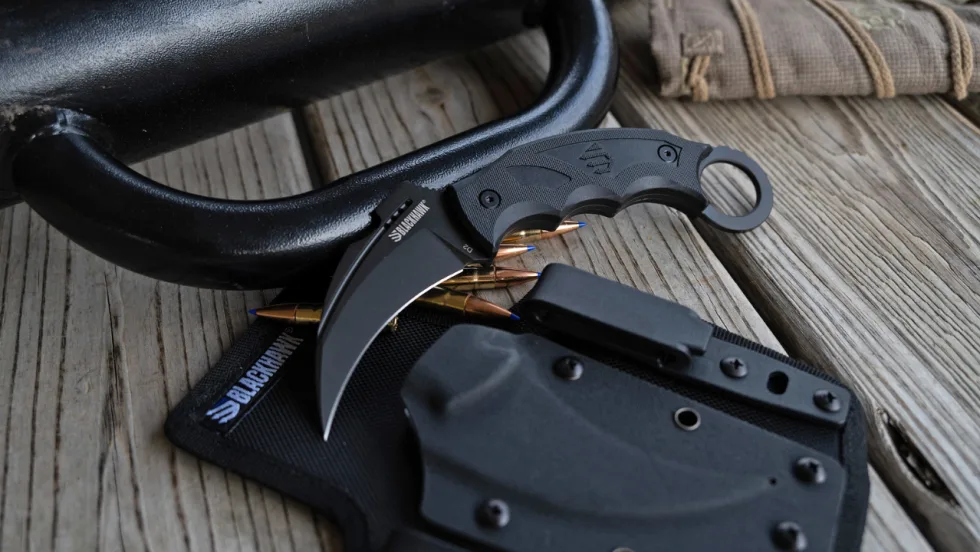
Blackhawk Introduces the Garra Fixed Karambit
The Blackhawk Garra Fixed Karambit is made from D2 steel and features a curved profile that enhances slicing efficiency, plus the full-tang construction ensures strength and durability from tip to handle.
Read More →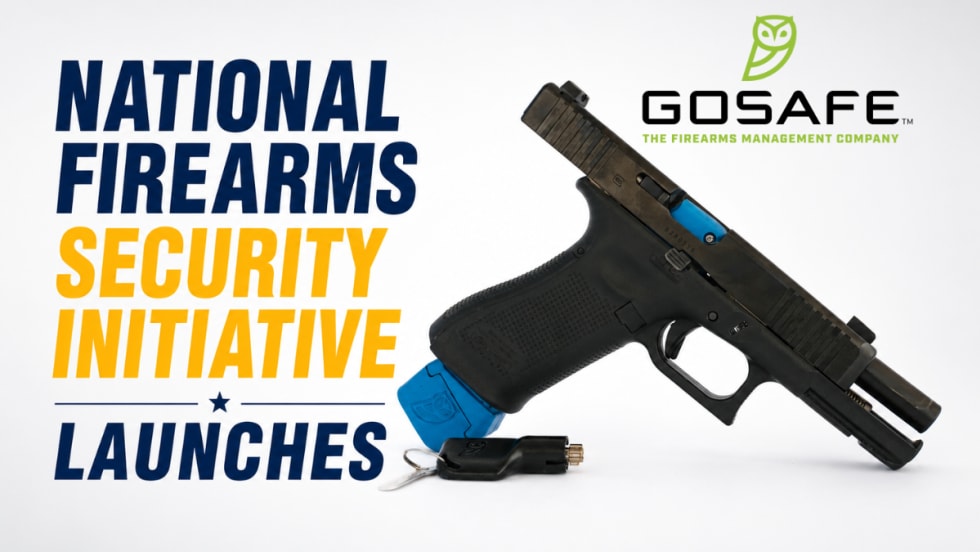
GOSAFE Technology Announces Public Safety Initiative Focused on Firearm Security and Risk Reduction
GOSAFE Technology’s new initiative provides support for agency-level solutions around secure firearm storage, vehicle-storage risks, off-duty firearm security, firearm accountability, and the public safety consequences that may result when firearms are stolen, lost, improperly secured, or diverted from lawful possession.
Read More →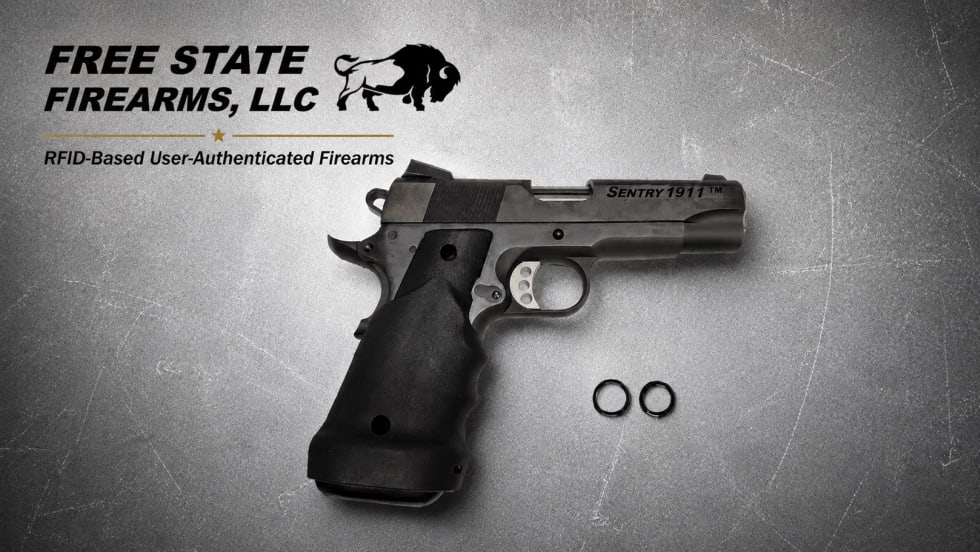
Texas Sheriff’s Office Deploys RFID-Based User-Authenticated Firearm for Prisoner Transport Operations
A sheriff’s office in Texas is now using RFID-based user-authenticated firearms, from Free State Firearms, for prisoner transfer and transport operations.
Read More →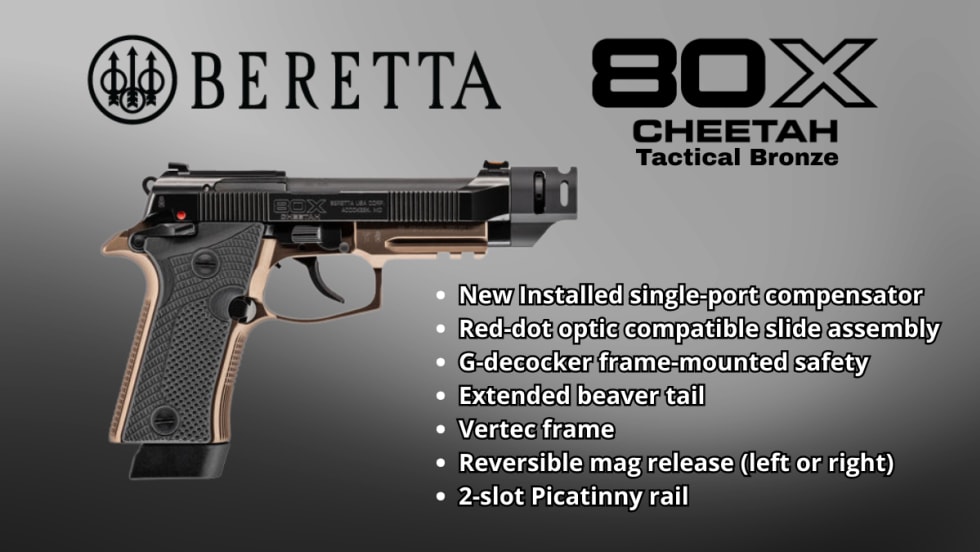
Beretta Introduces the 80X Cheetah Tactical Bronze
Beretta has launched the 80X Cheetah Tactical Bronze, which features a fiber-optic front sight, a serrated rear sight, and a Picatinny rail for accessory mounting, and ships with three 15-round extended magazines.
Read More →
Wrap Raises $5 Million to Restart Domestic Manufacturing & Advance R&D
With new funding, Wrap Technologies will restart domestic manufacturing, advance validated R&D programs into commercialization, and responsibly accelerate early growth initiatives aligned with rising demand for non-lethal response capabilities.
Read More →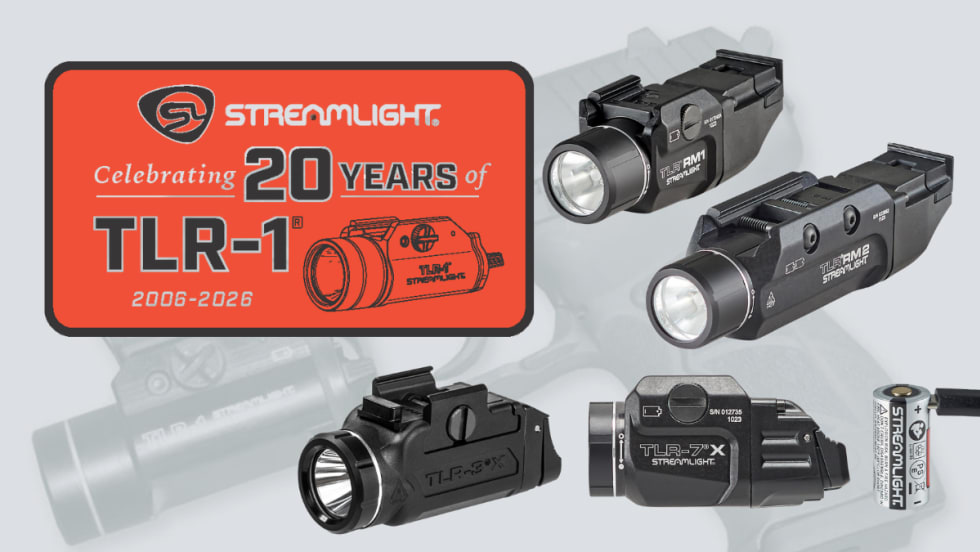
Streamlight Celebrates the 20-Year Anniversary of the TLR Series
This year, Streamlight marks two decades of weapon-mounted lighting innovation with the 20th anniversary of the TLR-1.
Read More →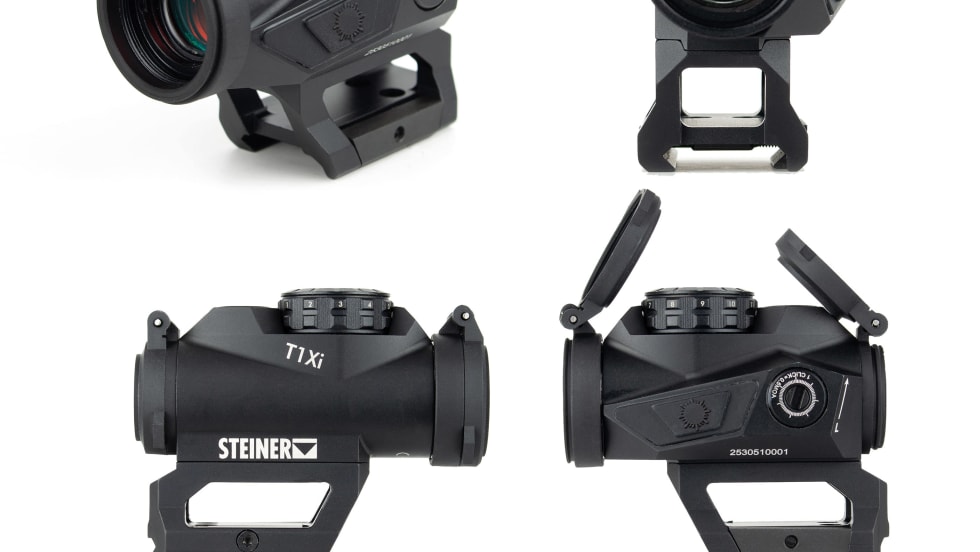
Steiner’s T1Xi Selected as Top Performer in Texas DPS Optic Evaluation
Steiner Optics’ T1Xi was selected as the top-performing red dot in the recent Texas Department of Public Safety optic evaluation.
Read More →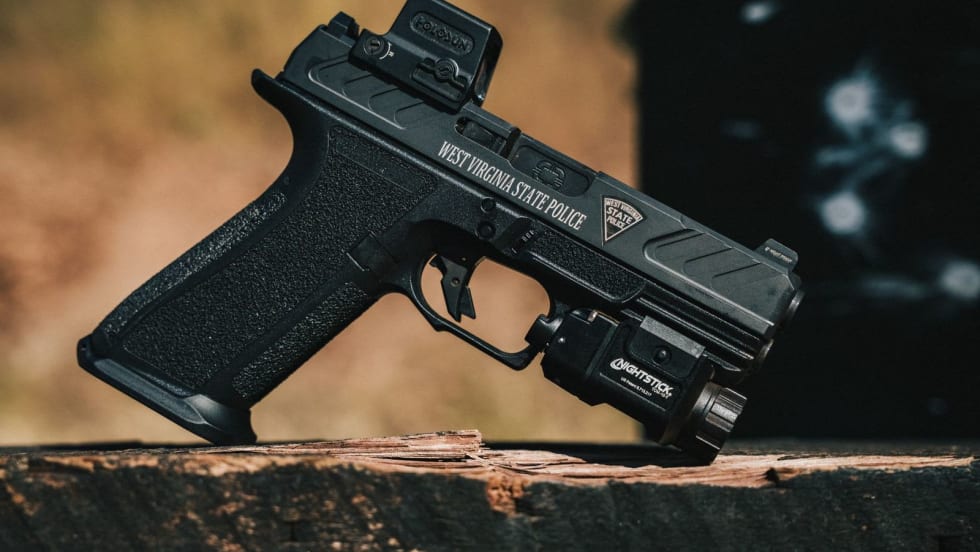
Shadow Systems Selected as Exclusive Pistol Provider for West Virginia State Police
Shadow Systems will provide 700 XR920 crossover pistols for West Virginia State Police troopers and 80 CR920X high-capacity subcompact pistols for the Bureau of Criminal Investigation.
Read More →
Aimpoint Celebrates 50 Years of Innovation and Excellence in Sighting Technology
Aimpoint is marking its 50th anniversary in 2025, celebrating five decades of red dot innovation trusted by military, law enforcement, and tactical professionals worldwide.
Read More →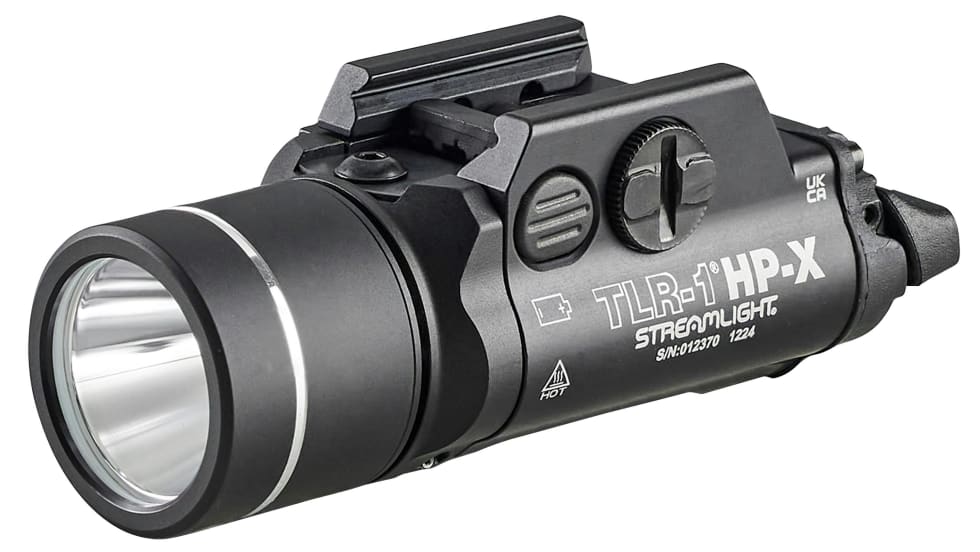
Streamlight Introduces Long-Range Handgun Light
“Our newest weapon light provides an industry-leading level of candela for handguns, giving users enhanced visibility under low light conditions, such as when searching a dark alley,” said Streamlight President Michael F. Dineen.
Read More →