



Learn to Love Chaos
If you can't make order out of chaos, then you shouldn't be a supervisor.

I loved chaos when I was working. It's my view that if you can't make order out of chaos, then you shouldn't be a supervisor. You don't earn your pay on a quiet night; you earn it when all hell breaks loose. How you deal with chaos defines how effective you are as a supervisor.
About 10 years ago, my former agency conducted its first mock terrorism training exercise at one of our local high schools. It started off slow and then everything seemed to happen at once. Before I knew it, a school bus had been destroyed, there were hostages inside the school, and there were injured firefighters everywhere.
It was my task to set up the perimeter and make sure the area was locked down. As other tasks were being identified, I observed several sergeants disappear into the background instead of volunteering. They missed a wonderful opportunity to prove themselves. To be effective in a chaotic environment, you must learn to minimize the impact, stress the importance of communication, and stay positive.
The first step in dealing with chaos is preventive; you must learn to minimize the impact before it ever starts. You accomplish this by preparing yourself and members of your command by conducting relevant training. Though hands-on training is always considered best, notional (on paper) training through tabletop exercises or squad/platoon assignments is also effective.
One example comes from former New York City mayor Rudy Giuliani. In his book on leadership he tells of how he and his multiagency command staff routinely conducted tabletop exercises. One such exercise involved a small plane crashing into the Twin Towers. Though the incident was not of the same magnitude as the 9/11 attack, it did give the incident command a chance to work through many of the same issues they would face on that fateful day.
What makes chaos so difficult is that it tends to create new circumstances and new scenarios, or simply overwhelms you by giving you so much to deal with at one time. The goal of your training is to take the unfamiliar and make it as familiar as possible. Work toward making each situation a set of prioritized tasks that can be managed efficiently. Since all critical incidents share the same baseline response, create a flexible structure, stick to the basics, and train often. That way you will be way ahead of the game when game day comes.
Through good communication, supervisors can clearly assess and identify the problem. When you know what you're up against, you can begin to take actions that have the highest probability of success. Supervisors need to ask questions, seek confirmation of critical information, and seek input whenever possible.
It's important that you explain your plans so that everyone understands what the objectives are. You and your officers need to stay flexible because plans have a habit of changing. Communication also helps control conflict.
Conflict occurs when individuals come together with preconceived ideas about how things should work. You need to quiet the naysayers by keeping them busy. By using good communication, you can get everyone working together and headed in the same direction.
Time is a luxury you don't have, so you can't squander it away with conflicting orders, duplication of effort, or ignoring resources. Your job as a supervisor is to communicate your intent in a way that avoids any uncertainty and makes sure that everyone involved is actively working to resolve the issue. If they are not, they have no reason to be there. Get rid of gawkers quickly, regardless of rank.
Supervisors often make the mistake of trying to control chaos; it can't be done. Instead, they should try to work with it. Think of chaos as a balloon that you deflate in short spurts. You never try to pop the balloon but instead change its size. Your actions serve to deflate chaos. One such action is staying positive.
When chaos strikes, your officers will look to you for guidance and support. Staying positive will help you focus on the light at the end of the tunnel. Sometimes you need to smile and say, "We got this," even if you are still trying to figure it out. Having a positive attitude and exuding confidence is infectious. If you don't believe in yourself, neither will anyone else.
You shouldn't fear chaos but instead learn to embrace it. We often hear things like, "While others run away from the sound of gunfire, it's our job is to run toward it." If you don't make chaos your friend, sayings like that are nothing more than phrases for T-shirts and bumper stickers.
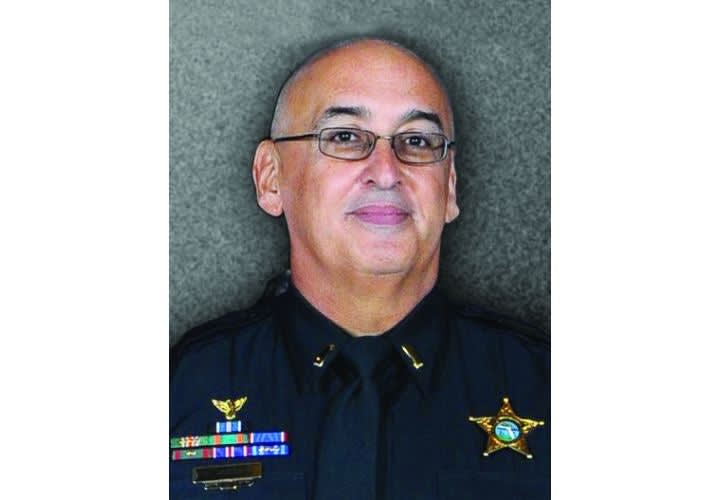
Amaury Murgado retired a senior lieutenant from the Osceola County (FL) Sheriff's Office with over 29 years of experience.
More Patrol

Streamlight Portable Scene Light III Wins 2026 OH&S New Product of the Year Award
Streamlight’s Portable Scene Light III has won the 2026 Occupational Health & Safety (OH&S) New Product of the Year Award in the Lighting category.
Read More →
Adept Armor Introduces Two New Rifle Plates
Adept Armor has launched two new Level IV ballistic plates, the Emperor and the Archon Mark 2, which brings Adept Armor’s new Quatroid ceramic to the high-threat, performance-value center of the range at 5.2 pounds.
Read More →
POLICE Product Test: Benchmade Bailout
The Benchmade Bailout is a slim, lightweight carry knife with a deep-ride pocket clip and comes in a variety of blade steels and scales. Here is a detailed review of the Taiga Green Bailout, released earlier this year.
Read More →
NLEOMF Announces July 2026 Officer of the Month
NLEOMF honored a Michigan deputy sheriff as the July 2026 Officer of the Month for rescuing a trapped driver from a burning vehicle following a Fourth of July crash.
Read More →
Streamlight to Showcase Newest Lighting Products at National Safety Council’s Safety Congress & Expo 2026
Streamlight will showcase its latest lights, including the Portable Scene Light III and the LiteBox 1Million, at the 2026 National Safety Council (NSC) Safety Congress & Expo.
Read More →
The 2027 World Police & Fire Games Set for Perth, Australia
The 2027 World Police & Fire Games (WPFG) will take place in Perth, Western Australia, from Friday, March 12 through Sunday, March 21, 2027.
Read More →
5.11 Partners with National Fallen Firefighters Foundation to Support #ForThe343
5.11 has joined the nationwide movement honoring the 343 New York City Fire Department firefighters lost on Sept. 11, 2001.
Read More →
Team Wendy Announces Title Sponsorship of the Jorge Pastore Foundation
Team Wendy’s 3-year partnership with the Jorge Pastore Foundation expands access to programs that strengthen those who serve.
Read More →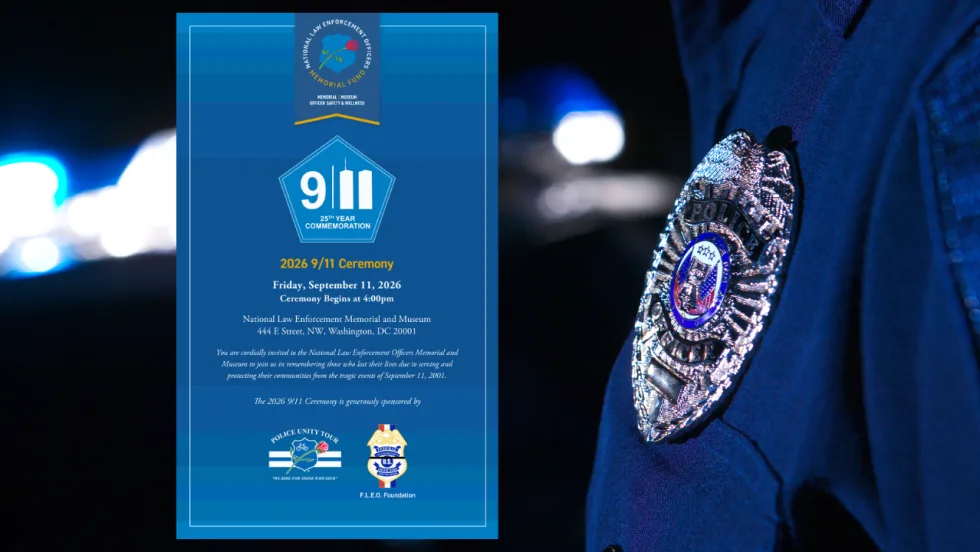
National Law Enforcement Memorial and Museum Hosting 9/11 25th-Year Commemoration Ceremony
The National Law Enforcement Memorial and Museum is hosting a 9/11 25th Year Commemoration Ceremony on Sept. 11 at 4 p.m.
Read More →
National Law Enforcement Officers Memorial Fund Announces June 2026 Officers of the Month
The National Law Enforcement Officers Memorial Fund (NLEOMF) named 15 officers of the Chico Police Department (California) as the Officers of the Month for June 2026 for their roles in responding to an active-shooter incident at a public library.
Read More →