



Improving ECW Tactics and Policies
A TASER is an effective tool when the situation calls for a non-lethal approach, but to properly use it, you need to do more than just pull the trigger.

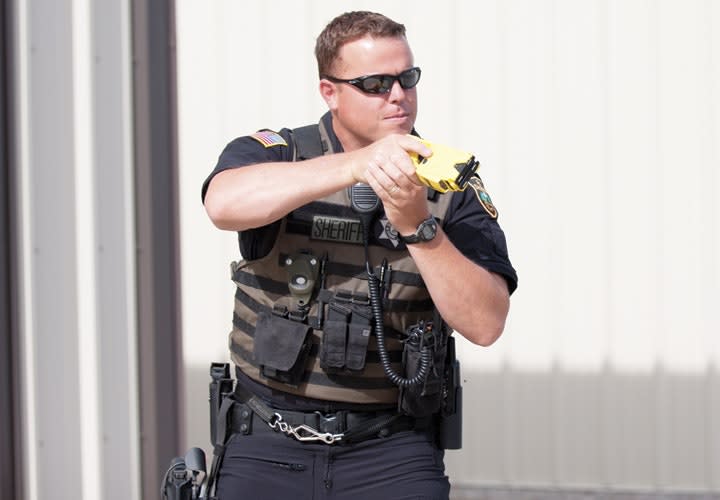
It's best to draw the TASER with your non-dominant hand, even if you transition to your strong hand after the draw. (Photo: Carla Blazek, Tumbled Bones Photography)
It was my honor as a young police officer in 1979 to be assigned as the LAPD's researcher for nonlethal weapons and to later become very close friends with NASA researcher and TASER inventor Jack Cover until we lost him in 2009, may he rest in peace.
I had no idea back in 1979 that police use of force would become my life's work. I jokingly "blame it all" on my supervisor and mentor, LAPD Sgt. Chuck Sale, who is long retired and living the good life climbing mountains in Colorado. Chuck was an invaluable advisor to several LAPD chiefs during his career, and he selected me to do the nonlethal weapons research in the wake of the tragic Eulia Love shooting in Los Angeles in early 1979.
Eulia Love was a poor woman with severe mental health issues and a big knife in her hand. It was a standoff. Verbalization and use of a baton failed. Then she attacked two LAPD officers and was shot. She was dead when she hit the ground.
Because of tragic shootings like the Eulia Love incident and because of a PCP epidemic that was frequently resulting in major injuries to officers and suspects, we needed to find a better way to subdue suspects who were unsafe to approach. We also needed a new nonlethal option for another reason. The LAPD had lowered its height requirement and went on a hiring binge focused on minority officers and on female officers. The increased recruiting of female officers made some officers smaller and lighter in weight than our previous hiring pools, and the people these new officers dealt with were often much larger than they were. So these officers needed a tool to equal the odds.
And out of all the innovative tactical tools we researched in 1979 and 1980, the TASER from Jack Cover's TASER Systems Inc. was by far the most effective at resolving confrontations with fewer and less severe injuries compared to other tools and tactics. The TASER also was an excellent force-options equalizer in a confrontation, regardless of the height and weight of the officer versus that of the suspect.
So by 1980, TASERs began to be a game-changer in law enforcement. And they became even more effective in 1999 when TASER International introduced the M-26 and in 2003 when the X-26 hit the market. The number of law enforcement and corrections agencies using TASERs or other electronic control weapons (ECW) has grown rapidly to the point that probably 90% of American agencies deploy them, as do many agencies around the world.
This article is directed at ECW users, trainers, supervisors, and policy makers. And looking back on my 36 years of TASER experience as a researcher, trainer, user, plus as a consultant and expert witness for more than 100 TASER-related criminal, civil, and arbitration cases, it occurs to me that despite our decades of experience with these tools there are several situations where we can improve our ECW tactics and policies.
Step Back
In far too many cases, officers report their TASERs did not work. But upon review, it often turns out the officer fired the TASER darts from much too close a distance to get a good dart spread. Wider dart spread means the TASER effect is felt across more muscles. So move back, aim well, and get a good spread.
Use Caution
The law requires you to consider the seriousness of the crime when using force. If someone is running away and you use your TASER, there is a greater risk of serious head injuries because of the uncontrolled fall than if he or she were standing still. So there is a substantial difference between using a TASER on a fleeing rapist vs. using it on a fleeing guy with an open container of beer. (Of course, if the open-beer guy is running at you, have at it.) Also consider handcuffed suspects. Unless the suspect is overtly violent and cannot be quickly controlled in some other reasonable way, your TASER is probably not your best option except, see the exception in the next paragraph.
Drive-Stuns
Having consulted as an expert on quite a few TASER cases where drive-stuns were used, I have concluded that drive-stun is way overused, is rarely effective at controlling anyone, leaves permanent scars, and usually just causes the suspect to physically react to the pain. Worst of all, that reaction to pain causes the officer to (wrongly) perceive increased resistance, thus the officer uses even more force. My advice is to stop drive-stunning people. And adjust your policy and training accordingly.
Drive-stun is really only useful in very limited circumstances:
1. As a break-contact tactic when you are tied up with the suspect
2. As a brief pain-compliance tactic when that handcuffed, belligerent drunk won't get into the back of your car and needs to get one or two seconds of drive-stun on the leg (after a proper warning, including an arc display) to convince him.
3. As part of a 3-point contact
Forget using drive-stun for any other purposes, unless the only other option is a greater quantum of force.
Give Proper Warnings
Some tactical situations do not allow time for a warning before a use of force, but most do. When you're verbalizing with a suspect, and you decide TASER would be a reasonable control option, show your TASER; tell the suspect that if he does not submit to your arrest that you are going to light him up with 50,000 volts of electricity; say it will hurt; and give him an arc display. That type of warning has proven to be effective at ending the resistance in many (not all) cases. Your superior negotiation and tactical skills will also look and sound good on your body-worn camera.
Ending Armed Stand-Offs
Ideally, when you are considering use of any nonlethal weapon on someone who is standing you off with a knife or something else they can kill you with if they get the chance, you will have a lethal force backup officer immediately at the ready. Don't rush in. Request backup.
If you are alone, you ought not face a deadly threat with a nonlethal weapon in your hand. Your gun belongs in your hand in that situation. But with a backup, one of you can be the TASER guy, and the other can be the shoot guy if the suspect attacks before being subdued. Use your verbal skills and perhaps an arc display warning, but don't "talk them to death," i.e., don't give them an opportunity to charge you. After appropriate warning, if the threat level is still significant, use your TASER.
And be sure to have a backup plan in case the TASER does not subdue the suspect. Many lives have been saved through use of the TASER officer and shoot officer tactic, and it ought to be incorporated into your scenario-based training.
Be Aware of Elevation
I'm seeing more cases where the suspect is badly hurt (even killed) when an officer uses a TASER on someone who is in "an elevated position." Policy and training generally counsel against using the TASER in that situation.
But what exactly is "an elevated position?" It is not well defined. Basically, you need to use common sense and consider the risk of serious injury or death if the suspect becomes physically incapacitated (which is why you're shooting the TASER darts at her in the first place) and experiences an uncontrolled fall.
If someone is standing or running on top of a building with an inclined roof (or near the edge of a flat roof); or up on a billboard; or standing on top of a refrigerator, or a car, or a truck, or a second-floor balcony, you should take into account that the suspect could be seriously injured or die as the result of an uncontrolled fall from that position. All of these things have happened. When TASERing a suspect could result in a devastating fall, you might be better off handling the situation with patience, containment, and continued verbalization.
Multiple TASER Cycles
Legally, each TASER cycle is a separate use of force. And you need to be able to justify if you hold the trigger down beyond the standard five-second shut-off.
In my view, it is foolish when an agency makes a policy that limits the number of TASER cycles you are allowed to use because after that, you may well be in a situation where you must use a greater level of force, even deadly force. But your agency policy should require—and the law does require—that you justify why you used so many cycles. And just as with any other use-of-force tool or tactic, if something is not working, transition to something else.
Cuffing Under Power
I've always given the "cuffing under power" tactic mixed reviews, and still do. It's one of those things that seems like a good idea in theory, but doesn't often work well in practice. I've seen too many cases where officers attempted it, they got zapped, and they never wanted to try it again.
Cuffing under power requires extensive hands-on training to do it right. And the real world rarely looks like the training scenario. So, use dynamic hands-on training and practice it if you're going to do it.
Officer Exposure in Training
I've taken eight "hits" with various TASER devices over the years. So I appreciate the importance of officers needing to feel the effects of the TASER during training so that they know what they are doing to the suspect and they know what it will feel like if suspects use TASERs on them. And it is important for the support officers to have the experience of holding onto a person receiving the TASER electricity, to understand that they won't get zapped if their hands are not in the circuit. Those things are important training points.
But I no longer support doing five-second "voluntary exposures" during training. Although the numbers have been low, there have been some serious training injuries. It seems to me that about two seconds of exposure is all that is needed to get the training points across.
Do Your Spark Check
Those pre-shift spark checks really are important. You need to keep the internal electronic parts "charged" so they will deliver the goods when you need them. Just do it.
Don't Draw with Your Strong Hand!
Although lots of people (including many officers) tend not to believe it can happen, drawing your firearm when you mean to draw your TASER does indeed happen. Not often. But when it does, the results are tragic.
I know of a dozen such cases in the United States and Canada since 2001. I was the police expert for the defense in the murder trial of the officer involved in the tragic Oakland/BART shooting that occurred in 2009. The jury convicted the officer of involuntary manslaughter. And I had hoped the BART tragedy would be the last, but since then, there have been a few more "weapons-confusion" cases.
Dr. Bill Lewinski of the Force Science Institute (who was also an expert in the BART murder case) and I have been writing and teaching ever since that the problem can occur when you use your "strong" (dominant) hand to draw the TASER in a stressful situation when a "slips and captures error" occurs. A "slips and captures error" is when your mind intends to do one thing, but under stress your body does something else, usually something that is more practiced. People crash cars because of this phenomenon. Pilots crash planes full of people because of this. And law enforcement officers sometimes draw their duty pistols when they intend to draw their TASERs.
How many of you train to draw your TASERs as often as you train to draw your firearms? I bet the answer is very few, maybe even none.
This is why every agency with officers that carry TASERs or other ECWs should consider having a policy that requires its officers to draw the weapons with their non-firearm hands. It's okay to transition to the strong hand after the draw because the common mistake in these incidents involves the mistaken drawing movement.
I don't claim to have cornered the market on wisdom about TASER tactics and policy. Use of force is an important subject for all of us, and it should be a matter of continuing concern and discussion. To that end, I welcome your comments and further discussion at gregmeyer@earthlink.net in the spirit of "continuous improvement" on this subject.
Greg Meyer is a retired Los Angeles Police Department captain, and a member of the POLICE Advisory Board.
More Patrol
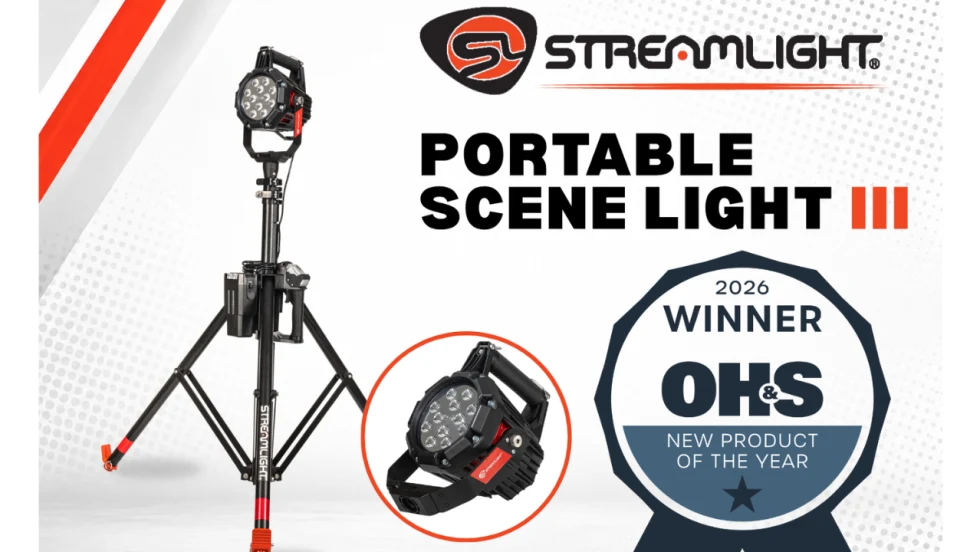
Streamlight Portable Scene Light III Wins 2026 OH&S New Product of the Year Award
Streamlight’s Portable Scene Light III has won the 2026 Occupational Health & Safety (OH&S) New Product of the Year Award in the Lighting category.
Read More →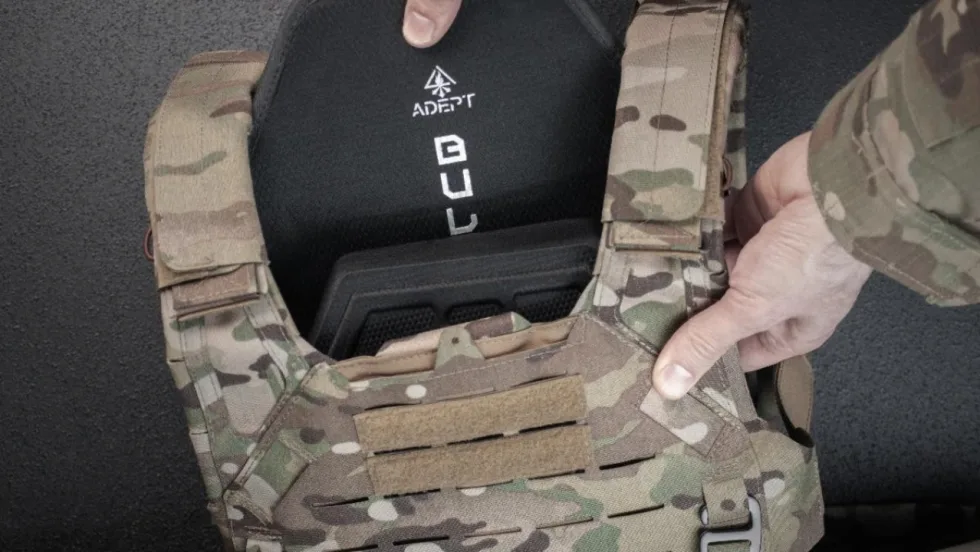
Adept Armor Introduces Two New Rifle Plates
Adept Armor has launched two new Level IV ballistic plates, the Emperor and the Archon Mark 2, which brings Adept Armor’s new Quatroid ceramic to the high-threat, performance-value center of the range at 5.2 pounds.
Read More →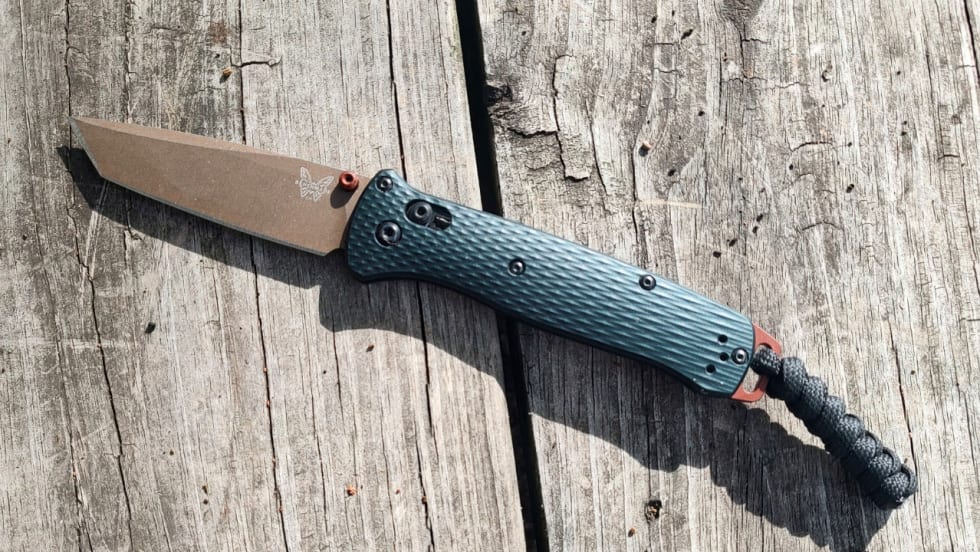
POLICE Product Test: Benchmade Bailout
The Benchmade Bailout is a slim, lightweight carry knife with a deep-ride pocket clip and comes in a variety of blade steels and scales. Here is a detailed review of the Taiga Green Bailout, released earlier this year.
Read More →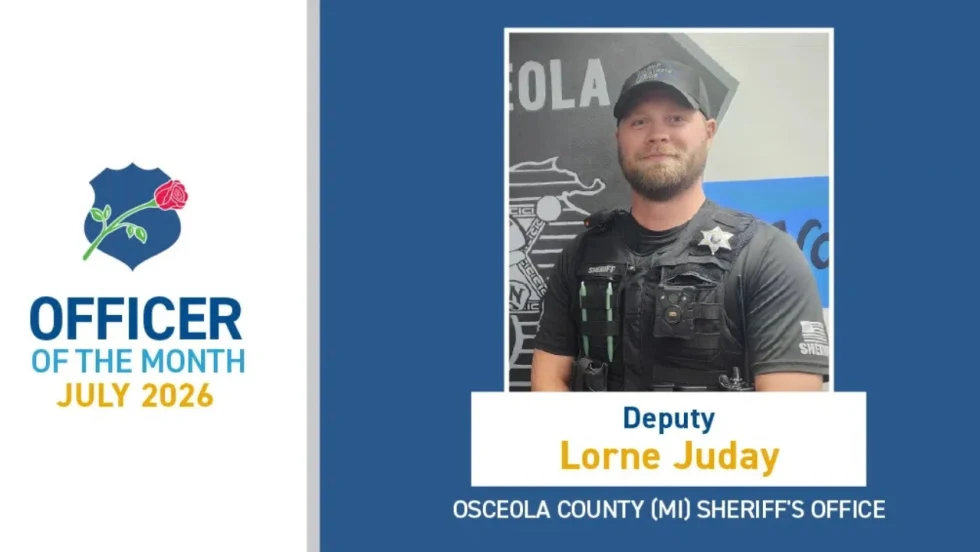
NLEOMF Announces July 2026 Officer of the Month
NLEOMF honored a Michigan deputy sheriff as the July 2026 Officer of the Month for rescuing a trapped driver from a burning vehicle following a Fourth of July crash.
Read More →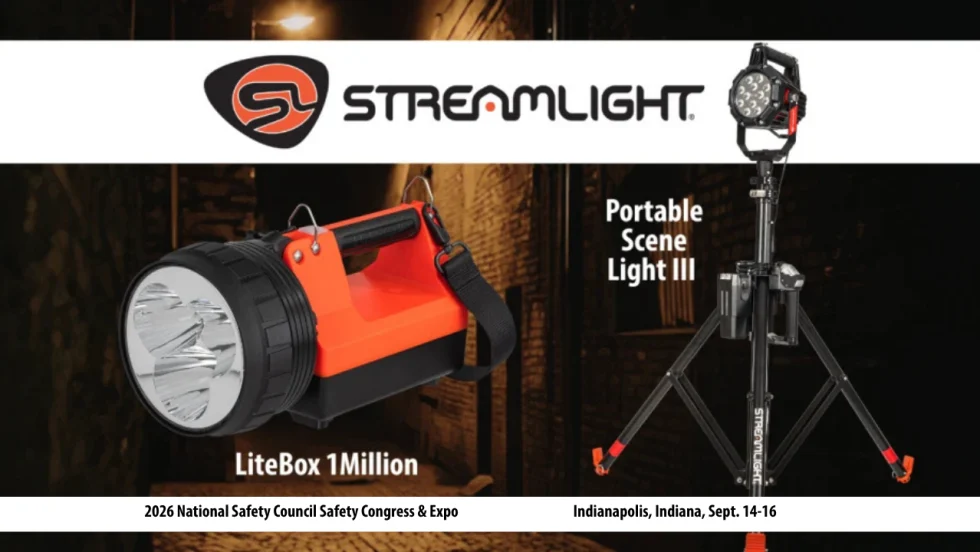
Streamlight to Showcase Newest Lighting Products at National Safety Council’s Safety Congress & Expo 2026
Streamlight will showcase its latest lights, including the Portable Scene Light III and the LiteBox 1Million, at the 2026 National Safety Council (NSC) Safety Congress & Expo.
Read More →
The 2027 World Police & Fire Games Set for Perth, Australia
The 2027 World Police & Fire Games (WPFG) will take place in Perth, Western Australia, from Friday, March 12 through Sunday, March 21, 2027.
Read More →
5.11 Partners with National Fallen Firefighters Foundation to Support #ForThe343
5.11 has joined the nationwide movement honoring the 343 New York City Fire Department firefighters lost on Sept. 11, 2001.
Read More →
Team Wendy Announces Title Sponsorship of the Jorge Pastore Foundation
Team Wendy’s 3-year partnership with the Jorge Pastore Foundation expands access to programs that strengthen those who serve.
Read More →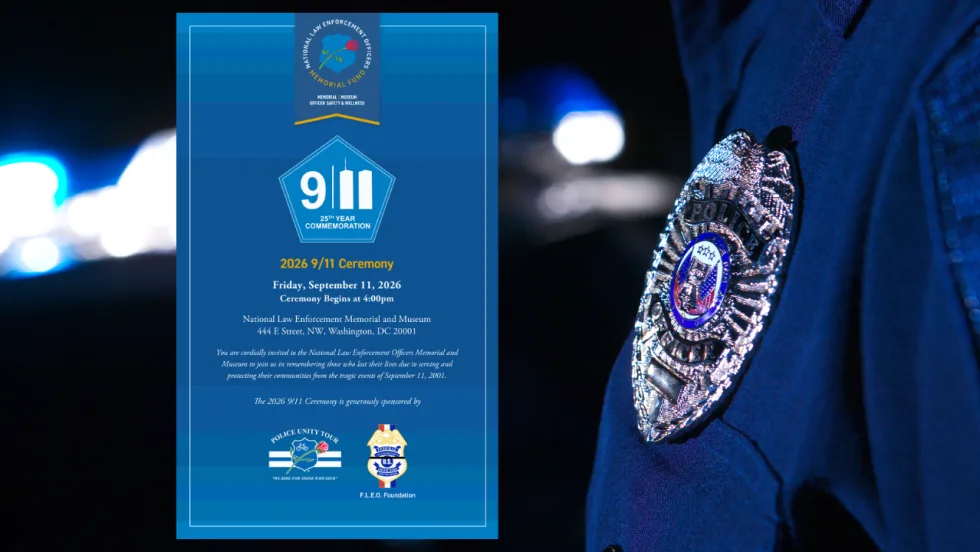
National Law Enforcement Memorial and Museum Hosting 9/11 25th-Year Commemoration Ceremony
The National Law Enforcement Memorial and Museum is hosting a 9/11 25th Year Commemoration Ceremony on Sept. 11 at 4 p.m.
Read More →
National Law Enforcement Officers Memorial Fund Announces June 2026 Officers of the Month
The National Law Enforcement Officers Memorial Fund (NLEOMF) named 15 officers of the Chico Police Department (California) as the Officers of the Month for June 2026 for their roles in responding to an active-shooter incident at a public library.
Read More →