



Immigration Checks
Under what circumstances is it permissible to inquire into a person's immigration status? The Supreme Court has addressed this question in several opinions, most recently in its 2012 decision reviewing Arizona's immigration statutes.

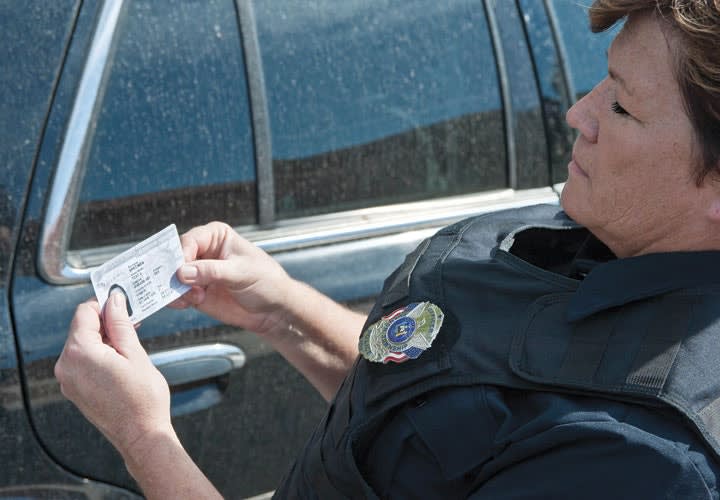
Photo: Mark W. Clark
Except for Native Americans, everyone in the United States is an immigrant, or the descendant of immigrants. Most of us are here legally, but a significant number are not. Under what circumstances is it permissible to inquire into a person’s immigration status? The Supreme Court has addressed this question in several opinions, most recently in its 2012 decision reviewing Arizona’s immigration statutes.
U.S. v. Brignoni-Ponce
By now, police officers are well aware that detentions cannot be based on racial profiling. But more than 35 years ago, border patrol officers sometimes relied on the apparent race of a suspect as an indication of possible violation of immigration laws. In Brignoni-Ponce, for example, officers stopped a vehicle not far from the Mexican border to see if its occupants were illegal aliens, based on nothing but their apparent Mexican ancestry. The Supreme Court found the stop to be unreasonable under the Fourth Amendment, saying this:
"We cannot conclude that this furnished reasonable grounds to believe that the three occupants were aliens. The Fourth Amendment forbids stopping or detaining persons for questioning about their citizenship on less than a reasonable suspicion that they may be aliens."
Although Brignoni-Ponce made clear that a suspicionless detention may not be made for the purpose of checking on immigration status (except at ports of entry and nearby fixed checkpoints), the case did not decide whether or not such questioning required some level of suspicion if the detention was justified on other grounds, or if there were no detention at all. Two subsequent cases addressed these issues.
INS v. Delgado
Officers from the INS (Immigration and Naturalization Service), forerunner of today's ICE (Immigration and Customs Enforcement), went to a garment factory to check workers' immigration status. Some agents with badges and radios walked around the factory floor talking to workers, and they sometimes asked to see immigration documents. Other agents were stationed inside each exit.
Employee Herman Delgado filed a federal suit for an injunction to prevent the INS from conducting such checks. The Ninth Circuit of the U.S. Court of Appeals ruled that the INS violated the Fourth Amendment by questioning workers about their immigration status without any reasonable suspicion that the individuals who were questioned were illegally in the country.
The U.S. Supreme Court reversed. The court pointed out that while its earlier cases, such as Brignoni-Ponce, prohibited detentions without reasonable suspicion, the Fourth Amendment does not apply to mere questioning of an individual who has not been detained. Ruling that the INS was engaged only in consensual encounters in the factory, the court said this:
"Interrogation relating to one's identity or a request for identification by the police does not, by itself, constitute a Fourth Amendment seizure. What is apparent from our cases is that police questioning, by itself, is unlikely to result in a Fourth Amendment violation."
The Delgado decision established that during a consensual encounter, the Fourth Amendment does not prohibit government agents from asking about a person's immigration status and requesting to see immigration documents, even though there is no reasonable suspicion of alienage. Logically, wouldn't the same rule apply during a lawful detention?
Muehler v. Mena
Police officers with a search warrant went to a home to look for weapons and other evidence of a drive-by gang shooting. Iris Mena, an occupant of the residence, was detained during the search, although she was not one of the suspects. During her detention, INS agents accompanying the police questioned Mena about her citizenship and asked to see her immigration documents. She produced documents showing that she was a legal resident and later sued the officers for violation of her Fourth Amendment rights, based in part on the fact that she had been questioned about immigration status without any suspicion that she might be an illegal alien.
Both the District Court and the Ninth Circuit ruled for Mena and against the officers. The Ninth Circuit held that simply asking questions was Fourth Amendment activity that must be supported by reasonable suspicion. The officers appealed this ruling to the U.S. Supreme Court, which reversed.
The Supreme Court said that the Ninth Circuit had misinterpreted its earlier decisions holding that detentions to check immigration status would violate the Fourth Amendment when there was no reasonable suspicion of wrongdoing, but that these decisions had no application to mere questioning of one who was already lawfully detained, as Mena was during the search warrant service. The court summarized the law as follows:
"In our earlier cases, we certainly did not create a requirement of particularized suspicion for purposes of inquiry into citizenship status. The officers’ questioning of Mena did not constitute an independent Fourth Amendment violation. Hence, the officers did not need reasonable suspicion to ask Mena her name, date and place of birth, or immigration status."
Arizona v. United States
Frustrated by federal inaction in enforcing immigration laws and beset by public safety threats from unchecked immigration across its border with Mexico, the State of Arizona enacted its own set of laws to try to cope with some of the problems. One provision, section 2(b) of the Act known as S.B. 1070, requires law enforcement officers in Arizona to make "a reasonable attempt to determine the immigration status” of any person they stop, detain, or arrest on some other legitimate basis, if “reasonable suspicion exists that the person is an alien and is unlawfully present in the United States."
The United States sued to prevent the state from enforcing this provision (among others), arguing that the entire field of immigration enforcement was preempted from state control by federal law. The United States also argued that immigration checks could unlawfully prolong otherwise lawful detentions. On June 25, 2012, the U.S. Supreme Court rejected both of these contentions.
As to federal preemption, the court pointed out that various provisions of federal law specifically authorize mutual communication between local and federal officers on immigration matters. Quoting a lower court opinion, the court said that "Arizona officers have authority to enforce the criminal provisions of federal immigration law. If § 2(b) only requires state officers to conduct a status check during the course of an authorized, lawful detention or after a detainee has been released, the provision likely would survive preemption."
On the issue of whether state officers could routinely conduct immigration checks during lawful detentions, the court cited to its earlier decision in Muehler v. Mena, which had already decided this issue, "finding no violation where questioning about immigration status did not prolong a stop." In the absence of evidence that Arizona officers would be applying § 2(b) in such a way as to cause detentions to be unlawfully prolonged, the Supreme Court saw no reason to invalidate this particular provision. (Other unrelated provisions were found to be preempted by federal law.)
Recapitulation
Two constitutional rules for police can be taken from this body of decisions:
1. It is not OK to stop someone for an immigration check without reasonable suspicion.
2. During a consensual encounter or a lawful detention or arrest, it is OK to inquire into immigration status without any independent suspicion the person is in violation of immigration laws.
Devallis Rutledge is a former police officer and veteran prosecutor who currently serves as special counsel to the Los Angeles County district attorney. He is the author of 12 books, including "Investigative Constitutional Law."
Related:
More Patrol

Team Wendy Introduces the EXFIL Endurance Ballistic Helmet, Engineered to Reduce the Burden of Extended Wear
Team Wendy has launched its EXFIL Endurance, a new lightweight ballistic helmet engineered to deliver protection, comfort, and fit during demanding, extended operations.
Read More →
The First Responders Children’s Foundation National First Responders Day Roll Call of Heroes Ceremony Returns to Times Square, NYC
First Responders Children’s Foundation (FRCF), in collaboration with T-Mobile, will host the Roll Call of Heroes ceremony in Times Square to commemorate National First Responders Day on Wednesday, Oct. 28. During the event, FRCF will present 18 Hero Awards.
Read More →
Streamlight to Showcase Newest Lighting Products for Law Enforcement Professionals at IACP 2026
Streamlight will showcase its newest lights for law enforcement at the International Association of Chiefs of Police Annual Conference & Expo. Featured lights will include the TLR-3 X, the PolyTac 1X, and more.
Read More →
Streamlight Portable Scene Light III Wins 2026 OH&S New Product of the Year Award
Streamlight’s Portable Scene Light III has won the 2026 Occupational Health & Safety (OH&S) New Product of the Year Award in the Lighting category.
Read More →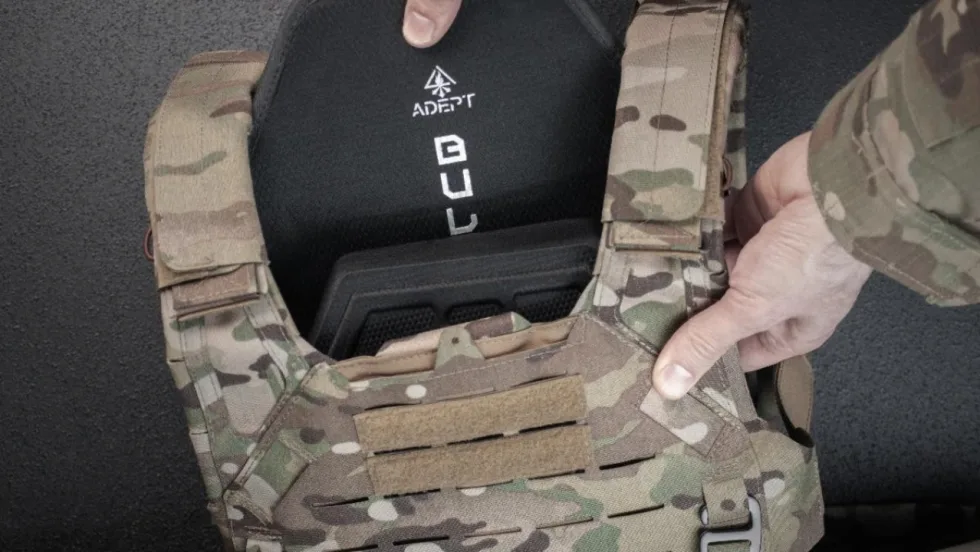
Adept Armor Introduces Two New Rifle Plates
Adept Armor has launched two new Level IV ballistic plates, the Emperor and the Archon Mark 2, which brings Adept Armor’s new Quatroid ceramic to the high-threat, performance-value center of the range at 5.2 pounds.
Read More →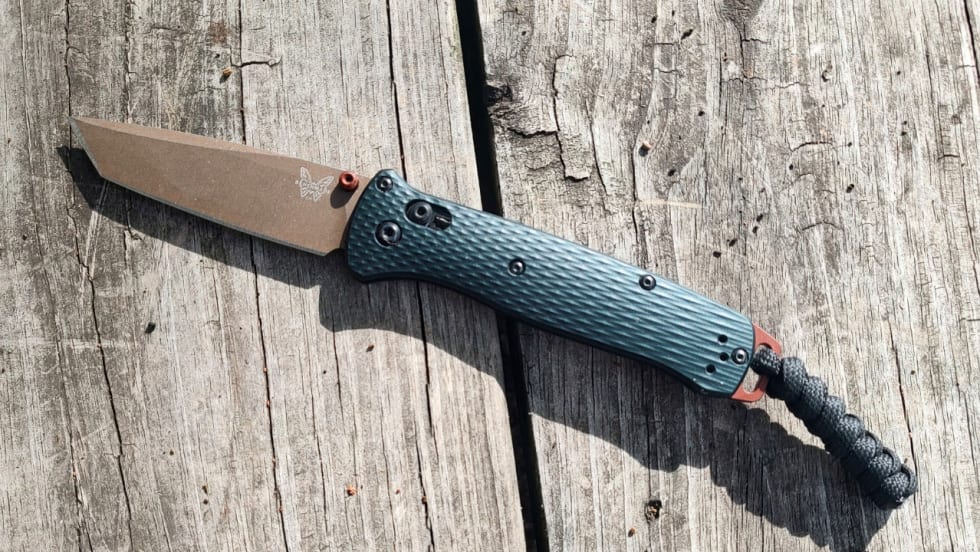
POLICE Product Test: Benchmade Bailout
The Benchmade Bailout is a slim, lightweight carry knife with a deep-ride pocket clip and comes in a variety of blade steels and scales. Here is a detailed review of the Taiga Green Bailout, released earlier this year.
Read More →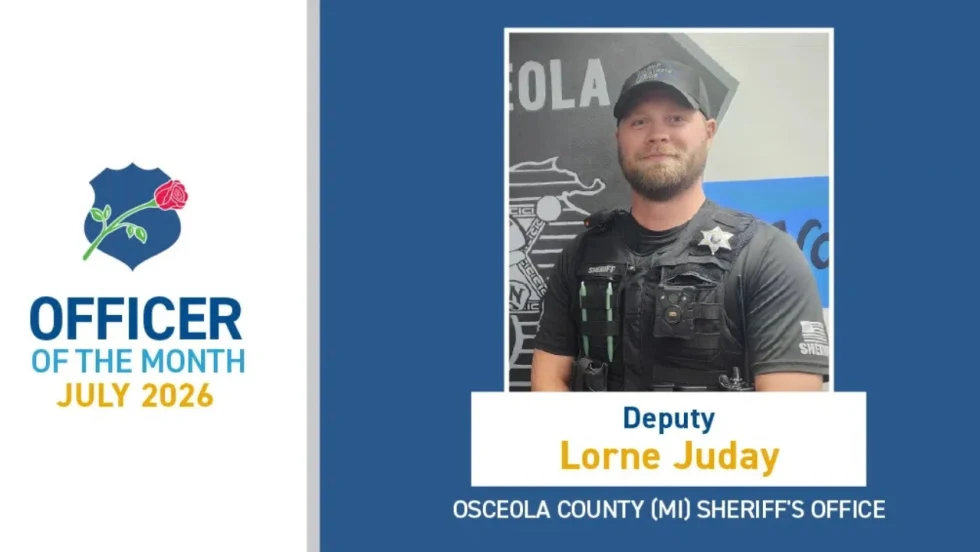
NLEOMF Announces July 2026 Officer of the Month
NLEOMF honored a Michigan deputy sheriff as the July 2026 Officer of the Month for rescuing a trapped driver from a burning vehicle following a Fourth of July crash.
Read More →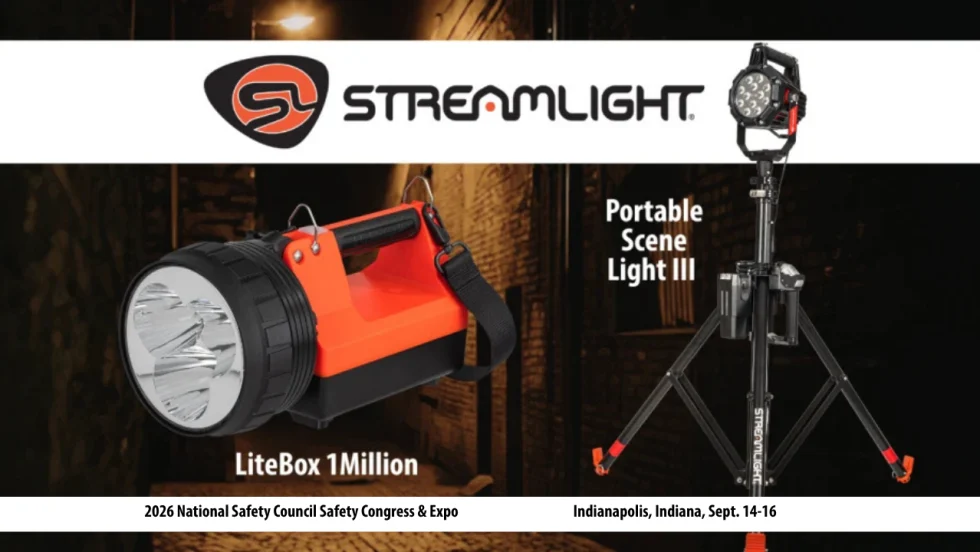
Streamlight to Showcase Newest Lighting Products at National Safety Council’s Safety Congress & Expo 2026
Streamlight will showcase its latest lights, including the Portable Scene Light III and the LiteBox 1Million, at the 2026 National Safety Council (NSC) Safety Congress & Expo.
Read More →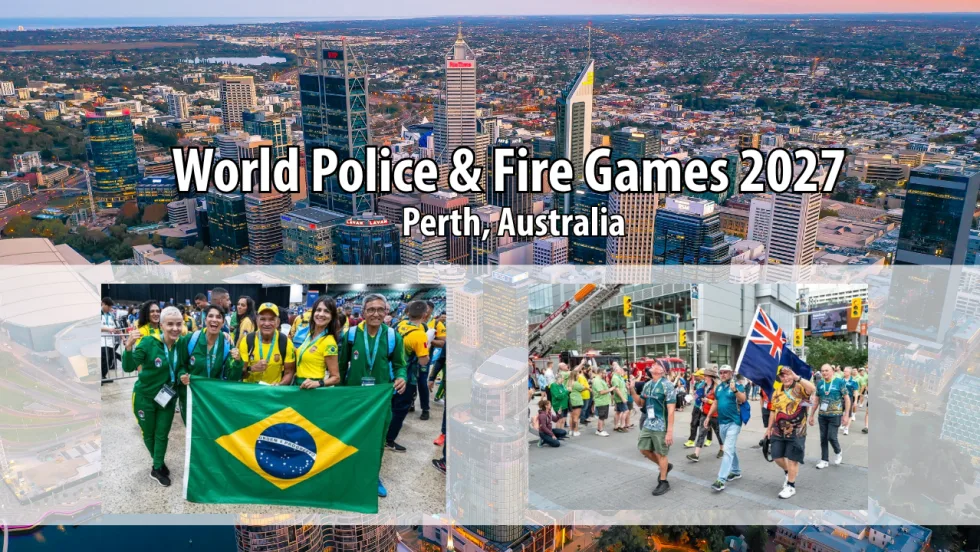
The 2027 World Police & Fire Games Set for Perth, Australia
The 2027 World Police & Fire Games (WPFG) will take place in Perth, Western Australia, from Friday, March 12 through Sunday, March 21, 2027.
Read More →
5.11 Partners with National Fallen Firefighters Foundation to Support #ForThe343
5.11 has joined the nationwide movement honoring the 343 New York City Fire Department firefighters lost on Sept. 11, 2001.
Read More →