



Unmixing Mixed-Up Concepts
How many times have you heard the expression "PC for the stop"? How about the application of Miranda once the suspect is "not free to leave?" These are common examples of improper mixing that can undercut the case against a guilty perpetrator.

Comedians get laughs and make a living by misusing the language. (Example: "He's at the pinochle of success.") But in our business, we can't afford to misuse legal terminology at the risk of contributing to widespread misunderstandings about what the law actually says. The U.S. Supreme Court has set precise standards and definitions that some law enforcement officers, attorneys, and judges carelessly transplant where they don't fit. The result, in many cases, is that the wrong standard is applied to a situation and the opportunity to obtain admissible evidence is needlessly lost.
The word "immiscible" refers to things that do not mix, such as oil and water. There are legal concepts that are immiscible, and yet people persist in trying to mix them together. How many times have you heard the expression "PC for the stop"? How about the application of Miranda once the suspect is "not free to leave?" These are common examples of improper mixing that can undercut the case against a guilty perpetrator.
There is no "PC for the Stop"
Under Fourth Amendment case law, there are three distinct levels of interaction between police and citizens: (1) consensual encounters, (2) detentions, and (3) arrests. (U.S. v. Mendenhall) Determining which one is occurring at a given time requires looking at what officers have said and done to see what degree of restriction (if any) is placed on the person's liberty.
(1) If there is no restriction because police have neither said nor done anything that would have communicated to a reasonable, innocent person that he or she must submit to the encounter, any interaction is purely consensual and requires no justification. (INS v. Delgado)
(2) If the person's liberty is temporarily restricted by a police command, display of emergency lighting, physical restraint or other means that would have communicated to a reasonable, innocent person that he or she was not free to disregard the police and come or go at will, a detention has occurred, requiring reasonable suspicion that the person may be involved in criminal behavior. (Florida v. Bostick) The two most common kinds of detention are the pedestrian stop (Terry v. Ohio) and the vehicle stop. (U.S. v. Hensley)
(3) An arrest typically involves either telling the person he is under arrest, or taking him into physical custody—usually by cuffing and caging the person and transporting him to a police station or jail. (Kaupp v. Texas) The level of justification required for an arrest is probable cause, commonly abbreviated "PC." (Atwater v. City of Lago Vista, Texas)
From these principles, it should be clear that PC is not needed for a stop—only for an arrest. All the Fourth Amendment requires for a stop (detention) is reasonable suspicion. "Reasonable suspicion is a less demanding standard than probable cause." (Alabama v. White) "The police can stop and detain a person for investigative purposes if the officer has a reasonable suspicion, even if the officer lacks probable cause." (U.S. v. Sokolow)
When police officers speak or write or testify about their "PC for the stop," they are feeding the confusion of legal standards that may already be cloudy to some prosecutors, defense attorneys, and trial judges. A judge hearing a suppression motion and looking for PC for a stop may find that the stop was unjustified—even though there was reasonable suspicion to support it. Officers need not take on a higher burden than the law specifies, but that is exactly what the improper linking of detentions and PC accomplishes. So if you've developed the bad habit of trying to mix PC and stops, it's time to break that habit and speak with legal precision. Stops require only reasonable suspicion—not probable cause. "PC" and "stop" are immiscible. Don't try to mix them.
Miranda and "Not Free to Leave"
How this one got started is anybody's guess. Many officers, attorneys, and judges think the test for Miranda "custody" is to ask whether, at the time police interrogation occurred, the suspect was, or was not, "free to leave." This analytical mistake likely arose from careless mixing of the old test for a detention under U.S. v. Mendenhall (under which a person was detained when he was no longer free to leave) with the "custody" factor from the Miranda equation.
Miranda v. Arizona ruled that judges could not admit as evidence of guilt at trial a confession obtained by police custodial interrogation, unless the prosecutor showed that the inherent compulsion of this process had been neutralized by the now-familiar warning and waiver. The evidentiary prerequisites of warnings and waiver are triggered by the combination of "custody" and "interrogation." (Illinois v. Perkins)
In later decisions, the Supreme Court defined "custody" as "formal arrest or its functional equivalent." (Berkemer v. McCarty; California v. Beheler) Examples of the functional equivalent of formal arrest could be handcuffing and caging the suspect, pointing guns, or preventing the suspect from leaving the police station. (Orozco v. Texas)Miranda "custody" and Fourth Amendment "arrest" are not synonymous, because "custody" also includes detentions accomplished with arrest-like restraints; therefore, even though an officer may not have formally arrested a suspect, if the suspect is being subjected to the functional equivalent of arrest at the time of questioning, he is in "custody" for Miranda purposes.
But in the absence of arrest-like restraints or stationhouse settings, the mere fact that a suspect is being detained ("not free to leave") does not mean that he is in "custody." For example, during a pedestrian detention or a vehicle stop, the person being questioned is "not free to leave," but as long as he is not restricted by handcuffs, police-car cage or pointed firearms, he is not in Miranda "custody." The Supreme Court made this point in Berkemer, where a motorist stopped for suspected driving under the influence was questioned without warnings before being taken into custody:
"The comparatively non-threatening character of [pedestrian] detentions explains the absence of any suggestion in our opinions that Terry stops are subject to the dictates of Miranda. The similarly non-coercive aspect of ordinary traffic stops prompts us to hold that persons temporarily detained pursuant to such stops are not in custody for the purposes of Miranda." (Berkemer v. McCarty)
Although this passage from Berkemer made clear that Miranda does not apply merely because a person is detained ("not free to leave"), it was necessary for the Supreme Court to reverse the Pennsylvania Supreme Court on this very point four years later. In Pennsylvania v. Bruder, the commonwealth court had mistakenly ruled that Miranda applied at a car stop, because the driver was not free to leave. In a brief, four-paragraph decision, the U.S. Supreme Court reversed this ruling and repeated that temporary detentions lacking arrest-like restraints do not constitute "custody" for Miranda purposes.
If police officers, attorneys, and judges erroneously believed that Miranda required the exclusion of statements obtained without warnings and waiver at a time when the suspect was concededly not free to leave but not yet under formal arrest or its functional equivalent, crucial evidence of guilt could be needlessly lost. Miranda "custody" and "not free to leave" are immiscible. Don't try to mix them.
More Patrol

Team Wendy Introduces the EXFIL Endurance Ballistic Helmet, Engineered to Reduce the Burden of Extended Wear
Team Wendy has launched its EXFIL Endurance, a new lightweight ballistic helmet engineered to deliver protection, comfort, and fit during demanding, extended operations.
Read More →
The First Responders Children’s Foundation National First Responders Day Roll Call of Heroes Ceremony Returns to Times Square, NYC
First Responders Children’s Foundation (FRCF), in collaboration with T-Mobile, will host the Roll Call of Heroes ceremony in Times Square to commemorate National First Responders Day on Wednesday, Oct. 28. During the event, FRCF will present 18 Hero Awards.
Read More →
Streamlight to Showcase Newest Lighting Products for Law Enforcement Professionals at IACP 2026
Streamlight will showcase its newest lights for law enforcement at the International Association of Chiefs of Police Annual Conference & Expo. Featured lights will include the TLR-3 X, the PolyTac 1X, and more.
Read More →
Streamlight Portable Scene Light III Wins 2026 OH&S New Product of the Year Award
Streamlight’s Portable Scene Light III has won the 2026 Occupational Health & Safety (OH&S) New Product of the Year Award in the Lighting category.
Read More →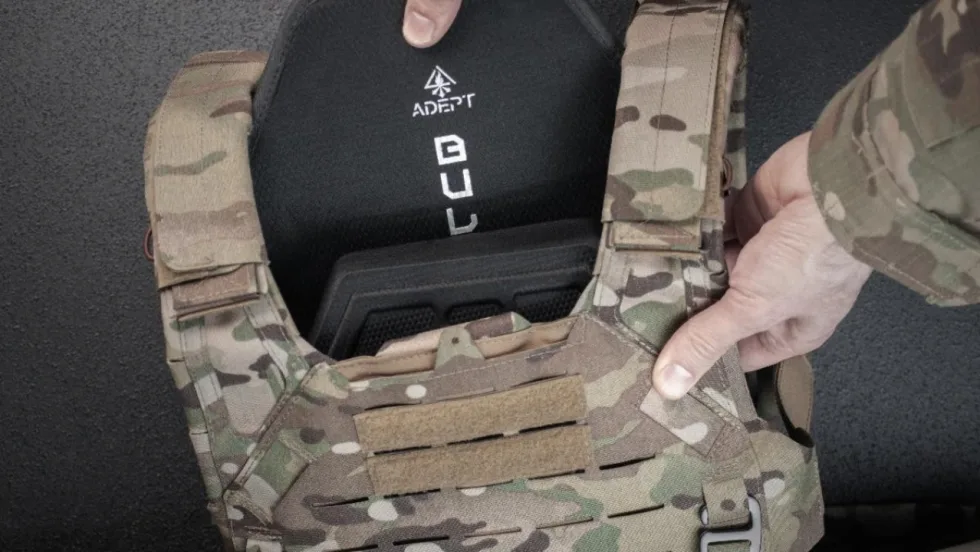
Adept Armor Introduces Two New Rifle Plates
Adept Armor has launched two new Level IV ballistic plates, the Emperor and the Archon Mark 2, which brings Adept Armor’s new Quatroid ceramic to the high-threat, performance-value center of the range at 5.2 pounds.
Read More →
POLICE Product Test: Benchmade Bailout
The Benchmade Bailout is a slim, lightweight carry knife with a deep-ride pocket clip and comes in a variety of blade steels and scales. Here is a detailed review of the Taiga Green Bailout, released earlier this year.
Read More →
NLEOMF Announces July 2026 Officer of the Month
NLEOMF honored a Michigan deputy sheriff as the July 2026 Officer of the Month for rescuing a trapped driver from a burning vehicle following a Fourth of July crash.
Read More →
Streamlight to Showcase Newest Lighting Products at National Safety Council’s Safety Congress & Expo 2026
Streamlight will showcase its latest lights, including the Portable Scene Light III and the LiteBox 1Million, at the 2026 National Safety Council (NSC) Safety Congress & Expo.
Read More →
The 2027 World Police & Fire Games Set for Perth, Australia
The 2027 World Police & Fire Games (WPFG) will take place in Perth, Western Australia, from Friday, March 12 through Sunday, March 21, 2027.
Read More →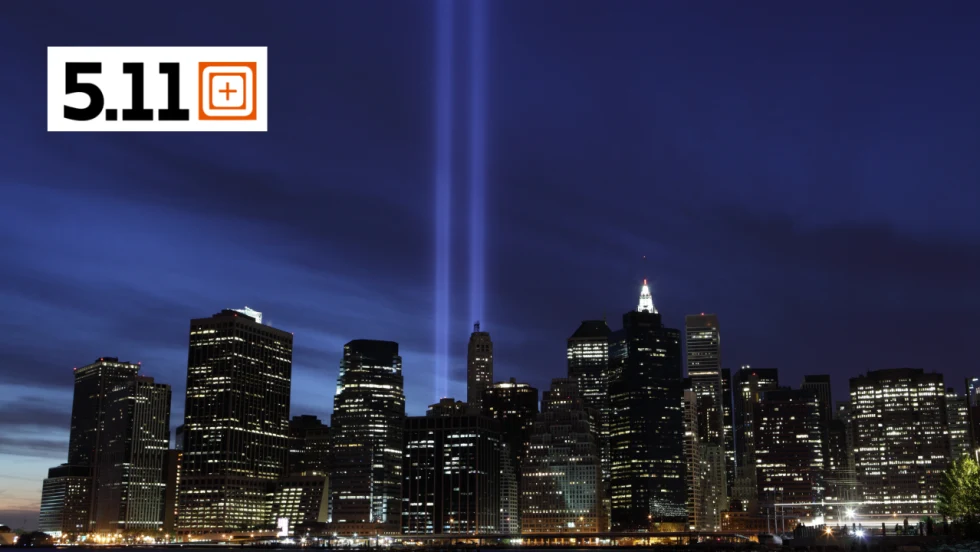
5.11 Partners with National Fallen Firefighters Foundation to Support #ForThe343
5.11 has joined the nationwide movement honoring the 343 New York City Fire Department firefighters lost on Sept. 11, 2001.
Read More →