



How To Lift Fingerprints
As the responding patrol officer it’s your job to properly process the crime scene, including locating, printing, collecting, and documenting all fingerprint evidence on scene — not necessarily an easy task.

A burglar climbs up to a balcony and pushes open the victim’s window. He pulls himself up and through the window opening. In the process the suspect leaves behind myriad fingerprint evidence.
As the responding patrol officer it’s your job to properly process the crime scene, including locating, printing, collecting, and documenting all fingerprint evidence on scene — not necessarily an easy task.
This article will provide some useful tips and tricks that should take your fingerprinting skills to the next level.
Fingerprints 101
Let’s start with the basics. A fingerprint consists of friction ridge skin unique to every person. This friction ridge skin is found on portions of the hands and feet. A latent fingerprint is probably the most common type of fingerprint we encounter in police work. It’s what the suspect leaves behind. Human skin contains glands that secrete numerous chemical compounds, including fatty acids, amino acids, and proteins. A latent fingerprint is created when someone touches a surface and deposits this mixture of organic materials, as well as other skin contaminants, onto the surface.
Latent fingerprints are not visible without some type of development. This development can be either physical or chemical. The goal is to make the latent fingerprint stand out against the background so the print can be collected and/or photographed. Ambient temperature and humidity, surface conditions, and the chemical makeup of the suspect’s body all contribute to the quality of latent fingerprints. There are no guarantees, but proper technique should increase the number of useable prints.
The Proper Tools
A patrol officer’s fingerprint kit doesn’t need to be overly complicated. You just need the basics: a fingerprint brush, black and bi-chromatic powder, lifting tape, and fingerprint cards.
Fingerprint brushes are a matter of personal preference. Although natural hair brushes and feather dusters are available, I personally use fiberglass brushes. These brushes are well suited for general patrol work. With their many tiny filaments, fiberglass brushes distribute the fingerprint powder evenly. They are also well suited for the spinning technique that I’ll discuss later in this article.
Basic black fingerprint powder is the best choice for most situations. It’s very fine and easy to work with. Bi-chromatic powder is a mixture of black powder and a lighter colored powder, like white or silver. Bi-chromatic is a must if you’re processing a very dark colored surface, as it allows you to see the print develop. Bi-chromatic powder looks dark on light-colored surfaces and looks light on dark-colored surfaces.
To lift the prints developed by powder, fingerprint lifting tape is available in various widths and compositions. General lifting tape is good for flat surfaces, while polyethylene tape is designed for curved surfaces such as doorknobs. Standard fingerprint powder works well on most smooth surfaces, including glass, most metals, non-porous wood, and plastics. Consult with your local experts regarding more advanced printing techniques on porous and other surfaces.
Processing Tips
The number one mistake officers make is over-processing the latent fingerprint. First rule: use less powder than you think you need. Because of this, I personally never place the brush directly into the powder jar. Instead, give the print powder jar a quick shake before opening the lid. Remove the lid and place the fingerprint brush inside the lid. The lid has enough powder to load your brush. Now the brush is ready to develop the latent print.
I gently spin the brush in my hand and apply light pressure on the surface to develop the latent print. Too much powder will overdevelop the fingerprint by filling in the ridge detail, while too little powder won’t provide enough contrast. Also, limit the number of brush strokes while developing the fingerprint. The brush itself can actually damage the print.
Once the latent fingerprints are developed, it’s time to collect the evidence. Depending on your agency and the type of case, the prints can be photographed before collection. It’s critical to apply the lifting tape smoothly and evenly.
My best tip is to use a credit card. I secure the lifting tape about an inch from the edge of the print. I then use the edge of a credit card to gently press the fingerprint lifting tape onto the surface. I do this in a smooth constant motion. This ensures complete adhesion between the tape and the powder, while eliminating air bubbles from being trapped under the tape. Gently pull the tape off of the surface and secure the edge of the tape onto the glossy side of the fingerprint backing card. I use the credit card again to carefully press the tape onto the card.
Using a pen or marker, I date and initial the edge of the lifting tape on the backing card. I recommend drawing a simple diagram and writing a short description of where the fingerprint was lifted. Finally, it’s important to detail in your report your exact actions on scene.
Solid fingerprinting techniques will increase the chances of lifting useable prints at a crime scene, which in turn increases the probability of identifying and arresting the suspect. It’s just good police work.
More Patrol

Team Wendy Introduces the EXFIL Endurance Ballistic Helmet, Engineered to Reduce the Burden of Extended Wear
Team Wendy has launched its EXFIL Endurance, a new lightweight ballistic helmet engineered to deliver protection, comfort, and fit during demanding, extended operations.
Read More →
The First Responders Children’s Foundation National First Responders Day Roll Call of Heroes Ceremony Returns to Times Square, NYC
First Responders Children’s Foundation (FRCF), in collaboration with T-Mobile, will host the Roll Call of Heroes ceremony in Times Square to commemorate National First Responders Day on Wednesday, Oct. 28. During the event, FRCF will present 18 Hero Awards.
Read More →
Streamlight to Showcase Newest Lighting Products for Law Enforcement Professionals at IACP 2026
Streamlight will showcase its newest lights for law enforcement at the International Association of Chiefs of Police Annual Conference & Expo. Featured lights will include the TLR-3 X, the PolyTac 1X, and more.
Read More →
Streamlight Portable Scene Light III Wins 2026 OH&S New Product of the Year Award
Streamlight’s Portable Scene Light III has won the 2026 Occupational Health & Safety (OH&S) New Product of the Year Award in the Lighting category.
Read More →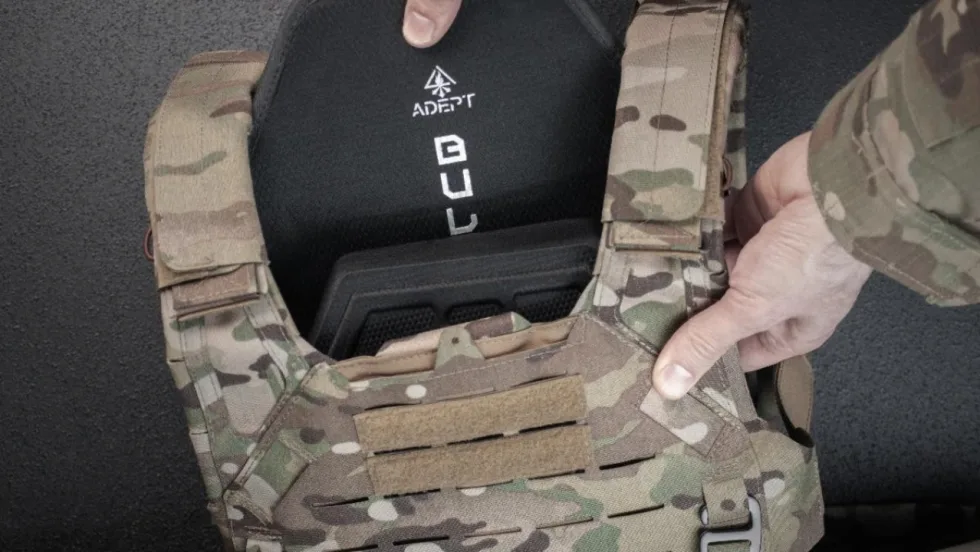
Adept Armor Introduces Two New Rifle Plates
Adept Armor has launched two new Level IV ballistic plates, the Emperor and the Archon Mark 2, which brings Adept Armor’s new Quatroid ceramic to the high-threat, performance-value center of the range at 5.2 pounds.
Read More →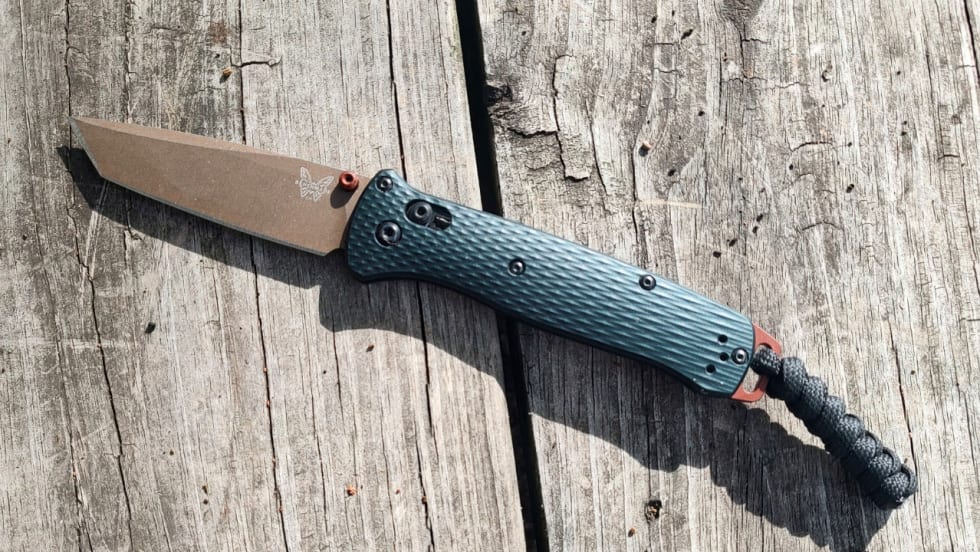
POLICE Product Test: Benchmade Bailout
The Benchmade Bailout is a slim, lightweight carry knife with a deep-ride pocket clip and comes in a variety of blade steels and scales. Here is a detailed review of the Taiga Green Bailout, released earlier this year.
Read More →
NLEOMF Announces July 2026 Officer of the Month
NLEOMF honored a Michigan deputy sheriff as the July 2026 Officer of the Month for rescuing a trapped driver from a burning vehicle following a Fourth of July crash.
Read More →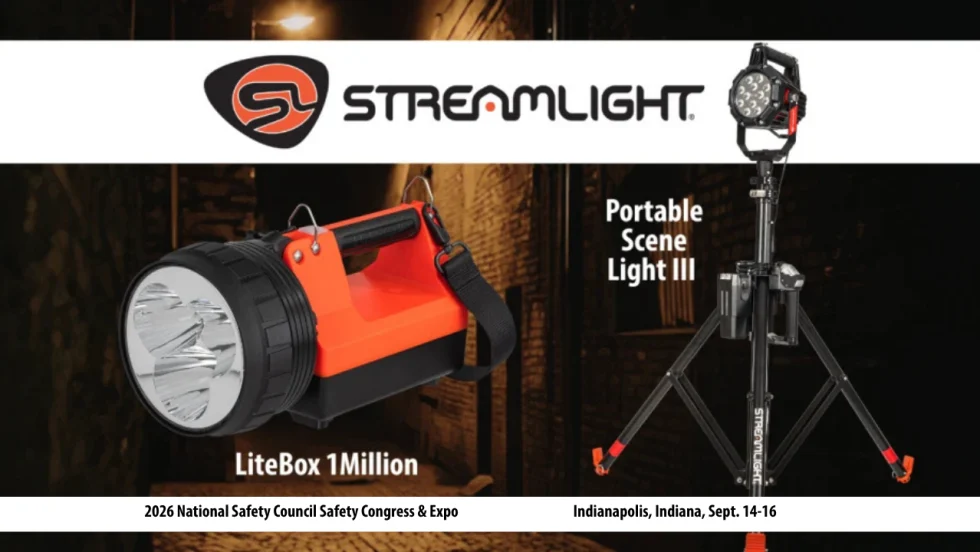
Streamlight to Showcase Newest Lighting Products at National Safety Council’s Safety Congress & Expo 2026
Streamlight will showcase its latest lights, including the Portable Scene Light III and the LiteBox 1Million, at the 2026 National Safety Council (NSC) Safety Congress & Expo.
Read More →
The 2027 World Police & Fire Games Set for Perth, Australia
The 2027 World Police & Fire Games (WPFG) will take place in Perth, Western Australia, from Friday, March 12 through Sunday, March 21, 2027.
Read More →
5.11 Partners with National Fallen Firefighters Foundation to Support #ForThe343
5.11 has joined the nationwide movement honoring the 343 New York City Fire Department firefighters lost on Sept. 11, 2001.
Read More →