



Easy Readers
Can you accurately see and write down one license plate number per second while driving at up to 100 miles per hour, even with darkness or bright sun limiting your sight? Fortunately, there are automated systems that can do this for you.

ELSAG North America
Can you accurately see and write down one license plate number per second while driving at up to 100 miles per hour, even with darkness or bright sun limiting your sight? Fortunately, there are automated systems that can do this for you.
License plate readers use algorithms to decipher the characters in the captured image of a license plate to identify vehicles. Systems commonly use infrared lighting to allow the camera to take the picture at any time of day. Then they run the numbers against those in state, local, and national databases to find persons or vehicles connected to a crime or infraction.
Whether you call it ALPR, LPR technology, license plate recognition, automatic vehicle identification, or optical character recognition, it's one heck of a time saver and a great aid to the crime fighter.
ELSAG North America
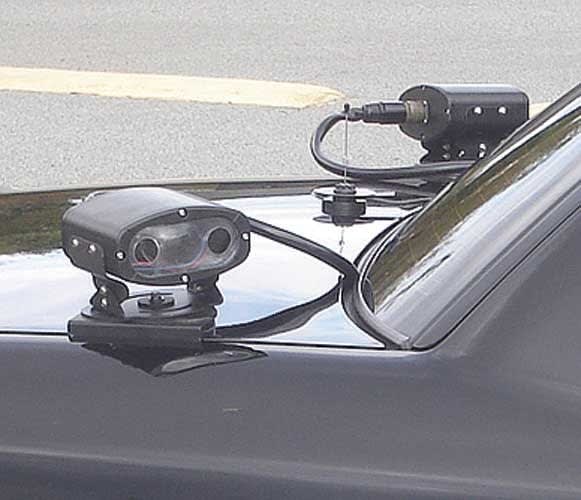
ELSAG North America's Mobile Plate Hunter-900 (MPH-900), can be mounted to patrol cars for capturing license plate numbers. If a suspect license plate number is read, audible and visual alarms alert the officer within milliseconds.
Cameras, a processing unit, and proprietary software allow officers to capture images of license plates and instantaneously compare them with millions of hot list records to identify vehicles of interest. This system reads plates day or night, from all 50 States and most foreign countries including Arabic characters. It can also read other alpha-numeric identification systems-even from 1,500 feet in the air.
Visit ELSAG North America Online
EZ Tag
EZ Tag, in partnership with ELSAG North America, has married video inputs with image analysis software that identifies targeted plates using an onboard hot list, and returns an alarm back to the operator in milliseconds. Using a vehicle mounted video camera, a moving patrol car can check between 5,000 and 8,000 plates per eight-hour shift at speeds in excess of 75 mph while the officer is attending to other routine duties.
When the patrol officer receives an audible alarm, the laptop screen will display a digital picture of the plate and the vehicle as well as information as to the reason the plate is hot listed.
Visit EZ Tag Online
Genetec
Genetec's AutoVu 4.3 is the newest version of its IP license plate recognition solution. New features include covert hit notification and wildcard hot lists that can check against partial plates.
AutoVu's real-time alarming and e-mail notification quickly informs assigned recipients of matched license plates, or hits. AutoVu also allows users to assign different priorities to hot lists. Each priority can be configured with a different color and alarm tone, alerting officers of hits both visually and audibly to easily identify the type of hit and its importance.
Visit Genetec Online [PAGEBREAK]
INEX/ZAMIR
INEX/ZAMIR's HY ALPR camera and illuminator provides an integral infrared LED light source, ensuring consistent image quality regardless of the time of day, headlights, or weather. With an effective range of up to 100 feet, a pulsed LED array and a variable table, multi-shutter arrangement allow for a stream of images with each one having different contrast characteristics.
The HY, with its ability to provide up to 60 images per second, can be used for high-speed or low-speed applications and can be configured for triggered or non-triggered operation.
A solution using the HY camera/illuminator with INEX/ZAMIR InSignia ALPR software provides real-time license plate recognition using a proven set of algorithms. An open architecture allows InSignia software to work with existing back office programs or most any application needs.
Visit INEX/ZAMIR Online
PIPS Technology (a Federal Signal company)
Federal Signal's automated license plate recognition (ALPR) Slate camera incorporates patented infrared illumination in an infrared camera for effective license plate imaging and a color camera for a vehicle overview image.
Patented filter and flash techniques compensate for headlights and bright sunlight, while TripleFlash technology reduces plate-to-plate variation issues.
When combined with PIPS Back Office System Server (BOSS), ALPR can be used for data mining efforts. PIPS also offers the PAGIS (Police ALPR Graphical Interface System), a proprietary in-car officer interface that seamlessly integrates with PIPS BOSS.
Visit PIPS Technology Online
Vigilant Video
Vigilant Video's CarDetector Mobile LPR Edition video analysis engine automatically scans, detects, and performs license plate recognition for mobile law enforcement vehicles. When any license plate is detected in the camera's field of view, powerful adaptive optical character recognition engines extract the plate image, apply image enhancement filters, and analyze each individual character of the plate, regardless of the plate colors or backgrounds.
CarDetector technology automatically triggers "in-car" audio/visual alarms based on LPR "hot lists" associated with stolen autos and other criminal activities in databases.
Visit Vigilant Video Online
ELECTRONIC CITATION STREAMLINES TRAFFIC ENFORCEMENT
The Oregon Department of Transportation's Governor's Office of Highway Safety (ODOT) has streamlined agencies' ticket citation process by implementing APS PocketCitation software, an electronic citation system from Advanced Public Safety (APS) designed to automate and streamline the process of issuing traffic tickets using Zebra printers.
Previously, traffic citations were manually issued by the officer, who was required to write out a multi-part form and submit a copy to each party involved. The officer, court, and DMV each had to enter the same data into a different computer system before it went on the driver's record.
According to Jeffrey D. Rubenstein, founder and CEO of APS, 20 to 30 percent of all hand-written traffic citations are dismissed because of incorrect statute numbers, illegible handwriting, and administrative data errors. PocketCitation's on-board intelligence ensures the citation information entered is correct and that the citation itself is printed in clear, legible type by Zebra RW 420 mobile printers.
"Using our PocketCitation application and Zebra's high-performance mobile printers, law enforcement officers can issue a traffic citation in less than a minute," says Rubenstein. "This capability can minimize risk and increase officer safety because they spend less time on the side of the road and in contact with traffic offenders."
The APS PocketCitation application populates an agency's current ticketing form (or newly designed form) with data from the violator's driver's license or returned from an officer's query to the FBI's National Crime Information Center (NCIC) or state motor vehicle bureau. The officer selects the applicable violation from a drop-down menu on the computer screen, and the appropriate statute number, fine amount, and court information are automatically entered on the ticket.
The ticket is then printed out, clearly and legibly, using a compact, Bluetooth-enabled Zebra RW 420 mobile printer. At the end of the shift, officers dock their handheld PDAs to upload the e-citation data into a centralized computer system, totally eliminating the extra step of manual data entry.
"Now, our officers are safer because they can issue citations from behind the cover of their cars while maintaining a clear view of the violators' vehicles," says Steve Vitolo, program manager of Statewide Law Enforcement and Judicial Programs, Oregon Governor's Office of Highway Safety. Moreover, efficiency at traffic stops has greatly increased. "Once officers discover the benefits of these automated solutions, they are more reluctant to give them up than they would be if someone were to ask for their car keys!"
Visit APS Online
Visit Zebra Online
More Technology

A police agency's guide to data-driven fleet management
Costs are rising and the public expects more transparency into how their tax dollars are spent. This e-book shows how police agencies can use fleet data to take control of fleet expenses while improving officer safety and demonstrating fiscal responsibility to the communities they serve.
Read More →
AI and analytics for law enforcement: Turning data into insights
Law enforcement agencies are managing more video, sensor data and digital evidence than ever before. Discover how AI and analytics can help turn that data into actionable insights that strengthen situational awareness, accelerate investigations and support more informed decisions.
Read More →
Vasco Electronics Adds Automatic Language Detection to Vasco Translator Q1
Vasco Electronics’ software update introduces hands-free language switching and expanded offline translation across 45 language pairs, empowering law enforcement, healthcare, and front-office enterprise teams
Read More →

North Miami Police Department Deploys Mark43
The North Miami Police Department has deployed Mark43 as part of its Five-Year Strategic Plan that represents its collective vision and goals for a more proactive police department, anchored by a core commitment to leveraging modern technology to enhance efficiency and public safety.
Read More →
Cellebrite Genesis for Enterprise Now Generally Available
Made available to the public sector in June, Cellebrite Genesis is serving a growing mix of national, regional, and local agencies worldwide, including some of the largest regional and metropolitan police departments. It is now available for enterprise organizations.
Read More →
2026 Vision FirstNet Users Summit to Host Emerging Leaders Training on Grassroots Advocacy for Public Safety
“Emerging Leaders Training: Understanding the Importance of Grassroots Advocacy for Public Safety," a session during the 2026 Vision FirstNet Users Summit, will offer a roadmap for unified advocacy at the federal level.
Read More →
Motorola Solutions Completes Acquisition of D-Fend Solutions
Motorola Solutions has acquired D-Fend Solutions, an industry leader in counter-drone technology. This deal provides public safety and enterprise customers with access to advanced counter-unmanned aerial systems.
Read More →
ZeroEyes, Advantech & Camden Police Partner to Bring AI Gun Detection Technology to Delaware School District
ZeroEyes has partnered with Advantech and the Camden Police Department to deploy ZeroEyes’ AI gun detection and intelligent situational awareness platform at Delaware’s Caesar Rodney School District (CRSD).
Read More →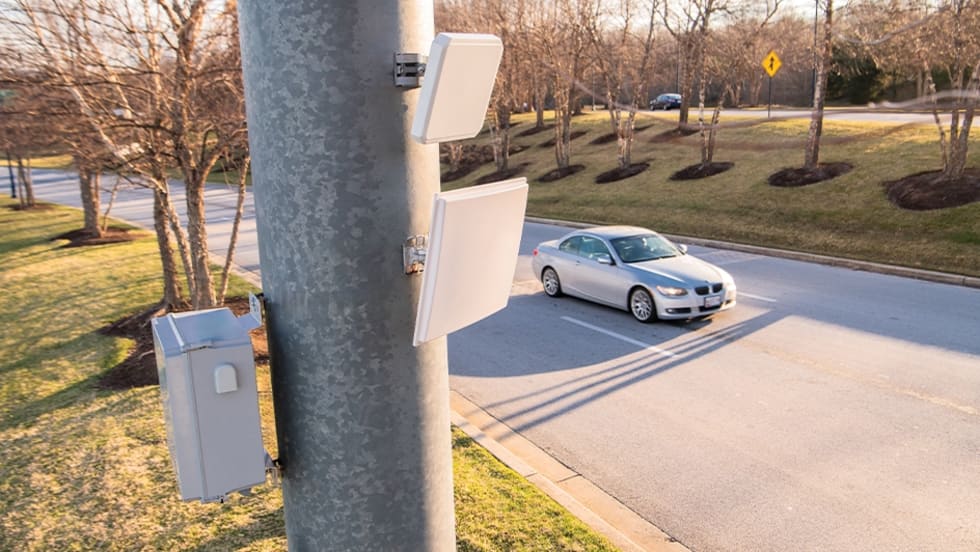
Leonardo U.S. Cyber & Security Solutions Introduces SignalTrace, the Next Evolution in Electronic Signature Detection Technology
SignalTrace reflects years of product refinement and a clearer expression of the technology’s purpose of recognizing and correlating electronic signatures in publicly broadcast wireless signals to reveal patterns, relationships, and trends that might otherwise go undetected.
Read More →
Pimloc Launches Secure File Sharing to Streamline Release of Redacted Video
Pimloc’s Secure File Sharing lets organizations deliver redacted video, audio, and documents through expiring, passcode-protected links, accelerating delivery while reducing security, compliance, and chain-of-custody risks.
Read More →