



Do You Still Need In-Vehicle Cameras?
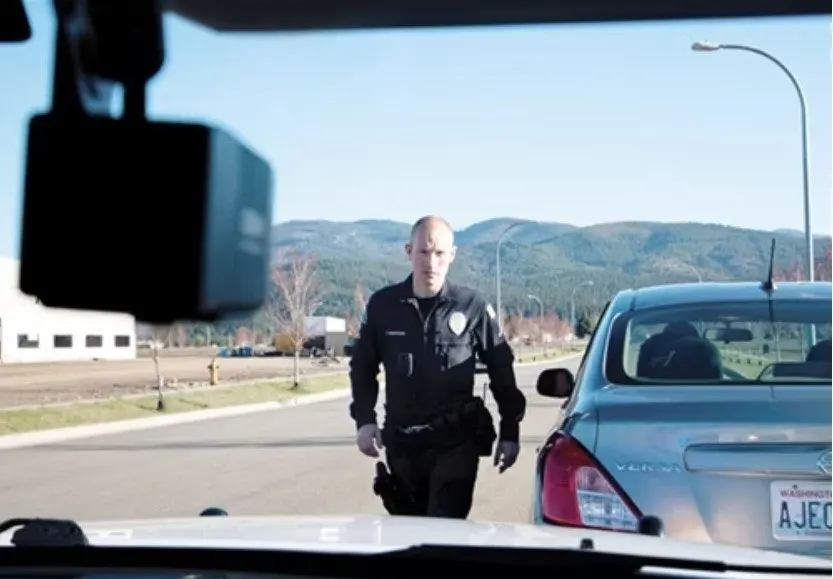
A dashcam provides a broader and more steady view of an incident than can be captured by body-worn cameras.
Police File
Since the beginning of the body-worn camera era of American law enforcement operations, some city and county councils, agency administrators, and command staff have been asking whether they can save money by phasing out in-vehicle camera systems and using only body cams for documenting traffic stops. For a variety of reasons, this is a bad idea.
In-vehicle video systems have been used by law enforcement agencies to document traffic stops, police chases and other incidents around patrol vehicles back to the early 1990s. They have evolved into purpose-built tools designed to capture the best possible evidence of any operation around and even inside a patrol vehicle.
The first commercial police dashcams were VHS video tape systems. A decade later they were recording to hard drives like DVRs, and now they capture the data on flash drives temporarily and transfer it wirelessly to the cloud or to on-premises servers. The video has improved from “what is that fuzzy thing” to high-definition digital as sharp as your Netflix feed.
Return on Investment
State-of-the-art dashcam systems require a significant investment from the law enforcement agencies that use them. So the question is: does the return on that investment warrant the expense if an agency’s officers are wearing body cameras.
It depends on how you define ROI. A purpose-built and properly positioned dash cam is going to capture aspects of an incident that will not be recorded by a body camera. The visual advantages of a dashcam include an often unimpeded view out of the windshield and the ability to see and record more of the action. They are also on a stable platform.
In contrast, stability is a major issue with body cameras. They get jostled around a lot by the movement of the officers wearing them. This shaky cam effect is magnified when the officer is running or under attack. The camera can even be knocked off of the officer, which will result in a recording of the pavement or the sky. In contrast, a vehicle camera is steady unless the vehicle is traveling very fast or very erratically, and it usually takes substantial impact or torque to pull it out of position.
David O’Connor, director of public safety for i-Pro Americas, says the vehicle provides the in-vehicle video system with much more than a stable platform. “It has a robust power source. In terms of being able to deploy something and know that it’s going to be operational in a critical moment, I’d much rather work with an in-vehicle system as opposed to a [body camera] system that has to be self-contained, lightweight, wearable, out in the elements all the time, and maintained by the individual.”
Another benefit of dashcams for evidence capture is that their cameras are not easily blocked. Unless a large object like a truck moves between the officer’s car and person or vehicle being recorded, a dashcam will probably get the image. Anyone who has reviewed body camera footage of officers conducting operations with their weapons drawn knows that the officers’ pistols or other tools they are using at chest level tend to block the camera, so do objects used for cover. And this effect happens when an officer driving a vehicle is wearing a body-worn camera that is doubling as a dashcam. Back in the early days of body-worn cameras, a number of agencies experimented with using body cameras as officer-worn dashcams and obscured views were one reason that the option was not very popular.
A Contextual View
Perhaps the most important benefit of dashcams that can make them an excellent complement to body cameras is that they can provide you with visual evidence of the scene from a broader perspective. The lens on a dashcam is farther away from the stopped vehicle or other object that it is videoing and provides a wider angle view. This gives the reviewer more information about the incident. That extra context can help explain why an officer felt he or she was in imminent danger and help legally justify their actions when it comes to use of force. It can also show more detail of what the passengers are doing in the vehicle, while the officer’s BWC is focused on the driver.
Stuart Boutell, director of evidence product management for Motorola Solutions, says the combination of body-worn cameras on officers outside of the vehicles and the dashcams in the vehicles provide the most complete picture of any incident… I think it’s very important to have that kind of ‘third eye’ from the vehicle in addition to the body cameras on the officers,” he adds.
Videoing the Back Seat
Another major benefit of in-vehicle video is the availability of a rear facing camera. This camera can document what is going on with the prisoners in the back seat, even when the officers are outside of the vehicle and that can reduce liability and even help investigators make cases.
Prisoners in the back seat are sometime videoed trying to hide evidence or even saying something incriminating to a compatriot. “The classic one is that the officer leaves the car and the prisoners in the back seat watching a search of their vehicle say something about a gun under the seat,” says O’Connor.
That’s a happy accident that can result in evidence for the prosecution, but the primary purpose of the rear-facing camera is to document the officer’s treatment of the prisoners. Evidence from the camera can document excessive force, and it can also offer evidence that the officer did nothing wrong, regardless of the prisoner’s claims.
Documenting Tragedy
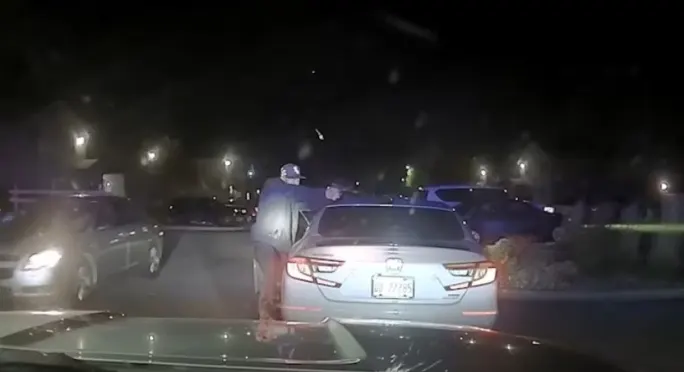
Still image from in-vehicle video shows Cristobal Santana opening fire on Illinois State Police Trooper Dakotah Chapman-Green, police say.
Illinois State Police
The value of having in-vehicle video systems was recently demonstrated in the attack on Illinois State Police Trooper Dakotah "Kody" Chapman-Green.
On Oct. 24, 2023, Trooper Chapman-Green was patrolling the city of Springfield when he made a traffic stop. The video system in his patrol vehicle documented what happened next. The video was released without audio. What the video shows is that after approaching the vehicle on the passenger side, the trooper spoke with the driver. The trooper’s weapon was not drawn and his body language does not indicate concern. Everything seemed routine, then the driver got out of the vehicle, drew a weapon, and opened fire. The trooper was shot in at least one of his legs, and then the assailant reportedly chased after him on foot and pistol-whipped the trooper, causing serious injury to his face.
Body camera footage from the incident has not been released. But it probably does not show as much information as the dashcam footage. The reasons for this are easy to understand. Trooper Chapman-Greene was under attack, returning fire, and trying to put distance between himself and his assailant. All of that means the camera may have been pointed in the wrong direction or blocked by other objects..
The dashcam footage probably helped responding officers track down and arrest the suspect a few hours later. It will also probably be very helpful in the man’s prosecution. Evidence from the dashcam will likely be backed up by video and audio from the trooper’s body camera.
The video of the shooting of Trooper Chapman-Greene demonstrates the value of combining body cameras with in-vehicle cameras during traffic stops. Body cameras may someday have the capabilities to replace dashcams in patrol vehicles. But for now, dash cameras are still best for capturing traffic stop video.
Dashcams capture a wide-angle view of a traffic stop that can show the actions of both the officers and the occupants of the vehicle that has been pulled over. They can protect officers and agencies from false claims and nuisance lawsuits. They can show the public the officer’s behavior and the motorist’s behavior at the stop. And should a shooting or other attack occur that injures or kills the officer, they can be used to identify the suspect and their vehicle. All of these things make them too valuable to be phased out in order to save money.
More Technology
A police agency's guide to data-driven fleet management
Costs are rising and the public expects more transparency into how their tax dollars are spent. This e-book shows how police agencies can use fleet data to take control of fleet expenses while improving officer safety and demonstrating fiscal responsibility to the communities they serve.
Read More →
AI and analytics for law enforcement: Turning data into insights
Law enforcement agencies are managing more video, sensor data and digital evidence than ever before. Discover how AI and analytics can help turn that data into actionable insights that strengthen situational awareness, accelerate investigations and support more informed decisions.
Read More →
Vasco Electronics Adds Automatic Language Detection to Vasco Translator Q1
Vasco Electronics’ software update introduces hands-free language switching and expanded offline translation across 45 language pairs, empowering law enforcement, healthcare, and front-office enterprise teams
Read More →

North Miami Police Department Deploys Mark43
The North Miami Police Department has deployed Mark43 as part of its Five-Year Strategic Plan that represents its collective vision and goals for a more proactive police department, anchored by a core commitment to leveraging modern technology to enhance efficiency and public safety.
Read More →
Cellebrite Genesis for Enterprise Now Generally Available
Made available to the public sector in June, Cellebrite Genesis is serving a growing mix of national, regional, and local agencies worldwide, including some of the largest regional and metropolitan police departments. It is now available for enterprise organizations.
Read More →
2026 Vision FirstNet Users Summit to Host Emerging Leaders Training on Grassroots Advocacy for Public Safety
“Emerging Leaders Training: Understanding the Importance of Grassroots Advocacy for Public Safety," a session during the 2026 Vision FirstNet Users Summit, will offer a roadmap for unified advocacy at the federal level.
Read More →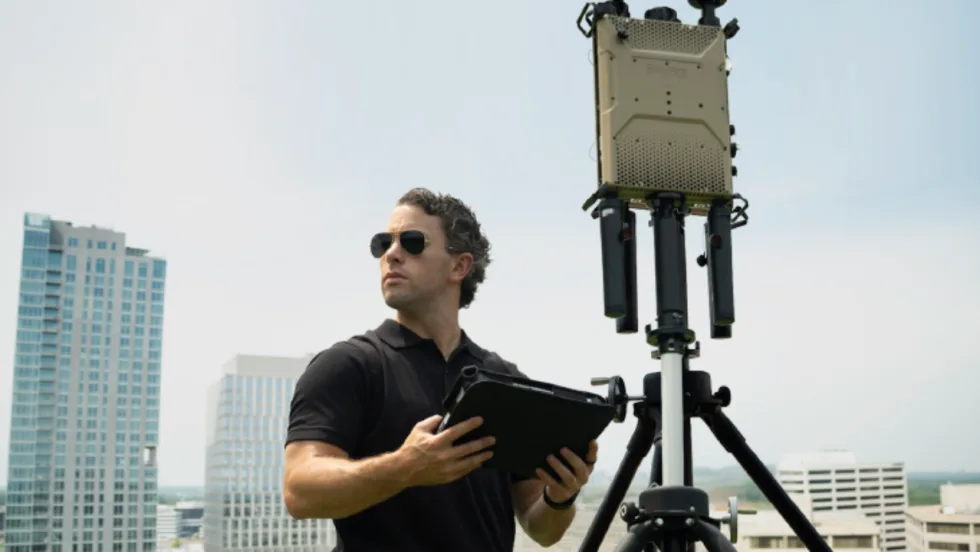
Motorola Solutions Completes Acquisition of D-Fend Solutions
Motorola Solutions has acquired D-Fend Solutions, an industry leader in counter-drone technology. This deal provides public safety and enterprise customers with access to advanced counter-unmanned aerial systems.
Read More →
ZeroEyes, Advantech & Camden Police Partner to Bring AI Gun Detection Technology to Delaware School District
ZeroEyes has partnered with Advantech and the Camden Police Department to deploy ZeroEyes’ AI gun detection and intelligent situational awareness platform at Delaware’s Caesar Rodney School District (CRSD).
Read More →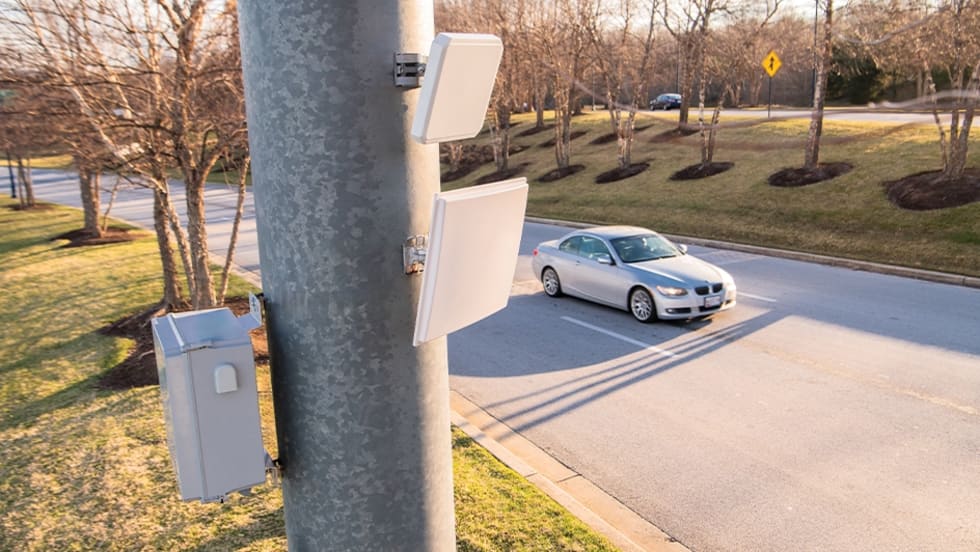
Leonardo U.S. Cyber & Security Solutions Introduces SignalTrace, the Next Evolution in Electronic Signature Detection Technology
SignalTrace reflects years of product refinement and a clearer expression of the technology’s purpose of recognizing and correlating electronic signatures in publicly broadcast wireless signals to reveal patterns, relationships, and trends that might otherwise go undetected.
Read More →
Pimloc Launches Secure File Sharing to Streamline Release of Redacted Video
Pimloc’s Secure File Sharing lets organizations deliver redacted video, audio, and documents through expiring, passcode-protected links, accelerating delivery while reducing security, compliance, and chain-of-custody risks.
Read More →