



15 Things You Should Know About Speed Enforcement Tools
Many officers use radar and lidar speed monitoring devices regularly, but not everyone understands everything about how they work and the best ways to use them.

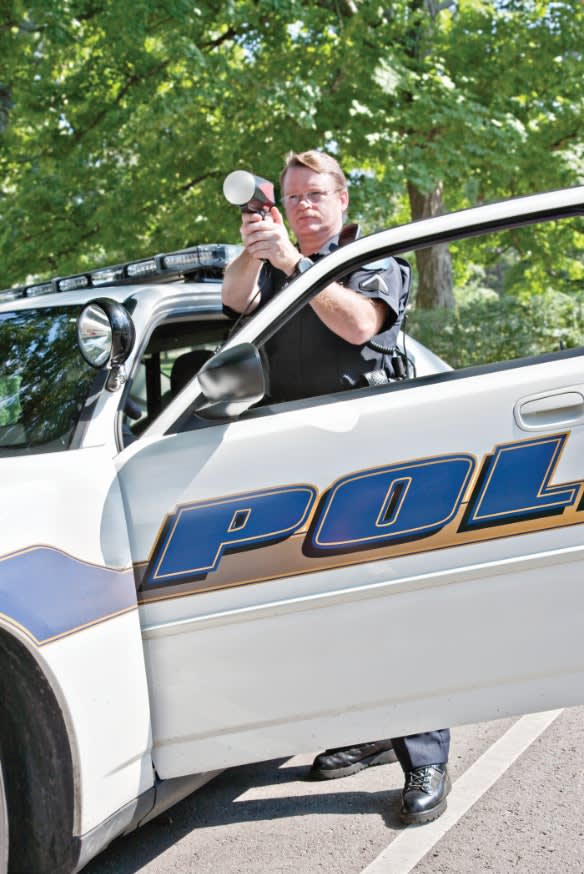
Photo: Getty Images
Devices used to measure vehicle speeds must be used correctly to accurately read how quickly people are driving. This applies to radar and lidar handheld devices, as well as specific guidelines for the installation of radar speed signs along the road. And covert data collection requires different considerations to get the most out of it.
If you're using speed measuring devices but don't fully understand how they work they won't be much good to you or your agency. Here are some tips for how to best use these devices, as well as a crash course in function and terminology that all operators and officers installing signs should know backwards and forwards.
1. Radar v. Lidar
Radar and lidar are similar, but because of the way they work they must be used differently. Comparing handheld devices, lidar (LIght Detection and Ranging) uses lasers to measure speed and is a handheld stationary device only. You must be still to use it. The accuracy is the same as radar: in stationary mode, it is accurate plus or minus 1mph.
The difference is that lidar is considered a target-specific device. On average, a lidar beam at 1,000 feet is 3 feet wide and 3 feet tall. A radar beam at 1,000 feet is over 200 feet wide, so you can't target a specific car with a radar unit.
2. 4 Steps for Tracking History
For a moving mode radar, every operator must follow a four-step process before stopping a vehicle for speeding. These four steps for establishing tracking history are part of standard operator training.
First, you must make a visual observation of a speeding target and estimate the speed.
Second, listen to the audio Doppler return from the actual target. The higher the pitch of the tone the higher the speed; the lower the pitch the lower the speed.
Third, observe the speed on the radar or lidar display for the target and judge if it seems correct. If the speed displayed is 62 mph, does that match your visual perception of the speed? Does the pitch or tone of the Doppler sound like a 62 mph car or higher?
Fourth, the most important step that's forgotten many times, is if you're in the moving mode, either opposite or same direction, you have to check your speedometer against your patrol speed reading on the radar or lidar device. They must agree within reasonable limits, and be consistent day in and day out.
3. Antenna on Vehicle Needs to Follow Line of Travel
A radar or lidar antenna on a patrol vehicle should be straight in the line of travel. If it's tilted to the right or left, that affects how the speed of the patrol car registers, making it appear slower or less than actual. The greater the angle, the lower the patrol speed reading from actual, due to something called "moving cosine." And that will in turn affect the speed that registers for a target vehicle, artificially raising the speed. It could be the difference between an officer deciding to stop a vehicle for speeding or not. And if it's discovered that the antenna is not correctly aligned, it could affect the validity of a traffic ticket.
4. Inside Antenna Position is Important
The position of the antenna within the vehicle itself is also important. Interference from inside the patrol car can cause an incorrect speed reading. For instance, the heater/AC fan in most cars is located on the engine side on the firewall on the passenger side of the vehicle. So you want to position your antenna as far away from that as possible. The ideal position to mount a radar or lidar antenna is near the driver's A pillar slightly up off the dash. That is said to be the "quietest" spot in most vehicles to eliminate fan noise.
Similarly, if you're getting strange speeds with the rear antenna in an SUV, it may be because of the fans providing cooling in the rear of the vehicle. So locate the rear antenna as far away from them as possible.
5. Why You Can't Get the Speed of a Car Whizzing Past You to Register
All same-direction radar have the same limitation on the maximum difference in speed between the patrol speed and the actual target. With a 50mph patrol speed, the difference that the device can pick up is 70% of your patrol speed; that allows for a maximum difference of 35mph for the target.
With the patrol vehicle traveling at 50mph, the radar would add the difference of 35mph, and you could pick up a car going 85mph. But if the car is going 86mph or faster you'll never see a speed reading because it's beyond the boundary.
6. Slow/Slower Function
For radar devices that don't have a directional antenna, for same direction mode the remote control has a function called "slow" or "slower." What that means is the operator has to tell the radar if the target vehicle is traveling faster or slower than the patrol vehicle.
In this situation, if the patrol vehicle is going 50mph, and the car in front of it is going 40mph, the radar recognizes a 10mph difference in speed, but isn't sure if that is 10mph plus or minus the patrol speed. It requires the operator to push the "slower" button to make that distinction, instead of getting an incorrect 60 mph reading.
A directional antenna can read the correct speed automatically. But if the device you're using doesn't have one, extra care needs to be taken to know you're getting the right speed on that target.
7. NHTSA Guidelines for Handheld Radar/Lidar Speed Measurement Operators
Operators must know the guidelines from the model basic operator training course in speed measurement before appearing in court … and review all of this information before every court appearance.
If you're an operator, know and use the correct terminology for speed enforcement principles and the skills you use. For example, you test the radar unit every shift, not calibrate it. Calibration is only performed for maintenance, and that is not something operators do.
Also be able to recall by name the major court cases related to speed enforcement, and be clear on what you need to state to make sure the case doesn't get thrown out. If the driver was caught speeding in your jurisdiction, say so. Skipping this step is a rookie mistake.
Just because you've never been called out on any of your mistakes or been asked any questions about pivotal cases in court before doesn't mean it couldn't happen next time.
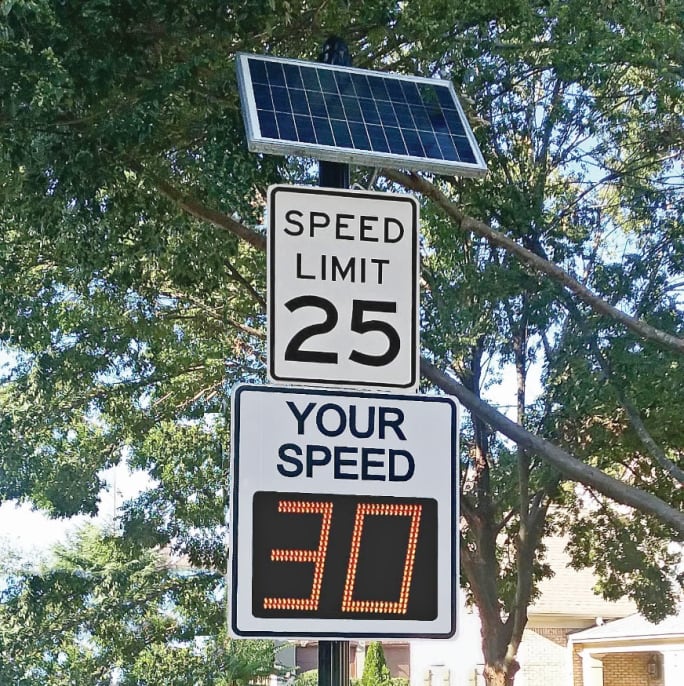
If speed signs aren't positioned properly they won't correctly read the speeds of passing vehicles. Photo: Radarsign
8. Look for Obstructions Before Installing a Radar Speed Sign
Any obstructions might interfere with proper operation of the sign. This includes telephone poles, large tree limbs, and other signage. And in the case of a solar powered radar speed sign, installing it under a tree can cause problems. Summer leaves on the tree could block the sun and impact solar recharging.
9. Don't Install a Radar Speed Sign Within 100 Feet of a Curve
A radar speed signal cannot "curve" with the road, and will not display speeds with enough time for drivers to see the alert and adjust their speed.
10. A Radar Speed Sign Shouldn't be Positioned Too Far from the Road Curb
At more than 6 feet from the road, the sign will take the eyes of the driver an unsafe distance from the roadway, and result in displayed speeds that are lower than the actual speed.
11. Keep Sign Direction Perpendicular to the Road with the Radar Pointing Directly at the Curb
For maximum vehicle detection, the radar should not be pointing at the center of the road. Signs rotated toward the center of the road will not perform as well.
12. Don't Position a Radar Speed Sign Too Low
Installing a speed sign lower than 4 feet off the ground will result in much of the radar speed signal being absorbed by the road, reducing the detection range.
13. Don't Position a Speed Sign on the Same Side of the Street as Parallel Parking of Vehicles
Vehicles lining the street very nearby could affect the radar performance of the speed sign.
14. Don't Install the Radar Sign Too High and Tilt it Down
Positioning a speed sign more than 12 feet above the roadway and then tilting it downward will result in a greatly reduced length of time vehicles will be detected, and will display speeds that are lower than actual speed (the cosign effect).
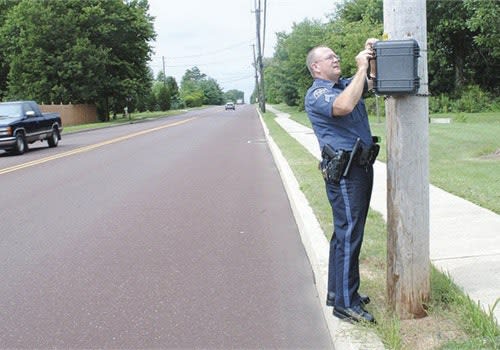
Photo: JamarTech
15. Covert Data Collection is Different
Speed monitoring equipment that may have lights, signs, and trailers that are clearly visible to drivers may influence the drivers' habits. So if you are looking to document the speeds at which people are driving normally instead of slowing them down, devices that collect covert data will work best.
When considering using a device to collect speed data, be clear on your agency's goals for using the information so you collect the right type of data. Will it solve a clear problem? Will it be used to address citizen complaints about speeding, to determine how many officers are needed in a certain area amid budget concerns, or something else?
Editor's Note: A special thank you to Jamar Technologies, Radarsign, and Stalker Radar for lending their expertise.
More Patrol

Adept Armor Introduces Two New Rifle Plates
Adept Armor has launched two new Level IV ballistic plates, the Emperor and the Archon Mark 2, which brings Adept Armor’s new Quatroid ceramic to the high-threat, performance-value center of the range at 5.2 pounds.
Read More →
POLICE Product Test: Benchmade Bailout
The Benchmade Bailout is a slim, lightweight carry knife with a deep-ride pocket clip and comes in a variety of blade steels and scales. Here is a detailed review of the Taiga Green Bailout, released earlier this year.
Read More →
NLEOMF Announces July 2026 Officer of the Month
NLEOMF honored a Michigan deputy sheriff as the July 2026 Officer of the Month for rescuing a trapped driver from a burning vehicle following a Fourth of July crash.
Read More →
Streamlight to Showcase Newest Lighting Products at National Safety Council’s Safety Congress & Expo 2026
Streamlight will showcase its latest lights, including the Portable Scene Light III and the LiteBox 1Million, at the 2026 National Safety Council (NSC) Safety Congress & Expo.
Read More →
The 2027 World Police & Fire Games Set for Perth, Australia
The 2027 World Police & Fire Games (WPFG) will take place in Perth, Western Australia, from Friday, March 12 through Sunday, March 21, 2027.
Read More →
5.11 Partners with National Fallen Firefighters Foundation to Support #ForThe343
5.11 has joined the nationwide movement honoring the 343 New York City Fire Department firefighters lost on Sept. 11, 2001.
Read More →
Team Wendy Announces Title Sponsorship of the Jorge Pastore Foundation
Team Wendy’s 3-year partnership with the Jorge Pastore Foundation expands access to programs that strengthen those who serve.
Read More →
National Law Enforcement Memorial and Museum Hosting 9/11 25th-Year Commemoration Ceremony
The National Law Enforcement Memorial and Museum is hosting a 9/11 25th Year Commemoration Ceremony on Sept. 11 at 4 p.m.
Read More →
National Law Enforcement Officers Memorial Fund Announces June 2026 Officers of the Month
The National Law Enforcement Officers Memorial Fund (NLEOMF) named 15 officers of the Chico Police Department (California) as the Officers of the Month for June 2026 for their roles in responding to an active-shooter incident at a public library.
Read More →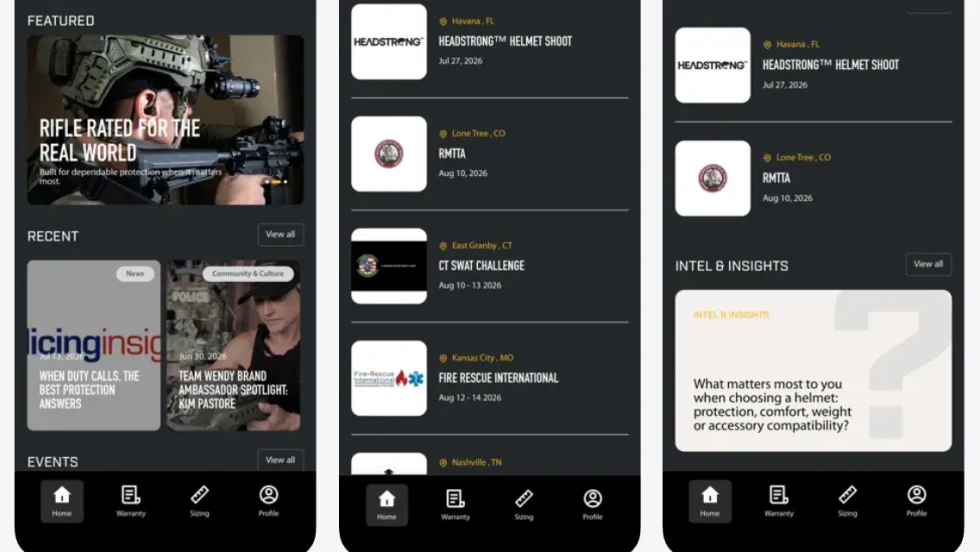
Team Wendy App Creates New Digital Hub for Helmet Owners
The Team Wendy Community App provides one location for warranty registration, size-fit tools, product updates, and community connection. For helmet owners, the new app creates a simpler path to the information and tools that matter most.
Read More →