



Your Next Patrol Computer Could be a Phone
Samsung phones running in docks with connected external displays and keyboards are being tested as replacements for in-vehicles laptops.

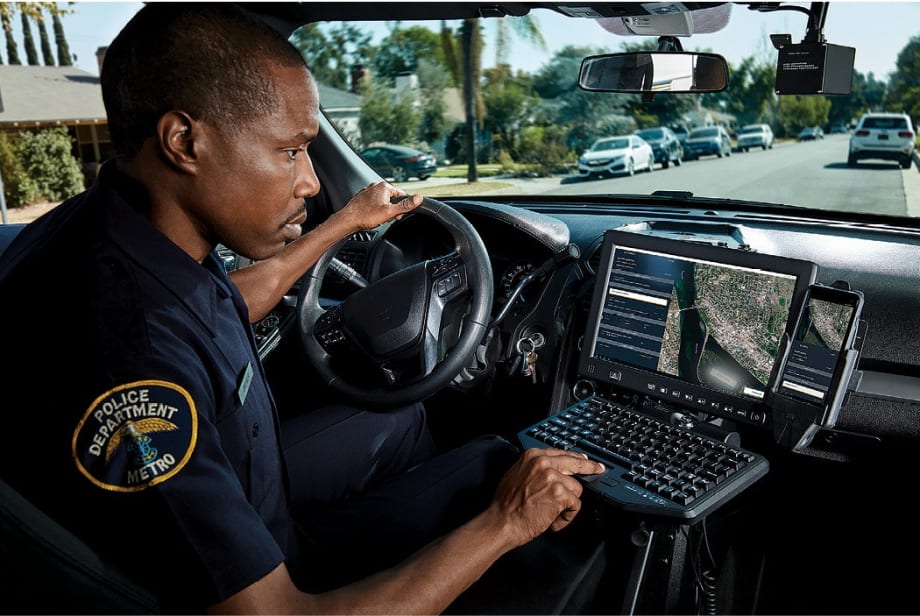
Samsung DeX allows agencies to connect phones to external keyboards and displays to create a mobile computer solution. (Photo: Samsung)
Many law enforcement officers are now carrying personally owned or department-issued smartphones—handheld computers—that have as much processing power and software versatility as the desktop and laptop machines they use on the job. The reasons phones are now rivaling police computers in power are simple: Cash-strapped agencies sometimes wait more than five years—an eternity in the high-tech market—to buy new laptops and even longer for new desktops. Also, innovation in mobile devices has accelerated much faster than innovation for conventional computers.
Exploiting the growing capabilities of the smartphone is the idea behind Samsung DeX. Short for “desktop experience,” DeX is software that turns a Samsung smartphone into a notebook or desktop computer. All of the processing power and connectivity comes from the smartphone. The rest of the system is a dock, a keyboard, and an external display.
DeX was created for industrial and business applications, but it is also finding favor with law enforcement and other public safety agencies as a replacement for in-vehicle computer systems.
Can a smartphone docked with a keyboard and an external display really replace laptop computers in police vehicles? The verdict is still out. But two of the nation’s largest law enforcement agencies, the Los Angeles Police Department and the Chicago Police Department, are currently weighing the evidence. “The smartphone is becoming more and more capable of being a standalone computer,” says Deputy Chief Sabih Khan of the Chicago PD’s Strategic Initiatives Division.
Khan says the Chicago PD is testing Samsung DeX because it offers all of the features the agency needs for its smartphone as computer program. “It offers true mobility, where officers aren’t tied to the vehicle,” Khan says. He explains that Chicago has officers who currently can’t access important information because they do not have laptops. “We have officers on foot, bikes, horses, and ATVs,”
he says.
Other reasons why Chicago chose DeX for its pilot program include the system’s capabilities for mass notification to officers and it’s built-in biometric security, which complies with CJIS. Another security benefit for using DeX is that the phone can be remotely erased if lost or stolen, preventing sensitive data from being compromised.
Khan and Lt. Dan Gomez, retired from the LAPD, recently presented a webinar on their agencies’ DeX pilot programs for Samsung. LAPD is reportedly using DeX in numerous vehicles on its way to rolling out the “Connected Officer Program” to 7,000 officers.
Chicago is currently at the beginning stages of its pilot. The program is currently limited to just three vehicles and some in-station docking systems. The testing includes evaluation of the hardware for mounting the systems into vehicles and the available displays and keyboards. Khan says the CPD’s DeX set ups are using different hardware. One of the primary issues that the Chicago PD is working on is how to best set up the system in its patrol vehicles. “[We need to determine] where do we place the phone, how to best fit the hub, open SIM/closed SIM, and cable lengths,” he says.
Software is another area of concern in the Chicago pilot. “[We need to know if] our current applications work and do they work well within the DeX environment,” Khan says. “We need to identify if it’s an issue on the DeX side or the vendor’s mobile application.”
The goal is to expand the program to all 1,200 patrol vehicles, Khan told the webinar audience. “We have to get into the game now to get there.”
The reasons for getting into the game are many, according to Khan. He believes the department will see significant cost savings on both computer hardware and IT services.
But the real benefits are the capabilities the system will give officers. The Samsung Galaxy phones the Chicago PD is planning to issue will carry more than 30 applications for helping officers in the field. Officers using DeX will be able to file reports on their phones, capture evidence on their phones, and even view live video from one or more of the city’s more than 40,000 digital surveillance cameras.
Another benefit to DeX is that the footprint of the computer system in the vehicle is much smaller that that of a conventional laptop. Both LAPD and Chicago PD run two-officer patrol units, and passenger compartment real estate is at a premium.
Gomez, who oversaw the rollout of the LAPD program, says DeX docking units inside of LAPD stations have reduced the time officers have to wait for computers so they can write up their reports. Gomez is now chief operating officer of TacLogix, a consulting company that helps agencies set up their own connected officer programs. He is working with the Chicago PD on its DeX program.
Khan says Chicago officers have been extremely enthusiastic about the possibility of using smartphones rather than laptops. “This is the only pilot where officers are asking to get involved,” Khan told Samsung. “With the younger officers, the phone has been everything to them, and they want to see this happen.”
Khan says officer feedback has been positive, but there are issues that need to be fine-tuned before the program expands. “Small but important things need to be worked out,” he says. He gives examples of CAD controls being too small and issues with minimizing and maximizing windows.” But overall he is bullish on the future of Samsung DeX at the Chicago PD and the future of smartphones as standalone computers in law enforcement operations. “This will be the future of policing,” he told the webinar audience.
More Technology

A police agency's guide to data-driven fleet management
Costs are rising and the public expects more transparency into how their tax dollars are spent. This e-book shows how police agencies can use fleet data to take control of fleet expenses while improving officer safety and demonstrating fiscal responsibility to the communities they serve.
Read More →
AI and analytics for law enforcement: Turning data into insights
Law enforcement agencies are managing more video, sensor data and digital evidence than ever before. Discover how AI and analytics can help turn that data into actionable insights that strengthen situational awareness, accelerate investigations and support more informed decisions.
Read More →
Vasco Electronics Adds Automatic Language Detection to Vasco Translator Q1
Vasco Electronics’ software update introduces hands-free language switching and expanded offline translation across 45 language pairs, empowering law enforcement, healthcare, and front-office enterprise teams
Read More →

North Miami Police Department Deploys Mark43
The North Miami Police Department has deployed Mark43 as part of its Five-Year Strategic Plan that represents its collective vision and goals for a more proactive police department, anchored by a core commitment to leveraging modern technology to enhance efficiency and public safety.
Read More →
Cellebrite Genesis for Enterprise Now Generally Available
Made available to the public sector in June, Cellebrite Genesis is serving a growing mix of national, regional, and local agencies worldwide, including some of the largest regional and metropolitan police departments. It is now available for enterprise organizations.
Read More →
2026 Vision FirstNet Users Summit to Host Emerging Leaders Training on Grassroots Advocacy for Public Safety
“Emerging Leaders Training: Understanding the Importance of Grassroots Advocacy for Public Safety," a session during the 2026 Vision FirstNet Users Summit, will offer a roadmap for unified advocacy at the federal level.
Read More →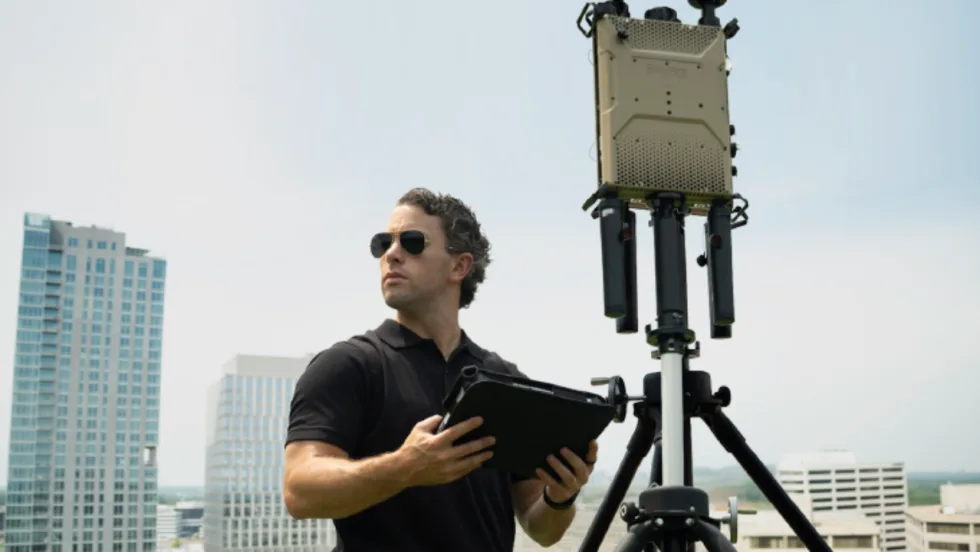
Motorola Solutions Completes Acquisition of D-Fend Solutions
Motorola Solutions has acquired D-Fend Solutions, an industry leader in counter-drone technology. This deal provides public safety and enterprise customers with access to advanced counter-unmanned aerial systems.
Read More →
ZeroEyes, Advantech & Camden Police Partner to Bring AI Gun Detection Technology to Delaware School District
ZeroEyes has partnered with Advantech and the Camden Police Department to deploy ZeroEyes’ AI gun detection and intelligent situational awareness platform at Delaware’s Caesar Rodney School District (CRSD).
Read More →
Leonardo U.S. Cyber & Security Solutions Introduces SignalTrace, the Next Evolution in Electronic Signature Detection Technology
SignalTrace reflects years of product refinement and a clearer expression of the technology’s purpose of recognizing and correlating electronic signatures in publicly broadcast wireless signals to reveal patterns, relationships, and trends that might otherwise go undetected.
Read More →
Pimloc Launches Secure File Sharing to Streamline Release of Redacted Video
Pimloc’s Secure File Sharing lets organizations deliver redacted video, audio, and documents through expiring, passcode-protected links, accelerating delivery while reducing security, compliance, and chain-of-custody risks.
Read More →