



Editorial: The Militarization Myth
In August the American Civil Liberties Union (ACLU) issued a white paper titled “Eye-in-the-Sky Policing Needs Strict Limits” focusing on drone as first responder programs, which are becoming popular, especially with smaller municipal and county law enforcement agencies.
As covered in POLICE’s April/May cover story “Drones on Patrol,” a drone as first responder (DFR) program involves operating drones beyond visual line of sight to gather information about what is happening on the ground at the site of a call for service. The drones are sent to the scene in advance of responding officers to gather information that can lead to more positive outcomes.
Despite these benefits, the ACLU wants to restrict the use of DFR programs.
The ACLU concedes that law enforcement use of drones during emergencies is constitutional. But the problem lies in definition of emergency. What the ACLU considers proper use of drones by police is implied in its criticism of the nation’s first DFR program in Chula Vista, CA.
The report says the Chula Vista Police Department has launched more than 14,000 DFR flights since the beginning of its program. Some of those flights were for things that the ACLU considers emergencies such as fires, vehicle accidents, and “gun violence” (crimes committed with firearms). Others were for things the ACLU considers less serious, and that merits a deeper dive.
Some very serious calls for service—family and domestic disputes, wellness checks, and mental health incidents—should not be considered emergent enough for a drone overflight in advance of your arrival, according to the ACLU. These are all very dangerous types of calls. It is not unusual for officers arriving at domestics to come under attack—and sometimes under fire—from the partner or family member that caused the problem. A welfare check could be the pretext for an ambush. A mental health call can rapidly escalate into a suicide-by-cop incident. There’s not a cop in America who wouldn’t love to have more information on these situations before rolling up on them. And to deny you that information on the grounds of the possibility of abuse of the technology is wrong.
The report also cites nuisance calls as a reason Chula Vista PD has sent in the drones. And it implies that the agency shouldn’t be allowed to do so. There are many reasons why this is wrongheaded thinking. But the primary one is that even if it is a nuisance call, once you receive information from the dispatcher, you have to go. Cops aren’t allowed to just ignore calls because they think they might be bogus. Having drone overflight before the officers arrive on scene can help clear those nuisance calls faster and help you get back to real emergencies.
To be fair, the ACLU report is not coming out against using drones to improve public safety or even officer safety. It’s biggest concerns are privacy of individuals who might be surveilled without a warrant.
And here is where the organization’s argument pretty much falls apart. The small rotor driven drones operated by most law enforcement agencies have an average flight time of 30 minutes. Unless you have a bunch of drones or a bunch of batteries or both, you are not going to be able to conduct any lengthy surveillance of a location, group, or individual with a police drone. They are best used for taking a quick peek at something or someone.
The disconnect lies in the fact that much of the public doesn’t realize the limitations of these aircraft, especially the anti-law enforcement public that believes John Law can bust them for cocaine possession after looking in their bedroom window with a DJI Mavic. Another issue is that much of the public conflates police drones with military drones and thinks they can loiter over their house for hours on end like a U.S. Air Force Reaper drone.
To its discredit, the ACLU report does not explain this difference or talk at all about flight times. It even invokes the concern that police would hover drones over high crime areas. (Not for more than 25 minutes, they wouldn’t.) You can draw one of two conclusions from this, either the ACLU is ignorant of the battery performance of typical quadcopter drones or they strategically left out this information to fire up the activists against DFR programs. Hint: The rest of the report is very well researched.
The ACLU is calling on a moratorium for new DFR programs until there is more information on the existing ones. Here’s all the information they need. Chula Vista PD and other users of DFR have been remarkably transparent about their programs. Current battery technology prevents small police drones from being used for the kinds of privacy violations that the ACLU is worrying about in its report—and that technology is unlikely to radically improve for a decade or more. And most importantly, DFR has likely saved police and civilian lives.
DFR programs are a resounding success. And more agencies should launch these programs once they have constitutionally compliant policies in place, community support, and funding.
More Technology
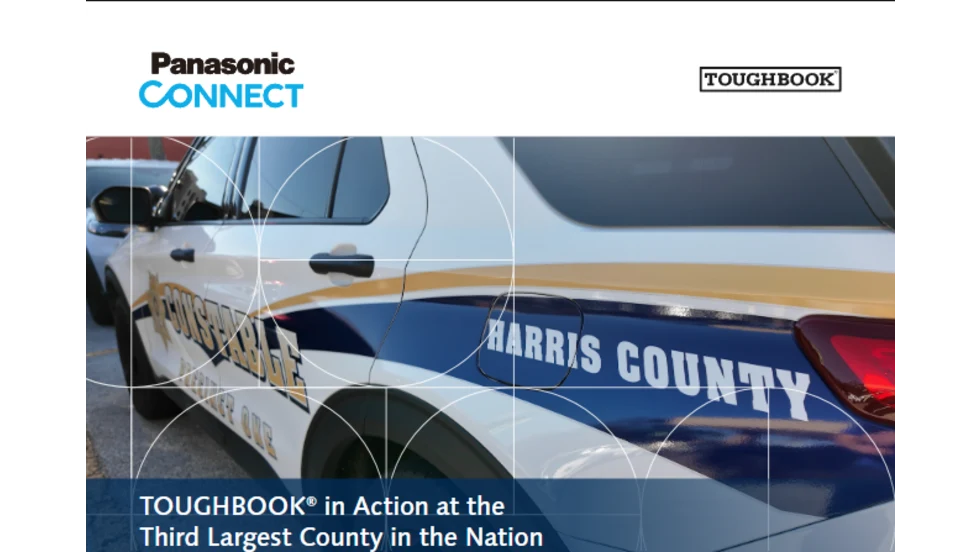
TOUGHBOOK in Action at the Third Largest County in the Nation – Harris County, TX
Learn how Harris County, one of the nation’s largest counties, modernized its law enforcement fleet with TOUGHBOOK® rugged laptops—strengthening security, productivity, and operational readiness across every unit.
Read More →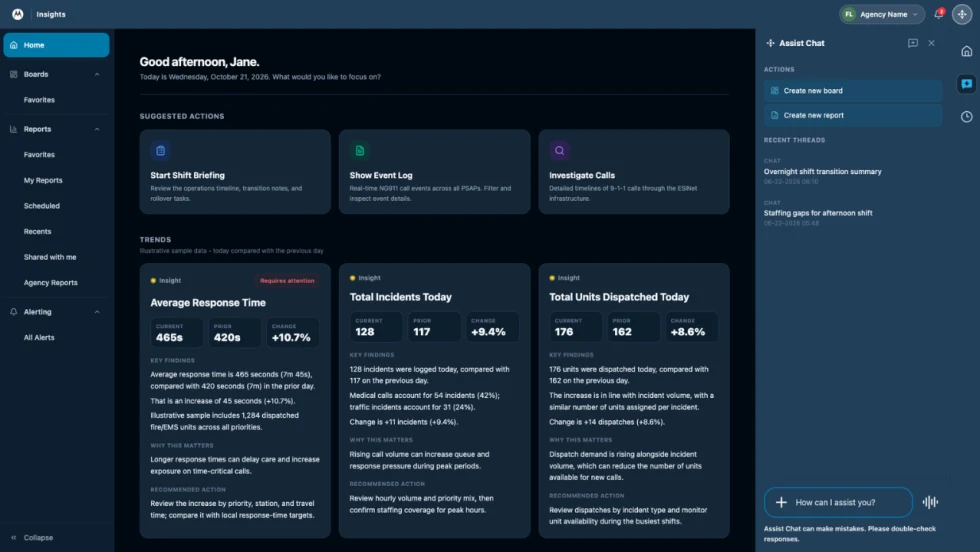
How Motorola Solutions’ New “Insights” Platform Helps Public Safety Agencies Identify Trends to Improve Their Operations
Motorola Solutions has introduced Insights, which leverages Assist, its mission-critical artificial intelligence (AI), to address these challenges and shape what’s next for public safety analytics and reporting technology.
Read More →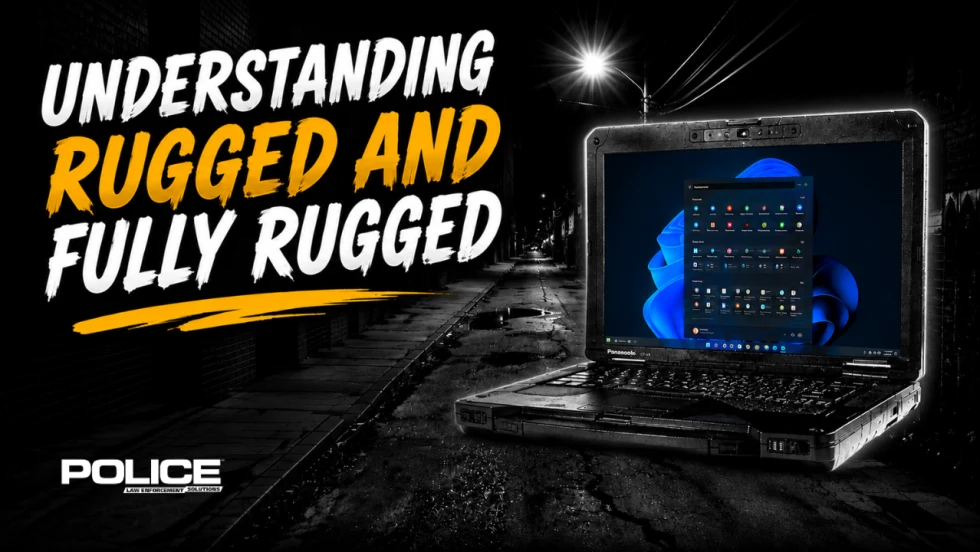
What Qualifies a Laptop as Rugged or Fully Rugged?
Police officers face a wide range of working conditions that can damage or even destroy a regular consumer laptop. Learn what qualifies a computer as rugged or fully rugged and why those devices are vital for law enforcement.
Read More →
Panasonic Connect Launches the Toughbook 34 and Toughbook G3, Fully Rugged 2-in-1 Mobile Computers
Panasonic Connect has launched the Toughbook 34 and Toughbook G3 to facilitate in-vehicle dispatch, records management, and mobile command operations from any location.
Read More →
A police agency's guide to data-driven fleet management
Costs are rising and the public expects more transparency into how their tax dollars are spent. This e-book shows how police agencies can use fleet data to take control of fleet expenses while improving officer safety and demonstrating fiscal responsibility to the communities they serve.
Read More →
AI and analytics for law enforcement: Turning data into insights
Law enforcement agencies are managing more video, sensor data and digital evidence than ever before. Discover how AI and analytics can help turn that data into actionable insights that strengthen situational awareness, accelerate investigations and support more informed decisions.
Read More →
Vasco Electronics Adds Automatic Language Detection to Vasco Translator Q1
Vasco Electronics’ software update introduces hands-free language switching and expanded offline translation across 45 language pairs, empowering law enforcement, healthcare, and front-office enterprise teams
Read More →
North Miami Police Department Deploys Mark43
The North Miami Police Department has deployed Mark43 as part of its Five-Year Strategic Plan that represents its collective vision and goals for a more proactive police department, anchored by a core commitment to leveraging modern technology to enhance efficiency and public safety.
Read More →
Cellebrite Genesis for Enterprise Now Generally Available
Made available to the public sector in June, Cellebrite Genesis is serving a growing mix of national, regional, and local agencies worldwide, including some of the largest regional and metropolitan police departments. It is now available for enterprise organizations.
Read More →
2026 Vision FirstNet Users Summit to Host Emerging Leaders Training on Grassroots Advocacy for Public Safety
“Emerging Leaders Training: Understanding the Importance of Grassroots Advocacy for Public Safety," a session during the 2026 Vision FirstNet Users Summit, will offer a roadmap for unified advocacy at the federal level.
Read More →