



Thales's Liberty Multiband Radio Provides Trunking Interoperability
Thales Communications, Inc., announced today that its Liberty multiband land mobile radio (LMR) successfully completed trunking interoperability testing, meeting the requirements of the U.S. Department of Homeland Security (DHS) Project 25 (P25) Compliance Assessment Program (CAP).

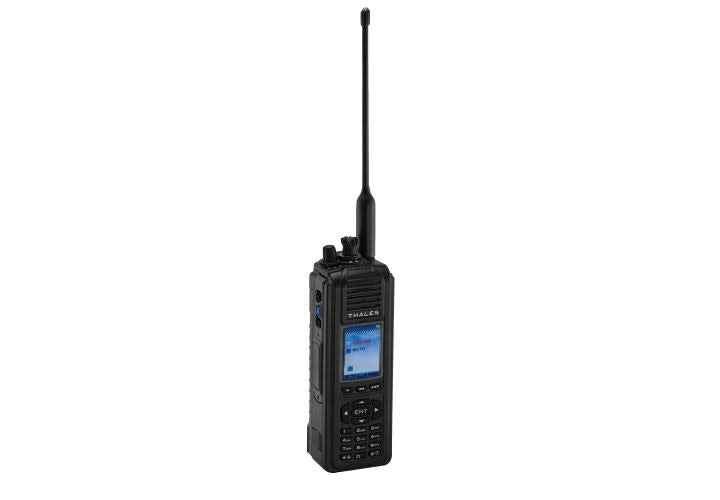
Thales Liberty Radio
Thales Communications, Inc., announced today that its Liberty multiband land mobile radio (LMR) successfully completed trunking interoperability testing, meeting the requirements of the U.S. Department of Homeland Security (DHS) Project 25 (P25) Compliance Assessment Program (CAP).
The Liberty radio was certified by the Tait Radio Communications/EADS Secure Networks laboratory, one of only four land mobile radio manufacturers named by the U.S. federal government as having a recognized P25 CAP laboratory.
The purpose of the program is to provide emergency response agencies with evidence that the communications equipment they are purchasing meets P25 standards for performance, conformance, and interoperability and offers demonstrated evidence of a product's compliance with specific requirements.
Police officers, fire personnel, emergency medical services, and other first responders need to exchange communications seamlessly across disciplines and jurisdictions to successfully respond to day-to-day incidents and large-scale emergencies. Unfortunately, until now, interoperability issues have existed, potentially compromising the success of emergency response operations. Emergency responders have had to carry multiple radios, depending on the agencies with which they need to communicate.
Thales's Liberty radio, approved earlier this year by the U.S. Federal Communications Commission, is the first multiband, software-defined LMR designed specifically for government agencies and first responders to meet these challenges. The Liberty LMR operates in all modes, with full encryption, and enables multi-agency communications in all the public safety frequency bands (136-174 MHz, 380-520 MHz, 700 MHz, and 800 MHz). The Liberty radio works on current analog systems as well as P25 trunking systems, regardless of frequency range.
Trunking is used by many government entities to provide two-way communication for emergency responders who all share spectrum allocated to a city, county, or other entity. Trunking conserves limited radio frequencies and provides other advanced features to users. Successful completion of the CAP trunking interoperability test assures users of reliable compatibility when operating in the P25 trunking mode.
"The Liberty radio's successful completion of the CAP trunking interoperability testing is in support of the FY 2007 SAFECOM Recommended Federal Grant Guidance," said Steve Nichols, Director of Business Development for Homeland Security and Public Safety for Thales Communications, Inc. "Liberty is proving itself to be an innovative, reliable, and cost-effective solution for first responders."
Developed and manufactured at the company's Maryland headquarters facilities, the Liberty radio is currently undergoing pilot testing under the DHS, Science and Technology Directorate, Multi-Band Radio Program.
For more information on the Liberty multiband LMR, visit www.thalesliberty.com. The Liberty multiband LMR is available under BPA GS-TFMG-BPA-09-0012.
More Technology

A police agency's guide to data-driven fleet management
Costs are rising and the public expects more transparency into how their tax dollars are spent. This e-book shows how police agencies can use fleet data to take control of fleet expenses while improving officer safety and demonstrating fiscal responsibility to the communities they serve.
Read More →
AI and analytics for law enforcement: Turning data into insights
Law enforcement agencies are managing more video, sensor data and digital evidence than ever before. Discover how AI and analytics can help turn that data into actionable insights that strengthen situational awareness, accelerate investigations and support more informed decisions.
Read More →
Vasco Electronics Adds Automatic Language Detection to Vasco Translator Q1
Vasco Electronics’ software update introduces hands-free language switching and expanded offline translation across 45 language pairs, empowering law enforcement, healthcare, and front-office enterprise teams
Read More →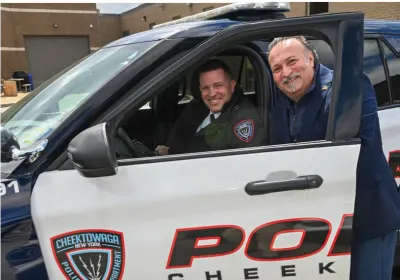
North Miami Police Department Deploys Mark43
The North Miami Police Department has deployed Mark43 as part of its Five-Year Strategic Plan that represents its collective vision and goals for a more proactive police department, anchored by a core commitment to leveraging modern technology to enhance efficiency and public safety.
Read More →
Cellebrite Genesis for Enterprise Now Generally Available
Made available to the public sector in June, Cellebrite Genesis is serving a growing mix of national, regional, and local agencies worldwide, including some of the largest regional and metropolitan police departments. It is now available for enterprise organizations.
Read More →
2026 Vision FirstNet Users Summit to Host Emerging Leaders Training on Grassroots Advocacy for Public Safety
“Emerging Leaders Training: Understanding the Importance of Grassroots Advocacy for Public Safety," a session during the 2026 Vision FirstNet Users Summit, will offer a roadmap for unified advocacy at the federal level.
Read More →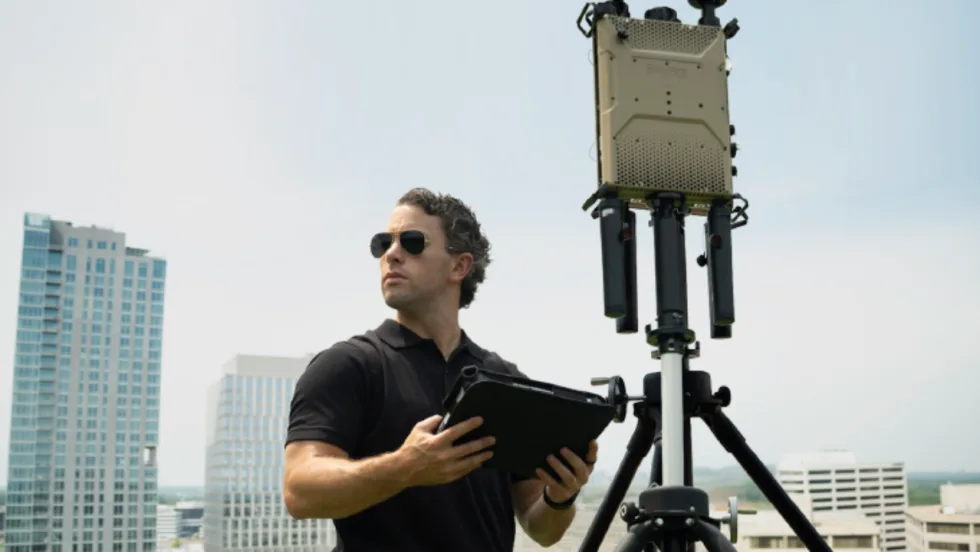
Motorola Solutions Completes Acquisition of D-Fend Solutions
Motorola Solutions has acquired D-Fend Solutions, an industry leader in counter-drone technology. This deal provides public safety and enterprise customers with access to advanced counter-unmanned aerial systems.
Read More →
ZeroEyes, Advantech & Camden Police Partner to Bring AI Gun Detection Technology to Delaware School District
ZeroEyes has partnered with Advantech and the Camden Police Department to deploy ZeroEyes’ AI gun detection and intelligent situational awareness platform at Delaware’s Caesar Rodney School District (CRSD).
Read More →
Leonardo U.S. Cyber & Security Solutions Introduces SignalTrace, the Next Evolution in Electronic Signature Detection Technology
SignalTrace reflects years of product refinement and a clearer expression of the technology’s purpose of recognizing and correlating electronic signatures in publicly broadcast wireless signals to reveal patterns, relationships, and trends that might otherwise go undetected.
Read More →
Pimloc Launches Secure File Sharing to Streamline Release of Redacted Video
Pimloc’s Secure File Sharing lets organizations deliver redacted video, audio, and documents through expiring, passcode-protected links, accelerating delivery while reducing security, compliance, and chain-of-custody risks.
Read More →