



Motorola Outlines Next-Gen Communications Strategy for Public Safety
Motorola's next generation of public safety solutions will maximize operational effectiveness by converging voice, image, data, and video communications from a multimedia, integrated command center and extend the reach of current mission-critical communications networks.

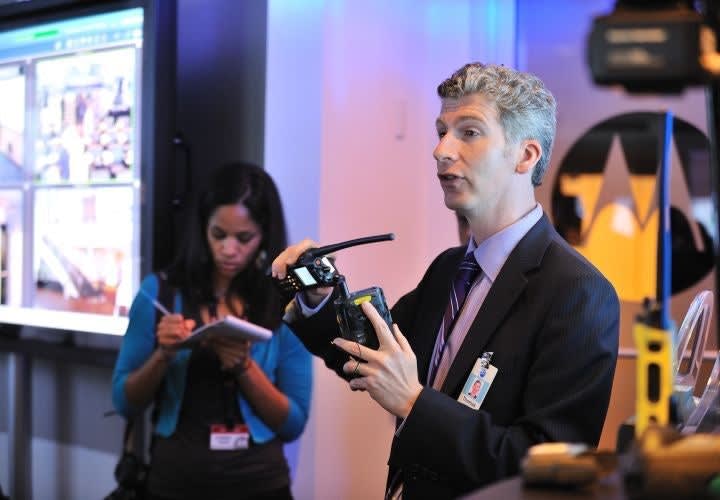
Thomas Quirke, vice president of Motorola Product and Solutions Marketing, demonstrates the APX 7000 multi-band portable radio. Photo courtesy of Motorola Inc.
Motorola Inc.'s Enterprise Mobility Solutions business unit has unveiled a comprehensive plan for delivering advanced communications to the nation's public safety agencies, the company announced.
The strategy, which Motorola is calling the "Next Generation of Public Safety," establishes "the building blocks extending from the mission-critical core for first responders to realize true mobile broadband connection speeds and access to rich-media applications delivered on advanced collaborative data devices," according to the company.
The plan was unveiled Monday during a press briefing at the Motorola Innovation Center in Schaumburg, Ill.
(Listen to our podcast with Motorola's broadband public safety director.)
Motorola's next generation of public safety solutions will maximize operational effectiveness by converging voice, image, data, and video communications from a multimedia, integrated command center and extend the reach of current mission-critical communications networks.
This will connect critical resources across agencies and jurisdictions, and between mission-critical two-way and broadband networks. With stronger networks and greater capabilities, public safety agencies can supplement voice with rich data and video content to empower first responders with the best information when and where it matters most to best serve and protect their communities.
"Motorola presents a powerful combination of new technologies resulting from our 75 years of experience supporting the public-safety community," said Greg Brown, Motorola's co-CEO and Enterprise Mobility Solutions and Networks CEO. "By working in close collaboration with public safety agencies, command-center operators and first responders, we've developed solutions that will leverage their existing infrastructure investments in mission-critical communications to transform their operations and move them to a broadband, multimedia future."
In developing its next-generation public-safety plan, Motorola has defined six key areas of innovation. They are designed to outline how public safety agencies can leverage their investments to dramatically enhance situational awareness with real-time, rich-media collaboration, improve productivity for day-to-day operations and heighten disaster preparedness.
1. Mobile broadband enables high speed wireless connections vital for multimedia applications and services. Motorola's solutions meet critical public safety requirements for tailored and hardened capabilities that deliver the control, priority, security, and performance demanded by first responders.
2. Interoperability solutions connect critical resources across agencies and jurisdictions, link private and public non-mission critical networks and bridge two-way radio systems with emerging mobile broadband networks.
3. Integrated command enables common, intuitive user experiences and meaningful interactions across command-center applications, marrying radio consoles with computer-aided dispatch systems that converge voice, data, records and video.
4. Video security offers intelligent solutions that analyze and correlate video with voice and data and share information optimally between the command center and the field to provide a new level of situational awareness without information overload.
5. Advanced devices pairs two-way radios with multimedia data devices designed and tested to be simple and intuitive and validated by human-factor research on how individuals react in stressful situations.
6. Workforce mobility brings enterprise efficiencies to public safety responders with streamlined applications and processes to support day-to-day operations as well as incident and disaster management.
"We know the challenges are becoming increasingly complex and our customers must do more with less, which is why they need to find greater value in their technology investments," said Brown. "Our long history and commitment to delivering innovative public-safety solutions trusted by first responders gives us a unique perspective for leading the way to a new generation of public safety solutions."
More Technology
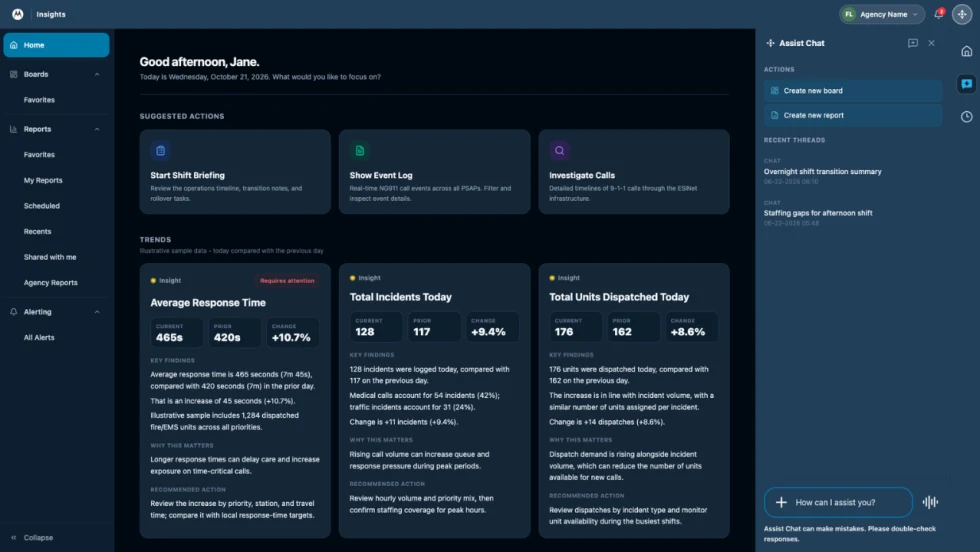
How Motorola Solutions’ New “Insights” Platform Helps Public Safety Agencies Identify Trends to Improve Their Operations
Motorola Solutions has introduced Insights, which leverages Assist, its mission-critical artificial intelligence (AI), to address these challenges and shape what’s next for public safety analytics and reporting technology.
Read More →
What Qualifies a Laptop as Rugged or Fully Rugged?
Police officers face a wide range of working conditions that can damage or even destroy a regular consumer laptop. Learn what qualifies a computer as rugged or fully rugged and why those devices are vital for law enforcement.
Read More →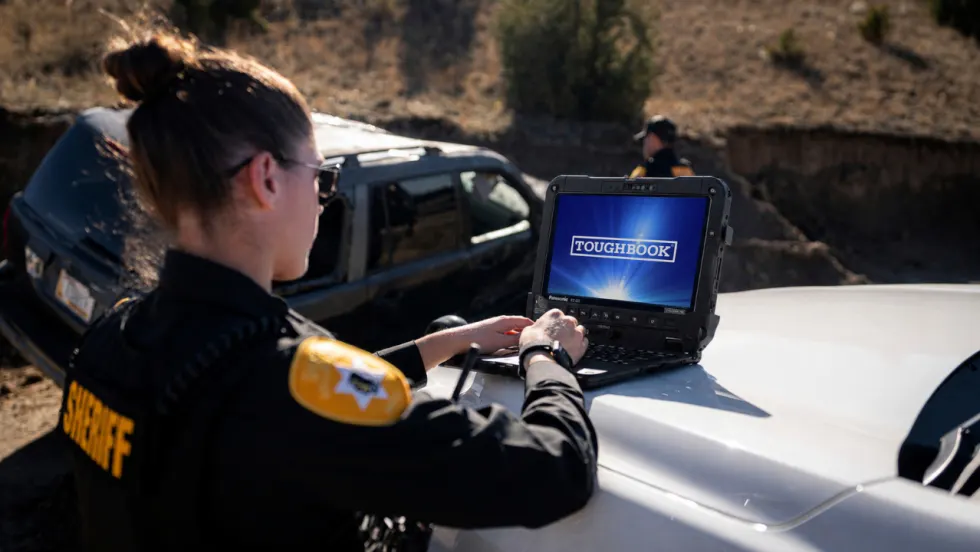
Panasonic Connect Launches the Toughbook 34 and Toughbook G3, Fully Rugged 2-in-1 Mobile Computers
Panasonic Connect has launched the Toughbook 34 and Toughbook G3 to facilitate in-vehicle dispatch, records management, and mobile command operations from any location.
Read More →
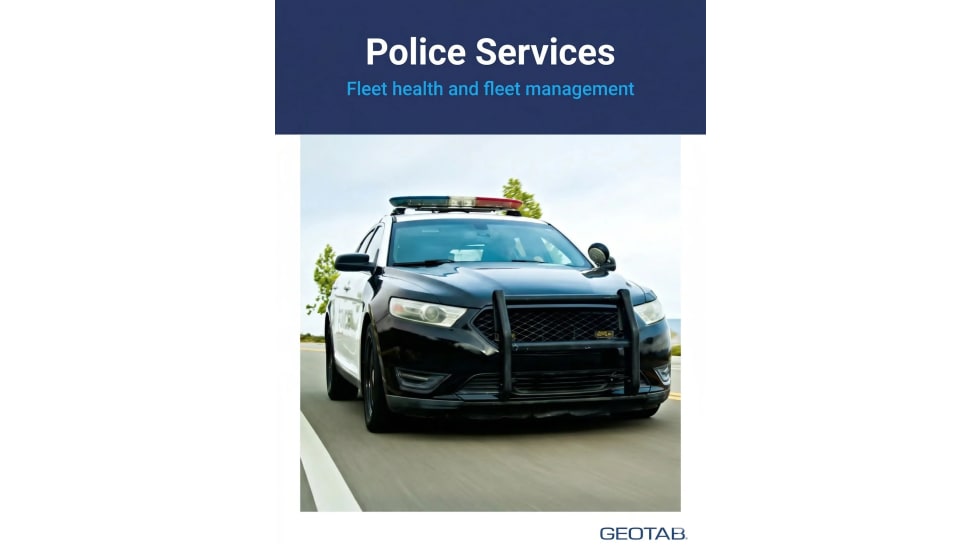
A police agency's guide to data-driven fleet management
Costs are rising and the public expects more transparency into how their tax dollars are spent. This e-book shows how police agencies can use fleet data to take control of fleet expenses while improving officer safety and demonstrating fiscal responsibility to the communities they serve.
Read More →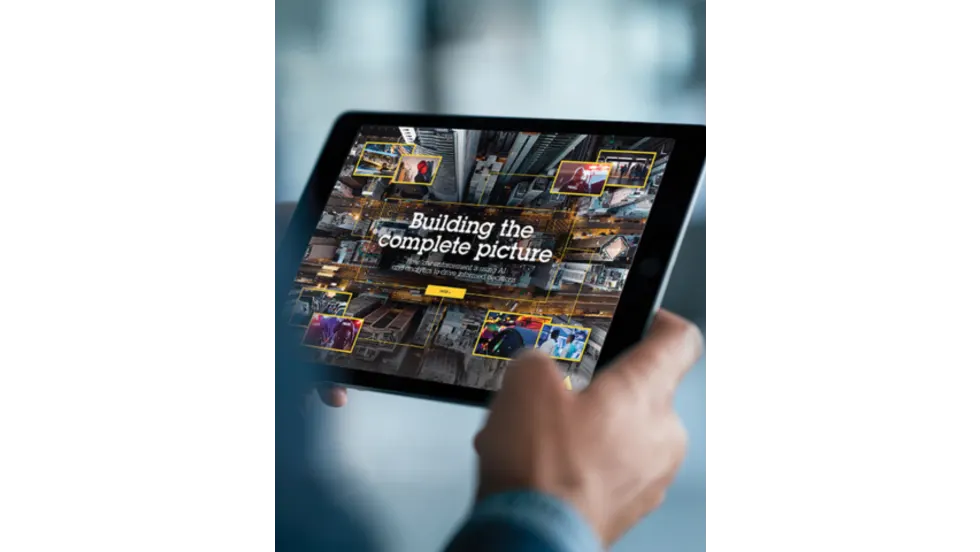
AI and analytics for law enforcement: Turning data into insights
Law enforcement agencies are managing more video, sensor data and digital evidence than ever before. Discover how AI and analytics can help turn that data into actionable insights that strengthen situational awareness, accelerate investigations and support more informed decisions.
Read More →
Vasco Electronics Adds Automatic Language Detection to Vasco Translator Q1
Vasco Electronics’ software update introduces hands-free language switching and expanded offline translation across 45 language pairs, empowering law enforcement, healthcare, and front-office enterprise teams
Read More →
North Miami Police Department Deploys Mark43
The North Miami Police Department has deployed Mark43 as part of its Five-Year Strategic Plan that represents its collective vision and goals for a more proactive police department, anchored by a core commitment to leveraging modern technology to enhance efficiency and public safety.
Read More →
Cellebrite Genesis for Enterprise Now Generally Available
Made available to the public sector in June, Cellebrite Genesis is serving a growing mix of national, regional, and local agencies worldwide, including some of the largest regional and metropolitan police departments. It is now available for enterprise organizations.
Read More →
2026 Vision FirstNet Users Summit to Host Emerging Leaders Training on Grassroots Advocacy for Public Safety
“Emerging Leaders Training: Understanding the Importance of Grassroots Advocacy for Public Safety," a session during the 2026 Vision FirstNet Users Summit, will offer a roadmap for unified advocacy at the federal level.
Read More →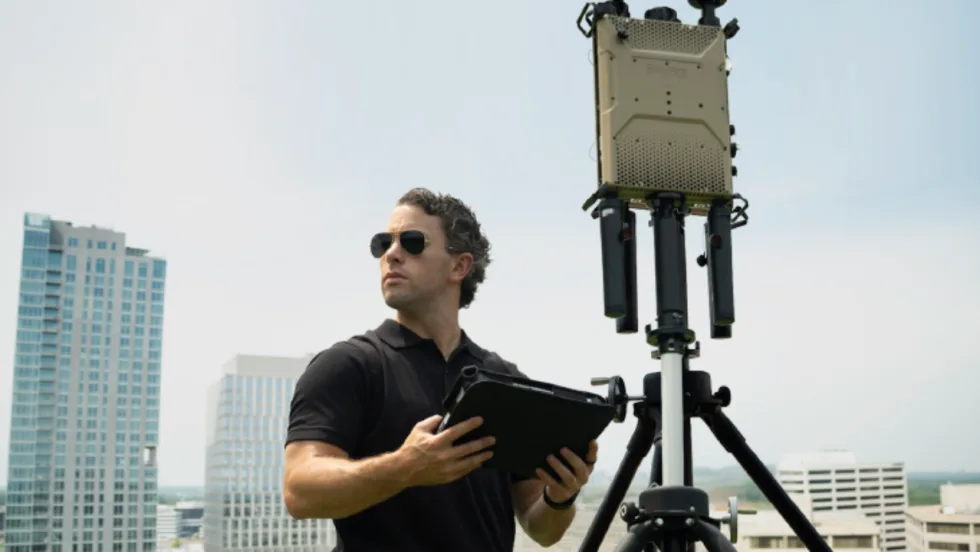
Motorola Solutions Completes Acquisition of D-Fend Solutions
Motorola Solutions has acquired D-Fend Solutions, an industry leader in counter-drone technology. This deal provides public safety and enterprise customers with access to advanced counter-unmanned aerial systems.
Read More →