



Calif. High Court OKs Cell Phone Searches Without Warrant
The majority of justices, in their ruling, agreed that the cell phone was a personal item of Diaz's at the time of his arrest and during administrative processing at the station.

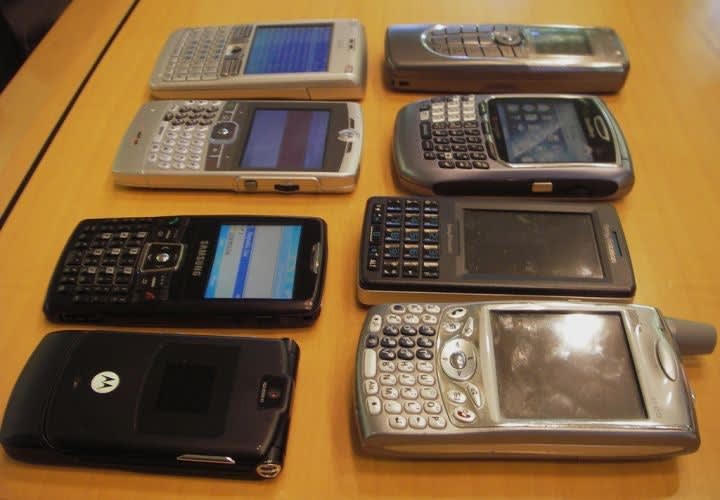
Photo via Flicker (jurvetson).
The California Supreme Court has ruled that law enforcement officers can search a suspect's cell phone without a warrant, after a lawful arrest, and that any incriminating texts, e-mails or other sensitive data can be used as evidence.
The Monday ruling stems from the 2007 arrest by Ventura County Sheriff's Deputy Victor Fazio of Gregory Diaz. Deputy Fazio witnessed Diaz participating in a police informant's controlled purchase of MDMA/ecstasy. A short time later, at the station, the deputy looked through the defendant's phone and found a text message that said "6 4 80," which meant "six pills of Ecstasy for $80."
After being shown this message by Deputy Fazio, who did not obtain a warrant, Diaz then admitted to participating in the drug sale, and he was charged with selling a controlled substance. Diaz pleaded not guilty, and his attorneys moved to suppress the fruits of the cell phone search — the text message and the statements he made when confronted with it — and argued that the search of the cell phone violated the Fourth Amendment.
The majority of justices, in their ruling, agreed that the cell phone was a personal item of Diaz's at the time of his arrest and during administrative processing at the station.
"Because the cell phone was immediately associated with defendant's person, [deputies were] entitled to inspect its contents without a warrant," the justices wrote in their decision.
In her dissenting opinion, Justice Kathryn Werdegar argued that the search was too invasive, because data on an electronic device would not fall under "searches of an arrestee's person and effects." Werdegar also called the search a "potential intrusion on informational privacy" in her opinion.
"Never before has it been possible to carry so much personal or business information in one's pocket or purse," Werdegar wrote. "The potential impairment to privacy if arrestees' mobile phones and handheld computers are treated like clothing or cigarette packages, fully searchable without probable cause or a warrant, is correspondingly great."
Although several previous federal court rulings, including those in Maine and Texas, appear to be in agreement with the California decision, the Ohio Supreme Court has come out on the other side of the issue. In December of 2009, it ruled that digital containers are more protected than other containers, such as pockets, wallets, backpacks and packs of cigarettes.
An attorney for Diaz plans to appeal the decision to the U.S. Supreme Court, reports MSNBC. A ruling by the nation's high court would bring needed clarity, according to Devallis Rutledge, a former police officer and veteran prosecutor who contributes monthly to POLICE Magazine's Point of Law department.
"We need to have a U.S. Supreme Court decision on this because it's not good to have one law in Ohio and one in California," Rutledge told Campus Safety magazine. "My hope is that they will agree [with the Diaz decision], and say that we can't place on police officers in the field the burden of determining as technology advances whether a particular product that has been put out by Apple or Microsoft is going to fit into a category of things that are or aren't searchable.
"The only workable rule that the U.S. Supreme Court can come down with, that I see, is the same one that the California court came down with in Diaz; namely we're not going to differentiate between containers that hold data or information because we can't anticipate what they are going to look like."
More Patrol

Adept Armor Introduces Two New Rifle Plates
Adept Armor has launched two new Level IV ballistic plates, the Emperor and the Archon Mark 2, which brings Adept Armor’s new Quatroid ceramic to the high-threat, performance-value center of the range at 5.2 pounds.
Read More →
POLICE Product Test: Benchmade Bailout
The Benchmade Bailout is a slim, lightweight carry knife with a deep-ride pocket clip and comes in a variety of blade steels and scales. Here is a detailed review of the Taiga Green Bailout, released earlier this year.
Read More →
NLEOMF Announces July 2026 Officer of the Month
NLEOMF honored a Michigan deputy sheriff as the July 2026 Officer of the Month for rescuing a trapped driver from a burning vehicle following a Fourth of July crash.
Read More →
Streamlight to Showcase Newest Lighting Products at National Safety Council’s Safety Congress & Expo 2026
Streamlight will showcase its latest lights, including the Portable Scene Light III and the LiteBox 1Million, at the 2026 National Safety Council (NSC) Safety Congress & Expo.
Read More →
The 2027 World Police & Fire Games Set for Perth, Australia
The 2027 World Police & Fire Games (WPFG) will take place in Perth, Western Australia, from Friday, March 12 through Sunday, March 21, 2027.
Read More →
5.11 Partners with National Fallen Firefighters Foundation to Support #ForThe343
5.11 has joined the nationwide movement honoring the 343 New York City Fire Department firefighters lost on Sept. 11, 2001.
Read More →
Team Wendy Announces Title Sponsorship of the Jorge Pastore Foundation
Team Wendy’s 3-year partnership with the Jorge Pastore Foundation expands access to programs that strengthen those who serve.
Read More →
National Law Enforcement Memorial and Museum Hosting 9/11 25th-Year Commemoration Ceremony
The National Law Enforcement Memorial and Museum is hosting a 9/11 25th Year Commemoration Ceremony on Sept. 11 at 4 p.m.
Read More →
National Law Enforcement Officers Memorial Fund Announces June 2026 Officers of the Month
The National Law Enforcement Officers Memorial Fund (NLEOMF) named 15 officers of the Chico Police Department (California) as the Officers of the Month for June 2026 for their roles in responding to an active-shooter incident at a public library.
Read More →
Team Wendy App Creates New Digital Hub for Helmet Owners
The Team Wendy Community App provides one location for warranty registration, size-fit tools, product updates, and community connection. For helmet owners, the new app creates a simpler path to the information and tools that matter most.
Read More →