



Breaking the Silence with Deaf Citizens
You've made a traffic stop and the suspect does not respond to your verbal commands. He moves his index finger from his ear to his mouth. Then he begins to reach for the glove compartment. Many veteran patrol officers say they've had to forcefully arrest or almost tire their weapon under similar circumstances-only to discover the subject they thought was being aggressive or uncooperative was deaf or hearing impaired.

You've made a traffic stop and the suspect does not respond to your verbal commands.
He moves his index finger from his ear to his mouth. Then he begins to reach for the glove compartment. Is this a sign of aggression? Is the suspect reaching for a gun? How should you respond?
Many veteran patrol officers say they've had to forcefully arrest or almost tire their weapon under similar circumstances-only to discover the subject they thought was being aggressive or uncooperative was deaf or hearing impaired.
Some deaf people are afraid of the police for the following reasons: They fear they'll be mistakenly arrested or shot, accused of being uncooperative or disrespectful or suspected of being under the influence. Or, they may have had negative contacts with police officers in the past.
Opening the Channels
Roughly II percent of the population in America is hearing impaired in one form or another. There is no single language that all deaf people use. In America, however, most deaf or hard of hearing people use American Sign Language commonly known as "'ASL."' By understanding some cultural and language differences between hearing and deaf persons, police can learn to communicate more effectively.
To begin with, law enforcement personnel must understand that a deaf person is no less dangerous than any other individual. But if a situation warrants, don't be afraid to use handcuffs on the hearing impaired person.
Remember: Once the hearing impaired or deaf suspect is handcuffed, he or she will not be able to communicate with you.
The following steps will help you communicate with the hearing impaired:
Step One:
Identify the Signs and Symptons
A deaf or hard of hearing person may point at their ear and shake their head, or point from their car to their mouth (the ASL sign for deaf0. They may jump up and down or clap their hands. During traffic stops, they may try to reach for a pencil and paper, hearing aids or a prosthetic speech device. They may also try to reach in the glove compartment to give you a medical tag or card explaining they are deaf.
In deaf culture, it is also common for deaf persons to touch people to get their attention: therefore, they may try to touch you. So to avoid any misunderstandings, always evaluate the situation carefully before you resort to force.
Step Two:
Start Writing
If you know a person is deaf offer them a pencil. When writing, use simple written commands and questions. Among other things, explain why they are being questioned, detained or arrested. Do not be surprised if their writing is not grammatically correct; ASL has a different grammar structure than formal written English. For example, a hearing person may write, "The blue car ran the red light and hit us when we were crossing the intersection." A deaf person may write, "Blue car go not their turn hit us hard."
Step Three:
Don't Be Fooled by Lip-readers
The best way to communicate with the deaf is through a skilled sign language interpreter.
Remember even the best lip readers can only get partial information from lip reading.
When someone is reading your lips, do the following:
Look directly at the person when you speak.
Speak slowly and clearly.
Do not over exaggerate words (it makes it harder to read your lips).
Keep sentences short.
You should also have the person repeat or write down what you have told them.
Step Four:
Know the Law
Laws concerning the deaf and hearing impaired vary from state to state, so it is important to know your state and local laws.
The Americans With Disabilities Act of 1990, or the ADA Law, is a federal law that covers the rights of deaf and hearing impaired persons. One key element of ADA law is that public organizations must provide equal access for persons with disabilities [ADA 1990 Subpart B Section 35.130 Paragraph (b) (l) (i)].
In general, deaf and hard of hearing persons have the same rights to drive motor vehicles, make telephone calls while in custody and have privileged communications with their family or an attorney. They also have the right to have an interpreter present or have access to a telecommunications device for the deaf, commonly known as a "TTY," while in custody.
Remember; When issuing the Miranda advisal, you must use acertified interpreter.
There is a difference between someone who knows sign language and a certified interpreter. A certified interpreter should have formal training or other certification. Many court cases involving deaf persons charged with criminal offenses were reversed when it was shown that they did not, or could not, understand the Miranda advisal. Therefore, officers should:
Use a certified interpreter for the Miranda advisal.
Have the suspect read and sign a copy of the advisal.
Videotape the advisal and any subsequent statements by the suspect. (This will eliminate questions about the suspect's statements or the quality of the interpreting.) Remember: like the blind, the deaf have the right to access public areas with a speciallytrained signal dogs.
Step Five:
Ask for Help
There are many books on sign language and deaf culture. In your jurisdiction, there is probably a deaf advocacy group or an interpreter service that your department can use.
Another source is the national university for the deaf, Gallaudet College, which is located in Washington D.C. You can also contact the National Information Center on Deafness (see phone number below) to find the number of the nearest interpreting service or deaf advocacy group.
Most deaf or hearing impaired individuals also have TTY devices in their homes that allow them to type written messages which can be received by other TTY dev ices. Officers can communicate with deaf persons via a three-way relay system, which is available in every state. (Contact your local telephone company for more details.)
By using this five-step approach, law enforcement officers can communicate more effectively with the deaf persons they encounter on the streets and also avoid legal problems the in courtroom.
Michael Siegfried is a deputy with the San Bernardino (Calif.) CountySheriff's Department and developed the department's training course, "Survival Sign Language for the Emergency Professional."
For details on law enforcement training in sign language, the deaf culture and communication with the deaf and hard of hearing, call the San Bernardino County Sheriff's Department, Training Division at (909) 880-2626, or the National Information Center on Deafness at (202) 651-651-5051.
More Patrol

Streamlight Portable Scene Light III Wins 2026 OH&S New Product of the Year Award
Streamlight’s Portable Scene Light III has won the 2026 Occupational Health & Safety (OH&S) New Product of the Year Award in the Lighting category.
Read More →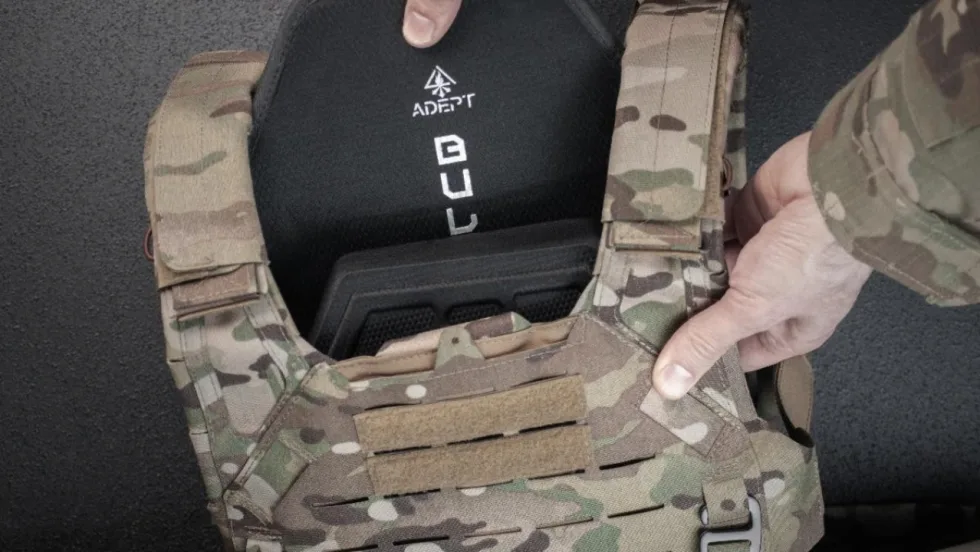
Adept Armor Introduces Two New Rifle Plates
Adept Armor has launched two new Level IV ballistic plates, the Emperor and the Archon Mark 2, which brings Adept Armor’s new Quatroid ceramic to the high-threat, performance-value center of the range at 5.2 pounds.
Read More →
POLICE Product Test: Benchmade Bailout
The Benchmade Bailout is a slim, lightweight carry knife with a deep-ride pocket clip and comes in a variety of blade steels and scales. Here is a detailed review of the Taiga Green Bailout, released earlier this year.
Read More →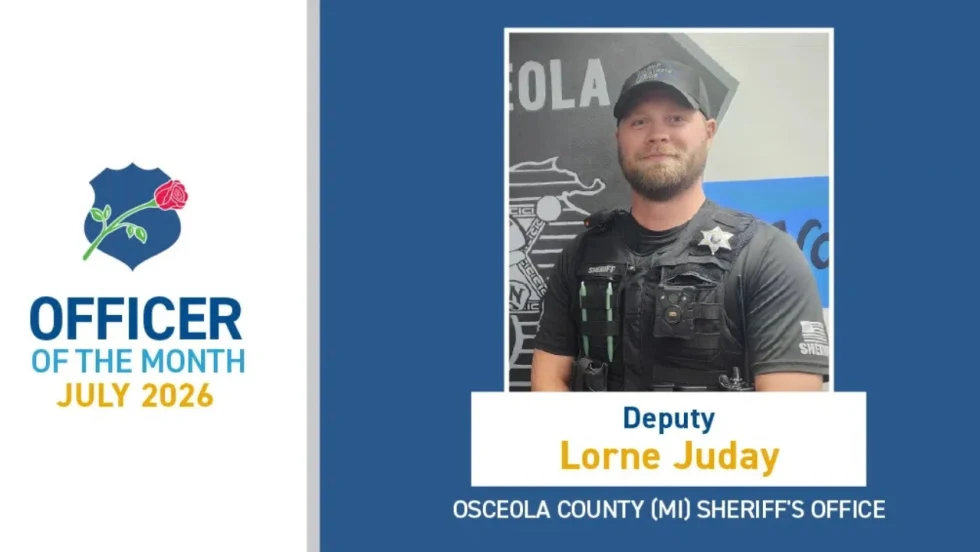
NLEOMF Announces July 2026 Officer of the Month
NLEOMF honored a Michigan deputy sheriff as the July 2026 Officer of the Month for rescuing a trapped driver from a burning vehicle following a Fourth of July crash.
Read More →
Streamlight to Showcase Newest Lighting Products at National Safety Council’s Safety Congress & Expo 2026
Streamlight will showcase its latest lights, including the Portable Scene Light III and the LiteBox 1Million, at the 2026 National Safety Council (NSC) Safety Congress & Expo.
Read More →
The 2027 World Police & Fire Games Set for Perth, Australia
The 2027 World Police & Fire Games (WPFG) will take place in Perth, Western Australia, from Friday, March 12 through Sunday, March 21, 2027.
Read More →
5.11 Partners with National Fallen Firefighters Foundation to Support #ForThe343
5.11 has joined the nationwide movement honoring the 343 New York City Fire Department firefighters lost on Sept. 11, 2001.
Read More →
Team Wendy Announces Title Sponsorship of the Jorge Pastore Foundation
Team Wendy’s 3-year partnership with the Jorge Pastore Foundation expands access to programs that strengthen those who serve.
Read More →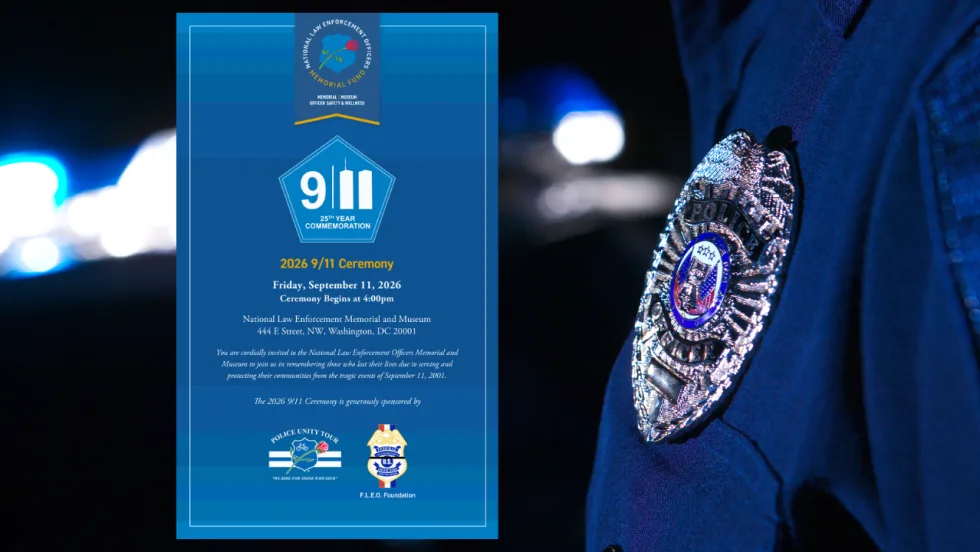
National Law Enforcement Memorial and Museum Hosting 9/11 25th-Year Commemoration Ceremony
The National Law Enforcement Memorial and Museum is hosting a 9/11 25th Year Commemoration Ceremony on Sept. 11 at 4 p.m.
Read More →
National Law Enforcement Officers Memorial Fund Announces June 2026 Officers of the Month
The National Law Enforcement Officers Memorial Fund (NLEOMF) named 15 officers of the Chico Police Department (California) as the Officers of the Month for June 2026 for their roles in responding to an active-shooter incident at a public library.
Read More →