



Don't You Have Better Things to Do?
Police work is not intended to generate revenue. This happens because the command staff allows it to happen and they, in turn, sell out their police officers and the entire law enforcement community.

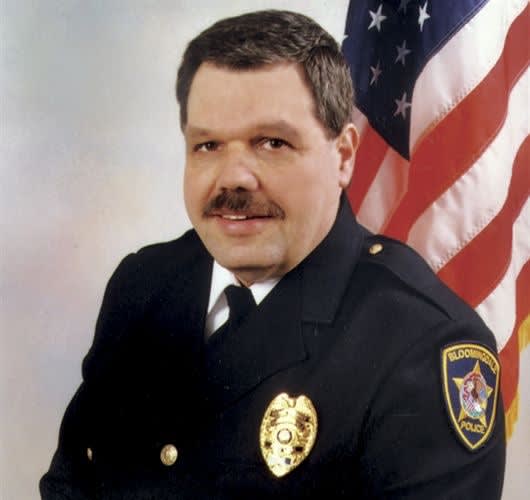
Charles J. Mader
The time is long overdue for law enforcement leaders to take command of their agencies and let the people in the political structures know what the police are supposed to be doing and what they are not supposed to be doing. We are not, and should never have been, armed tax collectors for the communities that employ us.
Raising revenue through ticket quotas is bad policy, and it's one of the leading causes of racial profiling complaints. Charges of racial profiling are damaging to the entire law enforcement community, and they cast an air of suspicion on almost all law enforcement citizen contacts. So if you are serious about wanting to reduce the potential for accusations of racial profiling, get rid of your ticket quotas.
Check out your department's system (before the plaintiff does). Most likely the majority of tickets issued by your agency are being written the last week of the month. Why? So the officers can catch up and get their numbers in before the month ends. What does that have to do with moving traffic safely and swiftly? What does that have to do with reducing accidents? What does that have to do with getting guns and/or dope off the street? As the end of the month approaches, the officers go to that special speeding location in town where it is like shooting fish in a barrel and then go after Mr. and Mrs. Smedly on their way to work.
It only takes a little time for the average police officer to realize all his or her department wants is tickets. Get your numbers up and they leave you alone. Ask yourself when was the last time your patrol personnel took either a gun or a large quantity of dope off the street, resulting from a traffic stop. When was the last time your patrol officers obtained data from a traffic stop that led to a search warrant? Do you think there are more guns and dope on the streets today than 10, 15, or 20 years ago? Your officers are responding to the leadership they have been given: stop the vehicle, write the ticket, and send them on their way.
Your department should be doing computer studies on its most common accident locations and attempt to evaluate the most likely cause of the accidents. Then the command staff can assign officers to do selective enforcement on established and documented traffic problems. This would surely reduce the potential for accusations of racial profiling. Stopping Mr. Smedly, the only vehicle on the road, for 14 miles over the limit at 0530 hours has not prevented any accident from occurring nor has it made him a safer driver. I support Mr. Smedly's response, "You don't have anything better to do, officer?"
At no point am I taking the position that police officers should not write tickets. So please do not misquote me. I do, however, take the position that the quality of a police officer in the United States should never be judged on ticket numbers or arrest numbers. Supervisors who insist that ticket numbers are needed to see if their officers are working should not be in a supervisor's position. If you cannot tell a good cop from a bad cop or an active cop from a lazy cop without ticket quotas, then you have no business being a supervisor. If you cannot recognize good police work without numbers, go to work at McDonald's and you can help them change the number served sign.
Police work is not intended to generate revenue. This happens because the command staff allows it to happen and they, in turn, sell out their police officers and the entire law enforcement community. The quality of a police officer in the United States should never be determined by the number of tickets he/she writes (and/or arrests made). It is an incompetent and archaic system and one that demonstrates an extreme lack of leadership in the law enforcement community.
For the record, I have been a command level police officer for well over 20 years, and my department got rid of ticket and arrest numbers years ago.
Charles J. Mader is deputy chief of the Bloomingdale (Ill.) Police Department, a 30-year law enforcement veteran, and a member of the POLICE magazine
Advisory Board.
More Patrol

Team Wendy Introduces the EXFIL Endurance Ballistic Helmet, Engineered to Reduce the Burden of Extended Wear
Team Wendy has launched its EXFIL Endurance, a new lightweight ballistic helmet engineered to deliver protection, comfort, and fit during demanding, extended operations.
Read More →
The First Responders Children’s Foundation National First Responders Day Roll Call of Heroes Ceremony Returns to Times Square, NYC
First Responders Children’s Foundation (FRCF), in collaboration with T-Mobile, will host the Roll Call of Heroes ceremony in Times Square to commemorate National First Responders Day on Wednesday, Oct. 28. During the event, FRCF will present 18 Hero Awards.
Read More →
Streamlight to Showcase Newest Lighting Products for Law Enforcement Professionals at IACP 2026
Streamlight will showcase its newest lights for law enforcement at the International Association of Chiefs of Police Annual Conference & Expo. Featured lights will include the TLR-3 X, the PolyTac 1X, and more.
Read More →
Streamlight Portable Scene Light III Wins 2026 OH&S New Product of the Year Award
Streamlight’s Portable Scene Light III has won the 2026 Occupational Health & Safety (OH&S) New Product of the Year Award in the Lighting category.
Read More →
Adept Armor Introduces Two New Rifle Plates
Adept Armor has launched two new Level IV ballistic plates, the Emperor and the Archon Mark 2, which brings Adept Armor’s new Quatroid ceramic to the high-threat, performance-value center of the range at 5.2 pounds.
Read More →
POLICE Product Test: Benchmade Bailout
The Benchmade Bailout is a slim, lightweight carry knife with a deep-ride pocket clip and comes in a variety of blade steels and scales. Here is a detailed review of the Taiga Green Bailout, released earlier this year.
Read More →
NLEOMF Announces July 2026 Officer of the Month
NLEOMF honored a Michigan deputy sheriff as the July 2026 Officer of the Month for rescuing a trapped driver from a burning vehicle following a Fourth of July crash.
Read More →
Streamlight to Showcase Newest Lighting Products at National Safety Council’s Safety Congress & Expo 2026
Streamlight will showcase its latest lights, including the Portable Scene Light III and the LiteBox 1Million, at the 2026 National Safety Council (NSC) Safety Congress & Expo.
Read More →
The 2027 World Police & Fire Games Set for Perth, Australia
The 2027 World Police & Fire Games (WPFG) will take place in Perth, Western Australia, from Friday, March 12 through Sunday, March 21, 2027.
Read More →
5.11 Partners with National Fallen Firefighters Foundation to Support #ForThe343
5.11 has joined the nationwide movement honoring the 343 New York City Fire Department firefighters lost on Sept. 11, 2001.
Read More →