



Emergency Entry Without a Warrant
Restating the obvious, a police officer should obtain a warrant before conducting a search.

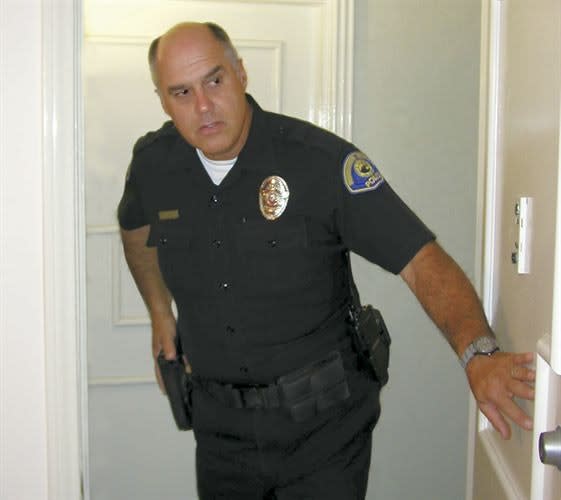
Restating the obvious, a police officer should obtain a warrant before conducting a search. However, over the years, the Supreme Court has articulated certain limited and narrowly defined exceptions, including entering a location in an emergency, also known as "exigent circumstances."
Exigent circumstances are circumstances that present a compelling need for immediate official action and a risk that delay will present a substantial threat of imminent danger to life or public safety. In this article, we'll review two recent cases that involved apparent emergencies: one in which the exigent circumstances exception didn't apply and another in which it did.
State v. Seavey, 789 A.2d 621, 2001 N.H. LEXIS 215 (2001)-On the night in question, an officer responded to the scene of an accident, where he found a vehicle that had crashed into a telephone pole. The car had a displaced steering wheel and a shattered windshield, and on the windshield, the officer observed hair. No driver was present.
A witness heard the crash and went to the scene. The witness told the officer he saw a woman get out of the vehicle and leave the scene. Shortly thereafter, the witness spoke with the woman and noticed she had cuts on her knees. After giving her license to the witness, the woman got a ride from the scene. The witness followed her to a nearby apartment above a barn.
The officer and a rescue person were led to the apartment. When the officer knocked on the door, no one answered. The rescue person then entered the apartment and the officer followed. Inside, the woman was discovered hiding in a bathtub inside the apartment and was subsequently arrested and charged with DWI and Conduct after an Accident.
When the case came to trial, the woman's attorney filed a motion to suppress the warrantless entry. The motion was denied by the trial court. An appeal to the Supreme Court followed. At issue was whether the warrantless entry into the apartment violated the defendant's rights under the state and federal constitutions.
The general rule is that a warrantless entry into a home is per se unreasonable unless the entry falls into one of the exceptions to the warrant requirement. In this case, the court held that the entry into the apartment did not satisfy the exigent circumstances exception to the warrant requirement.
Because she had walked from the scene, was coherent, and not physically impaired, the court reasoned that the defendant was not in a life-threatening situation. Therefore, it was not reasonable for the rescue personnel and police to believe that the defendant's condition was life threatening, which would establish sufficient exigency to justify a warrantless entry. The court reversed and remanded the case to the district court.
In general, it is apparent that the court is very concerned that the police will use the exigent circumstances exception as a pretext to enter homes in order to discover evidence. Therefore the court will only allow it to be applied in cases where there is a life-threatening situation.
Consequently, in a similar situation involving a motor vehicle crash where the defendant has left the scene, it is critical that you obtain and document as much information about the subject's condition as possible. You also need to note the condition of the scene and any evidence of a life-threatening situation, such as blood, before making a warrantless entry into a home. Also, where there is evidence of possible intoxication in this type of situation, the potential loss of evidence involved may also constitute an exigency that may be argued as justification for the search.
It is important to recognize that this case was a 3-2 decision and the court could reach a different conclusion in many other jurisdictions.
Vitek v. State, 750 N.E.2d 346 (Ind. 2001)-In this case, an ex-wife filed a missing person report on her former husband. The man had suffered from a number of physical disabilities, including obesity, a knee injury, sleep apnea, and a heart problem that required him to use an oxygen machine. Because of these disabilities, he did not leave the house very often.
After the responding detective visited the house several times and received no response, he entered the premises. In the basement, he saw what looked to be a grave and exited the house. Homicide detectives obtained a search warrant and discovered the body.
Two individuals were charged with the crime. The investigation revealed that one of the defendants had been staying at the victim's residence. When the co-defendant came over to purchase cocaine, he was refused because he owed the victim money. The co-defendant shot the victim, and both defendants then buried the body in the basement.
At trial the circumstances of this case supported the officer's search of the home. The trial court found that "the facts within the knowledge of [the detective]... constitute[d] probable cause to believe that [the victim] was upon the premises...and may have been in need of aid."
Exigent circumstances were apparent in this case. The victim had reliably been reported missing. He suffered from various ailments that kept him in or near his residence, making it reasonable to think that he was at home.
Furthermore, due to his disabilities, it was reasonable to think that the victim might be in imminent need of medical assistance. It is not necessary for police to have a warrant to enter a residence when the circumstances suggest a reasonable belief that a person within the premises is in need of aid.
It's important to note that although the warrant requirement is relaxed somewhat when there is a legitimate missing persons claim, there is no unlimited "missing persons" exception. Even in a missing persons case, there must be exigent circumstances to justify a warrantless search. In this case, it appears that the detective was legitimately searching for a missing person that he thought might be in need of aid. When he found evidence of foul play, he left the residence and turned the case over to homicide detectives. And as previously noted, before re-entering the victim's residence to search for evidence of a crime, the officers obtained a search warrant.
This was purely and simply "good police work."
John A Stephen is Deputy Commissioner for the New Hampshire Department of Safety and has served as Assistant Attorney General in the New Hampshire Department of Justice, where he was a state prosecutor.
More Patrol

Team Wendy Introduces the EXFIL Endurance Ballistic Helmet, Engineered to Reduce the Burden of Extended Wear
Team Wendy has launched its EXFIL Endurance, a new lightweight ballistic helmet engineered to deliver protection, comfort, and fit during demanding, extended operations.
Read More →
The First Responders Children’s Foundation National First Responders Day Roll Call of Heroes Ceremony Returns to Times Square, NYC
First Responders Children’s Foundation (FRCF), in collaboration with T-Mobile, will host the Roll Call of Heroes ceremony in Times Square to commemorate National First Responders Day on Wednesday, Oct. 28. During the event, FRCF will present 18 Hero Awards.
Read More →
Streamlight to Showcase Newest Lighting Products for Law Enforcement Professionals at IACP 2026
Streamlight will showcase its newest lights for law enforcement at the International Association of Chiefs of Police Annual Conference & Expo. Featured lights will include the TLR-3 X, the PolyTac 1X, and more.
Read More →
Streamlight Portable Scene Light III Wins 2026 OH&S New Product of the Year Award
Streamlight’s Portable Scene Light III has won the 2026 Occupational Health & Safety (OH&S) New Product of the Year Award in the Lighting category.
Read More →
Adept Armor Introduces Two New Rifle Plates
Adept Armor has launched two new Level IV ballistic plates, the Emperor and the Archon Mark 2, which brings Adept Armor’s new Quatroid ceramic to the high-threat, performance-value center of the range at 5.2 pounds.
Read More →
POLICE Product Test: Benchmade Bailout
The Benchmade Bailout is a slim, lightweight carry knife with a deep-ride pocket clip and comes in a variety of blade steels and scales. Here is a detailed review of the Taiga Green Bailout, released earlier this year.
Read More →
NLEOMF Announces July 2026 Officer of the Month
NLEOMF honored a Michigan deputy sheriff as the July 2026 Officer of the Month for rescuing a trapped driver from a burning vehicle following a Fourth of July crash.
Read More →
Streamlight to Showcase Newest Lighting Products at National Safety Council’s Safety Congress & Expo 2026
Streamlight will showcase its latest lights, including the Portable Scene Light III and the LiteBox 1Million, at the 2026 National Safety Council (NSC) Safety Congress & Expo.
Read More →
The 2027 World Police & Fire Games Set for Perth, Australia
The 2027 World Police & Fire Games (WPFG) will take place in Perth, Western Australia, from Friday, March 12 through Sunday, March 21, 2027.
Read More →
5.11 Partners with National Fallen Firefighters Foundation to Support #ForThe343
5.11 has joined the nationwide movement honoring the 343 New York City Fire Department firefighters lost on Sept. 11, 2001.
Read More →