



Snatched! Rescuing Stolen Kids
To anyone casually tuning into American TV or perusing a major U.S. newspaper, it looked like the country had been beset by an epidemic of kidnapped children.

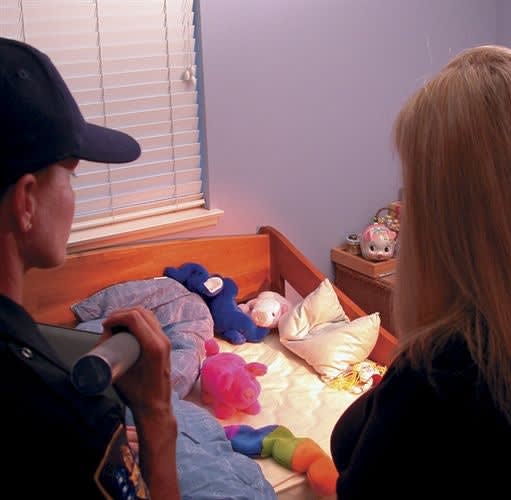
Department of Justice statistics reveal that there has been no marked increase in the number of child abductions in the United States since the Nixon administration. But you wouldn't know it from the news coverage this summer. To anyone casually tuning into American TV or perusing a major U.S. newspaper, it looked like the country had been beset by an epidemic of kidnapped children.
The truth is much more subtle. What really happened this summer was a combination of a slow news cycle and joint efforts by police and broadcasters to spread the word about snatched kids.
However, just because there's been no statistical evidence of a great increase in the number of child abductions, it doesn't mean that the crime isn't happening. It is. And you need to be ready to cope with it.
According to the chiefs of departments involved in the highest profile cases, there are a few basic procedures you can follow to ensure the most effective search for a kidnapped child. They advise you to have a plan for handling a child abduction case in your jurisdiction, to not be afraid to ask for assistance from both other law enforcement and civilian agencies, and to be ready for the media and its insatiable appetite for any new developments.
John Brook, senior investigator with the New York State Police Child Abuse and Exploitation Unit, says the key to dealing with stranger abductions of children is to, "set aside egos and turf issues and work together. Utilize all the resources, including surrounding agencies as well as those offered by the National Center for Missing and Exploited Children."
San Diego Stories
While child abductions are not a common criminal problem for the average department, they can happen, and in the San Diego area this summer, they happened in multiples.
Chief David Bejarano of the San Diego Police Department has no explanation for why the San Diego area has become the child abduction center of the United States. But he believes things will go back to normal soon. In the past, "America's Finest City" saw a child abduction case every five or 10 years, but in the past two months Bejarano's department has responded to three high-profile cases: a 7-year-old child (Danielle Van Dam) was murdered, a 2-year-old (Jahi Turner) is still missing, and a 7-month-old baby was safely returned to his parents.
"We are very sensitive to the issues involving child abduction cases," Bejarano says. "Every case is treated with the highest priority from the time the call is received."
Under San Diego PD procedures, child abduction cases are considered priority calls from the communications unit and an officer and a supervisor are immediately dispatched. Once a case is confirmed, a fax report is sent to a central location and then sent to local media. Bejarano, while not discounting the importance of television, says radio stations are a priority. "People are more likely to be listening to the radio while driving through the city," he explains.
Time is critical in abductions. According to a report by the Washington attorney general and the U.S. Department of Justice, the vast majority (74 percent) of abducted children who are murdered are dead within three hours of the abduction.
Bejarano says San Diego PD treats every abduction case as a homicide scene and, in addition to his officers, he immediately brings in a group of volunteers who are involved in the department's critical incident management unit. While these volunteers are not involved in enforcement activities, they are trained to operate the command post, do searches, and assist with traffic.
The San Diego PD also issues an Amber alert for any abducted child case. Amber alerts consist of broadcast bulletins that are sent out to radio and television stations, and are sometimes displayed on highway information signs.
By all indications, the Amber alert system appears to be a success. But with success can also come detractors. Critics say the public can become immune to the urgency of the alerts, if they are used too often. They also fear a "copy cat" syndrome, in which a suspect would attempt an abduction just to have the deed noted on television and radio.
Bejarano admits that copy-cats are a concern for police when issuing an Amber alert, but the benefits of using Amber outweigh any fears of eliciting copy-cat crimes. "[Copy-cat syndrome] would be a concern as to why we could explain why so many abductions occurred back to back. But there is a lot more to benefit from getting information out to the community regarding a missing juvenile."
Salt Lake City
Chief Charles Dinse of the Salt Lake City Police Department supports the Rachael alert system of Utah, which is modeled after the Amber system. After Elizabeth Smart was kidnapped at gunpoint from the bedroom of her house in Salt Lake City in June, Salt Lake City became the first department in the state to use the system. While it did not help in his investigation, Chief Dinse said that when a department has a description of a vehicle or a suspect, Rachael could be of greater assistance.
In addition to sending out a Rachael Alert in the Smart case, Salt Lake City PD was quick to enlist the aid of the FBI's rapid start system, which Dinse characterizes as "helpful, but improvements needed to be made." He adds that the resources of the FBI became an important asset to his investigation, explaining that Salt Lake City detectives were able to use the Bureau's investigators, technology, and expertise.
And the FBI has increasing expertise in the field. In 1998, federal legislation mandated the creation of the Morgan P. Hardiman Child Abduction and Serial murder Investigative Resources Center (CASMIRC), which was designed to provide investigative support to local agencies through the coordination and provision of federal law enforcement resources. The Center supplies training and application of other multidisciplinary expertise to assist federal, state, and local authorities in matters involving child abductions, mysterious disappearances of children, child homicide, and serial murder across the country.
The Center's rapid response unit supplies local agencies with the most current expertise available, immediate operations assistance, and onsite investigative support through technical and forensic resource coordination. Upon notification from a local department, CASMIRC's experts coordinate an immediate response to the site.
Salt Lake City PD is one of many local agencies that has benefited from this federal assistance. It is available to any department upon request.
With Smart still missing, Dinse says Salt Lake PD has had to be prepared not only to handle the investigation, but to deal with constant media inquiries. "If a case goes on for any length of time, you have to plan to manage a tremendous amount of information and be prepared to man phones 24 hours a day," he explains.
Early on in the case, Dinse added officers to his public information unit. He needed them. Initially the department was holding two press briefings a day. Now, months after Smart's abduction, briefings are held only when new information becomes available.
And while Dinse embraced an open policy for the media, he often became frustrated by leaks that were getting out of his department. "Be prepared. Leaks will happen," he warns.
Boulder
Since the murder of Jon Benet Ramsey and the subsequent constant national media attention, the Boulder (Colo.) Police Department has standardized its response to a child abduction, and each officer has a checklist.
When a child abduction is suspected, the responding officer goes down the list. He or she must verify the accuracy of the report, identify the last location where the victim was seen, secure the site as a crime scene, obtain a detailed description of the victim, notify a supervisor, find out what has been done to locate the child, determine when the victim was last seen, request additional units, conduct a complete and thorough search of the immediate area, locate any witnesses, request a search and rescue dog, and notify the FBI.
According to Det. Sgt. Kurt Weiler of the Boulder PD, the department also uses a system, provided by the non-profit group A Child is Missing, that allows dispatchers to send out a recorded message to all phones in the area where the child is reported missing. The Amber Alert is also in effect in Colorado.[PAGEBREAK]
Two Girls
The Amber system gets credit for helping Kern County Sheriff's deputies rescue two California teenagers from kidnapper and rapist Roy Ratliff. Police say Ratliff snatched two teenage girls from a lover's lane area near the desert community of Quartz Hill, drove them to a remote area near Bakersfield, raped them, and was searching for a place to dispose of their bodies. When Kern County Sheriff's deputies attempted to stop Ratliff's vehicle, Ratliff fled the vehicle on foot and was shot and killed by deputies when he pulled a gun.
This August case marked the first use of California's Amber system, and the system was credited with eliciting citizen leads that resulted in the rescue of the kidnapped teens. "Any time you have a major incident, your biggest key is the ability to communicate," says Sparks of the role played by the Amber system.
But in the end, Sparks says it was also the judgment of his officers that saved the girls. "If they hesitated, and the guy could have taken the two girls, he would have hurt them more or escaped on foot and had a shoot out in the trees."
The first time the Amber alert system was used statewide in Texas, there was a similar happy ending. A one-month-old baby was returned to her parents after being abducted from a parking lot in Abilene.
Amber alerts appear to have great promise as a resource for law enforcement. As with most things, the alerts must be used carefully. In addition, agencies must work together, both locally and nationally, to ensure that abduction cases are solved quickly and positively and innocent lives are protected.
Recovery Tools
With the latest series of child abductions taking over the news headlines, companies are scrambling to find ways to ensure child safety. Technologies that range from wristbands to chip implants for children are being marketed to help ease parents fears.
For Law enforcement, companies are beginning to look at computers as a way to make notifications quicker and easier.
Dialogic Communications Corp. has developed a high-speed notification system, which it calls the Communicator. It is designed to provide law enforcement agencies with a means to quickly communicate with a target group.
Originating from one computer, the system alerts individuals, groups, or teams by phone, pager, fax, and e-mails. It sends incident-specific information, confirms message receipts and prints faxes, and e-mails reports, detailing call out results.
A Fort Lauderdale, Fla.-based non-profit group called A Child is Missing, uses a similar service and provides it to law enforcement in four states: Florida, Rhode Island, Alaska, and Ohio. It is also available in Boulder, Colo., and in parts of Oklahoma and Kentucky. A Child is Missing is working to secure enough funding to provide the program free of charge to any law enforcement agency in the country.
The A Child is Missing service uses high-tech telephony, which can place 1,000 calls in five minutes. It can process multiple cases simultaneously and can work without jurisdictional boundaries. When a law enforcement agency gives the organization information on a missing child, a technician records a personalized message with case details asking residents for help in looking for the child. Messages are also left on answering machines.
Another non-profit agency, TRAK, has developed software that it hopes will be used by every American law enforcement agency as a supplement to the Amber alert. The TRAK system enables agencies to create and transmit photo bulletins.
According to Beth Falls, a spokeswoman for the company, the software is easy to use. Photos are scanned into pre-designed templates, and a black-and-white or color document is created within minutes. The system is designed to make it easy for an officer in an emergency situation to quickly build a color photo bulletin and make it available to other agencies, the media, and the community.
"At the heart of the system, there is an address book that they can then get into," Falls explains. The computer then dials an 800 number and faxes are distributed to everyone who has been designated by the law enforcement agency in the address book. "It can cover a lot of territory in 15 minutes," she adds.
New Jersey and California automatically use this system as a part of the Amber alert. And according to Falls, the two systems work well together, in that black-and-white or color images are transmitted along with the written alert. It is expected that 31 states and 1,800 agencies will have the TRAK system by the end of this year. Ninety percent of the systems have been acquired through grants or donations, which, according to Ms. Falls, is the quickest and easiest way to secure one.
Without these grants, the computer, monitor, scanner, and printer cost approximately $3,500. "We go out of our way to beat the bushes to finance them so we can overcome financial barriers," Falls says.
Technology has also made it easier to use the existing emergency alert system for missing children alerts. This process may not be a simple one. In New York, for example, only portions of the state are able to use the system. While some problems are being worked out, a system of faxes will be used in other areas.
With the help of computers, new technologies, and an assist from the media, the chances of finding an abducted child have increased dramatically. Experts say they are still looking for faster and better ways to send out alerts and help in investigations.
Amber Waves
Very few law enforcement tools have ever received as much attention from the media as the Amber Alert.
And with good reason. The Amber system makes the media and the police willing allies in the race to recover an abducted child. This symbiotic relationship gives the media a breaking story to score ratings and the police a way to reach out to the public and ask for help.
Named for Amber Hagerman, a 9-year-old girl who was kidnapped and murdered in Arlington, Texas, in 1996, the Amber system is actually an acronym for America's Missing Broadcast Emergency Response. It is now operating in 16 states and the others states are feeling pressure to adopt Amber.
But Amber is not perfect. Some jurisdictions have found that the system, which makes use of the old Cold War Emergency Alert System to air descriptions and information about an abducted child and his or her suspected kidnapper, must be managed to ensure that it is not activated without good cause.
California's experience with Amber is indicative of the system's potential for saving lives or causing hysteria. The Golden State's Amber system went online in July. By early August, it was credited with aiding the rescue of two teen girls from a kidnapper and rapist, but it had also been activated twice without just cause. In one case, an Amber alert was issued when a 12-year-old girl went missing from a youth group at San Francisco International Airport. There was no evidence that the case was a kidnapping and not just a girl running away. The girl turned up a few days later safe and sound with her relatives on the East Coast.
The California experience shows why strict usage guidelines are critical to the success of the Amber system. At presstime, California was working toward establishing guidelines that would restrict the Amber alert to cases involving suspected abduction of children under 17 and mentally or physically impaired adults in which the public could assist law enforcement in the victim's safe recovery. The California guidelines specify that the victim must face threat of serious bodily harm and death, and it specifically rules out the use of Amber in custody dispute kidnappings.
Also at presstime, New York was establishing its own version of the Amber system.
Unlike other amber alert systems, in New York, local police will fax the information to the State Police in Albany. The State Police will then fax the abduction alert to TV and radios stations in the affected area, where broadcasters will write their own message and choose how often to air it.
Shelly Feuer Domash is a Long Island-based writer who regularly covers the police beat for the New York Times. She is a frequent contributor to Police.
More Patrol

Team Wendy Introduces the EXFIL Endurance Ballistic Helmet, Engineered to Reduce the Burden of Extended Wear
Team Wendy has launched its EXFIL Endurance, a new lightweight ballistic helmet engineered to deliver protection, comfort, and fit during demanding, extended operations.
Read More →
The First Responders Children’s Foundation National First Responders Day Roll Call of Heroes Ceremony Returns to Times Square, NYC
First Responders Children’s Foundation (FRCF), in collaboration with T-Mobile, will host the Roll Call of Heroes ceremony in Times Square to commemorate National First Responders Day on Wednesday, Oct. 28. During the event, FRCF will present 18 Hero Awards.
Read More →
Streamlight to Showcase Newest Lighting Products for Law Enforcement Professionals at IACP 2026
Streamlight will showcase its newest lights for law enforcement at the International Association of Chiefs of Police Annual Conference & Expo. Featured lights will include the TLR-3 X, the PolyTac 1X, and more.
Read More →
Streamlight Portable Scene Light III Wins 2026 OH&S New Product of the Year Award
Streamlight’s Portable Scene Light III has won the 2026 Occupational Health & Safety (OH&S) New Product of the Year Award in the Lighting category.
Read More →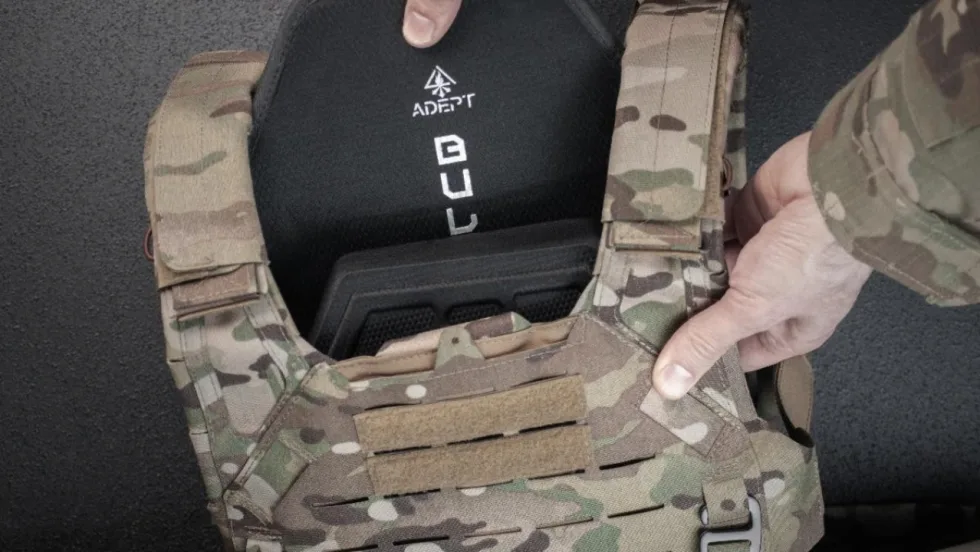
Adept Armor Introduces Two New Rifle Plates
Adept Armor has launched two new Level IV ballistic plates, the Emperor and the Archon Mark 2, which brings Adept Armor’s new Quatroid ceramic to the high-threat, performance-value center of the range at 5.2 pounds.
Read More →
POLICE Product Test: Benchmade Bailout
The Benchmade Bailout is a slim, lightweight carry knife with a deep-ride pocket clip and comes in a variety of blade steels and scales. Here is a detailed review of the Taiga Green Bailout, released earlier this year.
Read More →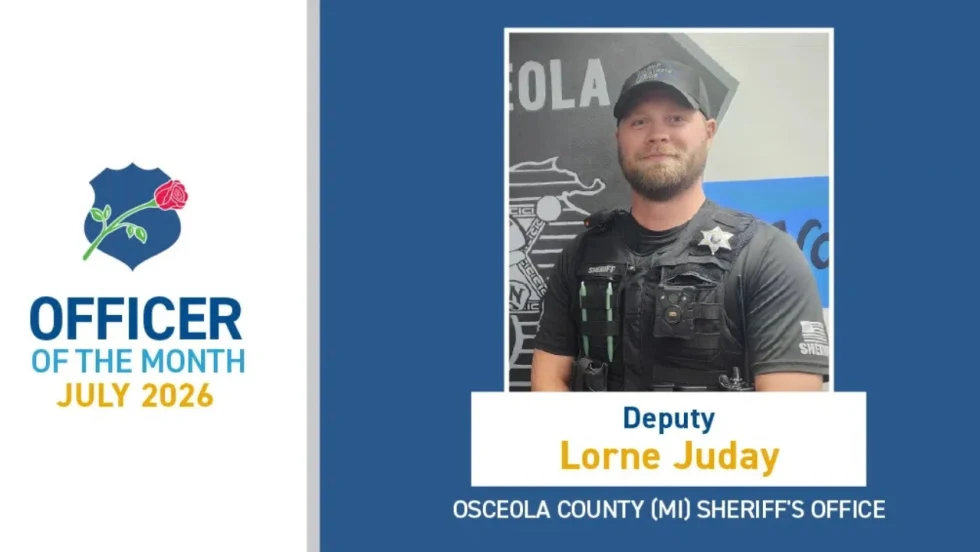
NLEOMF Announces July 2026 Officer of the Month
NLEOMF honored a Michigan deputy sheriff as the July 2026 Officer of the Month for rescuing a trapped driver from a burning vehicle following a Fourth of July crash.
Read More →
Streamlight to Showcase Newest Lighting Products at National Safety Council’s Safety Congress & Expo 2026
Streamlight will showcase its latest lights, including the Portable Scene Light III and the LiteBox 1Million, at the 2026 National Safety Council (NSC) Safety Congress & Expo.
Read More →
The 2027 World Police & Fire Games Set for Perth, Australia
The 2027 World Police & Fire Games (WPFG) will take place in Perth, Western Australia, from Friday, March 12 through Sunday, March 21, 2027.
Read More →
5.11 Partners with National Fallen Firefighters Foundation to Support #ForThe343
5.11 has joined the nationwide movement honoring the 343 New York City Fire Department firefighters lost on Sept. 11, 2001.
Read More →