



Picking Up the Pieces
The cleanup of the carnage left behind by a bloody crime or suicide requires more than a mop and some soapy water. Survivors of the victims are not only emotionally ill equipped to literally pick up the pieces of their loved ones, they lack the proper tools.

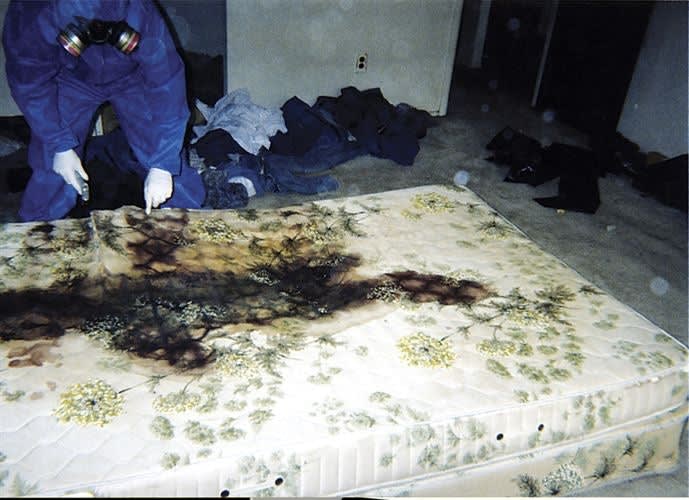
Trauma scene cleanup is not only a dirty job; it’s also a hazardous one.
Families who are unfortunate enough to have a loved one take his or her own life or fall victim to the homicidal urges of another human being inside their homes face many challenges. Not the least of these is what to do about the shredded flesh, brain matter, blood, and bone fragments that remain spattered across their walls and soaking into their carpets long after the body or bodies have been carried away.
The cleanup of the carnage left behind by a bloody crime or suicide requires more than a mop and some soapy water. Survivors of the victims are not only emotionally ill equipped to literally pick up the pieces of their loved ones, they lack the proper tools.
The same can also be said of most traditional cleaning services. Crime scene cleaning is a very specialized, dirty, and sometimes dangerous job.
Blood-borne pathogens like HIV, hepatitis in all its strains, and other infectious diseases can be real concerns. In addition, a crime scene can even contain toxic chemicals and other non-biological hazards. Consider a hostage scenario that involves SWAT officers shooting and killing a subject inside a building or home. Such an incident could leave behind bullets lodged in walls that constitute evidence as well as lead contamination. If the officers deployed gas, cleanup may also require neutralization of potentially dangerous chemicals.
And cleaning up the actual scene of the crime is really only part of the job. Disposal of affected material and cleaning gear is tricky, expensive, and time consuming. A crime scene cleaning team may be required to bag, remove, and properly dispose of drywall, insulation, flooring, and other building materials, along with the contaminated contents.
A Historical Perspective
There was a time, not so long ago, that the job of cleansing a house or building that was the site of a bloody trauma fell on the owners of the property who likely hired a traditional cleaning service.
Before OSHA began to establish standards for dealing with blood-borne pathogens and other hazardous materials in 1991, families hauled dumpsters to their front yards and tossed bloody sheets, carpets, and furniture into them for disposal at the local dump. And at apartment complexes, panicked landlords would call in the super to scrub up the massive stains, pick skull fragments out of the sheet rock, apply a little spackle, and try to make the unit look like it had never been the scene of violent death.
When the standards changed and costly training and equipment were required by law, there was suddenly a need for specialists to do the job. Under the new regs even coroners didn't have the stuff to handle the cleaning of bio wastes at crime scenes, and traditional cleaning services quickly decided that the protective gear, licenses, liability insurance premiums, disposal fees at special facilities, and hepatitis B inoculations for all employees made crime scene cleaning unprofitable. This must have left quite a few workers feeling relieved.
To fill the void, a small industry slowly began to develop. People accustomed to the horrific aftermath of crime scenes-firefighters, paramedics, forensic anthropologists, and cops-began to open specialized companies.
In 1996, there were fewer than a dozen companies offering crime scene cleaning services. Now there are hundreds. And each year, more companies enter the fray.
Some cleaners are in it for the money and some get in because they have the unique ability to stomach a job that most people wouldn't be able to perform for any amount of money. Still other companies have been started by people who wanted to help families who are coping with the violent deaths of their loved ones.
Such is the case with Crime Scene Clean-Up. The Aberdeen, Md.-based company was started in 1993 by Louise Burkhardt. At the time, Burkhardt, whose father had been the victim of a homicide, was operating a maid service and subcontracting with funeral homes as a transport service, when she began to get requests for cleaning up trauma scenes. She accepted a job that she admits most people can't even talk about.
"I can't imagine that anyone grows up wanting to do this for a living," says Burkhardt, whose family has also suffered two suicides. "But I get a lot of satisfaction helping people who need this kind of assistance."
Blood Money
Of course, there are other rewards as well.
Crime scene cleaning can be lucrative, but it's also a business with high overhead. And crime scene cleaners work very hard under often hellish conditions.
The bottom line is that the services of a company like Crime Scene Clean-Up are costly, ranging from hundreds to thousands of dollars. Cleanups can take a couple hours or several days or more, and cleaning companies charge accordingly.
Fortunately, most survivors get some help paying. The cost is often covered by home owner's insurance. And in some states crime victim compensation programs often pay costs that are not covered by insurance.
Some companies also do whatever they can to lessen the blow to a family's finances. According to Burkhardt, Crime Scene Clean-Up works with the families of all victims, regardless of their economic status. Under special circumstances, the company has even done jobs for free when no money could be found to pay for the service.[PAGEBREAK]
To Refer or Not to Refer
Most families and property owners faced with the prospect of cleaning up a crime scene have no idea of where to turn. They need advice. The question is, should cops give that advice and how do they make suggestions without crossing the line into recommending a service?
Some states have recently addressed the crime scene cleanup issue as part of a program of victim counseling.
In New Jersey, for example, once the crime scene is cleared by detectives, a counselor from the Office of Victim Witness Advocacy (VWA) takes over to assist the family. The counselors are very aware that cleaning up the carnage is often a high priority.
Counselors can't endorse a particular company, but Bobbie DeLaRoi, unit supervisor for Burlington County's VWA, does provide a list of companies that serve the local area. "If the family does not want to go back in the house and asks us to call someone for them, we will take care of it," adds DeLaRoi. "But they have to specifically ask for assistance."
The families of victims in New Jersey are fortunate to have people like DeLaRoi to help them. In nearby Philadelphia, the rules against recommending a commercial enterprise are much stricter.
This policy exists because the department once had a bad experience with a trauma scene entrepreneur. In the mid-'90s, a Philly officer started her own trauma scene cleanup company, and it didn't win her any points with the department's commanders. She was accused of conflict of interest because she would leave her brochures in the mailboxes of families after hearing about events over the police radio.
Today, the officers of the Philadelphia Police Department must be very careful about the advice they offer families that need crime scene cleanup services. According to Philadelphia officer Ken Stinson, when family members of victims ask who they can call to help clean up a mess, they might be given a cryptic answer like, "You can find companies in the yellow pages" or Why don't you check online?"
Under department guidelines, a Philadelphia PD officer may advise family members that some companies' advertisements specify that they handle crime or trauma scenes. Or recommend that the family ask the funeral home, insurance company, or medical examiner's office-but the interaction is often a delicate dance.
John Tyler, COO of Crime Scene Clean-Up, recommends that officers follow the lead of counselors like DeLaRoi. He says that departments would be doing a public service to create a small brochure, rack card, or even just a sheet of paper that answers survivor questions and lists local companies that perform cleanup services. He urges officers to include at least three to five companies to ensure there is no appearance of impropriety.
"Hopefully, the same thing will happen with us that happened with the towing industry," says Tyler. "The police used to refer companies, but they got into trouble with lawsuits. Now companies are registered and it's more official."
Helping the Cleaners
Tyler says he doesn't mind that officers are leery of recommending a specific service. However, there is one courtesy he requests from officers: information.
Unfortunately for crime scene cleaners, cops are not very forthcoming. They often resist spending even a few moments discussing the scene with cleanup teams.
The kind of information that Tyler and his colleagues seek is not privileged. For example, they'd like to know if during the investigation an officer touched a blood source with a gloved hand and then touched a light switch or drawer handle as part of that investigation with the same hand.
"It helps if they tell us where they have touched, just so we can make sure we clean everything properly," says Tyler. "We are not trying to inhibit them, we just want to know as much information as possible so we can do our job to the best of our ability."
Tyler adds that sometimes the materials that the investigators leave behind at a crime scene can do serious damage to property. And it would help if cops would let cleaners know where tools like fingerprint dust and blue Luminol dye have been used. These materials can seep into porous and lacquered surfaces, staining them forever.
Neil Weiss is the associate publisher of Limousine and Chauffered Transportation magazine, a Bobit Business Media publication. This is his first contribution to POLICE magazine.
More Patrol

Team Wendy Introduces the EXFIL Endurance Ballistic Helmet, Engineered to Reduce the Burden of Extended Wear
Team Wendy has launched its EXFIL Endurance, a new lightweight ballistic helmet engineered to deliver protection, comfort, and fit during demanding, extended operations.
Read More →
The First Responders Children’s Foundation National First Responders Day Roll Call of Heroes Ceremony Returns to Times Square, NYC
First Responders Children’s Foundation (FRCF), in collaboration with T-Mobile, will host the Roll Call of Heroes ceremony in Times Square to commemorate National First Responders Day on Wednesday, Oct. 28. During the event, FRCF will present 18 Hero Awards.
Read More →
Streamlight to Showcase Newest Lighting Products for Law Enforcement Professionals at IACP 2026
Streamlight will showcase its newest lights for law enforcement at the International Association of Chiefs of Police Annual Conference & Expo. Featured lights will include the TLR-3 X, the PolyTac 1X, and more.
Read More →
Streamlight Portable Scene Light III Wins 2026 OH&S New Product of the Year Award
Streamlight’s Portable Scene Light III has won the 2026 Occupational Health & Safety (OH&S) New Product of the Year Award in the Lighting category.
Read More →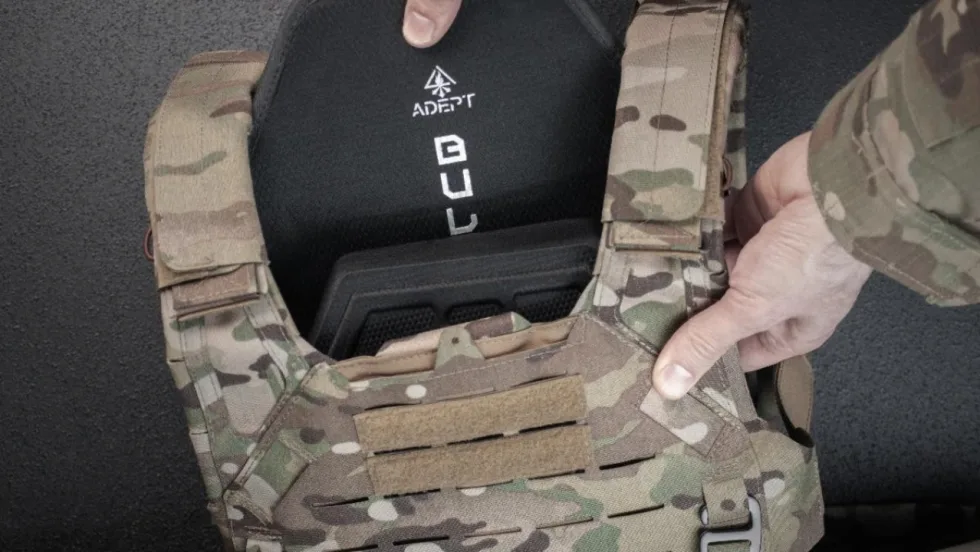
Adept Armor Introduces Two New Rifle Plates
Adept Armor has launched two new Level IV ballistic plates, the Emperor and the Archon Mark 2, which brings Adept Armor’s new Quatroid ceramic to the high-threat, performance-value center of the range at 5.2 pounds.
Read More →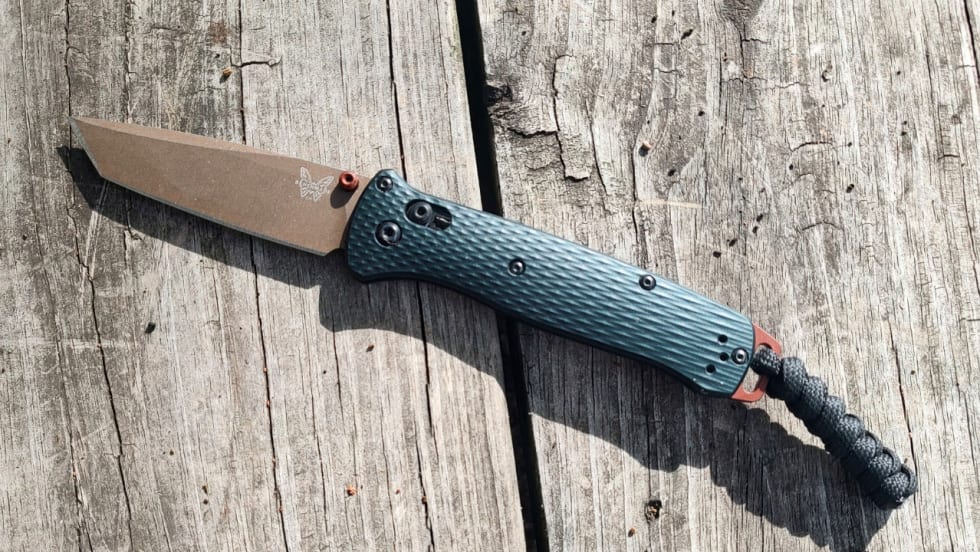
POLICE Product Test: Benchmade Bailout
The Benchmade Bailout is a slim, lightweight carry knife with a deep-ride pocket clip and comes in a variety of blade steels and scales. Here is a detailed review of the Taiga Green Bailout, released earlier this year.
Read More →
NLEOMF Announces July 2026 Officer of the Month
NLEOMF honored a Michigan deputy sheriff as the July 2026 Officer of the Month for rescuing a trapped driver from a burning vehicle following a Fourth of July crash.
Read More →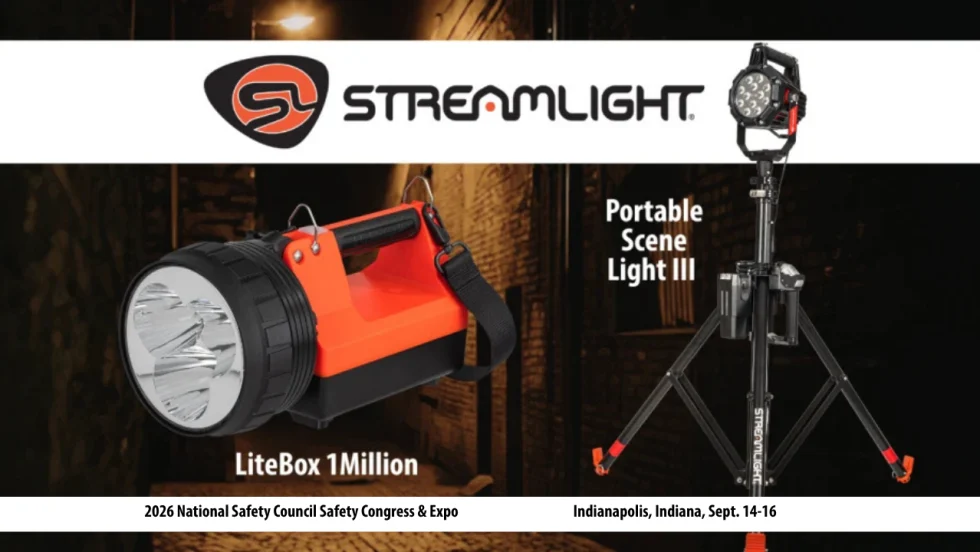
Streamlight to Showcase Newest Lighting Products at National Safety Council’s Safety Congress & Expo 2026
Streamlight will showcase its latest lights, including the Portable Scene Light III and the LiteBox 1Million, at the 2026 National Safety Council (NSC) Safety Congress & Expo.
Read More →
The 2027 World Police & Fire Games Set for Perth, Australia
The 2027 World Police & Fire Games (WPFG) will take place in Perth, Western Australia, from Friday, March 12 through Sunday, March 21, 2027.
Read More →
5.11 Partners with National Fallen Firefighters Foundation to Support #ForThe343
5.11 has joined the nationwide movement honoring the 343 New York City Fire Department firefighters lost on Sept. 11, 2001.
Read More →