



Taking a Toll
The enormity of what law enforcement officers have been tasked with in the Gulf state areas devastated by this year’s one-two punch of hurricanes can be summed up in one word: overwhelming.

The enormity of what law enforcement officers have been tasked with in the Gulf state areas devastated by this year’s one-two punch of hurricanes can be summed up in one word: overwhelming.
It’s not just an overwhelming task to physically rebuild the areas. It continues to be personally overwhelming for each law enforcement officer living and working in the affected areas to keep doing his or her job, pushing all feelings aside until there’s time to rest, and not knowing when that time might come.
Emotional Health on the Back Burner
Out of necessity, in most cases mental health had to take a back seat to the immediacies of rescue and survival. But that doesn’t mean that officers weren’t affected. It just means their healing has yet to begin. There are some things you just can’t forget, no matter how hard you try.
“Everybody saw things that are hard to see, but the officers saw that 24/7. They couldn’t get away from it,” says Chelley Barnes, a licensed counselor in Mississippi.
Law enforcement officers have a larger burden on their shoulders than the average citizen. They have to put others’ welfare ahead of their own, but have their own concerns in the back of their minds.
“The same kind of reactions that happen with survivors can also happen to responders. And of course in this situation, many of the rescuers are also survivors,” says Dr. Farris Tuma, Chief of Traumatic Stress Research for the National Institute of Mental Health.
To add to this burden, both individual police officers and their agencies were too busy literally trying to stay above water to tend to cops’ mental health needs in the beginning.
“I was so busy being on boats rescuing people that I didn’t really have time to do that kind of work, and that really wasn’t the issue at hand,” says James B. Arey, commander of the New Orleans Police Department Crisis Negotiation Team, Special Operations Division. As a member of the SWAT team and a mental health professional, he had to decide where to direct his efforts.
Luckily, Arey’s friend Dr. Jeff Rouse, a psychiatrist with the Orleans Parish Coroner’s Office, got into downtown New Orleans three days after Katrina first hit and was able to put together a mental health clinic. He gathered up a few other psychiatrists and together they started doing triage in the gift shop of the Sheraton Hotel on Canal Street.
Within the first few days, officers in the New Orleans Police Department’s Fifth District attended group debriefings led by either Rouse or Arey as part of roll call. All 911 operators who manned the phones during and after the hurricane were also debriefed to allow them some mental release and a way to process what they had heard and seen.
“We did a traditional Critical Incident Stress debriefing where you have the whole group, as a group, talk about this event,” says Arey. “They talked about what they saw, what happened to them, what happened to their houses, to their families, what they saw happening to civilians.”
But because of the chaos and the scattering of people, not all officers in New Orleans were able to go through this process. And many other agencies in affected regions are still working through their trauma.
“We had guys down there with no clothes, sleeping in their cars for a week or two weeks,” says Barnes, who is based in Jackson, Miss. She was one of many mental health professionals who had difficulty getting to the state’s Gulf Coast to talk to local officers after Katrina hit.
“There was nobody there to interact with them in that way,” she says. “It was just a matter of getting through and surviving for some of them.”
A Matter of Trust
Even when mental health professionals are available, there is still some trepidation on the part of officers when it comes to talking about their feelings.
“At this point, my job is not to provide that service, but to make sure officers know where it is because they trust me,” says Arey. “I’ve been around so long, I can let them know that Dr. Rouse is not nuts, and it’s safe to talk to him.”
Rouse isn’t a cop, but he’s a local and he knows some of the officers on NOPD from the monthly department training he participates in. Still, it’s tough to get officers to trust him. So it’s even more difficult to bring in complete outsiders.
Barnes, in addition to being a counselor, is a reserve officer with the state of Mississippi, so she understands that many people don’t get it.
“I found a problem a lot of counselors and therapists have is they try to get you to talk about your childhood and what have you,” she says. “But that’s not how you get through to cops. I’ve had a really hard time getting anybody to understand that it’s a different animal.”
That’s why Arey believes strongly in using local mental health professionals to counsel officers. Even if they’re not in law enforcement, they’re going to be around for the long haul and they can better understand where the officers are coming from because they’re more than likely dealing with similar frustrations, such as losing homes and battling with insurance companies.
The Stress of Uncertainty
Despite all that law enforcement officers have seen and experienced throughout these hurricanes, what’s most personally devastating for them is the uncertainty.
“You see, doing that kind of work, seeing people dead, that’s police work. And we’re real good at police work. So that was not a cause of stress,” says Arey.
“What was a cause of stress was knowing that you lost your house, not knowing exactly where your family was, and not knowing how this was going to play out in the end.
“I mean, was your spouse going to put pressure on you two months, three months, four months down the road and tell you that she wanted you to leave your agency and move away? You know, those kinds of things.”
Although temporary housing is being planned for officers and their families, it’s a slow process. And it’s still not clear what will happen after the nebulous “temporary” period ends.
“Depending on who you talk to, I’ve heard 75 percent of our officers had their houses damaged or destroyed; I’ve heard as high as 80,” says Arey.
Losing your home and that sense of security takes a toll. But some agencies have found new “homes” for their stations, which is helping to restore in officers a sense of security.
Arey’s unit, the NOPD SWAT team, has established a new base of operations at an evacuated elementary school. Renamed Camp Victory by Capt. Jeffrey Winn, the school is a comforting environment, away from the destroyed city.
“It’s become a good home. I sleep like a baby on that army cot in that second-grade classroom,” says Arey. “Camp Victory is our home. When I get there at night after a day of being on duty, it feels good.”
Other NOPD precincts have relocated to hotels in the French Quarter.
According to Aubrey Futrell, a retired sergeant from the Louisiana State Police who came in to help coordinate mental health relief efforts, a large site has been set aside to create temporary housing for state troopers whose homes were damaged or destroyed in the hurricanes.
Approaching Normal
Although it’s tough, experts say it’s important that officers introduce some aspects of normalcy into their lives whenever possible. Finding a place to call home, if you can, is a good start. Getting away from the sights and smells of the hurricane aftermath is the best medicine.
“Just get out of the city and realize that there is not death and destruction all over the world,” advises Arey. “Go anyplace. Find a place where you can go and feel safe and get nurtured. That’s what you need.”
But it’s important to pay attention to the small things that can be done even while on duty in affected areas.
“The first thing was just making sure they could have a few minutes somewhere safe where they could just chill out for a little while and get fresh clothes and a shower,” says Barnes. “To them that was a big thing at that time.”
Tuma of the National Institute of Mental Health agrees. “Providing rest areas, adequate food, a change of clothing, these are all very important in sustaining people and keeping stress levels under control,” he says. “These are things that we don’t always think of as essential to survival, but in a crisis, it’s very important.”
Mental health professionals say you can reduce overall stress if you exercise, get enough rest, eat nutritious meals, and keep yourself hydrated. As a former Louisiana state trooper, Bobby Smith knows these things are easier said than done.
Smith was shot in the face and blinded while on duty in 1986. Now a Ph.D in psychology and living in Missouri, he has become an expert on coping with trauma and has talked with NOPD officers about their ordeal.
“I say, ‘Guys, I know that you’re tired, but slip your tennis shoes on. Go jog for a couple miles, go walk, go do something. You need some alone time to process all those pictures in your mind, all those smells and all those sights, and go process those things through exercise.’”
Smith also stresses the importance of nutrition and hydration to stay functional, both physically and emotionally.
“They’re out there in 100-degree heat, humidity is 100 percent, and they’re lucky if somebody comes their way and throws them a can of beanie-weenies and a couple of bottles of water,” Smith acknowledges. “But try to get good nutrition, because it is very important in dealing with stress. Try to stay away from caffeine and sugar as best you can. And try to take in fruits and water. It’s good for your system and it keeps your head clear.”
No Help Wanted
Beyond the stress of trying to function normally in an abnormal situation, officers have been faced with the emotional strain of people rejecting their help, sometimes with outright violence.
Smith heard about this frustration from the officers he counseled by phone.
“The officers I’ve spoken with in New Orleans said, not only do you feel helpless to help, but then when you can get help to them, and say, ‘Look, get in my boat and we’ll try to get you out of here,’ they say, ‘No, we don’t want to leave.’ But they don’t understand the seriousness of the situation until later. And unfortunately a lot of people died as a result of that.”
When confronted with such a situation, helplessness and frustration often transform into anger, says Smith, and this emotional turmoil can last long after the incident occurs.
“The famous triangle circle is helplessness, anger, fear; they just go around in these circles,” says Smith. And it’s difficult to break out of that pattern.
In addition to the difficulty many first responders had convincing people to accept their help, they also met with violent opposition in the form of gunfire.
“It’s probably one of the few catastrophes that we’ve had in our country when the good guys are being shot at,” says Smith. “They’re essentially being told, ‘We don’t want your help. Stay out because we’re still looting and stealing. Get out until we finish.’”
The small percentage of people who took part in this behavior also prevented NOPD officers from helping those who desperately needed assistance, multiplying the emotional effect on the rescuers.
“Cops take their oath seriously to protect and serve the people,” says Smith. “And if you’re in a situation where you feel like you can’t accomplish that model that you took an oath to uphold, it’s very disheartening.”
Aftermath
Although the hurricanes are over, the process of rebuilding, both literal and figurative, has yet to begin. All of the people involved are still going through the clean-up stage.
“The issue is that the problem continues because we’ve got people still in theater,” says Futrell. “We had troopers pulled out of New Orleans and sent to Lake Charles because of Hurricane Rita over there.”
Uncertainty about personal and career decisions continues to loom over officers. And their prolonged period of non-stop work without true relief has mental health professionals worried about the potential for Post Traumatic Stress Disorder.
“I think the message is this is not a sprint, this is a marathon. Pacing oneself is very critical,” says Tuma of the National Institute of Mental Health.
But despite everyone’s best efforts to help alleviate stress and prevent lasting mental trauma, experts say PTSD is inevitable for some.
Symptoms include flashbacks and nightmares, avoiding emotions, explosive outbursts, irritability, and sleep disturbance.
But the important thing to remember, say mental health professionals, is that reactions to mental trauma and prolonged stress are normal and expected, and don’t necessarily mean you have PTSD.
“Your body is sort of staying revved up,” explains Tuma. “It’s important to be aware of these responses and understand that it doesn’t mean you’re crazy or ill and that normally these things will fade.”
But if you do continue to have these symptoms or new symptoms occur weeks or months afterward, there are treatments that can help.
“It may mean that their stress response system is not coming back to normal,” says Tuma, “and in some cases that can be corrected with talking or psychotherapy. In some cases it can be facilitated with certain medications for short-term duration, and in many cases it’s a combination of these things.”
And you shouldn’t feel that having these reactions or seeking help for them exhibits weakness. It just means the body’s fight-or-flight response is still kicked into overdrive, say experts.
“The positive news in all of this is that maybe only 10 to 20 percent might have this enduring difficulty,” says Tuma. “This is where having a close-knit workforce that relies on each other a great deal is so important for feeling supported and not fearing one is going to be perceived as weak.”
Law enforcement officers traditionally resist offers for help, especially when it comes to emotional issues. For this reason, many mental health professionals suggest asking officers to watch out for each other, if not themselves. Because cops are used to the idea of looking out for fellow officers, this is often the best approach to ensure that those who need counseling or other additional assistance will get help—if it’s available.
“When these things start to prevent you from doing your normal activities, whether these are being with your family or going to work, then we recommend people seek help,” says Tuma. “And that is when we are concerned that maybe not enough help will be around.”
No One to Turn To
Although departments’ mental health professionals who were assigned elsewhere are now available to counsel fellow officers, many of the additional mental health professionals who were called in from other states to help police officers and others cope with the stress of the hurricanes and their aftermath have already returned home.
“One of the concerns we have is that the attention is likely to shift to other crises and issues in the country,” says Tuma. “We’re very concerned for officers’ enduring mental health and health response to this series of events in the long run. Because it will probably be months before many people, police included, get around to saying, ‘You know what? I’m still not feeling that great and I think I should probably talk with someone,’ it’s then that we’ll need teams of people available.”
For now, agencies are doing what they can to help officers by circulating literature and making the services that are available known.
Arey knows there are tough times ahead for the New Orleans Police Department, but he has faith that the agency will pull through.
He is a strong believer in taking a breather from work and the chaotic environment in stricken areas, if even for a day or two. He also emphasizes the importance of talking things out and seeking help from a professional if necessary—whatever it takes to get back to normal.
“That should clear all of our heads so we’ll be able to go back and catch bad guys when they start showing back up,” says Arey. “And we will be ready for them like never before.”
More Patrol

Streamlight to Showcase Newest Lighting Products at National Safety Council’s Safety Congress & Expo 2026
Streamlight will showcase its latest lights, including the Portable Scene Light III and the LiteBox 1Million, at the 2026 National Safety Council (NSC) Safety Congress & Expo.
Read More →
The 2027 World Police & Fire Games Set for Perth, Australia
The 2027 World Police & Fire Games (WPFG) will take place in Perth, Western Australia, from Friday, March 12 through Sunday, March 21, 2027.
Read More →
5.11 Partners with National Fallen Firefighters Foundation to Support #ForThe343
5.11 has joined the nationwide movement honoring the 343 New York City Fire Department firefighters lost on Sept. 11, 2001.
Read More →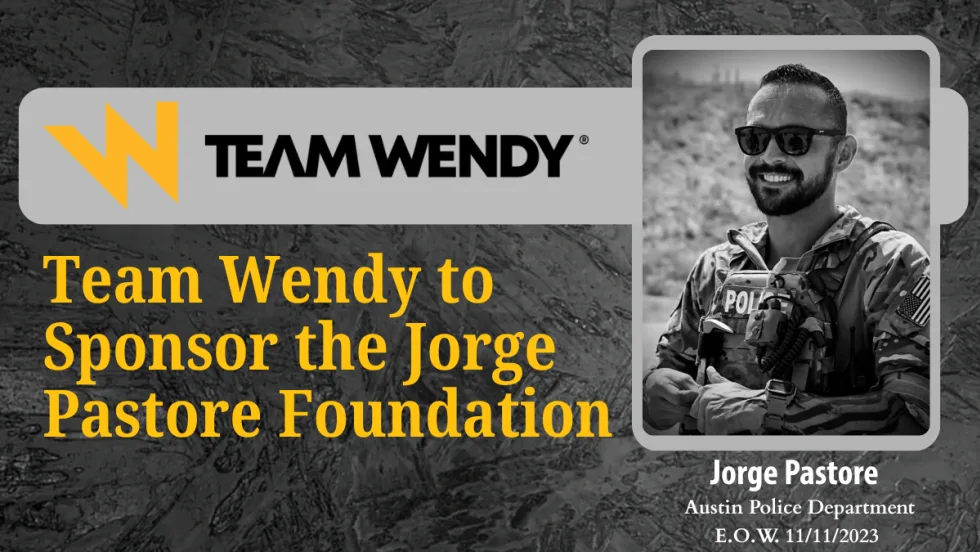
Team Wendy Announces Title Sponsorship of the Jorge Pastore Foundation
Team Wendy’s 3-year partnership with the Jorge Pastore Foundation expands access to programs that strengthen those who serve.
Read More →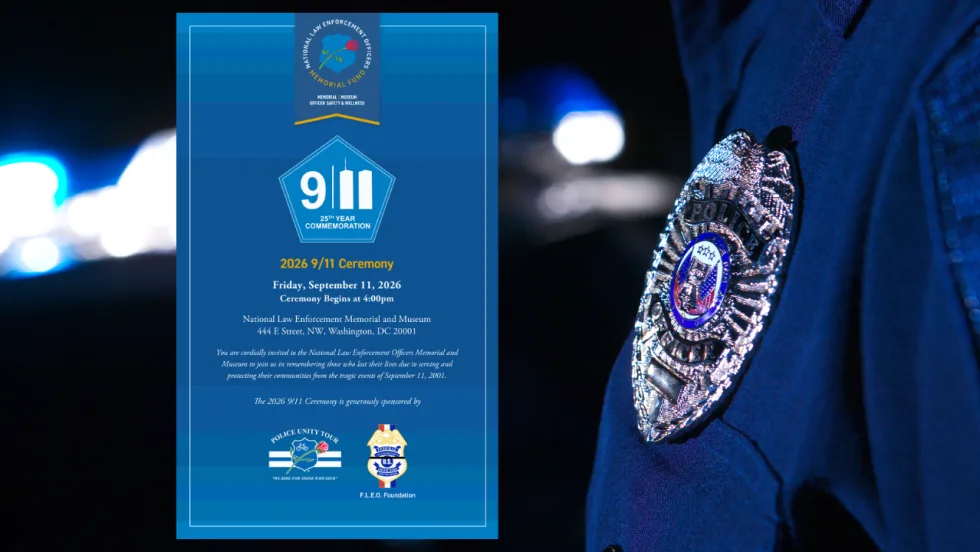
National Law Enforcement Memorial and Museum Hosting 9/11 25th-Year Commemoration Ceremony
The National Law Enforcement Memorial and Museum is hosting a 9/11 25th Year Commemoration Ceremony on Sept. 11 at 4 p.m.
Read More →
National Law Enforcement Officers Memorial Fund Announces June 2026 Officers of the Month
The National Law Enforcement Officers Memorial Fund (NLEOMF) named 15 officers of the Chico Police Department (California) as the Officers of the Month for June 2026 for their roles in responding to an active-shooter incident at a public library.
Read More →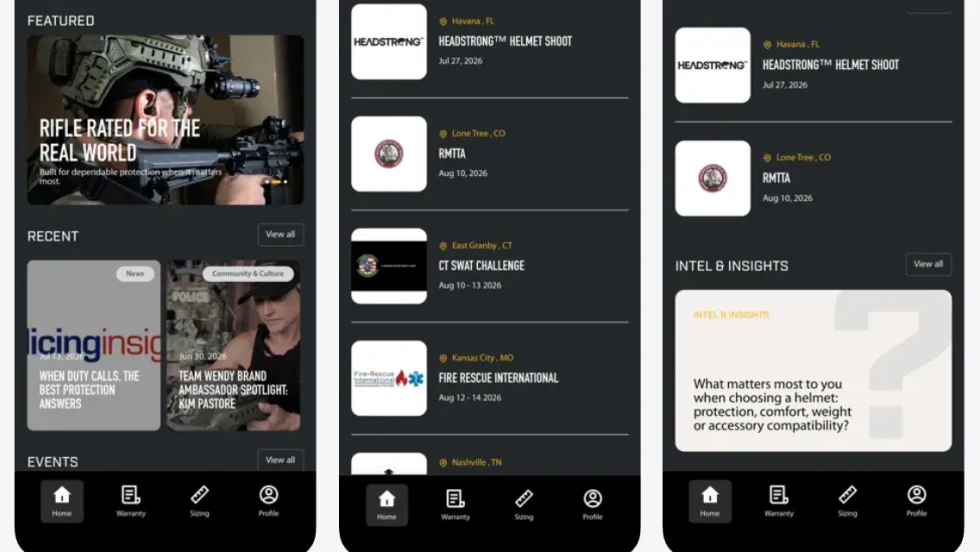
Team Wendy App Creates New Digital Hub for Helmet Owners
The Team Wendy Community App provides one location for warranty registration, size-fit tools, product updates, and community connection. For helmet owners, the new app creates a simpler path to the information and tools that matter most.
Read More →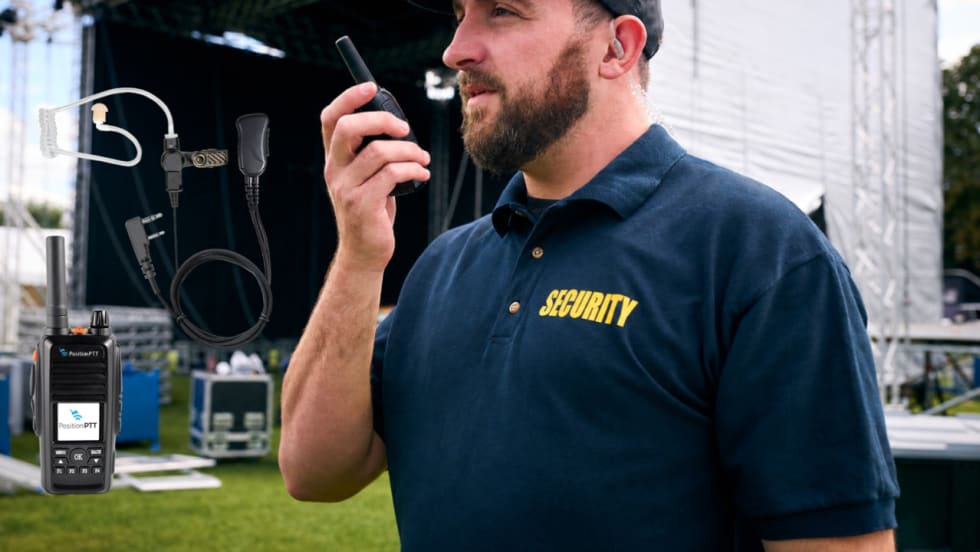
PositionPTT & Pryme Combine Communication Technologies to Deliver Distracted Driving Compliance
Pryme Radio Accessories and hardware/software maker PositionPTT join forces to advance hands-free communications and ensure Department of Transportation compliance using an integrated system of push-to-talk platforms, devices, and audio equipment.
Read More →
Justice Department Releases $25M in Law Enforcement Grants & Resources
The Office of Community Oriented Policing Services has just released $25 million in new grant Notices of Funding Opportunities (NOFOs) to support law enforcement. The recently released NOFOs include the Safer Outcomes: Enhancing Crisis Response Training for Law Enforcement Program and other grant programs.
Read More →
What Makes a Laptop Rugged or Fully Rugged?
What separates a rugged laptop from a fully rugged one? In this video, two Panasonic Connect experts explain the military testing, IP ratings, durability standards, and real-world features that help law enforcement officers rely on their computers in any environment.
Read More →