



Who Really Pays for Your Gear?
There are many professions in which workers receive some kind of additional pay to allow them to buy essential apparel, gear, and equipment for their work. Traditionally soldiers, nurses, even some janitors have received uniform allowances. But few professionals have come to rely on this practice as much as law enforcement officers.

There are many professions in which workers receive some kind of additional pay to allow them to buy essential apparel, gear, and equipment for their work. Traditionally soldiers, nurses, even some janitors have received uniform allowances. But few professionals have come to rely on this practice as much as law enforcement officers.
Last year the public was shocked that many combat soldiers who were heading for Iraq had to buy their own body armor. It might be even more shocked to learn that many cops do the same thing.
How many is really unknown. Law enforcement agencies are not consistent in the practice of allotments, moneys paid to officers to help them buy uniforms, armor, and other critical items. A large municipal department might issue everything its officers need and not pay uniform and equipment allowances. A small agency in the same county might be so cash-starved that officers buy everything with their own money or with meager uniform or equipment allotments.
Of course the reverse could be true. Many cities are just as financially strapped as small towns, if not more so. One cop from a major American city recently told the Police staff that the only thing he was ever issued by his department was a badge, six bullets, and a baton. All other equipment, gear, and apparel was purchased out of pocket, supplemented by a yearly allotment that was paid by his agency.
To gain a better understanding of this practice, how officers use their allotments, how they feel about receiving these funds, and how much is really paid from their own pockets, Police commissioned Wendy Jackson of Bobit Business Media’s research department to conduct an extensive survey. The following is a summary of her findings.
The issue of allotments is very personal and very important to officers who receive these moneys, so we don’t want to bog down the discussion with a bunch of statistical mumbo jumbo. If you want to know the science behind the survey, we refer you to the box headlined “Methodology” on page 36. Otherwise, let’s leave it at this: Response to the survey was outstanding, yielding a 99 percent statistical accuracy, give or take three points. In other words, we’re very confident that our findings are dead on.
Who Gets Allotments
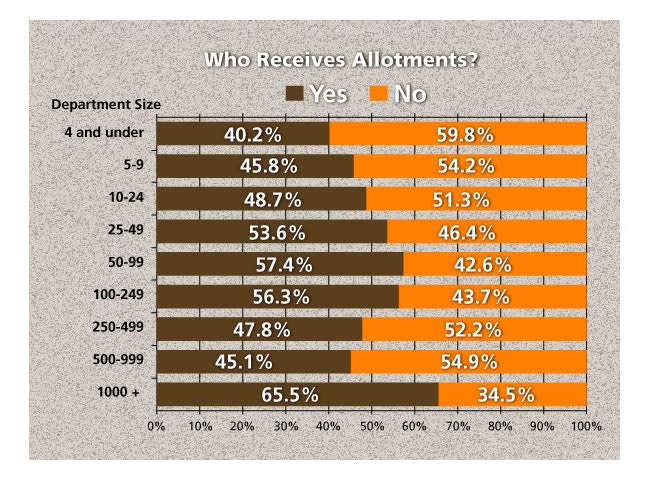
Our research shows that 53.5 percent of American officers receive some kind of allotment for the purpose of purchasing essential gear, apparel, or equipment.
Respondents to the survey included sworn personnel from municipal, county, state, and federal agencies. Some 83 percent of these respondents were either police officers or sheriff’s deputies.
Respondents also came from a wide range of police operations and job titles. The majority, at 37.2 percent, were patrol officers, deputies, or troopers. Another 19.7 percent were sergeants and lieutenants, and 16.9 percent were law enforcement executives, including chiefs, sheriffs, and superintendents. Other law enforcement job categories that were represented included: captains, department directors, investigators, training officers, and agents.
The respondent population was also representative of the wide range of police agency sizes in the United States. Responses were logged from officers who serve in agencies with as few as four sworn officers to agencies with more than 1,000. Another reason that the research can be characterized as especially valid is the balanced response from big, medium, and small departments. For example, the largest response, 16.5 percent, was from big agencies of more than 1,000 officers, but the next largest response of 14.8 percent came from agencies with 25 to 49 officers.
Agency size seems to be a determining factor in whether an officer receives an allotment. In the Police survey, nearly 60 percent of officers from agencies with four or fewer officers indicated that they do not receive allotments. In contrast, only 34.5 percent of respondents from agencies with more than 1,000 officers reported that they do not receive allotments.
Perhaps the reason why officers at small agencies are less likely to receive allotments is that allotments tend to be union negotiated. More than 56 percent of officers who said they received allotments told us that their allotments are part of their labor contract. Another 30 percent said their allotments were regulated by the government of the community they serve. And another 13 percent said that their allotments were determined by government regulation and by union negotiation.
Do You Like Allotments?
For the most part, the cops who receive allotments are in favor of the practice. The Police research shows that out of this population of officers, 42 percent of officers like the allotment system, 22.4 percent are neutral on the subject, and 19.7 percent have mixed feelings about allotments. Only 15.9 percent of the officers polled opposed allotments.
“I like having the option to buy my own gear,” says one officer, explaining why he favors allotments. “If I want something more expensive, my allotment helps me buy it.”
Another officer wrote, “The allotment system makes sense. A good deputy will always try to buy better equipment to improve job performance, even if the cost comes out of his or her pocket.”
Allotments are also favored by veteran officers who believe they help rookies acquire the necessary tools of the trade. “Allotments should be mandatory for every officer’s first police job,” one veteran wrote. “Back when I was starting, I spent a lot of money I didn’t have on uniforms and equipment because I was excited about working. I didn’t even have a paycheck yet.”
Many officers who disapproved of the allotment system argued that if their agencies wanted them to have equipment then it should be provided at no cost to the officer. “I think if your agency wants you to have a certain piece of equipment that it should issue it to you,” wrote one officer.
Another argument against allotments is that some officers believe the practice leads to an inconsistent look among a department’s ranks. “Giving officers allotments seems to cause a lack of uniformity,” one respondent wrote. “If a department buys the same uniform, weapons, holster, and duty gear for all of its officers, then everyone has the same thing and the department looks sharp.”
How Much Do You Get?
Of course, the most common complaint about allotments is that they are meager compared with the actual cost of uniforms, gear, and equipment. “It was better when they purchased the needed equipment and issued it to us,” writes one officer. “Our department gives us $750 a year over 26 paychecks. And it’s taxed. It’s horrible.”
Most agencies pay their officer allotments once per year. More than 67 percent of respondents said they receive this lump sum payment. Another 16 percent of respondents said they receive their allotments twice per year. Less than two percent of the survey’s respondents are in the predicament of having their allotment spread over a year’s worth of paychecks.
But the $750 figure touted by the officer above is pretty much in the ballpark for the majority of agencies that pay allotments. Police calculates that the average pre-tax allotment is about $681. Exactly 47 percent of the survey’s respondents reported that their pre-tax allotment was between $501 and $1,000. Another 40 percent receive between $100 and $500. Only two percent of respondents received less than $100 per year and only 11 percent were lavished with more than $1,000.
What Do You Buy?
A main concern of administrators who dislike the allotment system is a fear that officers will spend the money on non-professional expenses. This fear is largely unfounded. The Police survey reveals that only about nine percent of allotment money is spent on non-police expenses. In other words, out of every $100 paid in allotments, the average officer spends $91 on apparel, gear, and equipment.
The overwhelming majority of allotment money, 65 percent, is spent on uniforms and footwear. Another 14 percent goes toward tactical gear and armor. About 7.5 percent is spent on guns and knives. And five percent is spent on training, including courses, books, and software.
Issued vs. Purchased
One of the most interesting findings of the Police survey was that certain apparel, gear, and equipment items are more likely to be issued, while others are more likely to be purchased by the officer with his or her allotment or just out of pocket.
For example, ammunition is pretty much an agency purchase. More than 85 percent of officers polled by Police say that their ammo is issued. Body armor is also primarily issued, but about 19 percent of officers either buy their own or upgrade their issued armor, either using their allotment or personal funds.
At the other end of the scale is boots and footwear. About 83 percent of officers buy their own shoes and boots, either out of pocket or with their allotments.
It’s clear from the Police survey that most allotment money is spent on three categories of items: apparel/footwear, including uniforms, boots, gloves; flashlights; and duty gear. Another interesting category is knives. Only about four percent of officers are issued knives. Officers who carry knives, about 90 percent according to the survey respondents, primarily buy them out of pocket or with their allotments.
What Are You Buying Twice?
Perhaps the most alarming finding in the Police survey is that many issued items are so disliked by officers that they spend their own money to buy substitutes.
This phenomenon of double spending is clearly evident for certain items. For example, 28.9 percent of respondents said they ditched their issued flashlights for better models. Interestingly, handcuffs were another issued item that officers felt they either needed to upgrade or buy more of for multiple arrest situations.
Other items that are likely to be issued by the agency and discarded by the officer include: knives, duty gear, footwear, and gloves.
Methodology
• 11,000 Police subscribers were invited to participate in the survey.
• 2,338 subscribers responded. This is a very strong 21.2 percent response rate.
• Statistically, the survey is 99 percent accurate with a 2.6 percent margin of error. This is better than the industry standard for media polling.
Making Allotments Better
Other than just giving their officers more money, there are a variety of ways that agencies could improve their allotment programs and make the money go further. Here are some of the findings from the Police survey:
• Uniform costs are rising. Agencies should consider issuing all uniforms. If they can’t issue uniforms, they should at least help officers keep them clean. Dry cleaning expenses are a major hit on some officers. Agencies should consider negotiating a group rate for this service.
• Reduce double purchasing. Many officers are being issued apparel, equipment, and gear that they consider to be substandard. So they buy their own. This could be reduced by involving more officers in the periodic reviews of issued items. Agencies may also want to poll their officers to see which issued items make the grade and which ones don’t.
• Provide higher allotments or one-time equipment allowances to new officers starting out. They need everything.
More Patrol
Adept Armor Introduces Two New Rifle Plates
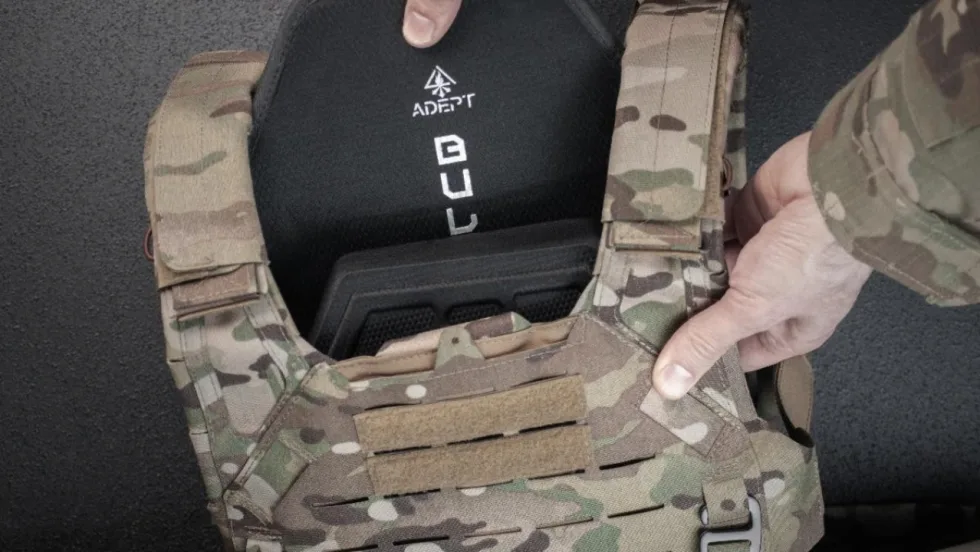
Adept Armor has launched two new Level IV ballistic plates, the Emperor and the Archon Mark 2, which brings Adept Armor’s new Quatroid ceramic to the high-threat, performance-value center of the range at 5.2 pounds.
Read More →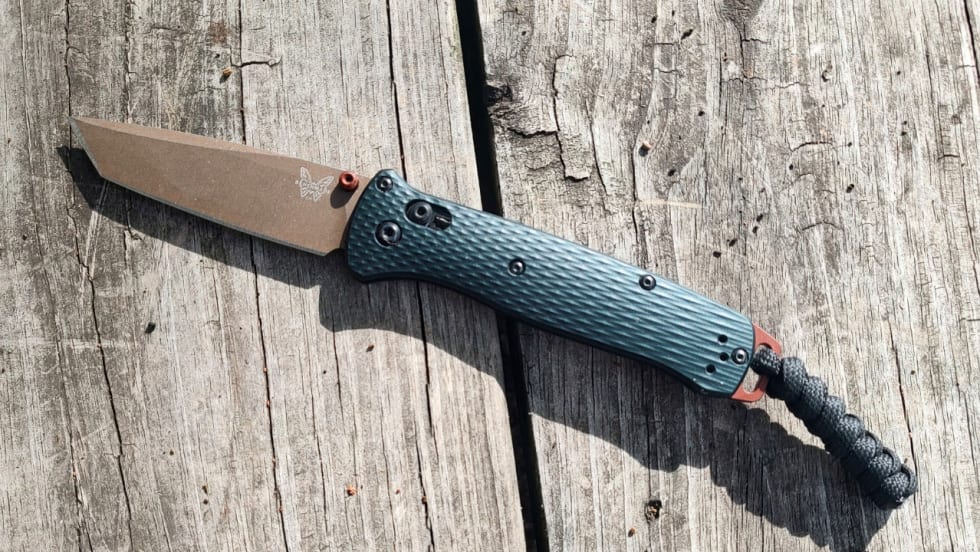
POLICE Product Test: Benchmade Bailout
The Benchmade Bailout is a slim, lightweight carry knife with a deep-ride pocket clip and comes in a variety of blade steels and scales. Here is a detailed review of the Taiga Green Bailout, released earlier this year.
Read More →
NLEOMF Announces July 2026 Officer of the Month
NLEOMF honored a Michigan deputy sheriff as the July 2026 Officer of the Month for rescuing a trapped driver from a burning vehicle following a Fourth of July crash.
Read More →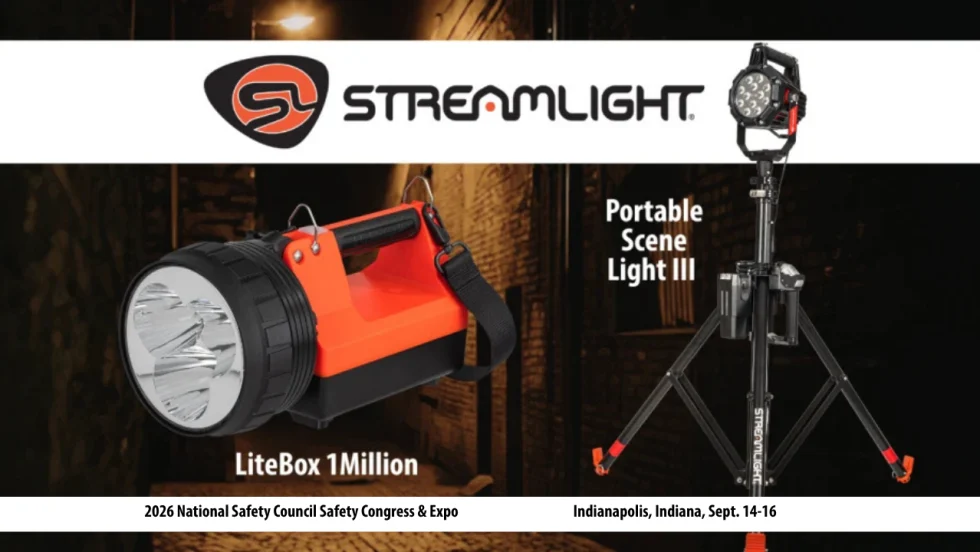
Streamlight to Showcase Newest Lighting Products at National Safety Council’s Safety Congress & Expo 2026
Streamlight will showcase its latest lights, including the Portable Scene Light III and the LiteBox 1Million, at the 2026 National Safety Council (NSC) Safety Congress & Expo.
Read More →
The 2027 World Police & Fire Games Set for Perth, Australia
The 2027 World Police & Fire Games (WPFG) will take place in Perth, Western Australia, from Friday, March 12 through Sunday, March 21, 2027.
Read More →
5.11 Partners with National Fallen Firefighters Foundation to Support #ForThe343
5.11 has joined the nationwide movement honoring the 343 New York City Fire Department firefighters lost on Sept. 11, 2001.
Read More →
Team Wendy Announces Title Sponsorship of the Jorge Pastore Foundation
Team Wendy’s 3-year partnership with the Jorge Pastore Foundation expands access to programs that strengthen those who serve.
Read More →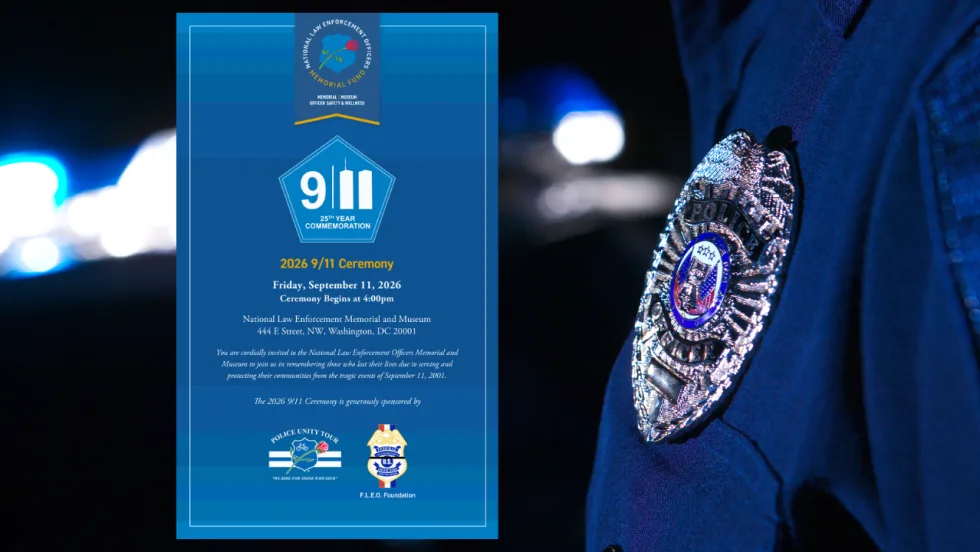
National Law Enforcement Memorial and Museum Hosting 9/11 25th-Year Commemoration Ceremony
The National Law Enforcement Memorial and Museum is hosting a 9/11 25th Year Commemoration Ceremony on Sept. 11 at 4 p.m.
Read More →
National Law Enforcement Officers Memorial Fund Announces June 2026 Officers of the Month
The National Law Enforcement Officers Memorial Fund (NLEOMF) named 15 officers of the Chico Police Department (California) as the Officers of the Month for June 2026 for their roles in responding to an active-shooter incident at a public library.
Read More →
Team Wendy App Creates New Digital Hub for Helmet Owners
The Team Wendy Community App provides one location for warranty registration, size-fit tools, product updates, and community connection. For helmet owners, the new app creates a simpler path to the information and tools that matter most.
Read More →