



In Praise of the Patrol Officer
Morale has hit new lows in the patrol ranks of some departments. Which is sad, because patrol is the core task of any police department.

In every issue this year, we will publish a thoroughly researched feature on some aspect of American law enforcement and how it affects the lives and careers of our readers. Our goal is not to provide you with a quick snapshot, but a detailed portrait of American law enforcement in 2008.
Leading off our 13-part series, "The State of American Law Enforcement," is an examination of the recruitment and retention issues that have resulted in a shortage of cops. This is an immensely important subject, and we hope that we've done it justice.
Even though our first feature in this series, "The Thinning Blue Line," is about 3,000 words long, it could have been much longer. And invariably, certain of our findings were left out or glossed over so that we could compress the story to its given length.
One of the most important aspects of this topic that we just didn't have room for in the article was a discussion of how the job of a patrol officer is held in low esteem by the public and by some law enforcement administrators. Consequently,
morale has hit new lows in the patrol ranks of some departments. Which is sad, because patrol is the core task of any police department.
Six years ago when I first came to work at POLICE, I interviewed a National Guard officer who was commanding a detail standing watch in local airport terminals in order to reassure a jittery flying public still rattled by 9/11. The commander was a light colonel in the Guard. He was also a patrol officer in a Southern California police department.
At the time I was surprised that this man wasn't something more than a "lowly" patrol officer. Shame on me. And shame on anyone else in this country who would describe a patrol officer as "lowly."
Civilians and even some law enforcement brass have a tendency to judge the value of an officer by his or her rank. Our attitude is that if you work patrol, then you must be stupid. We equate it with being a buck private in the Army.
But no veteran patrol officer should be treated like a buck private. A good patrol officer is a mediator, a psychologist, a lawyer, a teacher, a social worker…and yeah, when all else fails, an ultimate fighting champion. Good patrol officers are the most critical link in the thin blue line that protects society from chaos.
Many enforcement agencies have done a great job of making veteran patrol officers feel appreciated. This is a good thing for the officers, the agencies, and the communities that they serve because it doesn't require an officer to get off the streets just to get a raise.
Any law enforcement administrator who wants to improve morale and retain his or her patrol officers should ask the following question: "Does this agency value its patrol officers? If so, how does it show that it values its patrol officers?" I assure you that if you don't make your patrol officers feel appreciated, there are many sheriffs and chiefs who are ready to do so.
More Patrol

Streamlight Portable Scene Light III Wins 2026 OH&S New Product of the Year Award
Streamlight’s Portable Scene Light III has won the 2026 Occupational Health & Safety (OH&S) New Product of the Year Award in the Lighting category.
Read More →
Adept Armor Introduces Two New Rifle Plates
Adept Armor has launched two new Level IV ballistic plates, the Emperor and the Archon Mark 2, which brings Adept Armor’s new Quatroid ceramic to the high-threat, performance-value center of the range at 5.2 pounds.
Read More →
POLICE Product Test: Benchmade Bailout
The Benchmade Bailout is a slim, lightweight carry knife with a deep-ride pocket clip and comes in a variety of blade steels and scales. Here is a detailed review of the Taiga Green Bailout, released earlier this year.
Read More →
NLEOMF Announces July 2026 Officer of the Month
NLEOMF honored a Michigan deputy sheriff as the July 2026 Officer of the Month for rescuing a trapped driver from a burning vehicle following a Fourth of July crash.
Read More →
Streamlight to Showcase Newest Lighting Products at National Safety Council’s Safety Congress & Expo 2026
Streamlight will showcase its latest lights, including the Portable Scene Light III and the LiteBox 1Million, at the 2026 National Safety Council (NSC) Safety Congress & Expo.
Read More →
The 2027 World Police & Fire Games Set for Perth, Australia
The 2027 World Police & Fire Games (WPFG) will take place in Perth, Western Australia, from Friday, March 12 through Sunday, March 21, 2027.
Read More →
5.11 Partners with National Fallen Firefighters Foundation to Support #ForThe343
5.11 has joined the nationwide movement honoring the 343 New York City Fire Department firefighters lost on Sept. 11, 2001.
Read More →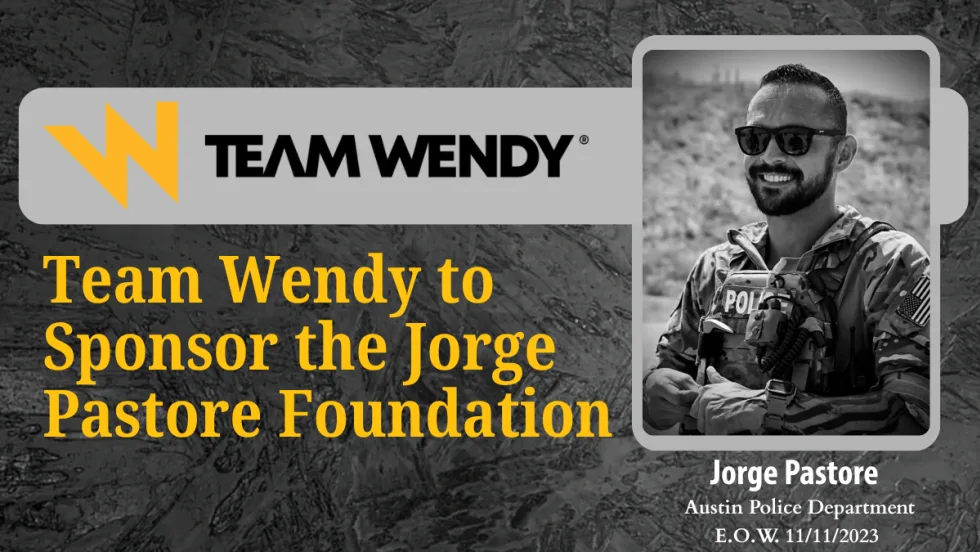
Team Wendy Announces Title Sponsorship of the Jorge Pastore Foundation
Team Wendy’s 3-year partnership with the Jorge Pastore Foundation expands access to programs that strengthen those who serve.
Read More →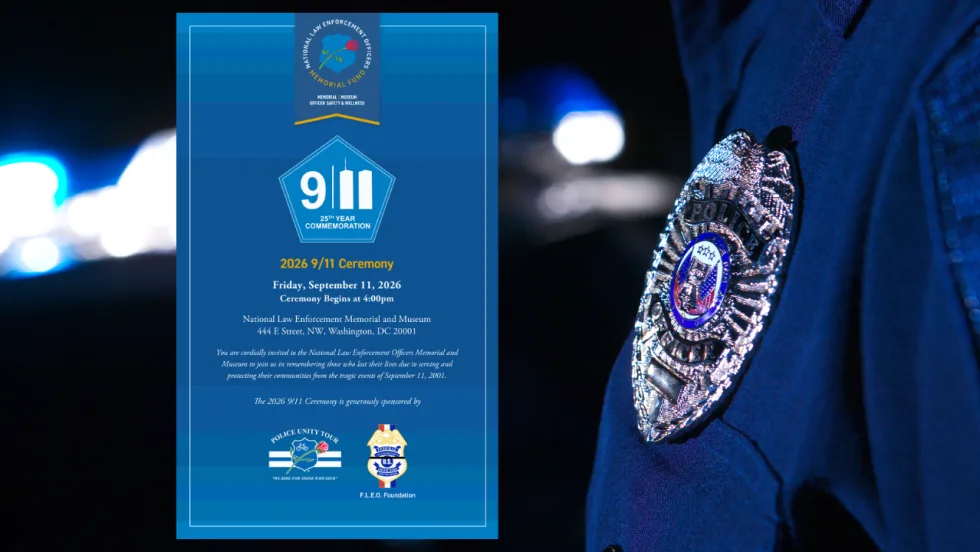
National Law Enforcement Memorial and Museum Hosting 9/11 25th-Year Commemoration Ceremony
The National Law Enforcement Memorial and Museum is hosting a 9/11 25th Year Commemoration Ceremony on Sept. 11 at 4 p.m.
Read More →
National Law Enforcement Officers Memorial Fund Announces June 2026 Officers of the Month
The National Law Enforcement Officers Memorial Fund (NLEOMF) named 15 officers of the Chico Police Department (California) as the Officers of the Month for June 2026 for their roles in responding to an active-shooter incident at a public library.
Read More →