



The Office of Sheriff
As far back as 1651, long before America became a nation, its people chose to elect their chief local law enforcement officers: their sheriffs. The tradition has been challenged, but the people have upheld their right to vote for the person who safeguards and protects their freedom and their property.

As far back as 1651, long before America became a nation, its people chose to elect their chief local law enforcement officers: their sheriffs. The tradition has been challenged, but the people have upheld their right to vote for the person who safeguards and protects their freedom and their property. The overwhelming majority of sheriffs, in turn, have served with honor, pride, integrity, and honesty.
The 3,084 sheriffs and other members of the National Sheriffs' Association take exception to POLICE Editor David Griffith's recent remarks that our nation's sheriffs are "incompetent" or "unqualified" because they are elected. Somehow, he rationalizes that having another politician appoint the position would purify the person wearing the badge. The outrageous tone of Mr. Griffith's editorial has indeed caused rancor in the ranks. NSA Executive Director Aaron Kennard says, "I've received hundreds of responses asking that the NSA formally respond to this attack editorial."
While some of our fine sheriffs are indeed appointed, 99 percent are elected by the people. That direct responsibility to the electorate protects the populace from undue political influence by members of a county's board, supervisors, council, etc., on local law enforcement. Moreover, there are a number of checks and balances imposed on the discretion of any given sheriff. Local voters can remove him or her from office through the electoral process or by special referendum. In extreme cases, various state statutes authorize the direct removal of a sheriff for malfeasance of duty while in office.
I submit Mr. Griffith's characterizations are misinformed and misguided. The fallacy of his argument rests with his assertion that appointing law enforcement executives somehow protects against incompetency, mismanagement, or corruption. It is not difficult to cite countless examples of appalling, outrageous misconduct by appointed law enforcement CEOs and from those incidents then draw the unwarranted conclusion that the transgression stems from the fact that the leaders are appointed. In truth, there are many more committed and dedicated men and women serving as sheriffs, police chiefs, directors, etc., across the country today than in any point in history. Knee-jerk reactions, broad brush generalizations, and oversimplifications only serve to perpetuate baseless or poorly reasoned assertions.
The isolated, "extremes cases" cited by Mr. Griffith as the basis of his argument are exceptionally few and far between. Even more relevant is the fact that those respective individuals mentioned were held accountable by the criminal justice system and/or the electorate. Going a step further, let's use real-time examples, not illustrations from a decade ago. Less than one percent of sheriffs in this country were charged or otherwise shamed from their offices in 2007. That means more than 99 percent did what the people elected them to do: protect their families, house their criminals, and collect the taxes that keep their communities going.
While we often lament the news media's focus on bad news, the climate was obviously similar when Thomas Jefferson said, "History, in general, only informs us of what bad government is." An honest examination of the men and women serving as sheriffs would reveal thousands of stories of selfless dedication and unparalleled leadership. I would ask Mr. Griffith to examine the careers of simple, committed men like Sheriff Leo Samaniego of El Paso, whose focus on truth and integrity led that agency out of the bowels of disgrace.
No election, not even one in which the incumbent is unchallenged, is perfect. There will always be someone unhappy with the results. But Americans have resoundingly said over the centuries that the electoral process is a fair way to gauge their voice. The National Sheriffs' Association agrees and will continue to defend the men and women chosen to protect and serve when they are honorable, and to ensure those who cross legal and ethical boundaries are held accountable.
Sheriff Craig Webre, president of the National Sheriffs' Association, is a lifelong resident of Lafourche Parish, La., and was recently elected to a fifth term. Webre has served his community as an officer with the Thibodaux Police Department, the Lafourche Parish Sheriff's Office, and as a Louisiana State Trooper.
More Patrol

Streamlight Portable Scene Light III Wins 2026 OH&S New Product of the Year Award
Streamlight’s Portable Scene Light III has won the 2026 Occupational Health & Safety (OH&S) New Product of the Year Award in the Lighting category.
Read More →
Adept Armor Introduces Two New Rifle Plates
Adept Armor has launched two new Level IV ballistic plates, the Emperor and the Archon Mark 2, which brings Adept Armor’s new Quatroid ceramic to the high-threat, performance-value center of the range at 5.2 pounds.
Read More →
POLICE Product Test: Benchmade Bailout
The Benchmade Bailout is a slim, lightweight carry knife with a deep-ride pocket clip and comes in a variety of blade steels and scales. Here is a detailed review of the Taiga Green Bailout, released earlier this year.
Read More →
NLEOMF Announces July 2026 Officer of the Month
NLEOMF honored a Michigan deputy sheriff as the July 2026 Officer of the Month for rescuing a trapped driver from a burning vehicle following a Fourth of July crash.
Read More →
Streamlight to Showcase Newest Lighting Products at National Safety Council’s Safety Congress & Expo 2026
Streamlight will showcase its latest lights, including the Portable Scene Light III and the LiteBox 1Million, at the 2026 National Safety Council (NSC) Safety Congress & Expo.
Read More →
The 2027 World Police & Fire Games Set for Perth, Australia
The 2027 World Police & Fire Games (WPFG) will take place in Perth, Western Australia, from Friday, March 12 through Sunday, March 21, 2027.
Read More →
5.11 Partners with National Fallen Firefighters Foundation to Support #ForThe343
5.11 has joined the nationwide movement honoring the 343 New York City Fire Department firefighters lost on Sept. 11, 2001.
Read More →
Team Wendy Announces Title Sponsorship of the Jorge Pastore Foundation
Team Wendy’s 3-year partnership with the Jorge Pastore Foundation expands access to programs that strengthen those who serve.
Read More →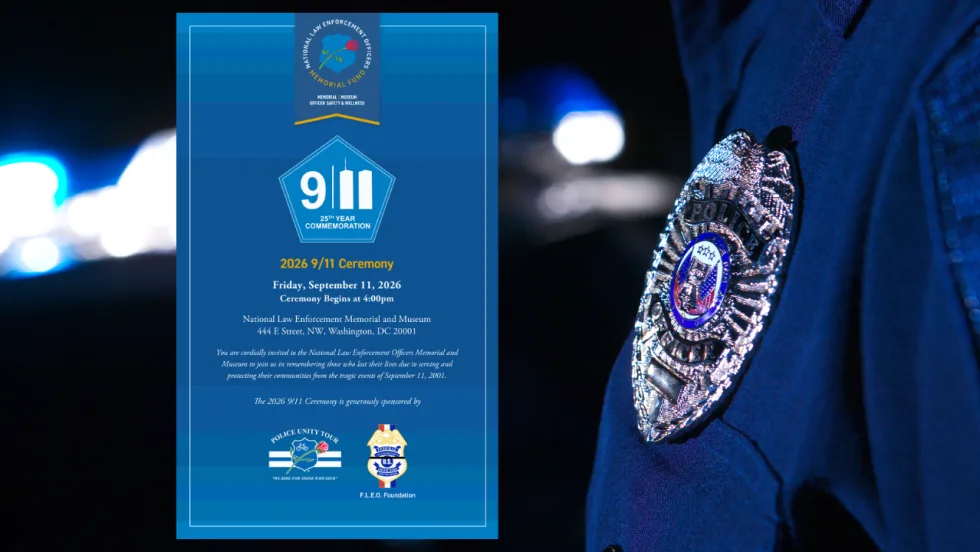
National Law Enforcement Memorial and Museum Hosting 9/11 25th-Year Commemoration Ceremony
The National Law Enforcement Memorial and Museum is hosting a 9/11 25th Year Commemoration Ceremony on Sept. 11 at 4 p.m.
Read More →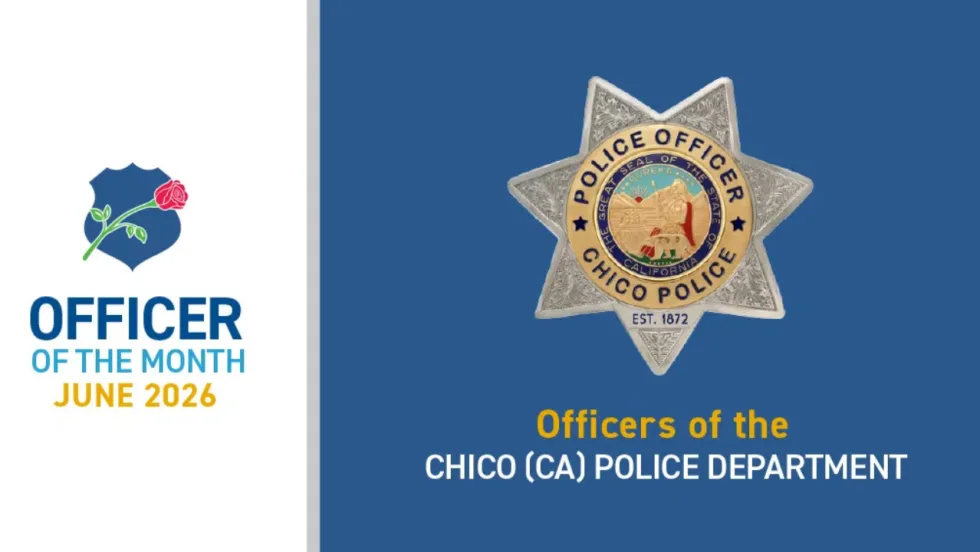
National Law Enforcement Officers Memorial Fund Announces June 2026 Officers of the Month
The National Law Enforcement Officers Memorial Fund (NLEOMF) named 15 officers of the Chico Police Department (California) as the Officers of the Month for June 2026 for their roles in responding to an active-shooter incident at a public library.
Read More →