



Topics of Conversation
Crooks often commit multiple crimes. When you make an arrest and get ready to begin interrogating, you will normally administer the four-part Miranda warning. But if you want to ask questions about more than one crime you think your suspect committed, do you have to inform him of all possible topics of discussion? The short answer is, "No."

Crooks often commit multiple crimes. When you make an arrest and get ready to begin interrogating, you will normally administer the four-part Miranda warning (informing the suspect of his right to silence, the risk that his statements may be used against him in court, the right to counsel before and during questioning, and the right to have free counsel if he is unable to pay). You will seek the suspect's acknowledgment that he understands, and a waiver ("Do you want to talk about what happened?").
But if you want to ask questions about more than one crime you think your suspect committed, do you have to inform him of all possible topics of discussion? The short answer is, "No."
Colorado v. Spring
John Leroy Spring shot and killed a man during a hunting trip in Colorado. The following month, ATF agents, who had received information about the shooting from an informant, arrested Spring in Kansas City, Mo., on federal firearms charges. Spring was advised of his rights and gave a valid waiver.
Agents asked questions about the firearms violations and then, without any new warnings or announcements that they were switching subject matter, asked questions about the Colorado killing. Spring admitted that he had a juvenile record for shooting his aunt when he was 10 years old and then said, "I shot another guy once." In a subsequent interrogation, he confessed to the Colorado murder.
At trial, Spring moved to suppress all of his statements relating to the murder on grounds that his Miranda warning did not put him on notice of all of the crimes he might be questioned about. The trial judge denied this motion and ruled the confession admissible. Spring was convicted of first-degree murder, but both the Colorado Court of Appeals and the Colorado Supreme Court ordered the conviction reversed and the confession suppressed, finding Miranda error. The state appealed.
The U.S. Supreme Court reversed the suppression order and held that Miranda was not violated by introduction of the confession. The High Court ruled that a listing of all possible topics to be covered in an interrogation is not an ingredient of the Miranda warning, and that the failure of the ATF agents to notify Spring that they intended to question him about a murder did not amount to tricking him into a waiver:
"The Constitution does not require that a criminal suspect know and understand every possible consequence of a waiver of the Fifth Amendment privilege. This Court has never held that mere silence by law enforcement officials as to the subject matter of an interrogation is 'trickery' sufficient to invalidate a suspect's waiver of Miranda rights, and we expressly decline so to hold today. We hold that a suspect's awareness of all the possible subjects in advance of questioning is not relevant to determining whether the suspect voluntarily, knowingly and intelligently waived his Fifth Amendment privilege." (Colorado v. Spring)
In other opinions, the court has repeated that a suspect need not be aware of the crimes he is to be questioned about or the evidence police already have in order to meet Miranda's evidentiary foundation: "There is no reason to assume that a suspect's state of mind is in any way investigation-specific." (Arizona v. Roberson)
Also, the court has held that once a valid waiver has been obtained, investigators may continue questioning unless and until the suspect clearly, unambiguously asserts his right not to answer further questions or to obtain an attorney. (Davis v. U.S.) In other words, after a waiver, the burden shifts to the suspect to claim his rights, if he wants the interrogation to cease.
The Implications of Spring
Confessions can make the difference between conviction and acquittal. This makes it important for law enforcement officers to attempt to obtain reliable, admissible confessions in every case they investigate. To ensure admissibility of most custodial confessions, a Miranda waiver must first be obtained. Therefore, officers need to minimize the chance of invocation of rights and maximize opportunities for waivers.
How can the ruling in Colorado v. Spring help?
Presumably, the greater a suspect's perception of the risks he is facing, the greater the odds that he will refuse to waive and answer questions. Conversely, the smaller his perception of risk, the more likely you will get a waiver.
Since Spring does not require you to put the suspect on notice of all of the more serious charges he may be facing, you can obtain a valid Miranda waiver by arresting the suspect on less serious charges, giving a warning and obtaining his agreement to talk, and then asking questions about every crime you suspect him of committing.
For example, suppose you run your murder suspect's information and learn that he has an outstanding arrest warrant for failure to appear on a traffic citation. He could be arrested on the traffic warrant and taken to the station. Without telling him that you also suspect him of the murder, you give the standard Miranda warning and obtain an unconditional waiver. After a few brief questions about the failure to appear, you begin to ask questions that relate to the murder. Unless he clearly and unambiguously says that he doesn't want to talk or wants an attorney, you can continue questioning him about the murder until you have a confession.
If the suspect has no outstanding warrants for minor charges, you could simply arrest him for a lesser-included charge for which you have probable cause. In most jurisdictions, PC to arrest for murder would necessarily include PC to arrest for assault or battery; PC to arrest for robbery might include PC to arrest for simple larceny; PC to arrest for forcible rape might also include PC to arrest for assault or unlawful sexual intercourse, and so on. Once you have the confession to the more serious charges, you can add those charges to the arrest and booking reports, to ensure adequate bail.
Unconditional Waivers
Be careful, because it is possible for an officer to create issues as to whether or not Spring allows unrelated questioning, by asking the waiver question in such a way as to impose limitations or restrictions that could arguably preclude applying Spring. If, for example, the waiver question asked, "Do you want to discuss the charges against you?" when the only announced charge was a failure to appear, the suspect could argue he only waived his rights for that specific investigation. An unconditional waiver question asks simply, "Do you want to talk about what happened?" without specifying everything that happened.
As always, consult local prosecutors or legal advisors to learn whether your jurisdiction imposes additional investigative restrictions not compelled by the federal constitution.
More Patrol

Team Wendy Introduces the EXFIL Endurance Ballistic Helmet, Engineered to Reduce the Burden of Extended Wear
Team Wendy has launched its EXFIL Endurance, a new lightweight ballistic helmet engineered to deliver protection, comfort, and fit during demanding, extended operations.
Read More →
The First Responders Children’s Foundation National First Responders Day Roll Call of Heroes Ceremony Returns to Times Square, NYC
First Responders Children’s Foundation (FRCF), in collaboration with T-Mobile, will host the Roll Call of Heroes ceremony in Times Square to commemorate National First Responders Day on Wednesday, Oct. 28. During the event, FRCF will present 18 Hero Awards.
Read More →
Streamlight to Showcase Newest Lighting Products for Law Enforcement Professionals at IACP 2026
Streamlight will showcase its newest lights for law enforcement at the International Association of Chiefs of Police Annual Conference & Expo. Featured lights will include the TLR-3 X, the PolyTac 1X, and more.
Read More →
Streamlight Portable Scene Light III Wins 2026 OH&S New Product of the Year Award
Streamlight’s Portable Scene Light III has won the 2026 Occupational Health & Safety (OH&S) New Product of the Year Award in the Lighting category.
Read More →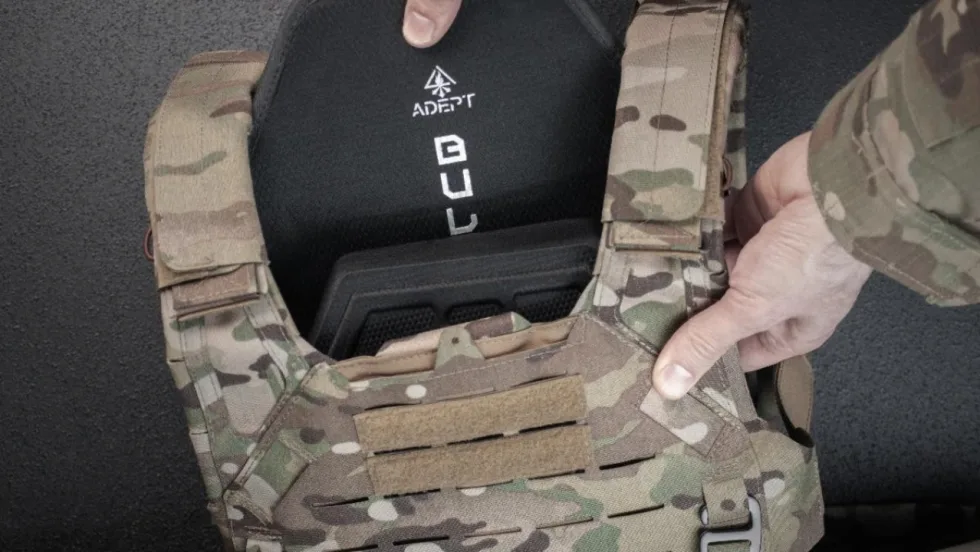
Adept Armor Introduces Two New Rifle Plates
Adept Armor has launched two new Level IV ballistic plates, the Emperor and the Archon Mark 2, which brings Adept Armor’s new Quatroid ceramic to the high-threat, performance-value center of the range at 5.2 pounds.
Read More →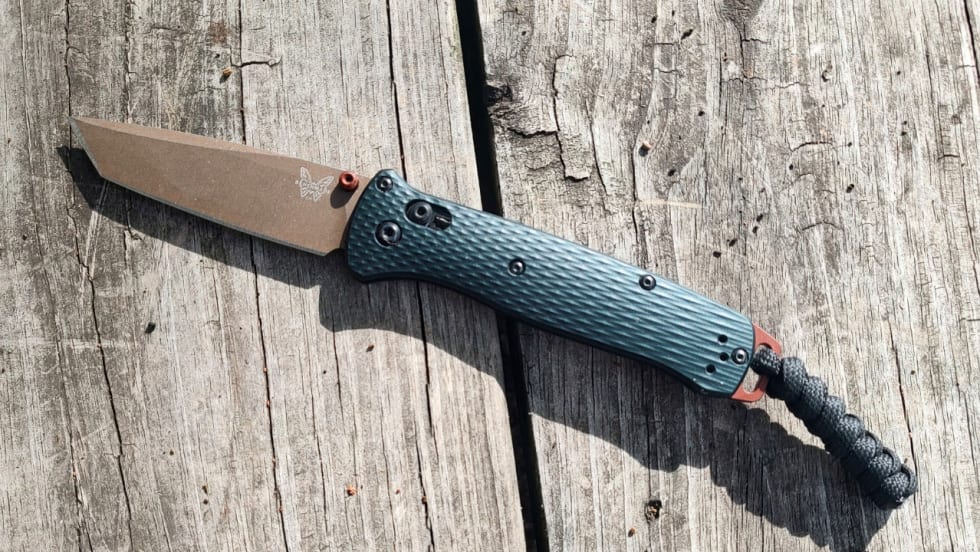
POLICE Product Test: Benchmade Bailout
The Benchmade Bailout is a slim, lightweight carry knife with a deep-ride pocket clip and comes in a variety of blade steels and scales. Here is a detailed review of the Taiga Green Bailout, released earlier this year.
Read More →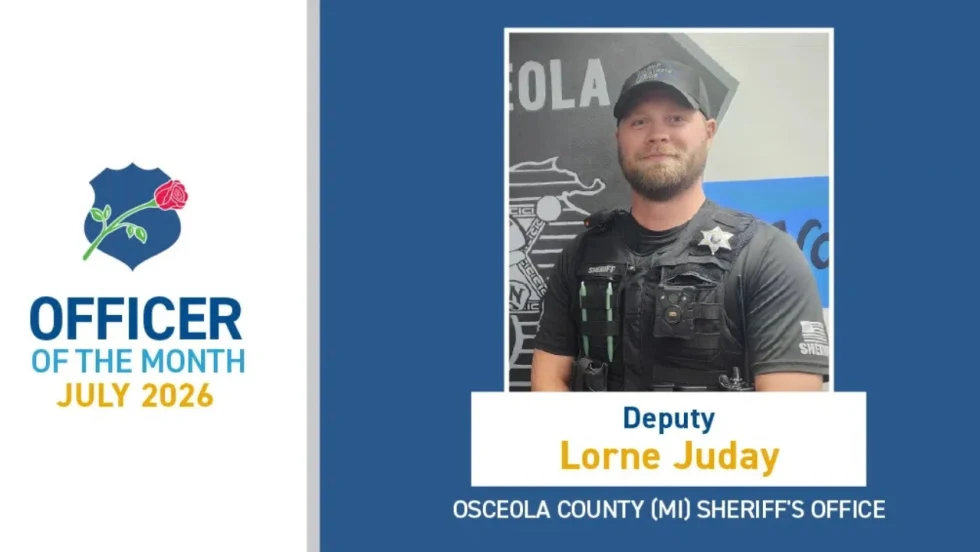
NLEOMF Announces July 2026 Officer of the Month
NLEOMF honored a Michigan deputy sheriff as the July 2026 Officer of the Month for rescuing a trapped driver from a burning vehicle following a Fourth of July crash.
Read More →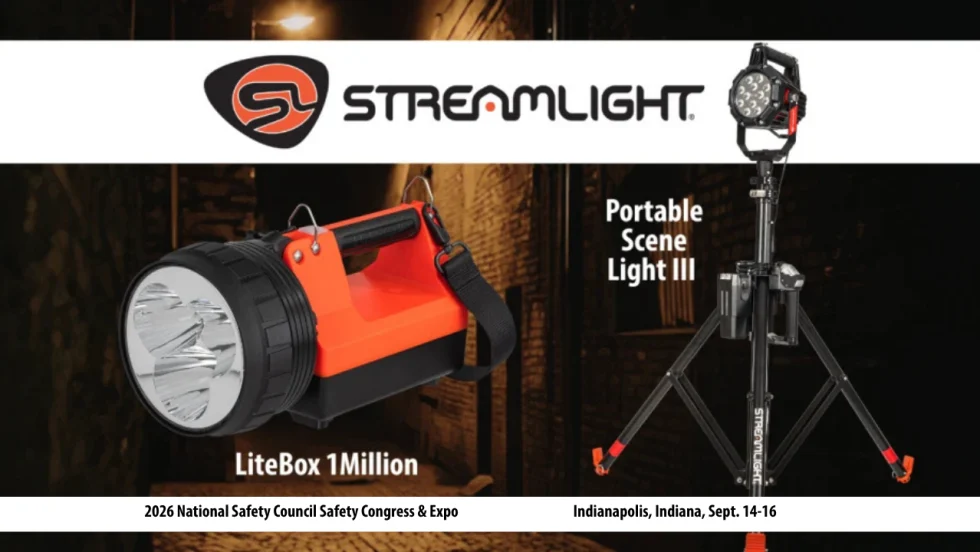
Streamlight to Showcase Newest Lighting Products at National Safety Council’s Safety Congress & Expo 2026
Streamlight will showcase its latest lights, including the Portable Scene Light III and the LiteBox 1Million, at the 2026 National Safety Council (NSC) Safety Congress & Expo.
Read More →
The 2027 World Police & Fire Games Set for Perth, Australia
The 2027 World Police & Fire Games (WPFG) will take place in Perth, Western Australia, from Friday, March 12 through Sunday, March 21, 2027.
Read More →
5.11 Partners with National Fallen Firefighters Foundation to Support #ForThe343
5.11 has joined the nationwide movement honoring the 343 New York City Fire Department firefighters lost on Sept. 11, 2001.
Read More →