



Why I Joined the Bomb Squad
By the time you read this article, I should have completed the six-week basic course at the FBI/Army Hazardous Devices School in Huntsville, Ala. Which means I will be well on my way to becoming a certified bomb technician, a career aspiration that many people—including fellow cops—consider crazy.

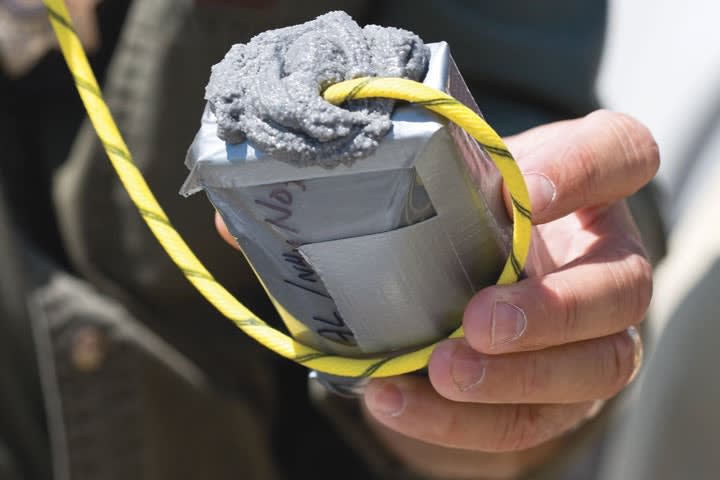
Editor's Note: View our photo gallery, "Joining the Bomb Squad."
By the time you read this article, I should have completed the six-week basic course at the FBI/Army Hazardous Devices School in Huntsville, Ala. Which means I will be well on my way to becoming a certified bomb technician, a career aspiration that many people—including fellow cops—consider crazy.
I've realized a few things in the scant year-and-a-half since I became a member of my department's bomb squad.
Bomb squads don't just deal with the teenager building pipe bombs or Grandpa's grenades that he brought back from the Big One anymore.
It's a scary new world out there with more threats than ever. Incidents like the 1993 World Trade Center bombing, the 1995 Oklahoma City bombing, the Unabomber bombings, and of course 9/11, have all solidified the stark realization that devastating acts of terrorism can happen here in America. And the principal weapon of the terrorist is the bomb.
A Growing Threat
The sad truth is that Improvised Explosive Devices (IEDs) have and will become more of a threat to American law enforcement and the American public.
And they are easy to make. Recipes for high explosives and various bomb designs have long been available to the public in books like "The Poor Man's James Bond" and "The Anarchist Cookbook." Worse, the Internet is a treasure trove of information for anyone who wants to make a bomb.
Contrary to the beliefs of some people, Internet instructions on how to make IEDs can be very accurate and very dangerous. They are no longer just step-by-step instructions on how to blow yourself up.
I attended a class last year taught by an explosives expert and forensic chemist. In a controlled setting, we actually manufactured some of the Internet recipes for high explosives like TATP, MEK, and HMTD. I was naive. I just didn't realize how easy it was to purchase the chemical precursors necessary to manufacture high explosives. A trip to Sally's Beauty Supply, Wal-Mart, and Home Depot, and we were good to go.
So one reason I wanted to join the bomb squad is that the threat is prevalent.
A Changing Field
Another is that the role of the bomb tech has expanded greatly in the past few years and so has the quality of training available to officers who want to learn how to neutralize bombs.
The modern bomb tech wears many hats. He or she might help a SWAT team make an explosive entry; he might work with HAZMAT teams at a meth-lab, she might respond to a suspected large vehicle bomb. The list goes on and on.
Law enforcement bomb squads as we know them today really haven't been around too long. In the 1970s, the responsibility of handling explosives calls began to shift to local law enforcement agencies. According to Dale Goetz, director of the Rocky Mountain Chapter of the International Association of Bomb Technicians and Investigators (IABTI) and a bomb tech since 1974, prior to this the military was responsible for dealing with civilian incidents.
Goetz says the military's method of dealing with an explosive device was to B.I.P. or "blow in place." While effective at rendering the device safe, it wasn't always the best option for the local agencies. Something needed to change.
That something was a program established by the federal government to help local law enforcement agencies field qualified bomb squads. The federal government and the Army established the three-week bomb school in the early 1970s in an effort to provide more standardized training to non-military bomb technicians. This course, now known as the Hazardous Devices School, is administered by the FBI and is still held at the Army's Redstone Arsenal in Huntsville. It is the only U.S. government school to certify non-military bomb technicians.[PAGEBREAK]
Remote Entry
A lot has changed at HDS in the last decades. Goetz attended the Hazardous Devices School in 1979. He says that when he started as a bomb technician, an explosives ordinance disposal (EOD) kit consisted of pliers, a knife, a roll of duct tape, and maybe a flak jacket, if you were lucky.
The emphasis back then was on hand-entry to disarm or render safe the explosive device. This meant the bomb technician was literally hands-on with the device as he or she attempted to disarm it. As you can imagine this put the bomb technician in significant danger.
Today, the emphasis is on remote entry. This means keeping the bomb technician away from the suspected device as much as possible.
Advances in technology have made remote entry possible and bomb techs much safer. Portable digital X-ray equipment, PAN disrupters, and bomb robots allow a suspected device to be inspected and manipulated remotely, thus reducing the bomb technician's "time on target."
Advances in technology have also resulted in bomb suits that provide a significant level of protection. This is a great leap forward in safety and a far cry from the flak jacket of a couple of decades ago.
Commander of the Denver Police Bomb Squad Sgt. Dave Marker feels that improvements in technology have certainly contributed to safer responses, not only for the bomb technician but also for the public.
However, Marker is quick to point out that while technology is great, it's still the human element that's the most important. Technology will never replace a bomb technician's good judgment, common sense, and experience.
Bomb Squad Accreditation
In addition to being Denver PD's Bomb Squad commander, Marker is also one of 12 voting members on the National Bomb Squad Commanders Advisory Board (NBSCAB). NBSCAB was established in 1998 to be a common voice for all the law enforcement bomb squad commanders from around the country.
NBSCAB has played a large role in advancing and standardizing the training and equipment of U.S. bomb squads. The group works closely with many federal agencies to ensure law enforcement bomb squads move into the future with better tools and training. Additionally, NBSCAB was instrumental in working with the Hazardous Devices School to push for the establishment of accredited bomb squads and also to certify bomb technicians.
Bomb squads must meet certain criteria in order to be accredited, including having specific, mandatory equipment depending on the size of the squad. One major change is that all accredited bomb squads must have a robot by 2009.
Today, there are more than 450 nationally accredited bomb squads in the United States and thousands of certified bomb technicians working on those squads.
Marker believes that the accreditation and certification process are a good thing because it means better interoperability between different bomb squads. It's much easier for teams to work together on a large scene when they share the same training and similar equipment. Marker has also noted a trend involving more collaboration between regional teams in terms of training. Again, if teams train together, chances are better that they'll work well together during a real incident.
This concept also integrates well into the National Incident Management System (NIMS), a 2004 directive from the Department of Homeland Security. At its core, the NIMS program was created to ensure a more effective, standardized multi-jurisdictional response to major incidents. If this incident involves explosives, then the incident commander knows that the EOD assets from various agencies can work together as a team.[PAGEBREAK]
Car Bombs
The federal government is also assisting squads with training and funding. Because of the prevalence of incidents in the United States and abroad involving vehicles as bombs—the common term is vehicle borne improvised explosive device (VBIED)—training has had to evolve to keep up with this growing threat.
New classes like the large vehicle IED countermeasures class and VBIED post-blast investigation class are funded by the federal government in an effort to keep bomb squads ahead of the curve. Regarding funding and equipment, the FBI has taken a lead role in procuring numerous pieces of specialized equipment for bomb squads. Homeland security grant opportunities and other federal grants assist squads in replacing or purchasing required equipment. Seeing that an industry standard Remotec Andros 6A bomb robot costs around $175,000, grants are a must for all but the largest bomb squads.
To say the least it's a challenging and dynamic time for bomb squads in the United States. But the mission is the same as it's always been: to safely respond to and render safe dangerous devices.
Still, the 21st century brings some new challenges that bomb squads have to be prepared for, including IEDs, VBIEDs, chemical weapons, biological weapons, nuclear devices, and radiological weapons. Mass casualty terrorism will happen again on American soil; it's just a matter of time.
In my humble opinion, the saving grace is that America's law enforcement bomb squads will continue to diligently prepare for, train for, and respond to future incidents with the utmost safety and professionalism.
The International Association of Bomb Technicians and Investigators (IABTI) is the premier professional organization for bomb technicians. Its motto is "Concunentes Provolationem." This translates from the Latin into "Meeting the Challenge." That says it all, for them and for me.
How to Become a Bomb Technician
My road to becoming a bomb technician has been a long one. The main reason is because the last time there was an opening on my department's team was 10 years ago. So bomb tech is not an easy assignment to get.
That said, I'd like to offer some advice to cops who are thinking about joining their local bomb squad.
First, make sure you meet all of the prerequisites set by your squad. Prerequisites may include length of service, specific training, and above average annual reviews.
Second, get your foot in the door early. Talk to current squad members and let them know you're interested in this type of work. Try to attend a couple of bomb squad training days to gain a good understanding of what the job entails. When it comes time to test you may have your foot in the door because the team already knows your name and that you've shown some interest.
Also, my team was looking for some investigative experience, and specifically an officer with crime scene investigation experience. I'm currently assigned to detectives and have been a CSI for years. In that time I took a couple of arson and post-blast investigation classes to help prepare myself. The bomb squad is responsible for post-blast investigation so any training along this line should help.
My testing for the team included a written test, an oral board, and a practical exercise. The practical exercise consisted of operating in the full bomb suit and completing a series of tasks including carrying X-ray and disruption equipment a couple of hundred feet, then getting down to ground level and setting up the gear, and finally walking back to the start.
If it's possible, I recommend that you get dressed in a full bomb suit before the testing so you will have some idea if you can function in the suit.
Denver PD Bomb Squad Commander Dave Marker says he's looking for some specific traits when it comes to new team members. He wants candidates who are willing to work with the team, have some mechanical and electronics aptitude, and are able to logically think through a problem and then take the required action to solve the problem.
Once you're accepted onto the bomb squad, it's about an 18-month wait list to get into the Hazardous Devices School. You have to meet height/weight guidelines, have a full physical including a hearing test and an eye exam, and undergo a background check to attend HDS. All new techs must complete a 40-hour technician level HAZMAT class before attending HDS. Contact your local bomb squad commander for more details.
David Spraggs is a major crimes detective and a certified bomb tech for the Boulder (Colo.) Police Department. He is a member of the Police Advisory Board and a frequent contributor.
Related:
More Patrol

Streamlight Portable Scene Light III Wins 2026 OH&S New Product of the Year Award
Streamlight’s Portable Scene Light III has won the 2026 Occupational Health & Safety (OH&S) New Product of the Year Award in the Lighting category.
Read More →
Adept Armor Introduces Two New Rifle Plates
Adept Armor has launched two new Level IV ballistic plates, the Emperor and the Archon Mark 2, which brings Adept Armor’s new Quatroid ceramic to the high-threat, performance-value center of the range at 5.2 pounds.
Read More →
POLICE Product Test: Benchmade Bailout
The Benchmade Bailout is a slim, lightweight carry knife with a deep-ride pocket clip and comes in a variety of blade steels and scales. Here is a detailed review of the Taiga Green Bailout, released earlier this year.
Read More →
NLEOMF Announces July 2026 Officer of the Month
NLEOMF honored a Michigan deputy sheriff as the July 2026 Officer of the Month for rescuing a trapped driver from a burning vehicle following a Fourth of July crash.
Read More →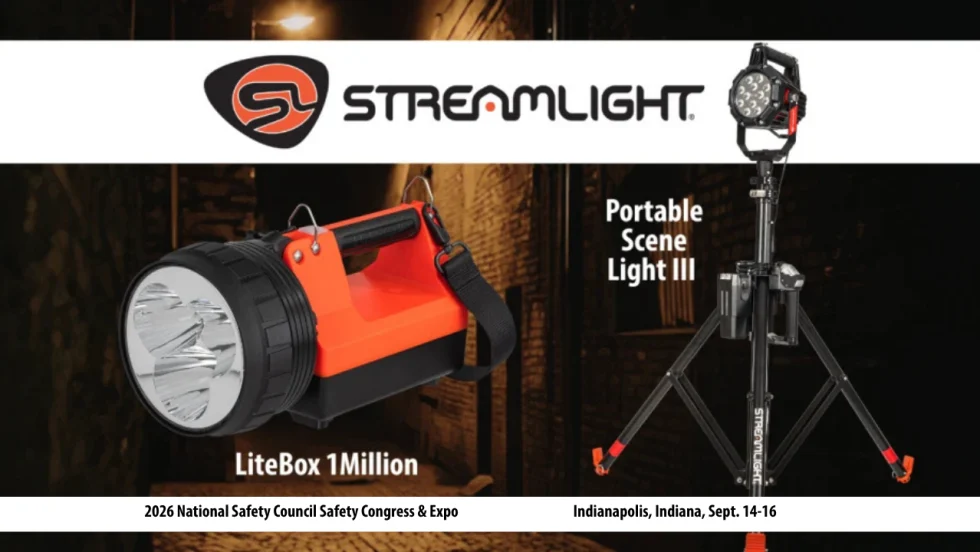
Streamlight to Showcase Newest Lighting Products at National Safety Council’s Safety Congress & Expo 2026
Streamlight will showcase its latest lights, including the Portable Scene Light III and the LiteBox 1Million, at the 2026 National Safety Council (NSC) Safety Congress & Expo.
Read More →
The 2027 World Police & Fire Games Set for Perth, Australia
The 2027 World Police & Fire Games (WPFG) will take place in Perth, Western Australia, from Friday, March 12 through Sunday, March 21, 2027.
Read More →
5.11 Partners with National Fallen Firefighters Foundation to Support #ForThe343
5.11 has joined the nationwide movement honoring the 343 New York City Fire Department firefighters lost on Sept. 11, 2001.
Read More →
Team Wendy Announces Title Sponsorship of the Jorge Pastore Foundation
Team Wendy’s 3-year partnership with the Jorge Pastore Foundation expands access to programs that strengthen those who serve.
Read More →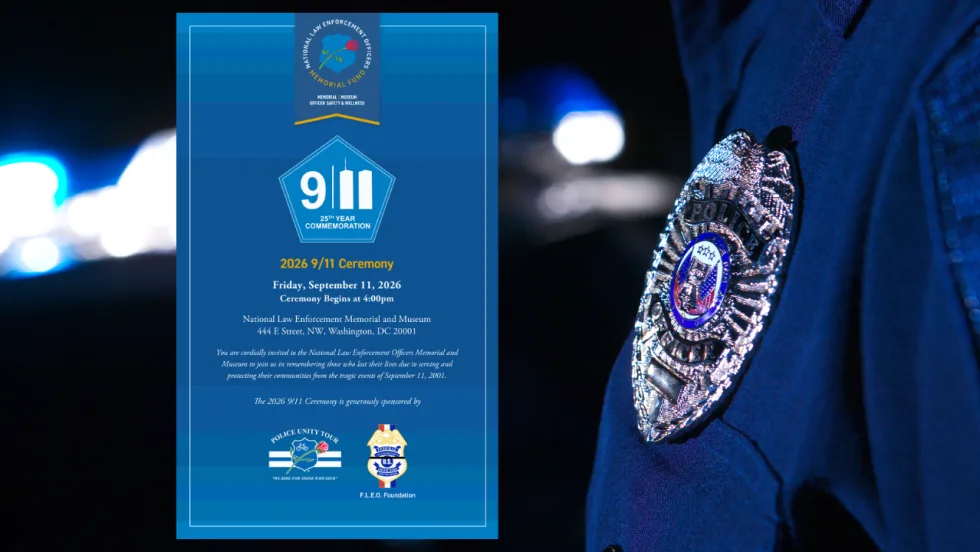
National Law Enforcement Memorial and Museum Hosting 9/11 25th-Year Commemoration Ceremony
The National Law Enforcement Memorial and Museum is hosting a 9/11 25th Year Commemoration Ceremony on Sept. 11 at 4 p.m.
Read More →
National Law Enforcement Officers Memorial Fund Announces June 2026 Officers of the Month
The National Law Enforcement Officers Memorial Fund (NLEOMF) named 15 officers of the Chico Police Department (California) as the Officers of the Month for June 2026 for their roles in responding to an active-shooter incident at a public library.
Read More →