



Setting Interpersonal Boundaries
Some days it seems there's always some schmuck hell-bent on ruining my day. There have been times when I was really good at not letting the person get to me, and then there were other times when I wasn't and just added to the drama. In reality it is my reaction to the situation that has either helped or made it worse.

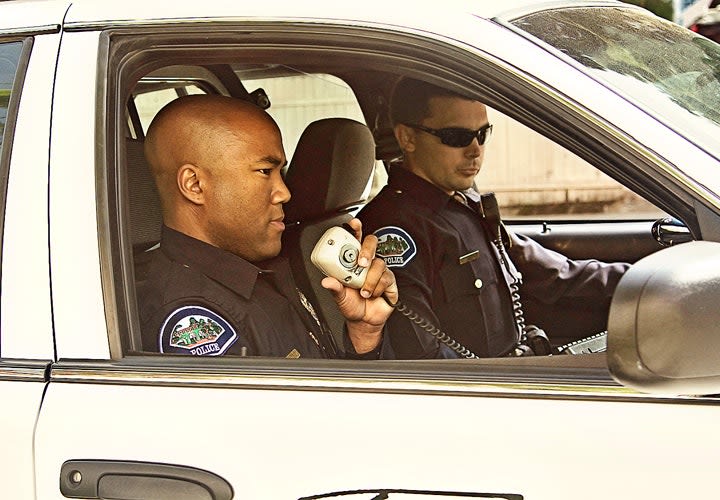
Photo: Vince Taroc.
As I enter into my 24th year in law enforcement, I look back and wonder what I could have done differently to cope with the ups and downs of the job. Some days it seems there's always some schmuck hell-bent on ruining my day.
There have been times when I was really good at not letting the person get to me, and then there were other times when I wasn't and just added to the drama. In reality it is my reaction to the situation that has either helped or made it worse. So what advice would I give to myself if I could do it all over again? I'd take a good look in the mirror and say, "Learn to understand and make better use of boundaries."
A Rose by Any Other Name...
Like me, you deal with boundaries every time you show up for work. Those your agency sets have familiar names like standards of conduct, use-of-force policies, and arrest procedures. These boundaries establish what is allowable on the job. As an individual, you also need to define for yourself what is and is not acceptable in the workplace, especially when it comes to dealing with your co-workers.
I discussed the concept of interpersonal boundaries with Ms. Kelli Willard, a licensed associate marriage and family therapist. She says: "Maintaining good personal boundaries is a key to resolving interpersonal conflict. Knowing where your own emotions end and where the other person's begin is crucial to owning only your actions and reactions, thus avoiding the escalation that usually results from entanglement." As I interviewed her for this article and took notes, the term entanglement struck a chord with me.
I realized how many times I had allowed myself to get sucked into someone else's drama. I thought about the times I had gone to work in a good mood only to have the air sucked out of me and be drowned by some "boat anchor" that was having a bad day. Willard helped me realize that people don't ruin your day; it's your self-entanglement with them that does.
According to Willard, one of the best ways to stay untangled is to set boundaries and stick to them. Once you set boundaries for yourself, you establish what is and is not acceptable to you as a person. Those boundaries then set the tone for all of your daily interactions. For example, I tell new supervisors all the time that you can be friendly but that doesn't mean you have to be everyone's friend.
The Laws of Boundaries
Willard recommended that I look into the works of two well-known authors, Henry Cloud and John Townsend, who have written extensively on setting boundaries in an interpersonal setting. Though their work focuses on marital relationships and not specifically on law enforcement, I found some of their advice crosses over to other interpersonal settings as well. In the book "Boundaries," Cloud and Townsend refer to "The 10 Laws of Boundaries," which I found very helpful. These laws include the laws of sowing and reaping, responsibility, and respect.
The law of sowing and reaping states that each of our actions has consequences. Someone will pay for them. The law of responsibility states that we are responsible to each other but not for each other. In other words, we are responsible for our own actions and we can't blame them on someone else. The law of respect teaches that if we want our boundaries to be respected, we must respect those of others in turn. If each of us understood how to apply these three simple tenets at work, our time there would be so much easier.
Keep Emotions in Check
The life of a police officer consists of an endless stream of decision-making. Many of these decisions are emotionally charged. No one, however Zen or Buddha-like, is bulletproof when it comes to his or her own emotions. Under the right conditions, everyone has a button that can be pushed.[PAGEBREAK]
Most veteran officers have come to realize that and understand that it's not the emotion you feel that gets you in trouble but what you do with it instead. If someone pushes your buttons, what gets you in trouble is what you do next — something you can learn to control. It's a classic example of what I call the circle analogy. In just the way a circle starts and ends in the same place, what happens to you starts and ends with you.
For example, if a supervisor pisses you off by purposely pushing your buttons and you react with pure emotion by punching him in the face, it might feel good right up to the point when you are turning in your badge and gun. You'll have plenty of time to ponder if it was worth it or not while you're in the unemployment line practicing how to say, "Would you like that supersized?"
Use Your Boundaries
To avoid such pitfalls, practice being aware of the boundaries between your emotions and those of your co-workers, and then putting them to use. Take for instance the tone you use with people at work. If you're having a bad day, be conscious of that fact and don't take it out on a co-worker. On the flip side, if someone is taking it out on you, what's wrong with telling him you don't appreciate it and you'd like for him to stop?
In law enforcement there is some unwritten rule that states we can't handle it that way because it's politically incorrect. But as long as you're not rude about it, this tactic can be effective. Sometimes using a little bit of humor can also help alleviate the tension. It might be as simple as saying, "Damn, no more coffee for you!"
Please don't get me wrong, I know it's not that easy and there are times when you just have to suck it up. Also, I'm not suggesting that you lose your empathy or your ability to care. What I am asking you to consider are the times when you could have said something to de-escalate a situation and didn't. Remember, a boat anchor lives by the credo that misery loves company. There are hundreds of them walking around out there waiting to drag you down to the bottom.
Don't Get Sucked In
I am by no means immune to button pushing by co-workers. Many years ago I worked for a female supervisor who lashed out at me during one of her famous tantrums. It was obvious to anyone who got near her she wasn't having a good day. Her rants always revolved around fixing blame on someone other than herself and, being true to form, this time would prove to be no different. She started criticizing me for following her orders to carry out another of her poor decisions that she pretended to never make. Finally, I'd had enough and interrupted her. It was time for one of my own tirades.
I told her I wasn't her redheaded stepchild, nor was I her husband and she needed to tone it down. I told her she needed to stop yelling at me and give me the same respect she demanded for herself. I reminded her that if she didn't like me personally she was to at least respect my rank. I may have even included a comment or two about her eating some chocolate and leaving me alone but I don't remember. I have to admit, it felt great to stand up for myself … for all of about 10 seconds.
Unfortunately, I let my emotions pick and choose my words for me. The chocolate comment that I will neither confirm nor deny was way out of line. It wasn't that I was being politically incorrect that bothered me. What did bother me was that I had become as big of an ass as she was. In reality all I accomplished was ending up playing right into her hands, and I paid the price later.
I allowed myself to get entangled in her emotions. Instead of just saying, "I'm so sorry you are having such a bad day. I'll look into it and get back to you," I locked horns with her.
Looking back, I learned a valuable lesson from that incident. If I had stayed within my own boundaries and controlled my emotions, I would have fared much better. As you get more experienced in this business, you realize the only person you can control is yourself.
Final Thoughts
We create much of the drama that happens to us at work by not setting boundaries for ourselves. We react to our co-workers instead of dealing with them. We allow our buttons to be pushed and when bad things happen to us because of it, we blame someone else. Learn to take control of your emotions by setting boundaries. Learn to disengage tactfully and deal with it. You'll be much happier and more effective at work if you learn to identify boat anchors and cut them loose long before they can drag you down.
Amaury Murgado is a special operations lieutenant with the Osceola County (Fla.) Sheriff's Office. He is a retired master sergeant from the Army Reserve, has 23 years of law enforcement experience, and has been involved with martial arts for 37 years.
More Patrol

Streamlight Portable Scene Light III Wins 2026 OH&S New Product of the Year Award
Streamlight’s Portable Scene Light III has won the 2026 Occupational Health & Safety (OH&S) New Product of the Year Award in the Lighting category.
Read More →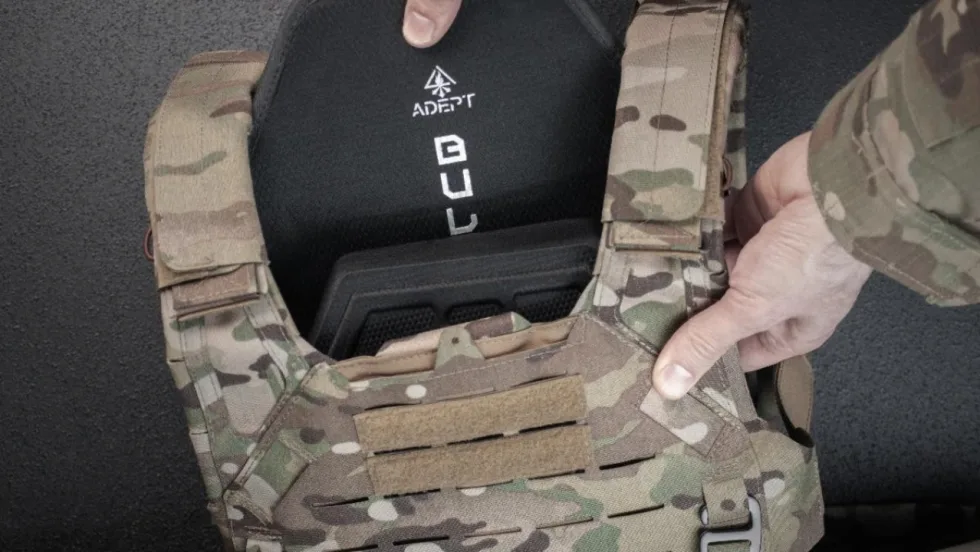
Adept Armor Introduces Two New Rifle Plates
Adept Armor has launched two new Level IV ballistic plates, the Emperor and the Archon Mark 2, which brings Adept Armor’s new Quatroid ceramic to the high-threat, performance-value center of the range at 5.2 pounds.
Read More →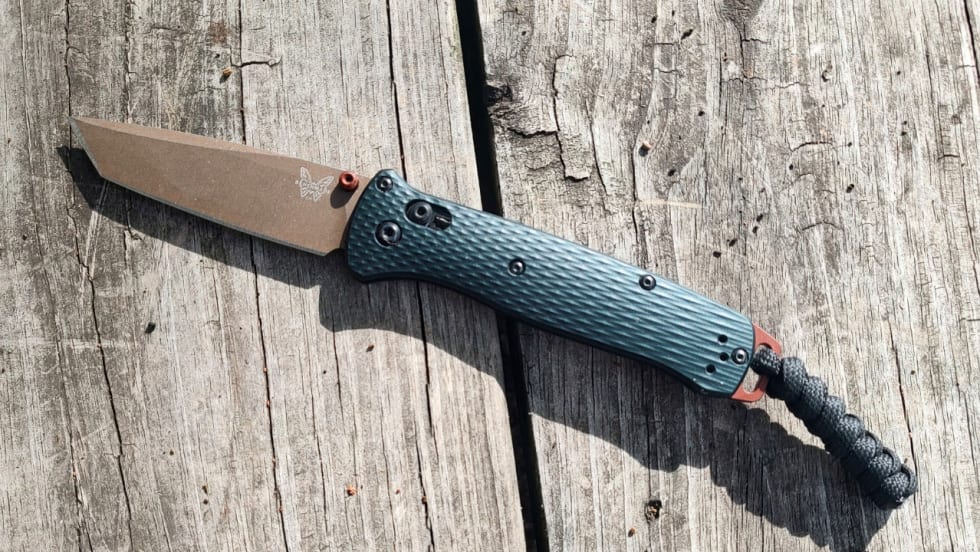
POLICE Product Test: Benchmade Bailout
The Benchmade Bailout is a slim, lightweight carry knife with a deep-ride pocket clip and comes in a variety of blade steels and scales. Here is a detailed review of the Taiga Green Bailout, released earlier this year.
Read More →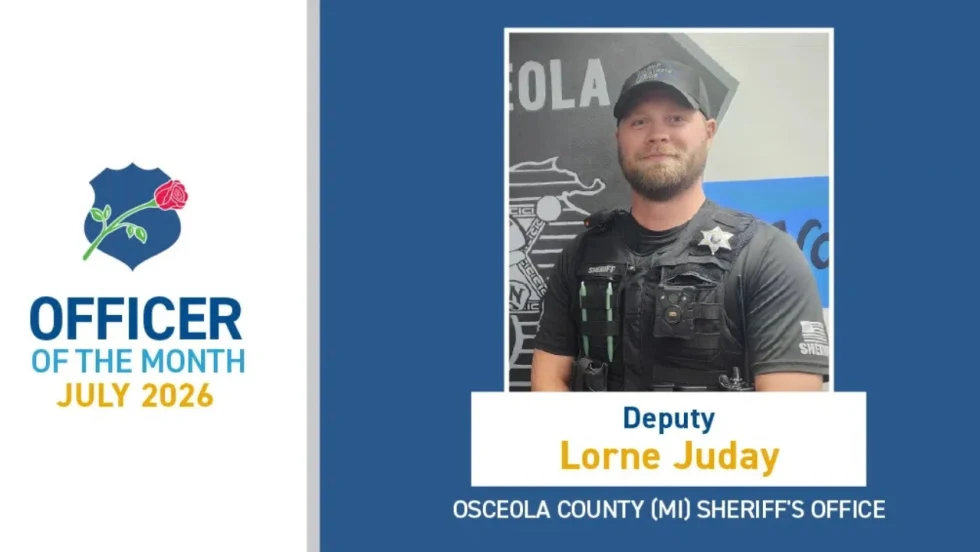
NLEOMF Announces July 2026 Officer of the Month
NLEOMF honored a Michigan deputy sheriff as the July 2026 Officer of the Month for rescuing a trapped driver from a burning vehicle following a Fourth of July crash.
Read More →
Streamlight to Showcase Newest Lighting Products at National Safety Council’s Safety Congress & Expo 2026
Streamlight will showcase its latest lights, including the Portable Scene Light III and the LiteBox 1Million, at the 2026 National Safety Council (NSC) Safety Congress & Expo.
Read More →
The 2027 World Police & Fire Games Set for Perth, Australia
The 2027 World Police & Fire Games (WPFG) will take place in Perth, Western Australia, from Friday, March 12 through Sunday, March 21, 2027.
Read More →
5.11 Partners with National Fallen Firefighters Foundation to Support #ForThe343
5.11 has joined the nationwide movement honoring the 343 New York City Fire Department firefighters lost on Sept. 11, 2001.
Read More →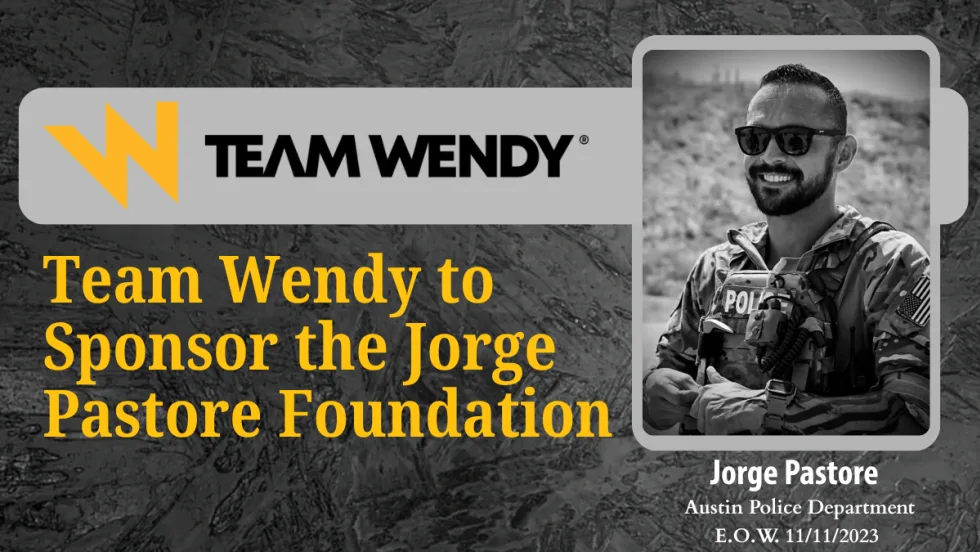
Team Wendy Announces Title Sponsorship of the Jorge Pastore Foundation
Team Wendy’s 3-year partnership with the Jorge Pastore Foundation expands access to programs that strengthen those who serve.
Read More →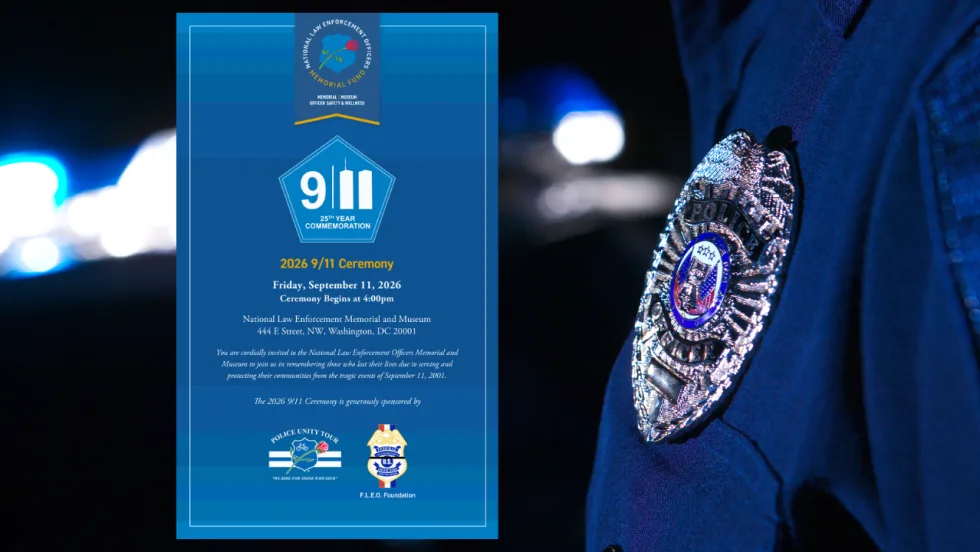
National Law Enforcement Memorial and Museum Hosting 9/11 25th-Year Commemoration Ceremony
The National Law Enforcement Memorial and Museum is hosting a 9/11 25th Year Commemoration Ceremony on Sept. 11 at 4 p.m.
Read More →
National Law Enforcement Officers Memorial Fund Announces June 2026 Officers of the Month
The National Law Enforcement Officers Memorial Fund (NLEOMF) named 15 officers of the Chico Police Department (California) as the Officers of the Month for June 2026 for their roles in responding to an active-shooter incident at a public library.
Read More →