



Unlawful Reaction to Unlawful Action
Let's face it—law enforcement officers sometimes make detentions, arrests, entries, or searches that run afoul of one or more of the hundreds of judicial decisions differentiating "reasonable" and "unreasonable" searches and seizures.


Photo courtesy of iStockPhoto.com.
Let's face it—law enforcement officers sometimes make detentions, arrests, entries, or searches that run afoul of one or more of the hundreds of judicial decisions differentiating "reasonable" and "unreasonable" searches and seizures. Usually, police error may mean the suppression of resulting evidence under the so-called "fruit of the poisonous tree" doctrine. (Wong Sun v. U.S.)
But what if a suspect reacts to an attempted unlawful detention, arrest, entry, or search by discarding evidence or committing a new crime? Can you then lawfully arrest and search him? Will resulting evidence be admissible?
Most courts have adopted the position that the suspect's abandonment of evidence or commission of a crime following an unlawful search or seizure attenuates the taint of police illegality and permits arrest and prosecution for the new offense, and admission of consequent evidence. The following cases from around the country are illustrative.
California v. Hodari D. (U.S. Supreme Court)
A group of young men ran when an Oakland Police car approached. One officer pursued Hodari on foot and saw him throw down a rock of crack cocaine as he fled. The rock was recovered, and Hodari was captured and arrested. He moved to suppress the drugs, on the ground of unlawful attempted detention. Although the California appellate court agreed with Hodari and suppressed the evidence, the U.S. Supreme Court reversed and held the drugs admissible. The court said this:
"Assuming the officer's pursuit in the present case constituted an unjustifiable show of authority requiring Hodari to halt, since Hodari did not comply, he was not seized until he was tackled. The cocaine abandoned while he was running was in this case not the fruit of a seizure."
U.S. v. King (1st Circuit—New Hampshire)
A trooper approached two men sitting in a parked car, ordered them out, and began to pat them down for weapons. The driver ran, pulled a gun, and fired at the officer. The officer pulled King, the passenger, to the ground and retrieved a pistol from King's waistband, then returned fire toward the fleeing driver. King was charged as a felon with a firearm and moved to suppress the gun, arguing that the initial detention was unlawful and the gun was fruit of the poisonous tree. The federal appeals court denied suppression, holding as follows:
"We assume without deciding that there was some illegality in the conduct of the officers prior to the shooting. We believe that the shooting was an independent intervening act which purged the taint of the prior illegality. At the moment the shot was fired, the officer had all the probable cause that was needed to search King."
U.S. v. Sprinkle (4th Circuit—South Carolina)
Under similar circumstances, officers were fired on after attempting what the court found to be an unlawful detention, and the defendant sought to suppress the illegal gun the officers recovered after arrest. The court of appeals summarized its view of the law this way:
"If a suspect's response to an illegal stop is itself a new, distinct crime, then the police constitutionally may arrest the suspect for that crime. Because the arrest is lawful, evidence seized incident to that lawful arrest is admissible."
U.S. v. Garcia-Jordan (5th Circuit—Texas)
During an arguably illegal detention, the suspect falsely told Border Patrol agents he was a U.S. citizen, which is a federal offense. He moved to suppress his statements and to bar his prosecution because of illegal detention. Denying this motion, the court held that uttering a false claim of citizenship constituted a new crime, so the spoken words were not subject to suppression, and prosecution was not barred. Said the court,
"A person who is stopped or detained illegally is not immunized from prosecution for crimes committed during his detention. Appellant's false statement of citizenship was a new and distinct crime. His prosecution for this new crime is not barred by the exclusionary rule."
U.S. v. Sledge (8th Circuit—Nebraska)
The court found that Sledge had been subjected to an illegal detention and search; however, when he resisted the search and ran from the officers, he committed a new crime that justified arrest and search, resulting in the seizure of narcotics. His suppression motion was denied under the principles applied in similar cases, as the court explained:
"Sledge forfeited any Fourth Amendment protection by resisting and running away, thus creating probable cause for arrest and incidental search. Even assuming the initial detention and pat-down search of Sledge were invalid, Sledge's actions provided independent grounds for his arrest and the cocaine found in the search incident to that arrest is admissible."
U.S. v. Mitchell (9th Circuit—Hawaii)
During an arguably illegal de facto arrest by Secret Service agents at the Honolulu airport, Leroy Mitchell made repeated threats to kill the president, declaring that he was going to drown the president in the ocean. Charged with unlawful threats, he tried to suppress his statements as the fruits of unlawful arrest, thereby barring any prosecution. The court made the following observations:
"A person does not have a license to kill a police officer merely because the officer arrested him illegally. When Mitchell made his threat at the Honolulu airport, he committed a felony. His statements threatening the life of the president were not suppressible as the fruit of an illegal arrest. The mere fact that he may have been arrested illegally does not serve to bar prosecution of that offense."
U.S. v. Bailey (11th Circuit—Georgia)
The suspect's resistance and flight from an attempted unlawful detention by DEA agents provided grounds for arrest and a search that yielded large quantities of heroin and cocaine. Suppression was again denied, based on the same principles adopted by other circuits. The court said this:
"The police may legally arrest a defendant for a new, distinct crime, even if the new crime is in response to police misconduct. If the police have lawfully arrested a suspect, then they may properly conduct incident to that custodial arrest a full search of the person."
Clark v. U.S. (D.C. Circuit)
Clark made illegal threats against the federal officer who was taking him into custody, though without clear-cut probable cause. Consistent with the prevailing view, the D.C. Circuit Court of Appeals refused to suppress his threatening statements as the fruits of unlawful arrest, saying this:
"Since appellant's response to the officer's unlawful action created probable cause to arrest, there is no constitutional basis to suppress the evidence."
Summary
If a review of one of your cases by a supervisor or prosecutor concludes that you initially attempted or committed an unjustifiable detention, arrest, entry, or search, that does not necessarily mean the suspect cannot be prosecuted for offenses he or she committed in reaction. Case authorities such as those briefed above may help establish that evidence is admissible and the suspect is prosecutable for new crimes, notwithstanding any initial missteps. "We are, after all, always engaged in a search for the truth in a criminal case." (Oregon v. Hass)
As always, it's a good idea to check with local prosecutors or legal advisors to verify the rule followed by courts in your local jurisdiction.
Devallis Rutledge is a former police officer and veteran prosecutor who currently serves as special counsel to the Los Angeles County district attorney. He is the author of 12 books, including "Investigative Constitutional Law."
More Patrol

Team Wendy Introduces the EXFIL Endurance Ballistic Helmet, Engineered to Reduce the Burden of Extended Wear
Team Wendy has launched its EXFIL Endurance, a new lightweight ballistic helmet engineered to deliver protection, comfort, and fit during demanding, extended operations.
Read More →
The First Responders Children’s Foundation National First Responders Day Roll Call of Heroes Ceremony Returns to Times Square, NYC
First Responders Children’s Foundation (FRCF), in collaboration with T-Mobile, will host the Roll Call of Heroes ceremony in Times Square to commemorate National First Responders Day on Wednesday, Oct. 28. During the event, FRCF will present 18 Hero Awards.
Read More →
Streamlight to Showcase Newest Lighting Products for Law Enforcement Professionals at IACP 2026
Streamlight will showcase its newest lights for law enforcement at the International Association of Chiefs of Police Annual Conference & Expo. Featured lights will include the TLR-3 X, the PolyTac 1X, and more.
Read More →
Streamlight Portable Scene Light III Wins 2026 OH&S New Product of the Year Award
Streamlight’s Portable Scene Light III has won the 2026 Occupational Health & Safety (OH&S) New Product of the Year Award in the Lighting category.
Read More →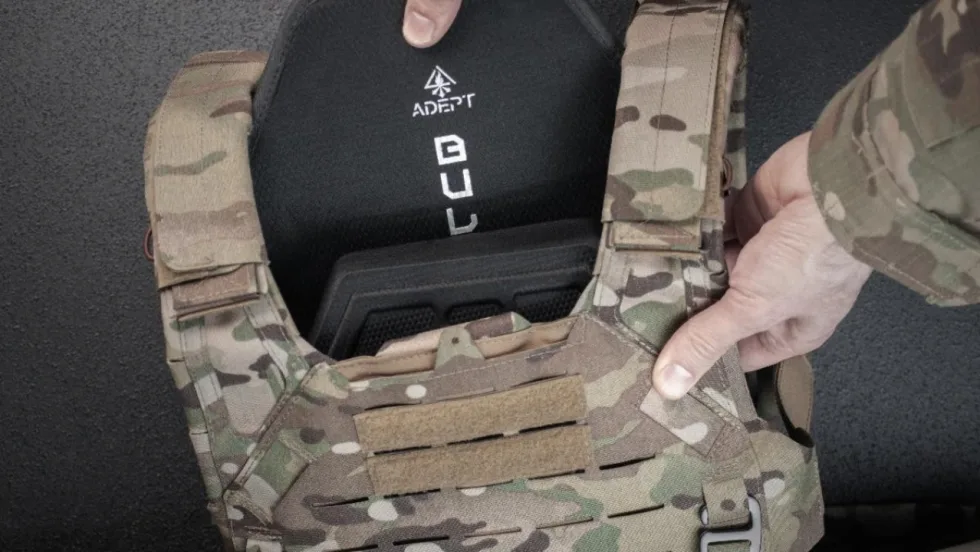
Adept Armor Introduces Two New Rifle Plates
Adept Armor has launched two new Level IV ballistic plates, the Emperor and the Archon Mark 2, which brings Adept Armor’s new Quatroid ceramic to the high-threat, performance-value center of the range at 5.2 pounds.
Read More →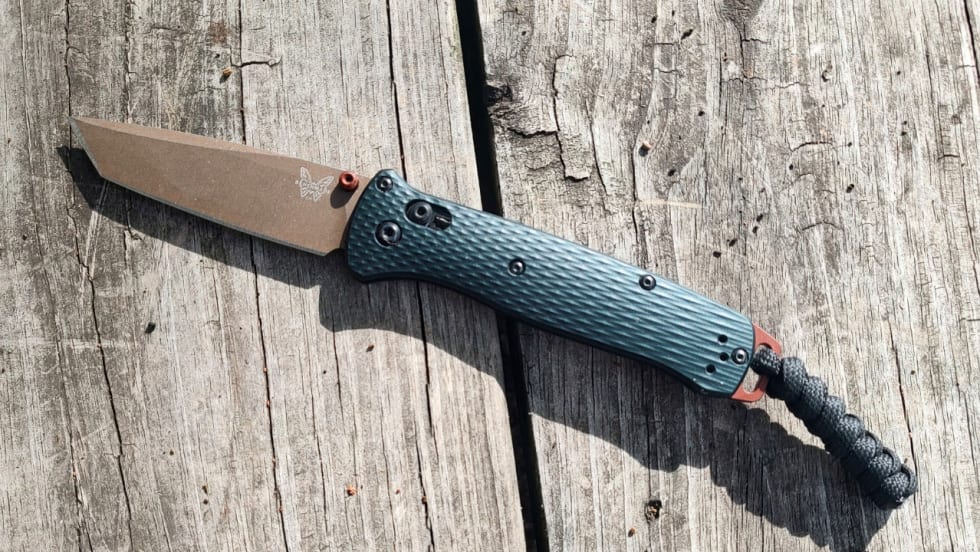
POLICE Product Test: Benchmade Bailout
The Benchmade Bailout is a slim, lightweight carry knife with a deep-ride pocket clip and comes in a variety of blade steels and scales. Here is a detailed review of the Taiga Green Bailout, released earlier this year.
Read More →
NLEOMF Announces July 2026 Officer of the Month
NLEOMF honored a Michigan deputy sheriff as the July 2026 Officer of the Month for rescuing a trapped driver from a burning vehicle following a Fourth of July crash.
Read More →
Streamlight to Showcase Newest Lighting Products at National Safety Council’s Safety Congress & Expo 2026
Streamlight will showcase its latest lights, including the Portable Scene Light III and the LiteBox 1Million, at the 2026 National Safety Council (NSC) Safety Congress & Expo.
Read More →
The 2027 World Police & Fire Games Set for Perth, Australia
The 2027 World Police & Fire Games (WPFG) will take place in Perth, Western Australia, from Friday, March 12 through Sunday, March 21, 2027.
Read More →
5.11 Partners with National Fallen Firefighters Foundation to Support #ForThe343
5.11 has joined the nationwide movement honoring the 343 New York City Fire Department firefighters lost on Sept. 11, 2001.
Read More →