



How to Handle Stress On Duty
Stress is a part of the job. But there are actions you can take to mitigate its effects that don't include the usual advice from doctors and fitness magazines.

Photo: iStock
Stress is a part of the job. But there are actions you can take to mitigate its effects that don't include the usual advice from doctors and fitness magazines.
There are three sets of information relating to stress in law enforcement that we hear about all the time. The first advises that stress can lead to long-term health problems such as heart disease, high blood pressure, and depression. The second compels us to identify the signs of stress, which include headaches, trouble sleeping, problems concentrating, short temper, and job dissatisfaction. The third set contains information about how to deal with stress off duty, which includes advice for eating right, working out, and getting plenty of rest. This is all good stuff for helping with off-duty mitigation, but what about on duty?
The first thing you have to recognize about your stress on duty is what causes it. For example, feeling as if you have no control over your job is a big cause of stress. Another is having too much responsibility. Poor communication among the rank and file is also a factor. Then there is the lack of support for solving problems you are held responsible for.
There are a number of reasons why we have stress on duty and an equal number for why it seems to never go away. The bad news is you can't run from stress. The good news is you don't have to. We have ways to deal with most of our stress. Below is a list of suggestions, in no particular order, that you can tackle yourself before having to reach out professionally.
1. Meet with your supervisor(s).
Meet periodically (every three months) to talk about your job and your performance. Ask them how you can improve. It puts it on them. No more guessing what they want.
2. Get organized.
Keep track of your professional business. Make a list of what's urgent. Use WIN (what's important now) to decide what matters most and what can wait. Keep your planner up to date and use it every day. It should be the first thing you see in the morning as you get ready for work.
3. Don't put things off.
Once it's on the radar, don't blow it off. Get it done as soon as you can. Staying ahead of things helps reduce stress.
4. Learn to say NO.
Don't overcommit yourself. If you take on too much, you're creating stress. We are afraid to say no because we think it looks bad. If given the option, it's OK to say no!
5. Focus.
Do one thing at a time and get it done right the first time. Multitasking has proven to be a myth. If you split your attention in several directions then you are not doing any one thing at 100%.
6. Concentrate.
Try to limit distractions and interruptions. Ten minutes of concentrated work beats an hour of interrupted work every time.
7. Learn to recognize stress.
As soon as you start displaying signs of stress, do something about it before it gets worse. Try to figure out what is causing it and take care of it.
8. Take time off.
Sometimes you just need a day off. Take some time to get away from the job and do something you're passionate about. Recharge your batteries.
9. Change your job situation.
Maybe it's time to change things up. Transfer shifts. Work a different part of town. Change supervisors. Work a different assignment. Or if really bad, go work somewhere else.
10. Talk it out.
Sometimes the way to reduce stress is to talk about it with someone. Create a support system of trusted people that include mentors, co-workers, and friends. Ask for their opinions. Sometimes a new perspective opens doors.
11. Find humor.
Find humor in the situation if at all possible. If not, share a joke or funny story. Sometimes a good laugh is really great medicine.
12. Maintain a positive attitude.
Negativity sucks the energy right out of you. Avoid co-workers who are nothing more than boat anchors. There is a big difference between someone who comes to you for help and someone who comes to you to just complain. Malcontents are never satisfied unless everyone else around them is as miserable as they are.
13. Take a break.
Make the most of your allotted breaks. Even a few minutes can be refreshing. Also take your lunch break, whether you eat or not, whenever possible.
14. Eliminate coffee.
Some stress experts believe that eliminating caffeine from your diet will help tone down your stress. Caffeine is one of those controversial topics that seems to have an equal amount of research for and against. This is one of those tips that you just have to try and see if it works for you.
15. Take control of your surroundings.
Is the traffic insane getting to work? Leave early or take the longer route. Use the extra time to listen to your favorite music or talk show. How you deal with the environment is up to you; being miserable is a choice, not a necessity.
16. Accept that you can only control so much.
Some things will always be outside your sphere of influence or control. It might be cliché, but learn the difference. Don't waste any more energy than you have to on what you can't control.
17. Avoid people who bother you.
If you have to, create some distance. Your agency policy probably says to treat your coworkers with respect and professionalism. It doesn't say you have to become their best friend.
18. Ask others to change their behavior.
If someone is doing something you don't like, tell him or her to stop. It's OK to set boundaries.
19. State limits.
Sometimes you just have to tell someone, "Look, I'm busy right now but I can give you five minutes now and we can finish talking about it later if you'd like." If the person walks off mad, so be it; you just saved five minutes.
20. Forgive.
It takes energy to be angry. Letting go can be very liberating.
21. Learn from your mistakes.
Sometimes we make errors in judgment. Instead of stewing over them, learn from them and don't make the same error again. You can't live in the past, so move on.
22. Adjust your standards.
Sometimes we expect everyone else to meet our high standards. The standard at work is set by policy and not by you. If you want to have higher standards that's great, but stop projecting them on others. Continue to lead by example and be happy with that.
23. Practice stopping bad thoughts.
Keep from working yourself into a lather over something. Tell yourself it's just something to deal with. It's just another item on the to-do list and nothing more.
24. Reframe the issue.
Try looking at your situation from a new viewpoint. The question is actuallly more important than the answer. Maybe instead of framing the situation as a problem you can frame it as an opportunity.
25. Look at the big picture.
Does this really matter? Most of the time it doesn't because it just reflects a difference of opinion between you and someone else.
Bit of Advice: Drop the Drama
My father once told me, "Son, we create our own drama." Those words turned out to be very empowering considering the context of the situation I was in when he told me. Once I realized he was right, I was able to cut my own stress by more than half.
I suggest you look at any self-drama first and take care of it. That buys you some maneuvering space with other stressors that won't go away so easily. Sometimes all you need is a little breathing room to figure things out. If that doesn't work, there is no shame in asking for help.
Amaury Murgado is a special operations lieutenant with the Osceola County (Fla.) Sheriff's Office. He has over 28 years of law enforcement experience and an adjunct professor for Valencia College.
More Patrol

Why Tennessee’s New Deadly Force Law Matters Beyond Tennessee
Tennessee’s new deadly force law is more limited than many may realize. Effective July 1, 2026, the law applies to a person who is not engaged in conduct that would constitute a felony or a Class A misdemeanor and who is in a place where the person lawfully resides. But it could have far-reaching influence.
Read More →
When Do You Transport a Wounded Officer by Police Vehicle?
Time-sensitive injuries like penetrating trauma mean a wounded officer needs to reach a trauma center as soon as possible, and in some cases, that means transporting by police vehicle rather than waiting for EMS. What are the factors to consider in making that transport decision?
Read More →
Safariland Solis Rethinks Concealable Duty
What if Level I retention didn’t require a full duty rig? Safariland’s Solis delivers trusted ALS security in a streamlined OWB platform built for administrative and plainclothes professionals who need protection without the bulk.
Read More →
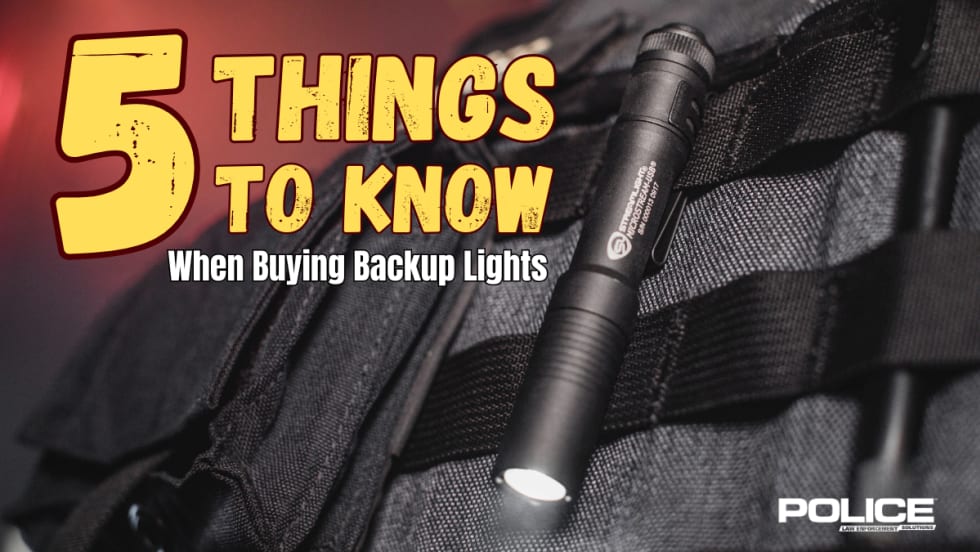
5 Things to Know When Buying Backup Lights for Patrol Use
What is the value of a backup light, and what do you need to consider when selecting one? These smaller lights are invaluable as a secondary or special-purpose light and can be easily carried in a pocket or clipped to MOLLE gear, a key chain, shirt, or a vest.
Read More →
363 Fallen Officers Honored During National Police Week
In case you missed NELOMF’s annual Candlelight Vigil, here are all 363 names of the fallen officers whose names were added to the National Law Enforcement Officers Memorial this year.
Read More →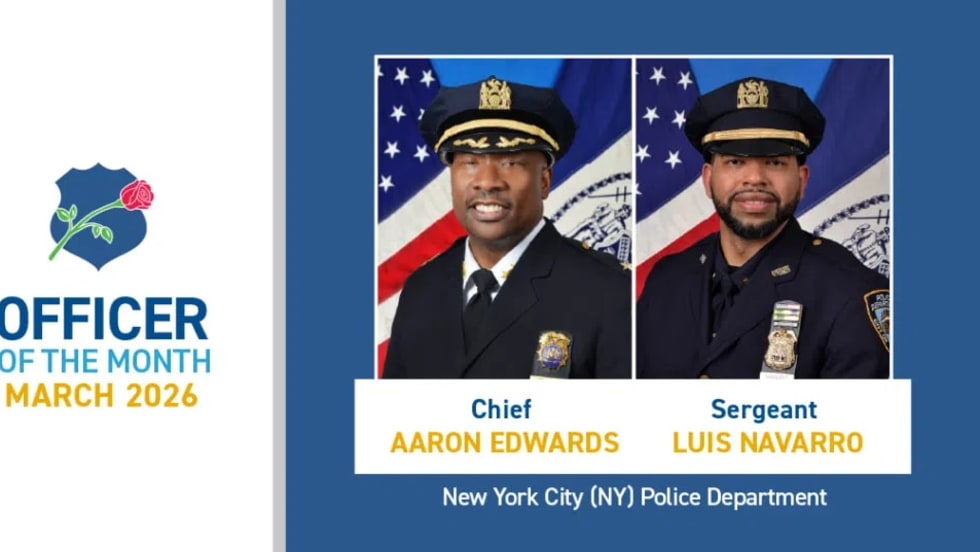
NYPD Officers Who Responded Quickly During IED Incident Recognized as NLEOMF Officers of the Month
Chief Aaron Edwards and Sgt. Luis Navarro were recognized by NLEOMF as Officers of the Month for their response during an IED incident and their actions that helped prevent harm to the public.
Read More →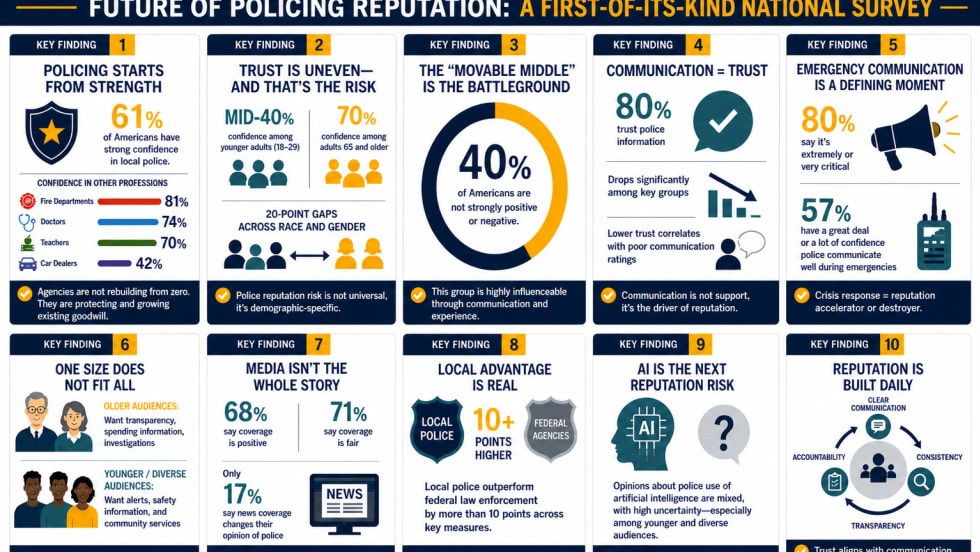
National Police Survey Reveals How Americans View Policing Today
A new national survey offers a comprehensive look at how Americans view policing. The study uncovers public sentiment toward local vs. federal police, communications, crisis response, the use of AI in policing, and more.
Read More →
Streamlight TLR-7 X Selected as Standard Issue Pistol Light by Canadian Federal Police
The Canadian Federal Police will be adding a new duty pistol system, which will include Streamlight’s TLR-7 X and a Glock 45 MOS 7 pistol with a red dot sight.
Read More →
Fallen Law Enforcement Officers from Across the Country to be Honored During 38th Annual Candlelight Vigil on May 13th in Washington, D.C.
The National Law Enforcement Officers Memorial Fund (NLEOMF) will honor 363 fallen officers who have died in the line of duty as their names are added to the National Law Enforcement Officers Memorial during the annual Candlelight Vigil on May 13.
Read More →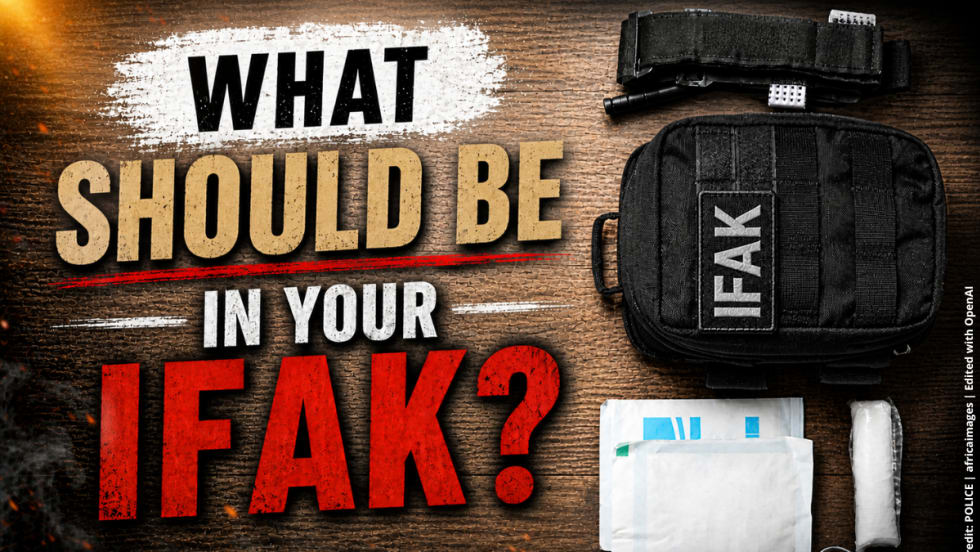
What Should Be in Your IFAK?
What should every officer include in an IFAK? Sydney Vail, M.D., a veteran trauma surgeon and former SWAT surgeon, explains which components are needed and which are not, and stresses training.
Read More →