



Officer Fitness: Peak Performance and Recovery Training
There are science-based methods that have been developed to help manage the physical and mental stresses placed on high-level athletes and these methodologies can be adapted to help manage the physical and mental stresses that are placed upon you by this profession.

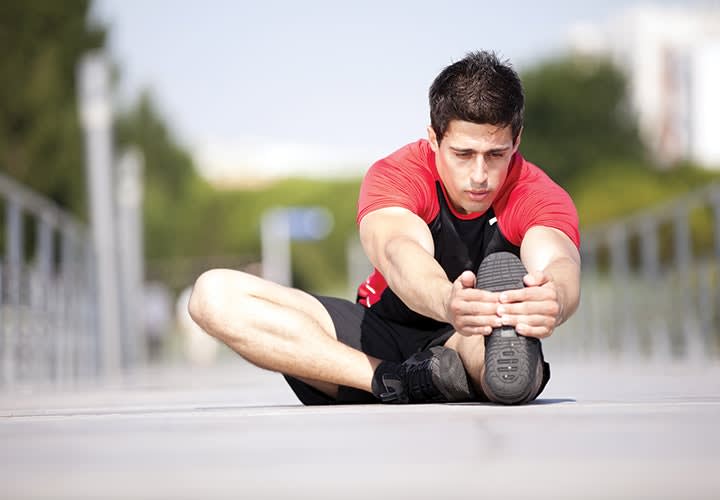
Photo: istockphoto.com
Law enforcement is regularly cited as one of the most stressful occupations in contemporary America. It ranks up there with military service, firefighting, and piloting commercial aircraft. But now, in this current era of policing, what is normally a very stressful job has become the most high-profile, scrutinized, and demanding occupation in society.
Officers are being pulled in many different directions today, and they are being asked to do work that is beyond their stated job description tasks and core competencies. Work conditions in the current political environment can be described as challenging, at best, while officers still must juggle the "normal" stresses of the job, including compressed work schedules, double-shifts, overtime, court appearances, canceled days off, lack of proper sleep, lack of family and recreational time, difficulty maintaining a proper diet and exercise regimen, dehydration, and, of course, the emotional toll that is a natural consequence of witnessing too much negativity and tragedy.
As working law enforcement officers, you know this all too well. But here is something you may not know. There are science-based methods that have been developed to help manage the physical and mental stresses placed on high-level athletes and these methodologies can be adapted to help manage the physical and mental stresses that are placed upon you by this profession.
In the world of sports, the goal is to help athletes achieve what is known as "peak performance" and to aid in optimizing their recovery through training. Clinical sports psychologist, applied sports scientist, and author of the forthcoming brain sciences book "The Brain Always Wins," Dr. John Sullivan, defines Peak Performance as:
…a state that is also known as peak experience, the zone of optimal functioning and flow. It refers to a moment when an individual's CNS (central nervous system) health status is high and ready for demands thereby allowing sub-systems (e.g., cardiac, endocrine, neuromuscular, etc.) to respond accordingly.
Dr. Sullivan further states:
Recovery training consists of active and passive activities that allow for CNS growth, adaptation, and detoxification—which then leads other systems to do the same. Since all training produces trauma, recovery must be optimized for growth and improvement to happen.
To achieve this level of performance and recovery, doctors and trainers work with athletes on every level of their physical and mental preparedness. They bring the vetted science behind peak performance and recovery to many areas of the athletes' lives, including their nutrition, hydration, relaxation, rest, physical training, mental training, and injury prevention.
Collegiate and professional sports teams spend huge amounts of money on peak performance and recovery so that their teams and athletes are put in the best position to garner more wins. But, as was pointed out in an article titled "Police Training" in the March 2003 issue of The CrossFit Journal, "Cops and soldiers are professional athletes. In fact, we argue that the physical preparedness required of military combat—and by extension law enforcement—matches and regularly surpasses that required of Olympic athletes."
This is why some elite military units have been utilizing the science of peak performance and recovery to help their operators garner more "wins" in their world, which in military operation means staying alive, completing their missions, and remaining as healthy as possible.
Yet, little-to-no money is being spent by agencies in the area of peak performance and recovery for law enforcement, and little-to-no information about peak performance and recovery is being shared with law enforcement officers. This is true even though the job that law enforcement personnel do on a daily basis is much more critical and has a much greater impact on our society than the job of any athlete. Therefore, I am asking officers to start thinking of themselves as professional athletes. More importantly, I'm asking officers to treat their minds and bodies as such in order to improve their performance, recovery, and overall health. This is a game-changer.
To facilitate this, I will be writing future columns for POLICE that outline some peak performance and recovery training modalities. I have been researching these concepts and practices for both my department and myself, and I want to share this information with as many law enforcement personnel as possible. In doing so, I hope to assist law enforcement personnel in increasing job performance, improving readiness, and combating the effects of fatigue and stress.
Future columns will cover concepts such as understanding the role of the autonomic nervous system (ANS); proper sleep, nutrition, and hydration; physical training, relaxation breathing, meditation/mindfulness, and recovery training.
You can read about all these topics in health and fitness publications and on their Websites, but I will address these topics in a law enforcement-specific context. It is my hope that, by sharing the methods of peak performance and recovery in a way that addresses the unique needs of law enforcement, officers may gain some skill sets that could lead to:
Better Cognitive Function
Enhanced Decision Making
Greater Emotional Control and Management
Improved Reaction Times
Optimized Physical Performance
Better Response to Crisis
Improved Response to Stress
Better Overall Resilience
Above all, it is my hope that the information that will be found in my future columns may help officers improve their overall well-being. There has never been a time in the history of law enforcement that officers have needed more ideas for managing stress and improving performance than right now.
George Ryan is a sergeant with a major Southern California agency. He spent 17 years in SWAT, and he created his department's Peak Performance and Recovery Training program.
More Patrol

Streamlight Portable Scene Light III Wins 2026 OH&S New Product of the Year Award
Streamlight’s Portable Scene Light III has won the 2026 Occupational Health & Safety (OH&S) New Product of the Year Award in the Lighting category.
Read More →
Adept Armor Introduces Two New Rifle Plates
Adept Armor has launched two new Level IV ballistic plates, the Emperor and the Archon Mark 2, which brings Adept Armor’s new Quatroid ceramic to the high-threat, performance-value center of the range at 5.2 pounds.
Read More →
POLICE Product Test: Benchmade Bailout
The Benchmade Bailout is a slim, lightweight carry knife with a deep-ride pocket clip and comes in a variety of blade steels and scales. Here is a detailed review of the Taiga Green Bailout, released earlier this year.
Read More →
NLEOMF Announces July 2026 Officer of the Month
NLEOMF honored a Michigan deputy sheriff as the July 2026 Officer of the Month for rescuing a trapped driver from a burning vehicle following a Fourth of July crash.
Read More →
Streamlight to Showcase Newest Lighting Products at National Safety Council’s Safety Congress & Expo 2026
Streamlight will showcase its latest lights, including the Portable Scene Light III and the LiteBox 1Million, at the 2026 National Safety Council (NSC) Safety Congress & Expo.
Read More →
The 2027 World Police & Fire Games Set for Perth, Australia
The 2027 World Police & Fire Games (WPFG) will take place in Perth, Western Australia, from Friday, March 12 through Sunday, March 21, 2027.
Read More →
5.11 Partners with National Fallen Firefighters Foundation to Support #ForThe343
5.11 has joined the nationwide movement honoring the 343 New York City Fire Department firefighters lost on Sept. 11, 2001.
Read More →
Team Wendy Announces Title Sponsorship of the Jorge Pastore Foundation
Team Wendy’s 3-year partnership with the Jorge Pastore Foundation expands access to programs that strengthen those who serve.
Read More →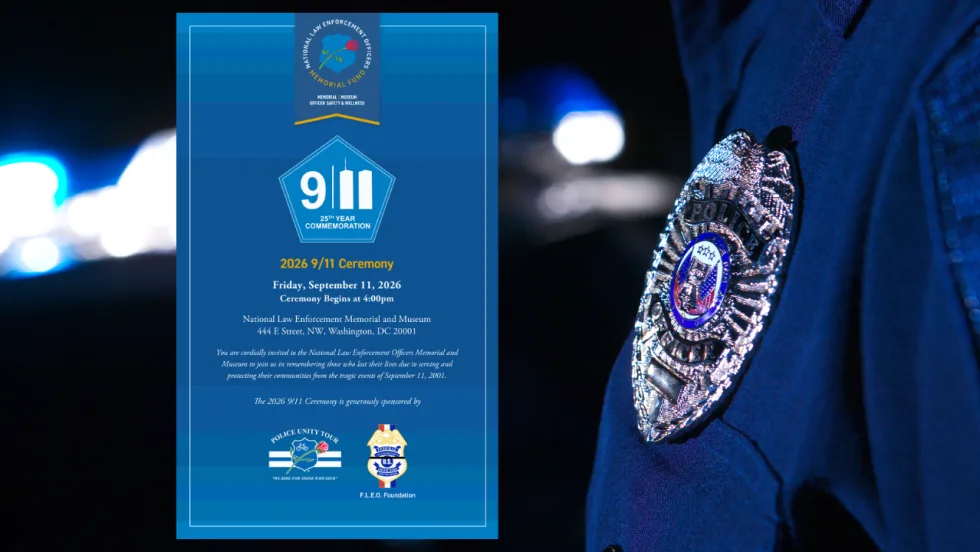
National Law Enforcement Memorial and Museum Hosting 9/11 25th-Year Commemoration Ceremony
The National Law Enforcement Memorial and Museum is hosting a 9/11 25th Year Commemoration Ceremony on Sept. 11 at 4 p.m.
Read More →
National Law Enforcement Officers Memorial Fund Announces June 2026 Officers of the Month
The National Law Enforcement Officers Memorial Fund (NLEOMF) named 15 officers of the Chico Police Department (California) as the Officers of the Month for June 2026 for their roles in responding to an active-shooter incident at a public library.
Read More →