



Real Change
Obtaining tacit knowledge is considered our most important and powerful learning activity, but too often the folks with the tacit knowledge are left out of the decision-making process, in favor of the most institutionally educated folks; the ones with explicit knowledge only.

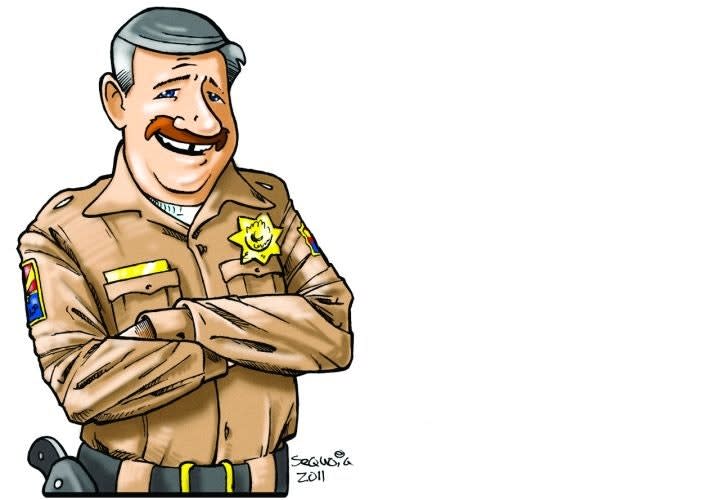
Illustration: Sequoia Blankenship
The last few years I have sure heard a lot about the need to change law enforcement. Most of these "changes" are the same ones we have tried to make since the early '70s, and are politicians' and leaders' ways of avoiding the elephants in the room. They focus on demanding change in things that seem "safe." Demanding cultural and behavioral change in the police seems like a safe way to put the blame somewhere other than on the culprits who deserve it. Often, these demands are made by groups of "experts" who have a great deal of letters following their names, but who suffer from a severe lack of tacit knowledge.
Knowledge can be categorized as "explicit," the kind found in books and lectures, and "tacit," which is gained through life experience and interactions. Obtaining tacit knowledge is considered our most important and powerful learning activity, but too often the folks with the tacit knowledge are left out of the decision-making process, in favor of the most institutionally educated folks; the ones with explicit knowledge only.
A marvelous essay titled "Intellectual Yet Idiot," by Nassim Taleb, explains how modern America has an abundance of intellectuals that seem … well … like idiots. Science and policy are often fraught with political, rather than rational, considerations on the part of these intellectuals. And too often the consequences of their decisions are poor or disastrous for those who have to live and work under their guidance.
Take some of the recent policy recommendations following the Ferguson crisis. Panels of experts gave some dramatic recommendations regarding law enforcement culture and training. Few, if any, folks with tacit knowledge about training and performance were involved, and many recommendations were made with the apparent goal of giving political leaders and activists carte blanche to blame law enforcement for social ills, without offering real-world solutions. Ultimately, few things have actually changed — other than entering an era of "de-policing" in many urban areas.
I hope future decisions about the direction of law enforcement are made with more consideration and research.
So how does one create change in a culture as powerfully inculcated as law enforcement? History tells us we can disable the power of leadership and supervision to effect change, but the consequences are usually terrible. After World War II, the Army was politicized and "sensitized."
Fortunately, Korea was a wake-up call reminding us that a military needs strong supervisors, and the Marine Corps kept faith with its sergeants and saved the day on the peninsula. One of the lessons learned from the Korean War is that the culture of an organization is created and nurtured by its supervisors. Positive organizational change can only occur and persist if these folks understand and buy into it.
In The Fifth Discipline, Peter Senge explains how to create a learning organization that is always growing and improving. He says the true lever to create change is the supervisor; he or she is the "engineer" that makes change happen. How many leaders have failed to convince their supervisors of the need for organizational change, and thus suffered failure?
Whatever change our leadership sees as necessary over the next few years, three steps should be taken:
First, make sure practitioners with tacit knowledge and understanding are part of the decision process. Tacit knowledge brings with it passion, insight, and inspiration.
Second, look at law enforcement as an open system with key interacting parts, and understand that the primary engine of change will be the sergeants and supervisors. Write policy all you want, but true change is cultural, and sergeants will make it happen.
Finally, one of the most positive changes I have seen in law enforcement in my lifetime is the development of the Field Training Officer Program. FTOs give young officers the tacit knowledge and modeling they need to be outstanding, and therefore FTOs must be groomed and monitored to ensure excellence in this cadre.
That said, great FTOs also make great cops, and they should be thought of as an excellent resource for tacit input for change, and for evaluating the effectiveness of that change after implementation.
Change will happen, and I think it is best when planned and implemented properly, with both explicit and tacit knowledge prioritized over political concerns.
Dave Smith is an internationally recognized law enforcement trainer and is the creator of "JD Buck Savage." You can follow Buck on Twitter at @thebucksavage.
More Patrol

The First Responders Children’s Foundation National First Responders Day Roll Call of Heroes Ceremony Returns to Times Square, NYC
First Responders Children’s Foundation (FRCF), in collaboration with T-Mobile, will host the Roll Call of Heroes ceremony in Times Square to commemorate National First Responders Day on Wednesday, Oct. 28. During the event, FRCF will present 18 Hero Awards.
Read More →
Streamlight to Showcase Newest Lighting Products for Law Enforcement Professionals at IACP 2026
Streamlight will showcase its newest lights for law enforcement at the International Association of Chiefs of Police Annual Conference & Expo. Featured lights will include the TLR-3 X, the PolyTac 1X, and more.
Read More →
Streamlight Portable Scene Light III Wins 2026 OH&S New Product of the Year Award
Streamlight’s Portable Scene Light III has won the 2026 Occupational Health & Safety (OH&S) New Product of the Year Award in the Lighting category.
Read More →
Adept Armor Introduces Two New Rifle Plates
Adept Armor has launched two new Level IV ballistic plates, the Emperor and the Archon Mark 2, which brings Adept Armor’s new Quatroid ceramic to the high-threat, performance-value center of the range at 5.2 pounds.
Read More →
POLICE Product Test: Benchmade Bailout
The Benchmade Bailout is a slim, lightweight carry knife with a deep-ride pocket clip and comes in a variety of blade steels and scales. Here is a detailed review of the Taiga Green Bailout, released earlier this year.
Read More →
NLEOMF Announces July 2026 Officer of the Month
NLEOMF honored a Michigan deputy sheriff as the July 2026 Officer of the Month for rescuing a trapped driver from a burning vehicle following a Fourth of July crash.
Read More →
Streamlight to Showcase Newest Lighting Products at National Safety Council’s Safety Congress & Expo 2026
Streamlight will showcase its latest lights, including the Portable Scene Light III and the LiteBox 1Million, at the 2026 National Safety Council (NSC) Safety Congress & Expo.
Read More →
The 2027 World Police & Fire Games Set for Perth, Australia
The 2027 World Police & Fire Games (WPFG) will take place in Perth, Western Australia, from Friday, March 12 through Sunday, March 21, 2027.
Read More →
5.11 Partners with National Fallen Firefighters Foundation to Support #ForThe343
5.11 has joined the nationwide movement honoring the 343 New York City Fire Department firefighters lost on Sept. 11, 2001.
Read More →
Team Wendy Announces Title Sponsorship of the Jorge Pastore Foundation
Team Wendy’s 3-year partnership with the Jorge Pastore Foundation expands access to programs that strengthen those who serve.
Read More →