



Dave Smith: The Roaring Twenties
Looking back a century ago, we can see that America has always faced great challenges. And law enforcement officers have always played a role in helping us meet those challenges.

What a difference a century makes. The 1920s were a time of flappers and moonshine, Babe Ruth and Jack Dempsey, the women’s right to vote and the return to normalcy following World War I. The 2020s have become an era of social conflict, worldwide crisis, and anything but “normalcy.”
Watching the world situation from the safety of my living room suddenly makes my living room feel less safe. My wife, the Sarge, caught me putting a new grip on one of my pistols the other day and didn’t even say anything about me buying another item for “my toys;” she just brought me her Smith M&P to clean. Yeppers, anxiety abounds in today’s “Roaring Twenties.”
Ironically, one thing that hasn’t changed is crime. Prohibition brought the rise of organized crime and a sense of tolerance toward law breaking. It has been said that there is nothing more detrimental to a republic than a generally hated and commonly disregarded law, and the puritanical attempt to control vice led to a decade of decadence and open disregard for the law. Today’s institutional disregard for the law is just as detrimental to a civil society, and to public safety, as the social disregard for the law was in the era of Al Capone and Meyer Lansky. I wonder if we will talk about today’s renegade prosecutors, such as Kim Foxx and George Gascon, with the same sense of outrage as we do the gangsters of the bygone era. Frankly, it is difficult to see which group will, in fact, hurt society more in the long run.
It is interesting to see how closely the 1920s and the 2020s parallel each other. The crises both decades faced were preceded by “progressive” times. Prohibition and suffrage were meant to create a better society, and followed a war “to end all wars.” Such idealism was certainly understandable following such a terrible cataclysm of unimaginable carnage, but the unintended consequences of governmental action are hard to predict and difficult to stop. The powerful parallels between the two eras in rising crime and social unrest are unmistakable. In Europe totalitarian movements were growing fast and the roots of World War II were sinking deep into the Old World. Woodrow Wilson’s support encouraged the growth of the KKK to such a point that they boasted a membership of over 4 million and in 1925 held an estimated 600,000-man march in Washington, DC. A hundred years later, leaders are still stirring racial animus and division, inciting the have’s versus the have-not’s, and promoting division instead of unity.
Today’s critical issues, while appearing to be unique, are anything but. Utopian dreams often lead to social unrest and new unforeseen problems that leaders, pundits, academics, and experts often misdiagnose, creating a cascade of obstacles the citizens have to deal with. Rising crime, inflation, strife, epidemics, education problems—the list goes on and on—all of these have become part of our day to day lives. Just like a century ago they will be resolved one way or another, but the one constant the citizens of the United States can count on is that the law enforcement community will be there. Study the 1920s: regardless of the crisis, America was able to count on the police to come.
As the economy collapsed in 1929, starting the horror of the Great Depression and ending the boom of the Roaring Twenties, it must have seemed as if the world was truly ending. It is concerning that today we see similar bad things happening. But if our current decade doesn’t seem to have any of the fun things of the bygone era, nor do we have all of the problems. Prohibition is long gone and I can drive to four breweries in a 10-minute circle to satisfy my love of brew. And every two years the entire legislative body known as the House of Representatives (The People’s House) have to come before their constituents for appointment, and therein lies our hope for change for the better. New laws, new budgets, new solutions and new problems will be forthcoming, but in the meantime, we know the call will still be answered by those who protect and serve.
I am confident that, as long as you keep faith in your mission, things will get better. Oh sure, the world will constantly swing between good times and bad, but that is the nature of life, always has been. But when we actually measure our lives against those of the 1920s, ours is so much better, so much safer, and we should pause to reflect on how great our nation still is in spite of all of our flaws.
More Patrol

Streamlight Portable Scene Light III Wins 2026 OH&S New Product of the Year Award
Streamlight’s Portable Scene Light III has won the 2026 Occupational Health & Safety (OH&S) New Product of the Year Award in the Lighting category.
Read More →
Adept Armor Introduces Two New Rifle Plates
Adept Armor has launched two new Level IV ballistic plates, the Emperor and the Archon Mark 2, which brings Adept Armor’s new Quatroid ceramic to the high-threat, performance-value center of the range at 5.2 pounds.
Read More →
POLICE Product Test: Benchmade Bailout
The Benchmade Bailout is a slim, lightweight carry knife with a deep-ride pocket clip and comes in a variety of blade steels and scales. Here is a detailed review of the Taiga Green Bailout, released earlier this year.
Read More →
NLEOMF Announces July 2026 Officer of the Month
NLEOMF honored a Michigan deputy sheriff as the July 2026 Officer of the Month for rescuing a trapped driver from a burning vehicle following a Fourth of July crash.
Read More →
Streamlight to Showcase Newest Lighting Products at National Safety Council’s Safety Congress & Expo 2026
Streamlight will showcase its latest lights, including the Portable Scene Light III and the LiteBox 1Million, at the 2026 National Safety Council (NSC) Safety Congress & Expo.
Read More →
The 2027 World Police & Fire Games Set for Perth, Australia
The 2027 World Police & Fire Games (WPFG) will take place in Perth, Western Australia, from Friday, March 12 through Sunday, March 21, 2027.
Read More →
5.11 Partners with National Fallen Firefighters Foundation to Support #ForThe343
5.11 has joined the nationwide movement honoring the 343 New York City Fire Department firefighters lost on Sept. 11, 2001.
Read More →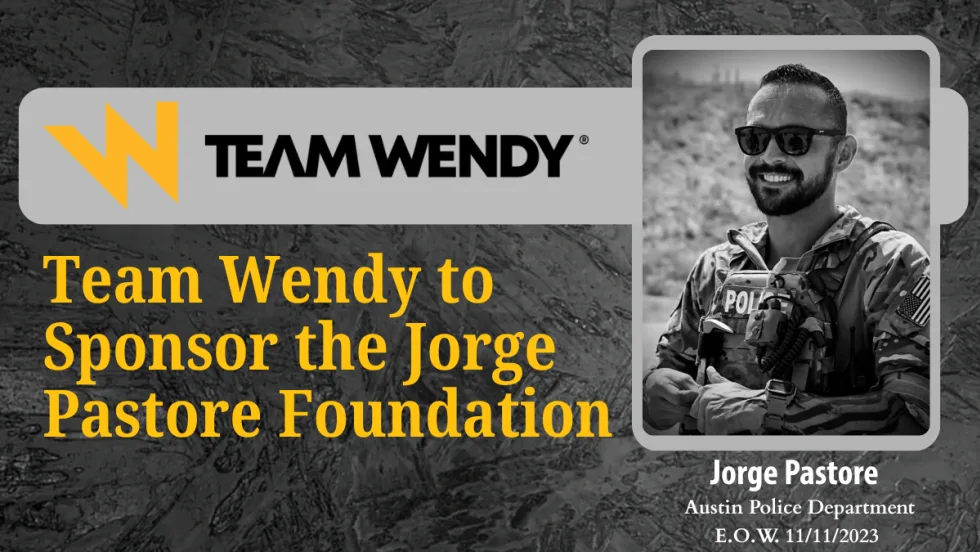
Team Wendy Announces Title Sponsorship of the Jorge Pastore Foundation
Team Wendy’s 3-year partnership with the Jorge Pastore Foundation expands access to programs that strengthen those who serve.
Read More →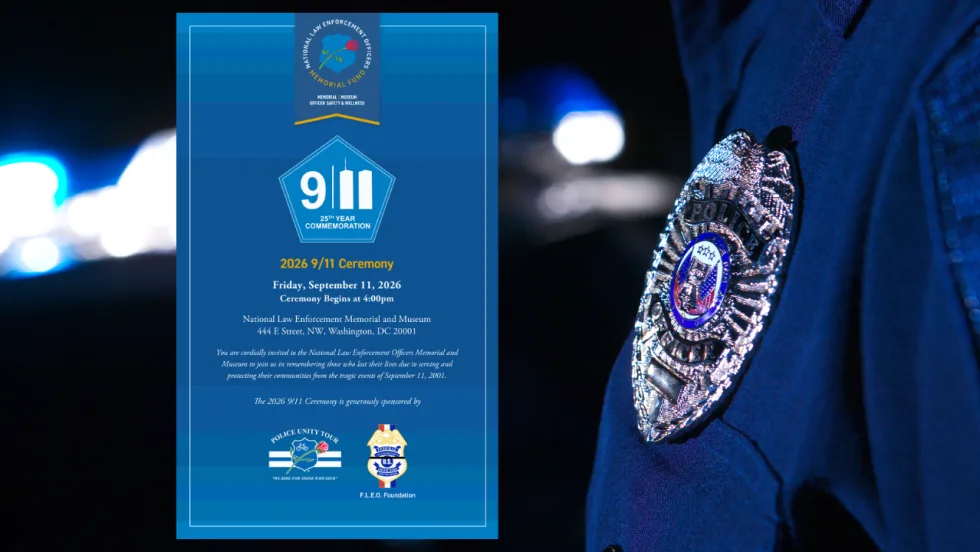
National Law Enforcement Memorial and Museum Hosting 9/11 25th-Year Commemoration Ceremony
The National Law Enforcement Memorial and Museum is hosting a 9/11 25th Year Commemoration Ceremony on Sept. 11 at 4 p.m.
Read More →
National Law Enforcement Officers Memorial Fund Announces June 2026 Officers of the Month
The National Law Enforcement Officers Memorial Fund (NLEOMF) named 15 officers of the Chico Police Department (California) as the Officers of the Month for June 2026 for their roles in responding to an active-shooter incident at a public library.
Read More →