



GA Police Department Fields Swiftwater Rescue Team
If the water rescue is something that the patrol officer cannot safely perform, Sgt. Andrew Rausch says the best action is to keep an eye on the victim and wait for a swiftwater team, whether fire or police, to arrive.

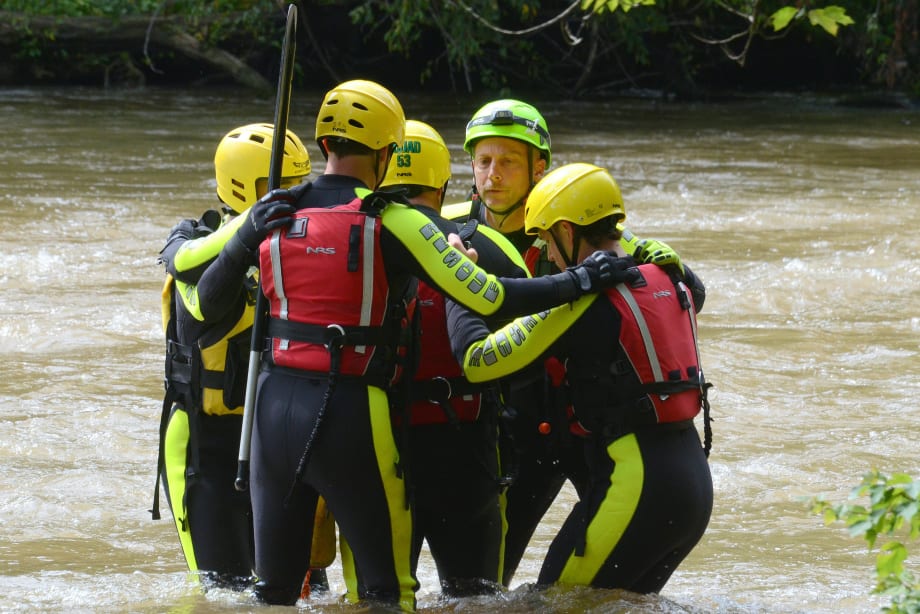
Officers from the Sandy Springs Police Department train in swiftwater rescue alongside firefighers in a course taught on the Chattahoochee River.
PHOTO: Sandy Springs Police Department
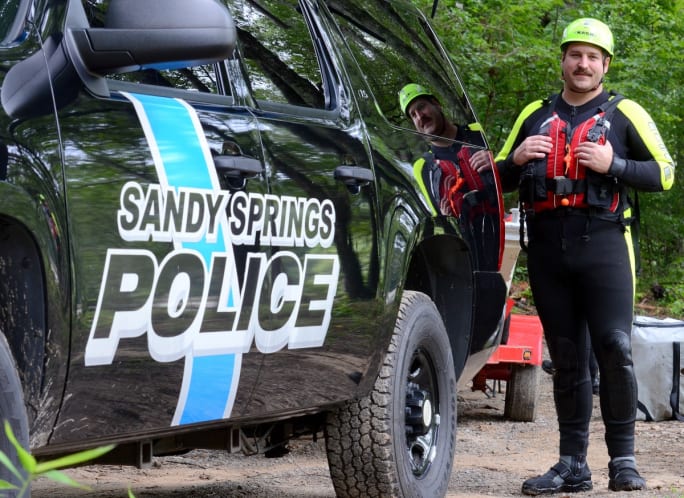
Detective Clinton Werner is part of a small collection of Sandy Springs Police Department officers that are trained to respond for swiftwater rescues.
PHOTO: Sandy Springs Police Department
Whether faced with rising waters from flash flooding or the dangers of swiftwater rescue, one Atlanta-area police department is prepared. In 2009, the City of Sandy Springs faced a rising river and flooding in some areas. As a result, in 2010 a rescue boat was purchased and a swiftwater rescue team was formed.
The city, which is located just north of Atlanta, was formed in late 2005 and is bordered on one side by a 20-mile stretch of the Chattahoochee River. The river is heavily used by kayakers, whitewater paddlers, and other outdoor recreation enthusiasts.
In 2006 Sandy Springs created a police department, which now boasts about 150 officers and few open vacancies. Within the ranks are a small handful of officers who have trained and certified in swiftwater rescue. Currently there are only three members on the team, but there is room to take on additional officers.
Sgt. Andrew Rausch, who leads the department’s bicycle squad, is one of the original members of the swiftwater team and now commands the small unit. Along the way he did take a break from it for a few years while juggling other assignments, but then found his way back into the water.
Training
Last year he and Detective Clinton Werner trained and certified as basic swiftwater techs. Their classroom for the weeklong course was the Chattahoochee River.
“It trains us on a bunch of things and teaches us various techniques to rescue people on the Chattahoochee. It teaches us basic skills about swimming with a PFD, without it. It teaches us specifically about the Chattahoochee River and what obstacles you could encounter,” Rausch explains.
They learned boat handling, throw bag rescues and how team members can employ rescue techniques, eddy hopping, swimming in rapids, and more. They must be prepared since it is likely police officers may be the first to reach the scene of a water rescue.
“Sometimes we can get places faster than the fire department, it's just a matter of us being trained up. Sometimes that call comes out and we're right around the corner. We need to be able to respond quickly to those scenarios and have some type of expertise in order to be a first responder to these types of situations,” Rausch says.
Although the police department’s team is separate from the fire department’s swiftwater rescue team, the two teams frequently train together and are ready to work side-by-side during rescues.
“We respond to the same calls anyway, somebody floating down the river that got lost, or an overturned boat, or whatnot. If we end up being out there at the same time, we can commingle our teams and put some of our members in with their members and in whatever craft they have to deploy,” explains Rausch.
Gear
Each member of the police department’s swift water team carries a PFD, their individual throw bags, a wetsuit and Rausche says they try to give each individual member a dry suit as well. He says their kit is rounded out with things like helmet, gloves, boots, and anything they may need in a water rescue scenario.
Past the individual gear and capabilities of the officers, the team also fields several watercraft. The workhorse of the fleet is a flatbottom rock-proof boat that is jet propelled and can get up onto plane with four rescuers and all their gear.
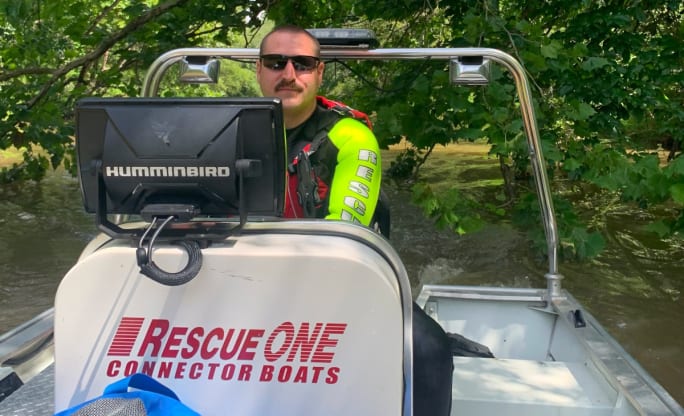
The team's rock-proof boat is ready to handle the challenges of the Chattahoochee River when people are in need of rescue.
PHOTO: Sandy Springs Police Department
The team also can deploy an inflatable rescue boat they call the banana boat, or Yellow.
“It's a rapid deployment craft we can inflate pretty quickly. We can put two rescuers on there and can drag somebody up on the platform pretty easily if they were stuck in a place where our boat couldn’t get to,” he explains.
The fleet of craft is rounded out by two kayaks, although they are not intended for deployment during swiftwater rescues. They do however get used in community relations events where officers can go kayaking with local groups. However, they could always be used to access a flooded area in addition to the other boats.
Advice
“One of the things that we always tell people when we're giving them advice on the river, and safety measures, is don’t underestimate the river,” says Rausch. “Don't underestimate how much it flows and how quickly it flows. So that's the main advice I can give, and just be prepared with your PFD.”
Most patrol officers are not trained in swiftwater rescue and many are not formally trained in standard water rescue. But a time will come when many will be faced with such situations.
“They have to use their judgment in reference to water rescues and they have to weigh the risk versus reward of trying to save somebody out there,” Rausch explains.
If the water rescue is something that the patrol officer cannot safely perform, Rausch says the best action is to keep an eye on the victim and wait for a swiftwater team, whether fire or police, to arrive.
Recruiting Perk
With just 150 officers, Sandy Springs could be considered a small department by many. However, being part of a smaller tight-knit team affords new officers opportunities to follow their interests, especially if they want to be part of a swiftwater rescue group.
“Our city takes pride and taking care of the officers that work here. So, from that perspective, as far as law enforcement goes, we're paid pretty well and have some pretty good benefits and makes it easier to retain officers and recruit officers because of that. Then we offer a lot of things like a river rescue team that a lot of agencies just don't do, so it's something for guys to get involved in,” says Sgt. Matthew McGinnis, of the department’s public information office. “And the sense of community is really good in this size department.”
More Patrol

Why Tennessee’s New Deadly Force Law Matters Beyond Tennessee
Tennessee’s new deadly force law is more limited than many may realize. Effective July 1, 2026, the law applies to a person who is not engaged in conduct that would constitute a felony or a Class A misdemeanor and who is in a place where the person lawfully resides. But it could have far-reaching influence.
Read More →
When Do You Transport a Wounded Officer by Police Vehicle?
Time-sensitive injuries like penetrating trauma mean a wounded officer needs to reach a trauma center as soon as possible, and in some cases, that means transporting by police vehicle rather than waiting for EMS. What are the factors to consider in making that transport decision?
Read More →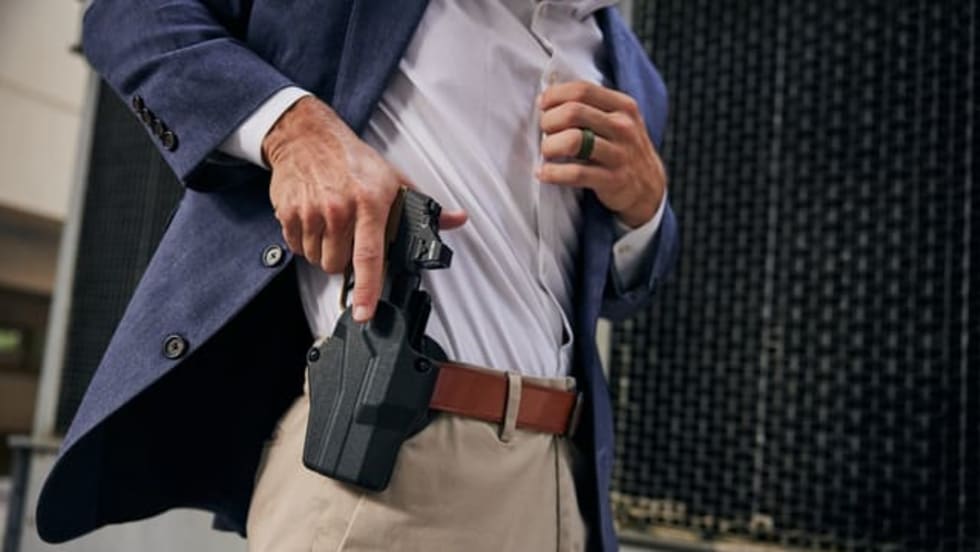
Safariland Solis Rethinks Concealable Duty
What if Level I retention didn’t require a full duty rig? Safariland’s Solis delivers trusted ALS security in a streamlined OWB platform built for administrative and plainclothes professionals who need protection without the bulk.
Read More →

5 Things to Know When Buying Backup Lights for Patrol Use
What is the value of a backup light, and what do you need to consider when selecting one? These smaller lights are invaluable as a secondary or special-purpose light and can be easily carried in a pocket or clipped to MOLLE gear, a key chain, shirt, or a vest.
Read More →
363 Fallen Officers Honored During National Police Week
In case you missed NELOMF’s annual Candlelight Vigil, here are all 363 names of the fallen officers whose names were added to the National Law Enforcement Officers Memorial this year.
Read More →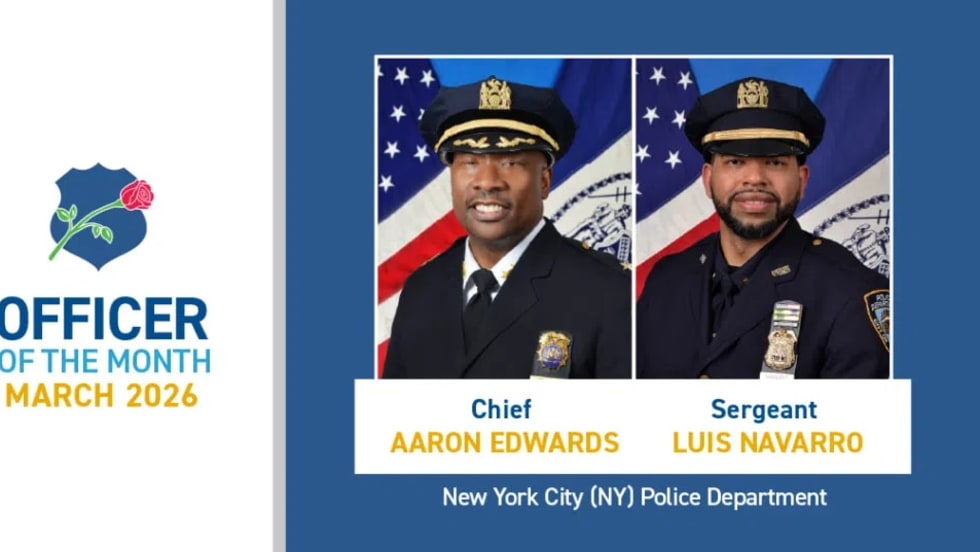
NYPD Officers Who Responded Quickly During IED Incident Recognized as NLEOMF Officers of the Month
Chief Aaron Edwards and Sgt. Luis Navarro were recognized by NLEOMF as Officers of the Month for their response during an IED incident and their actions that helped prevent harm to the public.
Read More →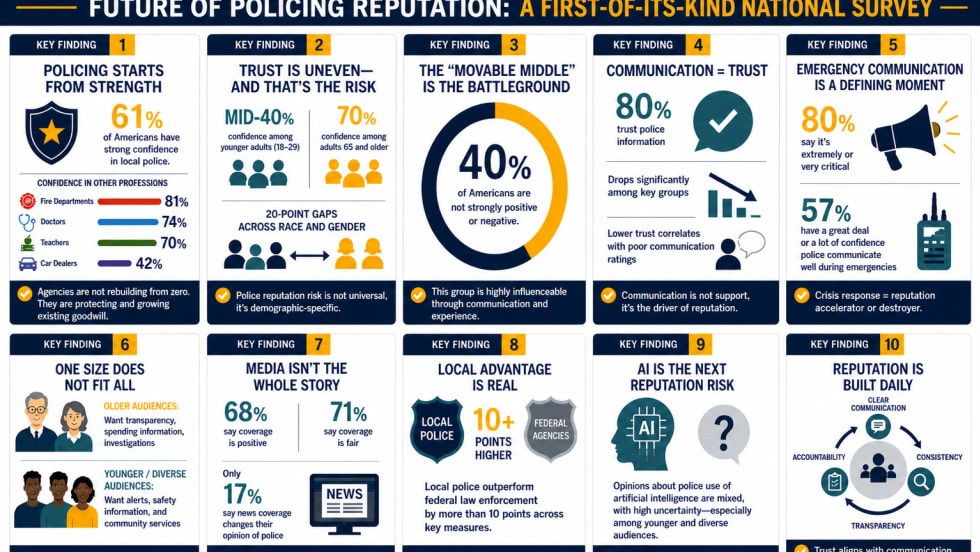
National Police Survey Reveals How Americans View Policing Today
A new national survey offers a comprehensive look at how Americans view policing. The study uncovers public sentiment toward local vs. federal police, communications, crisis response, the use of AI in policing, and more.
Read More →
Streamlight TLR-7 X Selected as Standard Issue Pistol Light by Canadian Federal Police
The Canadian Federal Police will be adding a new duty pistol system, which will include Streamlight’s TLR-7 X and a Glock 45 MOS 7 pistol with a red dot sight.
Read More →
Fallen Law Enforcement Officers from Across the Country to be Honored During 38th Annual Candlelight Vigil on May 13th in Washington, D.C.
The National Law Enforcement Officers Memorial Fund (NLEOMF) will honor 363 fallen officers who have died in the line of duty as their names are added to the National Law Enforcement Officers Memorial during the annual Candlelight Vigil on May 13.
Read More →
What Should Be in Your IFAK?
What should every officer include in an IFAK? Sydney Vail, M.D., a veteran trauma surgeon and former SWAT surgeon, explains which components are needed and which are not, and stresses training.
Read More →