



Vigilant Solutions LPR Adds 'Extra Set of Eyes' to Improve Sobriety Checkpoint Operation
A Midwest police department that deployed Vigilant's license plate recognition (LPR) in a sobriety checkpoint operation reports improved officer safety and efficiency, as well as 28 enforcement actions for offenses.

A Midwest police department that deployed Vigilant's license plate recognition (LPR) in a sobriety checkpoint operation reports improved officer safety and efficiency, as well as 28 enforcement actions for offenses including drug possession and operating while intoxicated, among others. The agency has asked not to be named in the release but is willing to speak to other law enforcement agencies about its experiences with the system.
A sergeant at the agency comments, "We've had the license plate reader (LPR) system from Vigilant Solutions for roughly six months and it is proving to be a valuable tool on many fronts. One such use is at sobriety checkpoints. As an example, we recently set up a checkpoint selected as the result of a traffic study."
License plate readers (LPR) use a camera system that takes pictures of license plates, and uses optical character recognition (OCR) to convert the image into text that the LPR system software can check against law enforcement databases. The system does not look up information on individuals – it only sees the letters and numbers on the plate. So each plate, quite simply, is read and compared to the law enforcement databases. If there is a match, then the officer visually confirms the match and follows agency policy regarding proper patrol response.
The sergeant continued, "At 10:20 p.m., after training everyone and setting up the location, we began directing six vehicles at a time into the checkpoint. When the checkpoint was full, we allowed vehicles to pass by the checkpoint so as not to disrupt traffic, and to minimize wait times for drivers. The LPR system read the plates passing through the checkpoint and compared them against a number of law enforcement databases. This served both an officer safety role, and improved the effectiveness of our checkpoint by calling attention to vehicles that may have otherwise gone unnoticed. The LPR system ensures fair and consistent enforcement, as it only sees the characters of the license plate – not the type or condition of the vehicle, nor the driver. The system also allowed us to scan all vehicles allowed to bypass the checkpoint against the same databases, so that – in the event of a hit – we could notify a patrol car downstream of the checkpoint to stop the vehicle.
"We ended the checkpoint at 2:35 a.m., at which point it was tallied that we had encountered 488 vehicles through the checkpoint, and over 1,000 others that bypassed the checkpoint but were still checked because we had the LPR system. This four-hour operation resulted in 28 enforcement actions. The enforcement actions included 22 of the vehicles being towed, as well as a number of arrests including drug related offenses including possession of controlled substances and drug paraphernalia, operating while intoxicated, driving while suspended, unlicensed drivers, expired plates, and warrants," said the sergeant.
"We are pleased to hear that this agency is enjoying the use of its system and realizing the benefits," explains Tom Joyce, Vice President of Business Development at Vigilant Solutions. "As the sergeant explained, LPR cameras are an extra set of eyes in the field that greatly enhance the efficiency and safety of officers in the field. In today's environment, officers need and deserve these mission critical tools."
For more information, visit www.vigilantsolutions.com.
More Technology
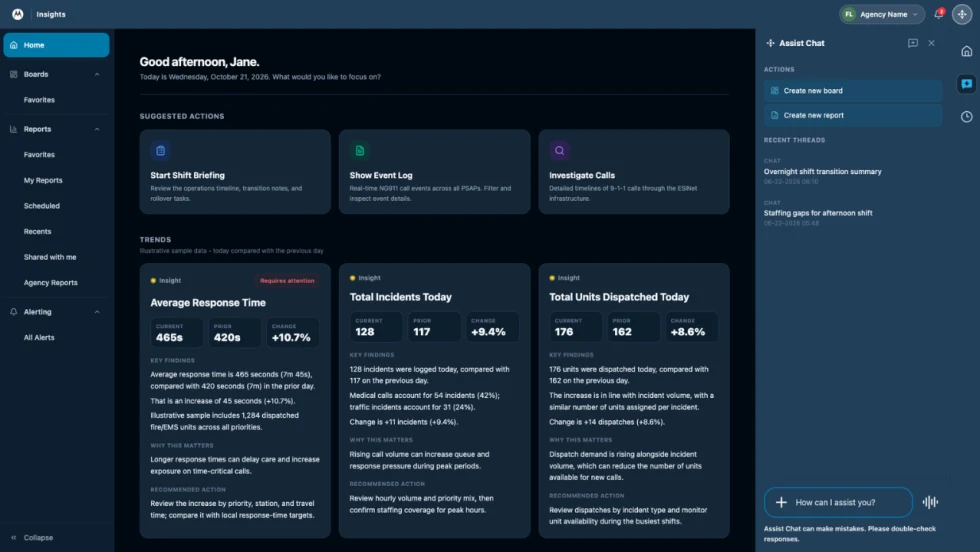
How Motorola Solutions’ New “Insights” Platform Helps Public Safety Agencies Identify Trends to Improve Their Operations
Motorola Solutions has introduced Insights, which leverages Assist, its mission-critical artificial intelligence (AI), to address these challenges and shape what’s next for public safety analytics and reporting technology.
Read More →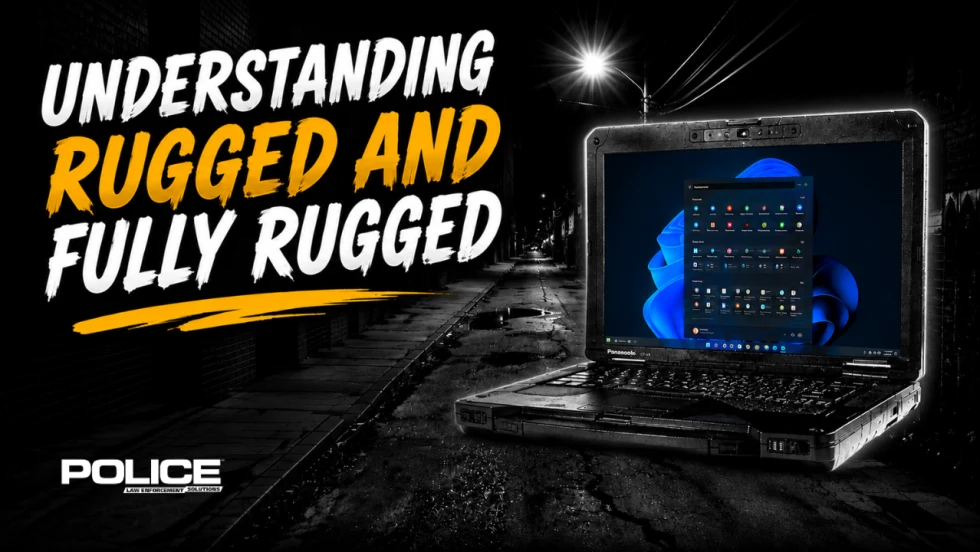
What Qualifies a Laptop as Rugged or Fully Rugged?
Police officers face a wide range of working conditions that can damage or even destroy a regular consumer laptop. Learn what qualifies a computer as rugged or fully rugged and why those devices are vital for law enforcement.
Read More →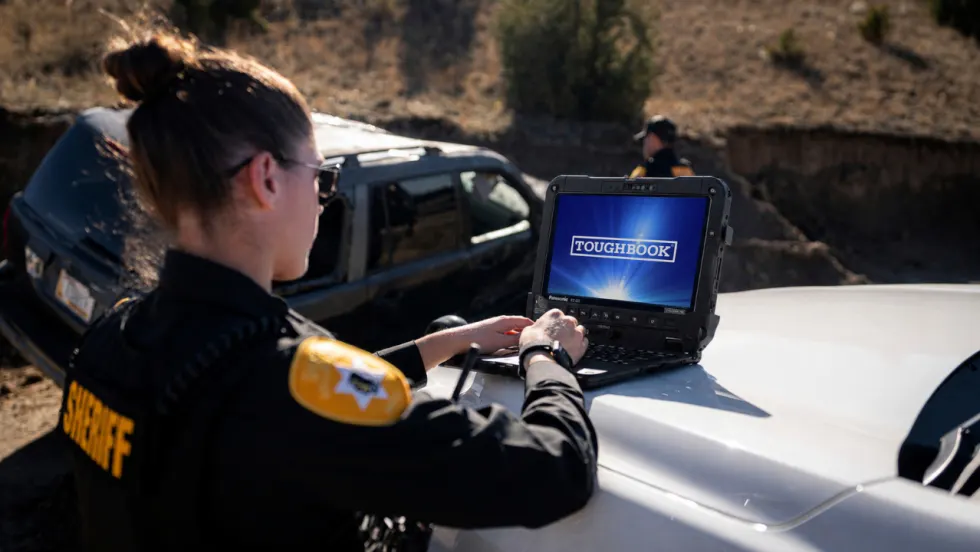
Panasonic Connect Launches the Toughbook 34 and Toughbook G3, Fully Rugged 2-in-1 Mobile Computers
Panasonic Connect has launched the Toughbook 34 and Toughbook G3 to facilitate in-vehicle dispatch, records management, and mobile command operations from any location.
Read More →

A police agency's guide to data-driven fleet management
Costs are rising and the public expects more transparency into how their tax dollars are spent. This e-book shows how police agencies can use fleet data to take control of fleet expenses while improving officer safety and demonstrating fiscal responsibility to the communities they serve.
Read More →
AI and analytics for law enforcement: Turning data into insights
Law enforcement agencies are managing more video, sensor data and digital evidence than ever before. Discover how AI and analytics can help turn that data into actionable insights that strengthen situational awareness, accelerate investigations and support more informed decisions.
Read More →
Vasco Electronics Adds Automatic Language Detection to Vasco Translator Q1
Vasco Electronics’ software update introduces hands-free language switching and expanded offline translation across 45 language pairs, empowering law enforcement, healthcare, and front-office enterprise teams
Read More →
North Miami Police Department Deploys Mark43
The North Miami Police Department has deployed Mark43 as part of its Five-Year Strategic Plan that represents its collective vision and goals for a more proactive police department, anchored by a core commitment to leveraging modern technology to enhance efficiency and public safety.
Read More →
Cellebrite Genesis for Enterprise Now Generally Available
Made available to the public sector in June, Cellebrite Genesis is serving a growing mix of national, regional, and local agencies worldwide, including some of the largest regional and metropolitan police departments. It is now available for enterprise organizations.
Read More →
2026 Vision FirstNet Users Summit to Host Emerging Leaders Training on Grassroots Advocacy for Public Safety
“Emerging Leaders Training: Understanding the Importance of Grassroots Advocacy for Public Safety," a session during the 2026 Vision FirstNet Users Summit, will offer a roadmap for unified advocacy at the federal level.
Read More →
Motorola Solutions Completes Acquisition of D-Fend Solutions
Motorola Solutions has acquired D-Fend Solutions, an industry leader in counter-drone technology. This deal provides public safety and enterprise customers with access to advanced counter-unmanned aerial systems.
Read More →