



Police Departments Don't Want INS Duties
Police fear working as quasi-INS agents will keep some people from reporting crimes committed against them.

Police fear working as quasi-INS agents will keep some people from reporting crimes committed against them.
Immigrants, especially those living in the country illegally, are often reluctant to report crime when it happens to them.
So when police in cities from Austin to Nashville learned last month that the Bush administration is considering enlisting state and local police to help the federal government find and deport illegal immigrants, they balked.
''If we are forced to do this, you can just throw the trusting relationship that we built with this community out the window,'' says Rudy Landeros, Austin's assistant police chief.
''The Austin Police Department will not stop, detain or arrest individuals solely based on their immigration status. Period. Our job is to protect and serve everybody, regardless of their gender, religion or immigration status,'' Landeros says.
More than 8 million foreigners are in this country illegally, according to government estimates. And there are just 2,000 immigration agents to enforce the laws.
Police around the country say they already have enough work without enforcing federal immigration laws.
''It is an unfunded mandate, which takes away the ability of local law enforcement to provide the same level of service to the community,'' says Mark Brewer, legal adviser to the Lake County Sheriff's Department in central Florida.
The Florida Department of Law Enforcement, however, is negotiating with the Immigration and Naturalization Service (INS) about assigning 35 Florida officers to seven task forces to be set up to investigate terrorism in different regions of the state.
Al Dennis, a spokesman for the Florida police agency, stresses that the 35 officers would play a limited role once the agreement is finalized. Details of the officers' duties are not yet worked out.
''This is not about going out and raiding migrant workers' camps,'' he says. ''This is strictly limited to specific duties.''
Police in other cities say they are willing to help federal agents with specific requests. Nashville police spokesman Don Aron noted that his department has already assigned officers to task forces run by the FBI and the Bureau of Alcohol, Tobacco and Firearms that were set up after the Sept. 11 terrorist attacks.
''But this police department is not interested in having our officers become quasi-INS agents,'' he says.
In Austin, Landeros says: ''We understand the aftermath of Sept. 11. But we have to stop this problem we have here in Austin, and unless we do, the murders will continue and the robberies will continue.''
The Justice Department proposed that local police help pick up people for possible immigration violations as a way to combat terrorism. All 19 hijackers on Sept. 11 were living in the USA on temporary visas. Two were in violation of their visa requirements.
The Justice Department issued a short statement last month describing the proposal as part of exploring ''many options to enforce immigration laws.''
If adopted, the plan would reverse a 1996 legal opinion by the Justice Department that prevents local officers from making arrests for immigration violations.
Immigrants' rights groups and civil libertarians oppose the Justice Department plan because they say it could lead to widespread racial profiling by police.
More Technology

A police agency's guide to data-driven fleet management
Costs are rising and the public expects more transparency into how their tax dollars are spent. This e-book shows how police agencies can use fleet data to take control of fleet expenses while improving officer safety and demonstrating fiscal responsibility to the communities they serve.
Read More →
AI and analytics for law enforcement: Turning data into insights
Law enforcement agencies are managing more video, sensor data and digital evidence than ever before. Discover how AI and analytics can help turn that data into actionable insights that strengthen situational awareness, accelerate investigations and support more informed decisions.
Read More →
Vasco Electronics Adds Automatic Language Detection to Vasco Translator Q1
Vasco Electronics’ software update introduces hands-free language switching and expanded offline translation across 45 language pairs, empowering law enforcement, healthcare, and front-office enterprise teams
Read More →

North Miami Police Department Deploys Mark43
The North Miami Police Department has deployed Mark43 as part of its Five-Year Strategic Plan that represents its collective vision and goals for a more proactive police department, anchored by a core commitment to leveraging modern technology to enhance efficiency and public safety.
Read More →
Cellebrite Genesis for Enterprise Now Generally Available
Made available to the public sector in June, Cellebrite Genesis is serving a growing mix of national, regional, and local agencies worldwide, including some of the largest regional and metropolitan police departments. It is now available for enterprise organizations.
Read More →
2026 Vision FirstNet Users Summit to Host Emerging Leaders Training on Grassroots Advocacy for Public Safety
“Emerging Leaders Training: Understanding the Importance of Grassroots Advocacy for Public Safety," a session during the 2026 Vision FirstNet Users Summit, will offer a roadmap for unified advocacy at the federal level.
Read More →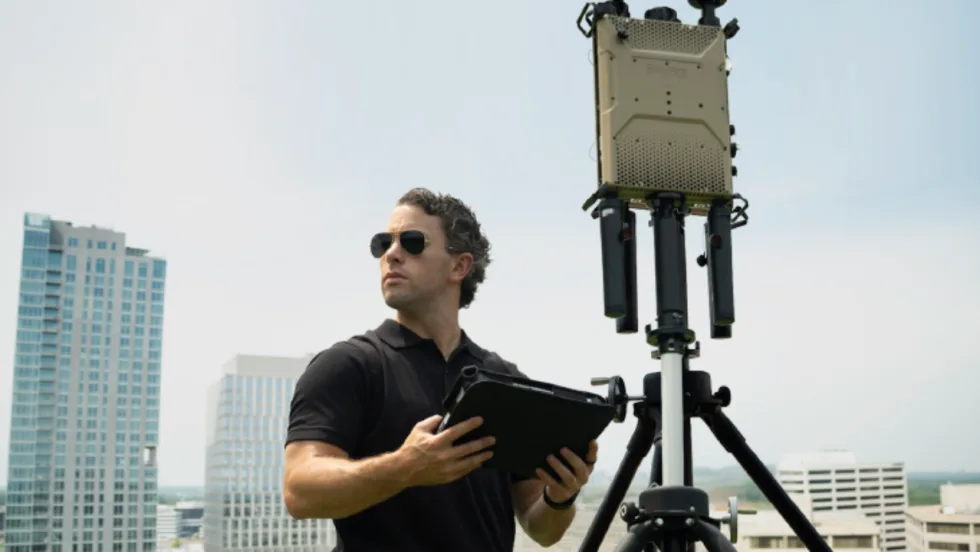
Motorola Solutions Completes Acquisition of D-Fend Solutions
Motorola Solutions has acquired D-Fend Solutions, an industry leader in counter-drone technology. This deal provides public safety and enterprise customers with access to advanced counter-unmanned aerial systems.
Read More →
ZeroEyes, Advantech & Camden Police Partner to Bring AI Gun Detection Technology to Delaware School District
ZeroEyes has partnered with Advantech and the Camden Police Department to deploy ZeroEyes’ AI gun detection and intelligent situational awareness platform at Delaware’s Caesar Rodney School District (CRSD).
Read More →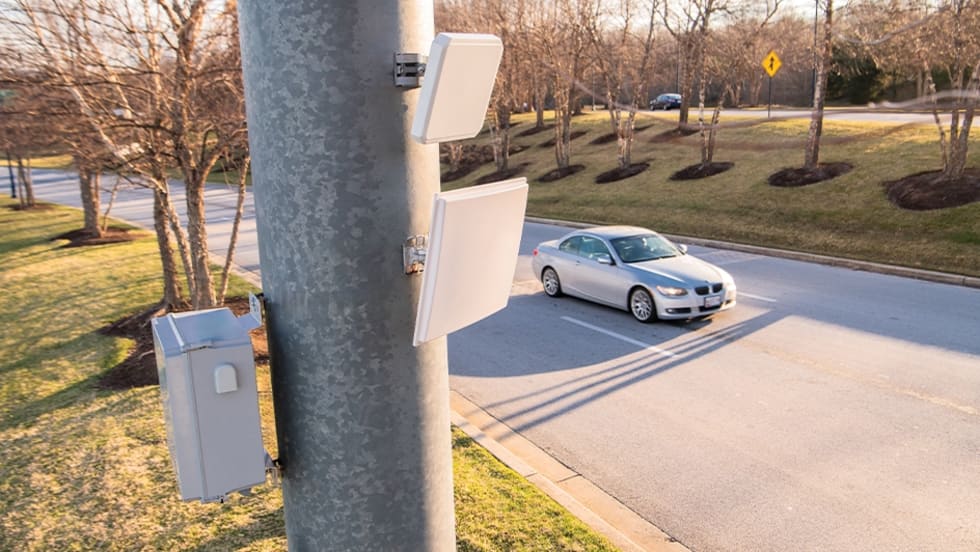
Leonardo U.S. Cyber & Security Solutions Introduces SignalTrace, the Next Evolution in Electronic Signature Detection Technology
SignalTrace reflects years of product refinement and a clearer expression of the technology’s purpose of recognizing and correlating electronic signatures in publicly broadcast wireless signals to reveal patterns, relationships, and trends that might otherwise go undetected.
Read More →
Pimloc Launches Secure File Sharing to Streamline Release of Redacted Video
Pimloc’s Secure File Sharing lets organizations deliver redacted video, audio, and documents through expiring, passcode-protected links, accelerating delivery while reducing security, compliance, and chain-of-custody risks.
Read More →