



Officer Safety and Wellness, The Missing Link
Veteran law enforcement trainer John Bostain, president of Command Presence Training, shares how a healthy culture is the number one thing that can shape officer wellness in any law enforcement agency or department.

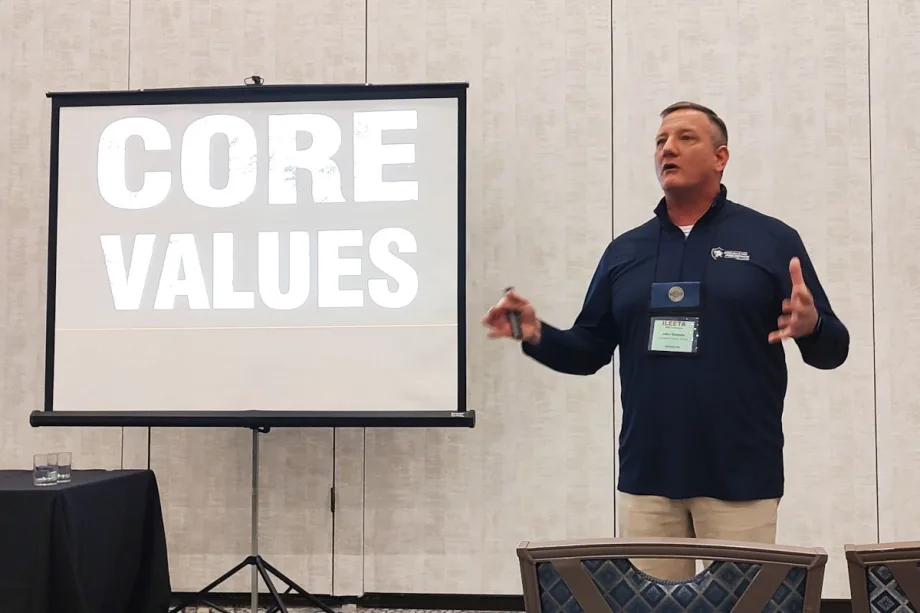
Wayne Parham
Officer longevity and mental wellness have been prevalent topics among police leaders in recent years, but special programs alone are not as likely to achieve optimal results. It takes more. Culture is what John Bostain calls the “missing link” in officer wellness.
Bostain, president of Command Presence Training, has been a law enforcement trainer for 27 years and has taught more than 40,000 public safety professionals. During the recent International Law Enforcement Educators and Trainers Association annual conference, he led a session on “Officer Safety and Wellness: The Missing Link.”
Bostain opened with the story of an unnamed agency that had eight officer suicides in less than two years.
“You can have all the wellness programs you want and still not have well officers. That's exactly what happened at that agency I just mentioned. They had a wellness coordinator,” Bostain told the ILEETA attendees in the session. “He literally went to the chief and said, ‘Chief, I’m the wellness coordinator here, but we got a problem. Our culture sucks.’”
Bostain asked the class if there is a time when the culture of a department causes the need for a wellness program.
Officers in the room chimed in with “absolutely” to his query.
“The missing link is your culture. The missing link is your culture,” emphasized Bostain. “I don’t care how many wellness programs you have if you do not have culture, you’ll never have well officers.”
How can an agency become the one that everyone wants to work for, how can it increase morale, how can it improve recruiting and retention? Bostain provided a roadmap to building a culture that officers, at all ranks, can count on.
So, What is Culture?
The longtime trainer referenced the concepts of David J. Friedman, author of “Culture by Design,” who outlined eight steps to building culture. After studying those, Bostain crafted three elements of building culture in a department, which he shared during ILEETA.
Bostain followed Friedman online after learning about his teachings, and then the two eventually spoke about the challenges facing law enforcement when it comes to culture.
Bostain adopted Friedman’s definition of culture — Culture is the commonly held set of values and principles that show up in the everyday behaviors of the people.
“So, culture is not what you say you believe in. Your culture is not defined by the posters going down the hallways in your agency,” explained Bostain. “That's not your organizational culture.”
Culture, Bostain said, shows up every day in the behavior of every member of a department, from secretaries, to dispatchers, to the men and women on patrol, and even in the ranking leadership of an agency.
Officers are leaving agencies, to pursue other professions, go to departments nearby, or even as Bostain shared sometimes leave to become baristas. It, he explains, is not that they are leaving for more money. They leave because of a cultural problem, or even a toxic culture.
Bostain used images to illustrate a department with a healthy culture, picture a greenhouse, and one with a toxic culture, which he represented by an image of a parched desert. In a greenhouse, all plants are nourished and given what they need to grow. A desert is barren.
Most departments, he explained, are in the middle of the two, looking more like a yard with some good grass but mixed with barren patches.
A good agency culture, like the greenhouse example, is healthy for everyone.
Bostain divided building a strong culture into three components, which are:
Leadership at all levels
Intentionally designed culture
Succession planning for talent, not title
1. Leadership Training at All Levels
Bostain preaches leadership training should be provided for each person in the department, everyone. But, he breaks that into three tiers.
Tier 1 leadership training should be for the non-supervisory staff members, but maybe lower-level supervisors as well. That should teach self-leadership and personal accountability. That ties in also with taking charge of one’s professional goals and achieving the desired career path.
Tier 2 leadership training is for all supervisors below the level of command staff. This will teach about team building, watching out for situations or issues that can cause the team to be dysfunctional, and learning how to be the ideal team leader.
Tier 3 leadership training is all about how to lead an organization and is for the executive staff. As the other lower staff members have been trained in leadership, those at the top have to learn to be strong leaders and also how to develop strategic plans.
Bostain pointed out that often command staff will want to leave a legacy behind when they retire or depart. Creating a leadership training plan for all levels would be a great way to leave the department in a better place.
He suggests any department can get an easy start on leadership training in simple ways, such as suggesting staff listen to podcasts, or maybe watch videos. Leadership training does not have to involve sending staff away to be trained.
2. Intentionally Designed Culture
“Intentionally design the culture your people deserve,” said Bostain.
That starts with crafting the proper mission statement that should be purpose-built and answer key questions, such as “Why do we exist?”
Next, it must be internally focused.
Bostain points out how mission statements are usually too long and crafted for the public perspective, thereby not truly being internally focused. The mission statement should be short enough for anyone to remember and the words must have meaning.
Have a simple mission statement that is actionable. Bostain provided the example of his company’s mission statement — To educate and empower people everywhere, so they can serve the public.
The second step of intentionally designing a department’s culture is to identify the fundamental behaviors required of everybody in the organization.
“Fundamental behaviors, number one, create accountability,” explained Bostain.
You set a standard for the fundamental behaviors that are expected and they are to be followed, from the chief and command staff down to the newest rookie.
3. Succession Planning for Talent Not Just Title
“We talk about succession planning and it's about who's going to be next captain, who's going to be next major, who's going to be next deputy chief” It's always about that,” explained Bostain. “The question we better start asking ourselves is who's going to be the next PIO? Who's going to be the next firearms instructor? Who's going to be the next drone pilot?”
Any department should be thinking about what officers can grow into what roles and learn what officers are interested in following specific career paths within the agency. There should be a career path program and a mentoring program, Bostain said.
Read More: ILEETA 2024: Walking the Expo Aisles
More Patrol

Team Wendy Introduces the EXFIL Endurance Ballistic Helmet, Engineered to Reduce the Burden of Extended Wear
Team Wendy has launched its EXFIL Endurance, a new lightweight ballistic helmet engineered to deliver protection, comfort, and fit during demanding, extended operations.
Read More →
The First Responders Children’s Foundation National First Responders Day Roll Call of Heroes Ceremony Returns to Times Square, NYC
First Responders Children’s Foundation (FRCF), in collaboration with T-Mobile, will host the Roll Call of Heroes ceremony in Times Square to commemorate National First Responders Day on Wednesday, Oct. 28. During the event, FRCF will present 18 Hero Awards.
Read More →
Streamlight to Showcase Newest Lighting Products for Law Enforcement Professionals at IACP 2026
Streamlight will showcase its newest lights for law enforcement at the International Association of Chiefs of Police Annual Conference & Expo. Featured lights will include the TLR-3 X, the PolyTac 1X, and more.
Read More →
Streamlight Portable Scene Light III Wins 2026 OH&S New Product of the Year Award
Streamlight’s Portable Scene Light III has won the 2026 Occupational Health & Safety (OH&S) New Product of the Year Award in the Lighting category.
Read More →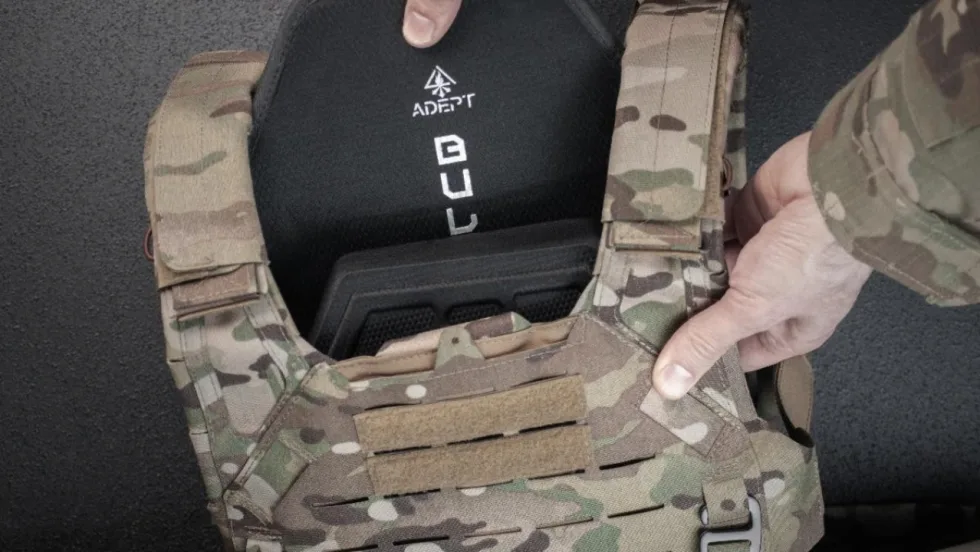
Adept Armor Introduces Two New Rifle Plates
Adept Armor has launched two new Level IV ballistic plates, the Emperor and the Archon Mark 2, which brings Adept Armor’s new Quatroid ceramic to the high-threat, performance-value center of the range at 5.2 pounds.
Read More →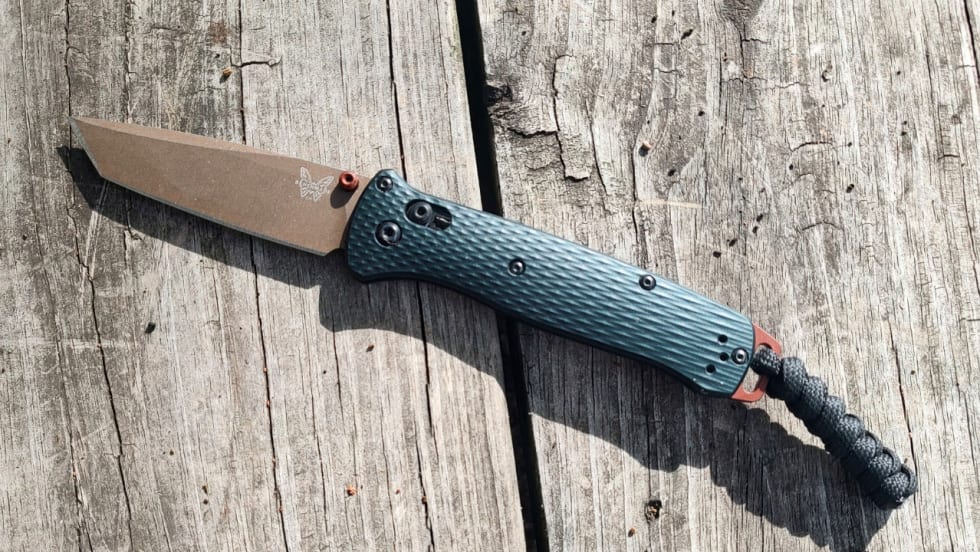
POLICE Product Test: Benchmade Bailout
The Benchmade Bailout is a slim, lightweight carry knife with a deep-ride pocket clip and comes in a variety of blade steels and scales. Here is a detailed review of the Taiga Green Bailout, released earlier this year.
Read More →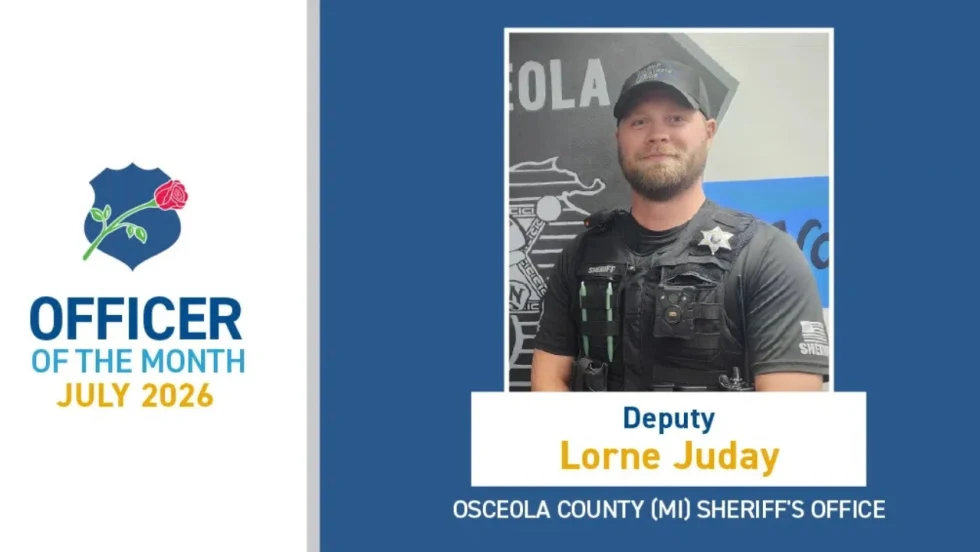
NLEOMF Announces July 2026 Officer of the Month
NLEOMF honored a Michigan deputy sheriff as the July 2026 Officer of the Month for rescuing a trapped driver from a burning vehicle following a Fourth of July crash.
Read More →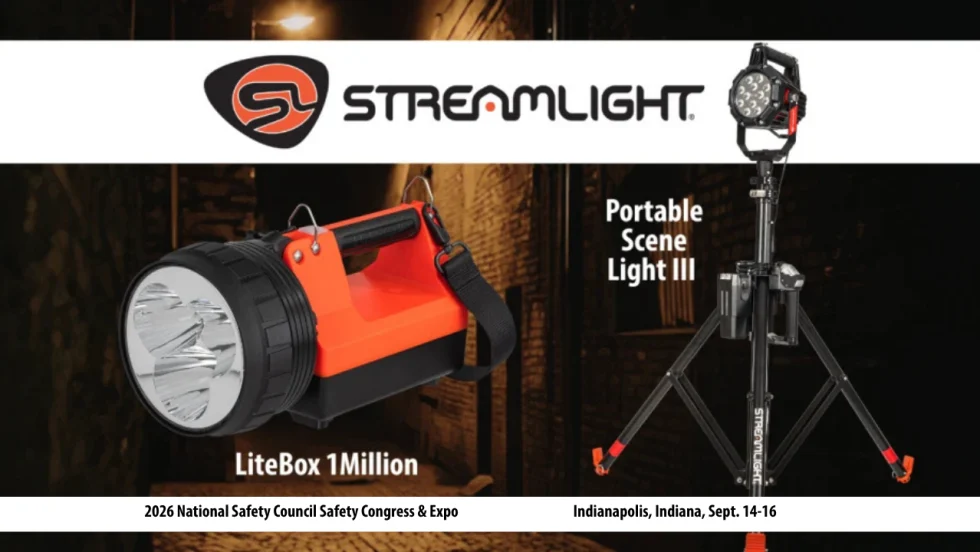
Streamlight to Showcase Newest Lighting Products at National Safety Council’s Safety Congress & Expo 2026
Streamlight will showcase its latest lights, including the Portable Scene Light III and the LiteBox 1Million, at the 2026 National Safety Council (NSC) Safety Congress & Expo.
Read More →
The 2027 World Police & Fire Games Set for Perth, Australia
The 2027 World Police & Fire Games (WPFG) will take place in Perth, Western Australia, from Friday, March 12 through Sunday, March 21, 2027.
Read More →
5.11 Partners with National Fallen Firefighters Foundation to Support #ForThe343
5.11 has joined the nationwide movement honoring the 343 New York City Fire Department firefighters lost on Sept. 11, 2001.
Read More →