



Legal Weed States Have Trouble Defining "High" Driving
It turns out, measuring a person's THC is actually a poor indicator of intoxication. Unlike alcohol, THC gets stored in your fat cells, and isn't water-soluble like alcohol, says Thomas Marcotte, co-director of The Center for Medicinal Cannabis Research at the University of California, San Diego.

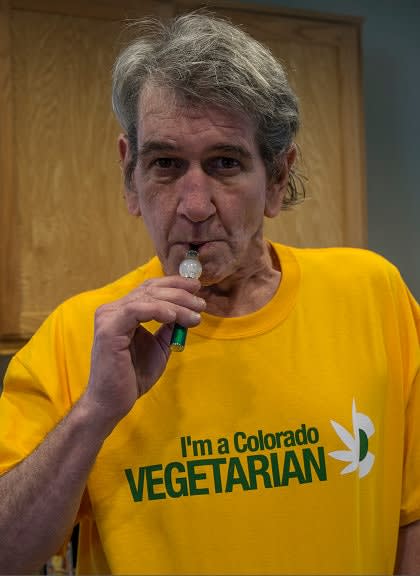
Colorado's marijuana DUI law is modeled on the one for alcohol, which sets a number to determine when someone is too intoxicated to drive. For pot, that number is five nanograms of THC per milliliter of blood. Anything above that and the law says you shouldn't be driving.
More states may come up with their own marijuana DUI guidelines. Voters in five states from California to Maine are deciding this November whether to legalize recreational marijuana. They're weighing the good, the bad and the still unknown. Issues like driving while stoned are still in the "unknown" category.
It turns out, measuring a person's THC is actually a poor indicator of intoxication. Unlike alcohol, THC gets stored in your fat cells, and isn't water-soluble like alcohol, says Thomas Marcotte, co-director of The Center for Medicinal Cannabis Research at the University of California, San Diego.
"Unlike alcohol, which has a generally linear relationship between the amount of alcohol you consume, your breath alcohol content and driving performance, the THC route of metabolism is very different," he explains.
That's why adapting drunk driving laws to marijuana makes for bad policy, says Mark Kleiman, a professor of public policy at New York University. "You can be positive for THC a week after the last time you used cannabis," he says. "Not subjectively impaired at all, not impaired at all by any objective measure, but still positive."
Still, Colorado and five other states have such laws on the books because pretty much everyone agrees that driving stoned can be dangerous, especially when combined with alcohol.
What cops really need is a simple roadside sobriety test. Scientists at UCSD are among researchers working on several apps that could measure how impaired one is behind the wheel. One has a person follow a square moving around a tablet screen with a finger, which measures something called "critical tracking." Another app measures time distortion, because things can slow way down when a person is high, NPR reports.
More Patrol

Streamlight Portable Scene Light III Wins 2026 OH&S New Product of the Year Award
Streamlight’s Portable Scene Light III has won the 2026 Occupational Health & Safety (OH&S) New Product of the Year Award in the Lighting category.
Read More →
Adept Armor Introduces Two New Rifle Plates
Adept Armor has launched two new Level IV ballistic plates, the Emperor and the Archon Mark 2, which brings Adept Armor’s new Quatroid ceramic to the high-threat, performance-value center of the range at 5.2 pounds.
Read More →
POLICE Product Test: Benchmade Bailout
The Benchmade Bailout is a slim, lightweight carry knife with a deep-ride pocket clip and comes in a variety of blade steels and scales. Here is a detailed review of the Taiga Green Bailout, released earlier this year.
Read More →
NLEOMF Announces July 2026 Officer of the Month
NLEOMF honored a Michigan deputy sheriff as the July 2026 Officer of the Month for rescuing a trapped driver from a burning vehicle following a Fourth of July crash.
Read More →
Streamlight to Showcase Newest Lighting Products at National Safety Council’s Safety Congress & Expo 2026
Streamlight will showcase its latest lights, including the Portable Scene Light III and the LiteBox 1Million, at the 2026 National Safety Council (NSC) Safety Congress & Expo.
Read More →
The 2027 World Police & Fire Games Set for Perth, Australia
The 2027 World Police & Fire Games (WPFG) will take place in Perth, Western Australia, from Friday, March 12 through Sunday, March 21, 2027.
Read More →
5.11 Partners with National Fallen Firefighters Foundation to Support #ForThe343
5.11 has joined the nationwide movement honoring the 343 New York City Fire Department firefighters lost on Sept. 11, 2001.
Read More →
Team Wendy Announces Title Sponsorship of the Jorge Pastore Foundation
Team Wendy’s 3-year partnership with the Jorge Pastore Foundation expands access to programs that strengthen those who serve.
Read More →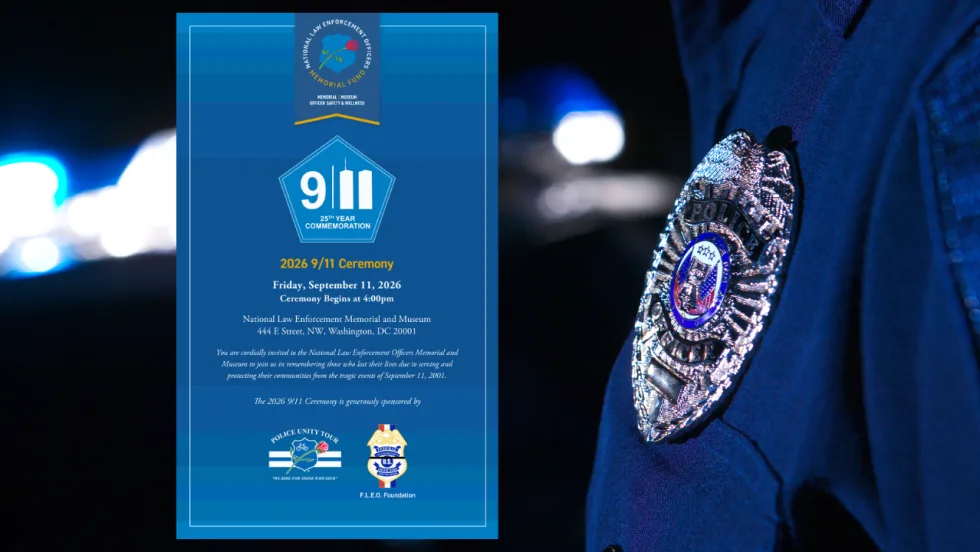
National Law Enforcement Memorial and Museum Hosting 9/11 25th-Year Commemoration Ceremony
The National Law Enforcement Memorial and Museum is hosting a 9/11 25th Year Commemoration Ceremony on Sept. 11 at 4 p.m.
Read More →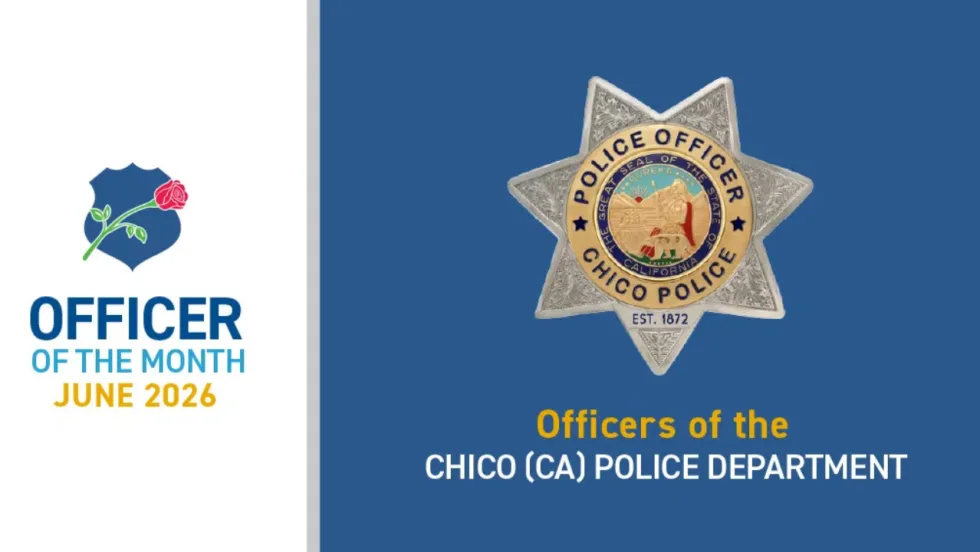
National Law Enforcement Officers Memorial Fund Announces June 2026 Officers of the Month
The National Law Enforcement Officers Memorial Fund (NLEOMF) named 15 officers of the Chico Police Department (California) as the Officers of the Month for June 2026 for their roles in responding to an active-shooter incident at a public library.
Read More →