



JVC Introduces Private Mesh Video Network at NAB 2015
JVC Professional Video will unveil the JVC Private MESH Video Network at the 2015 NAB Show (Booth C4314), which runs April 13–16 in Las Vegas, Nev. An ideal solution for wireless, multi-camera coverage of sports, parades, and other location shoots, the JVC IP solution uses the Silvus Bi-Directional Radio System to transmit very high quality video from remote locations with extremely high streaming reliability.

JVC Professional Video, a division of JVCKENWOOD USA Corporation, will unveil the JVC Private MESH Video Network at the 2015 NAB Show (Booth C4314), which runs April 13–16 in Las Vegas, Nev. An ideal solution for wireless, multi-camera coverage of sports, parades, and other location shoots, the JVC IP solution uses the Silvus Bi-Directional Radio System to transmit very high quality video from remote locations with extremely high streaming reliability.
JVC offers several ProHD and 4KCAM camcorders that deliver reliable and cost effective live video-over-IP streaming for broadcasters. With built-in Zixi Advanced Streaming Technology (AST) featuring forward error correction and new adaptive bit rate technology, JVC camcorders maximize bandwidth to deliver high-quality live HD video with lower dropout and connection loss than standard UDP transmission. Because current IP streaming solutions typically depend on broadband networks or public Wi-Fi, network congestion may intrude on a live broadcast stream and limit applicability in certain venues.
JVC's Private MESH Video Network solves the congestion problem and provides bandwidth up to 85 Mbps, which is significantly more than traditional cellular and even bonded cellular transmission systems. When partnered with the Silvus Bi-Directional Radio System, the JVC system offers even better reliability. Plus, the private network delivers much larger transmission distances than Wi-Fi systems, provides a secure direct encoded video stream, and features two-way communication that allows camera setup and adjustment from remote locations.
"This is the future of 'first mile' contribution for live multi-camera coverage of remote events. Broadcasters are going to love the reliability and simplicity of our private wireless network system, because it resolves any issues of access or bandwidth in the field," Dave Walton, assistant vice president, marketing communications. "Sports producers have already expressed interest in this technology, and it has huge potential for government and security applications as well."
The independent, isolated network is built around the use of mobile MESH nodes that can communicate while moving without any kind of fixed infrastructure. Although the JVC network was designed as a portable MANET (Mobile Ad-Hoc Network) system, nodes can be permanently installed in locations such as sports arenas or government buildings where broadcasters frequently return for live reports.
Each node in the JVC system is a Silvus Transceiver Radio that serves as both transmitter and receiver, creating a flexible, self-managing, and self-healing network. Radio choices include a camera node that directly attaches to a JVC camcorder and receive an encoded stream directly from the camera (a JVC exclusive), mobile relay node designed for use in vehicles, fixed relay node for fixed locations within the wireless service area, and destination access point node that serves primarily as the receiver for live transmission or file transfer.
The network is simple to set up and requires very little knowledge to operate. Best routing decisions are made automatically, and the network can be administered from any radio. The quantity of nodes required to cover an event is subject to the size of the area and topography of the region.
The JVC system uses MIMO (Multi In Multi Out) technology that supports four transmit channels and four receive channels. Traditional systems use a two-dimensional signaling space (time and frequency), but MIMO systems add a third dimension – space – to allow transmission of multiple signals over multiple signal paths at the same time and frequency. All streams operate at the same frequency, but each antenna transmits a unique data stream that is recovered at the receiver via sophisticated signal processing.
Headquartered in Wayne, N.J., JVC Professional Products is a division of JVCKENWOOD USA Corporation, a wholly-owned subsidiary of JVC Kenwood Corporation. The company is a leading manufacturer and distributor of broadcast and professional video and audio equipment, D-ILA front projection systems, and Super LoLux HD video security products. For further product information, visit https://pro.jvc.com/ or call (800) 582-5825.
More Technology
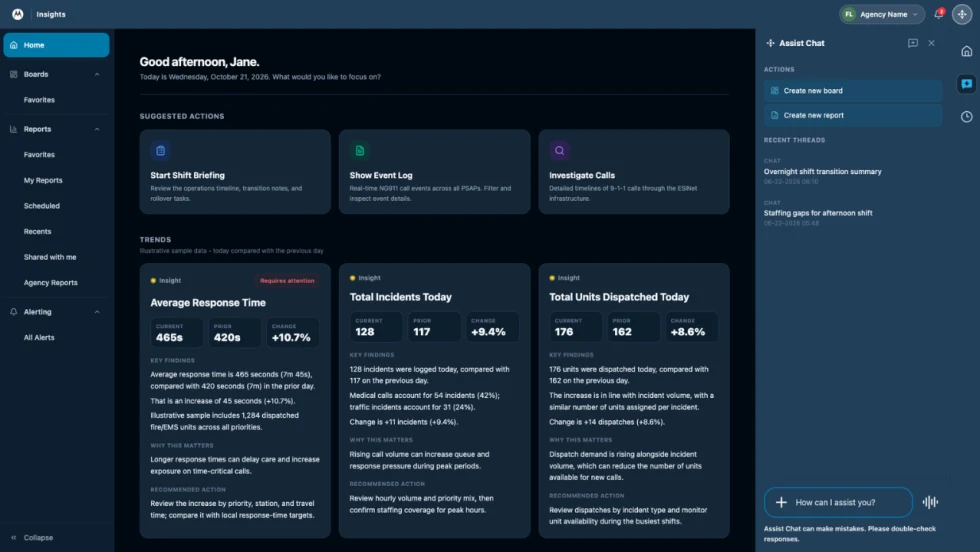
How Motorola Solutions’ New “Insights” Platform Helps Public Safety Agencies Identify Trends to Improve Their Operations
Motorola Solutions has introduced Insights, which leverages Assist, its mission-critical artificial intelligence (AI), to address these challenges and shape what’s next for public safety analytics and reporting technology.
Read More →
What Qualifies a Laptop as Rugged or Fully Rugged?
Police officers face a wide range of working conditions that can damage or even destroy a regular consumer laptop. Learn what qualifies a computer as rugged or fully rugged and why those devices are vital for law enforcement.
Read More →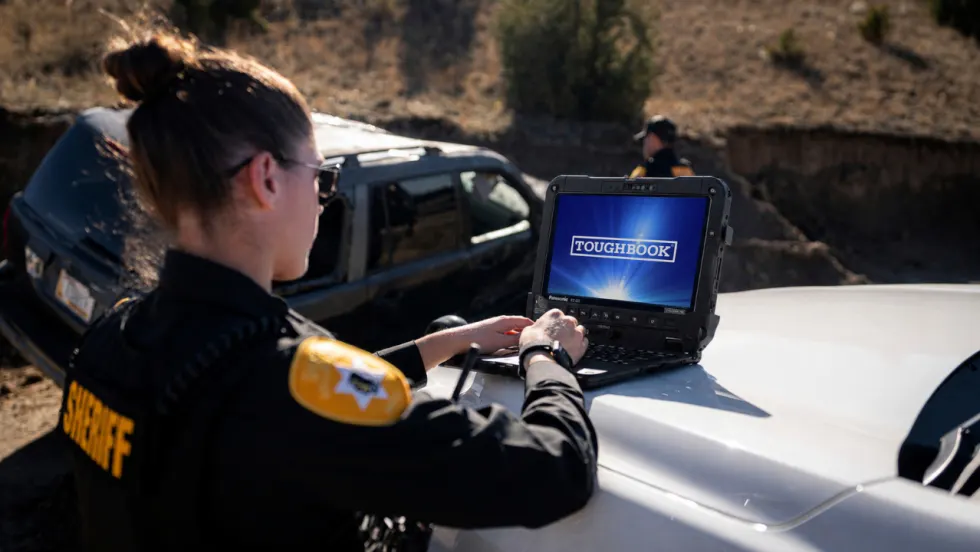
Panasonic Connect Launches the Toughbook 34 and Toughbook G3, Fully Rugged 2-in-1 Mobile Computers
Panasonic Connect has launched the Toughbook 34 and Toughbook G3 to facilitate in-vehicle dispatch, records management, and mobile command operations from any location.
Read More →

A police agency's guide to data-driven fleet management
Costs are rising and the public expects more transparency into how their tax dollars are spent. This e-book shows how police agencies can use fleet data to take control of fleet expenses while improving officer safety and demonstrating fiscal responsibility to the communities they serve.
Read More →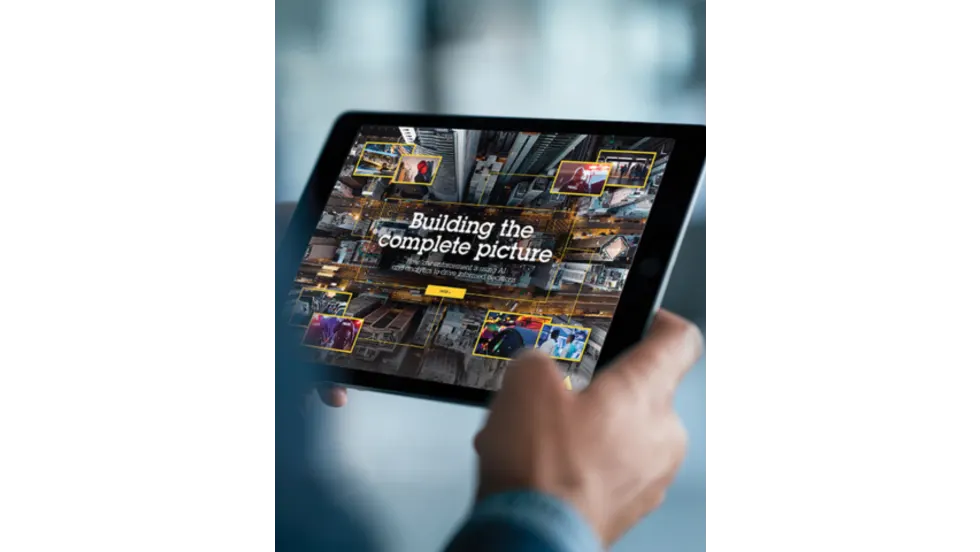
AI and analytics for law enforcement: Turning data into insights
Law enforcement agencies are managing more video, sensor data and digital evidence than ever before. Discover how AI and analytics can help turn that data into actionable insights that strengthen situational awareness, accelerate investigations and support more informed decisions.
Read More →
Vasco Electronics Adds Automatic Language Detection to Vasco Translator Q1
Vasco Electronics’ software update introduces hands-free language switching and expanded offline translation across 45 language pairs, empowering law enforcement, healthcare, and front-office enterprise teams
Read More →
North Miami Police Department Deploys Mark43
The North Miami Police Department has deployed Mark43 as part of its Five-Year Strategic Plan that represents its collective vision and goals for a more proactive police department, anchored by a core commitment to leveraging modern technology to enhance efficiency and public safety.
Read More →
Cellebrite Genesis for Enterprise Now Generally Available
Made available to the public sector in June, Cellebrite Genesis is serving a growing mix of national, regional, and local agencies worldwide, including some of the largest regional and metropolitan police departments. It is now available for enterprise organizations.
Read More →
2026 Vision FirstNet Users Summit to Host Emerging Leaders Training on Grassroots Advocacy for Public Safety
“Emerging Leaders Training: Understanding the Importance of Grassroots Advocacy for Public Safety," a session during the 2026 Vision FirstNet Users Summit, will offer a roadmap for unified advocacy at the federal level.
Read More →
Motorola Solutions Completes Acquisition of D-Fend Solutions
Motorola Solutions has acquired D-Fend Solutions, an industry leader in counter-drone technology. This deal provides public safety and enterprise customers with access to advanced counter-unmanned aerial systems.
Read More →