



Child Porn Ban Ruled Too Vague
The Supreme Court struck down a congressional ban on virtual child pornography Tuesday, ruling that the First Amendment protects pornography or other sexual images that only appear to depict real children engaged in sex.

The Supreme Court struck down a congressional ban on virtual child pornography Tuesday, ruling that the First Amendment protects pornography or other sexual images that only appear to depict real children engaged in sex.
The 6-3 ruling is a victory for both pornographers and legitimate artists such as moviemakers, who argued that a broad ban on simulated child sex could make it a crime to depict a sex scene like those in the recent movies "Traffic" or "Lolita."
The court said language in a 1996 child pornography law was unconstitutionally vague and far-reaching.
The court majority, led by Justice Anthony M. Kennedy, found two provisions of the Child Pornography Prevention Act overly broad and unconstitutional.
"The First Amendment requires a more precise restriction," Kennedy wrote for himself and Justices John Paul Stevens, David H. Souter, Ruth Bader Ginsburg and Stephen G. Breyer. Justice Clarence Thomas wrote separately to agree with the outcome.
The law was challenged by a trade association for pornographers. The law barred sexually explicit material that "appear(s) to be a minor" or that is advertised in a way that "conveys the impression" that a minor was involved in its creation.
Justice Sandra Day O'Connor partially agreed with the majority and partially disagreed. She was joined by Chief Justice William H. Rehnquist and Justice Antonin Scalia. Rehnquist and Scalia also filed their own separate dissenting opinion that went further.
"The aim of ensuring the enforceability of our nation's child pornography laws is a compelling one," Rehnquist wrote for the pair. "The (law) is targeted to this aim by extending the definition of child pornography to reach computer-generated images that are virtually indistinguishable from real children engaged in sexually explicit conduct."
The law was Congress' answer to then-emerging computer technology that allowed the computer alteration of innocent images of real children, or the creation from scratch of simulated children posed in sexual acts.
The law was an expansion of existing bans on the usual sort of child pornography. Congress justified the wider ban on grounds that while no real children were harmed in creating the material, real children could be harmed by feeding the prurient appetites of pedophiles or child molesters.
The Free Speech Coalition, the pornographers' trade group, said it opposes child pornography but that the law could snare legitimate, if unsavory, films and photos produced by its members.
The group did not challenge a section of the law that banned the use of identifiable children in computer-altered sexual images.
A federal judge upheld the law, but the San Francisco-based 9th U.S. Circuit Court of Appeals decided in December 1999 that the challenged provisions violated the Constitution's free-speech protection.
The appeals court said the government did not show a connection between computer-generated child pornography and the exploitation of actual children.
The Supreme Court upheld the appeals court, finding that the law would ban images that are not obscene as the court has previously defined that term. Neither obscenity nor child pornography involving real children is protected by the Constitution's free-speech guarantee.
The Clinton and Bush administrations defended the law in court, claiming it "helps to stamp out the market for child pornography involving real children."
This case is one of two dealing with children and pornography that the court considered this term. The other, which the court has not yet decided, tests the constitutionality of a separate law governing children's access to sexually explicit material on the Internet.
More Patrol

Team Wendy Introduces the EXFIL Endurance Ballistic Helmet, Engineered to Reduce the Burden of Extended Wear
Team Wendy has launched its EXFIL Endurance, a new lightweight ballistic helmet engineered to deliver protection, comfort, and fit during demanding, extended operations.
Read More →
The First Responders Children’s Foundation National First Responders Day Roll Call of Heroes Ceremony Returns to Times Square, NYC
First Responders Children’s Foundation (FRCF), in collaboration with T-Mobile, will host the Roll Call of Heroes ceremony in Times Square to commemorate National First Responders Day on Wednesday, Oct. 28. During the event, FRCF will present 18 Hero Awards.
Read More →
Streamlight to Showcase Newest Lighting Products for Law Enforcement Professionals at IACP 2026
Streamlight will showcase its newest lights for law enforcement at the International Association of Chiefs of Police Annual Conference & Expo. Featured lights will include the TLR-3 X, the PolyTac 1X, and more.
Read More →
Streamlight Portable Scene Light III Wins 2026 OH&S New Product of the Year Award
Streamlight’s Portable Scene Light III has won the 2026 Occupational Health & Safety (OH&S) New Product of the Year Award in the Lighting category.
Read More →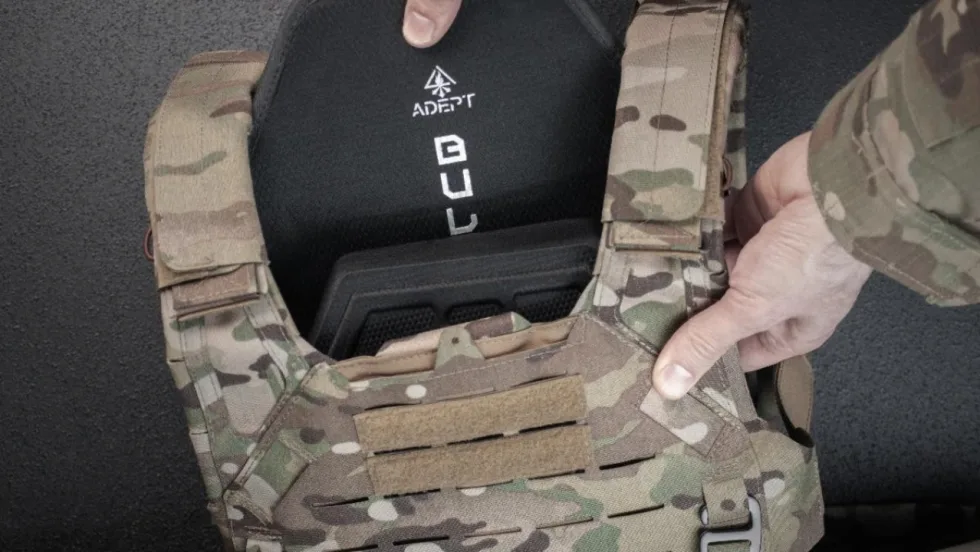
Adept Armor Introduces Two New Rifle Plates
Adept Armor has launched two new Level IV ballistic plates, the Emperor and the Archon Mark 2, which brings Adept Armor’s new Quatroid ceramic to the high-threat, performance-value center of the range at 5.2 pounds.
Read More →
POLICE Product Test: Benchmade Bailout
The Benchmade Bailout is a slim, lightweight carry knife with a deep-ride pocket clip and comes in a variety of blade steels and scales. Here is a detailed review of the Taiga Green Bailout, released earlier this year.
Read More →
NLEOMF Announces July 2026 Officer of the Month
NLEOMF honored a Michigan deputy sheriff as the July 2026 Officer of the Month for rescuing a trapped driver from a burning vehicle following a Fourth of July crash.
Read More →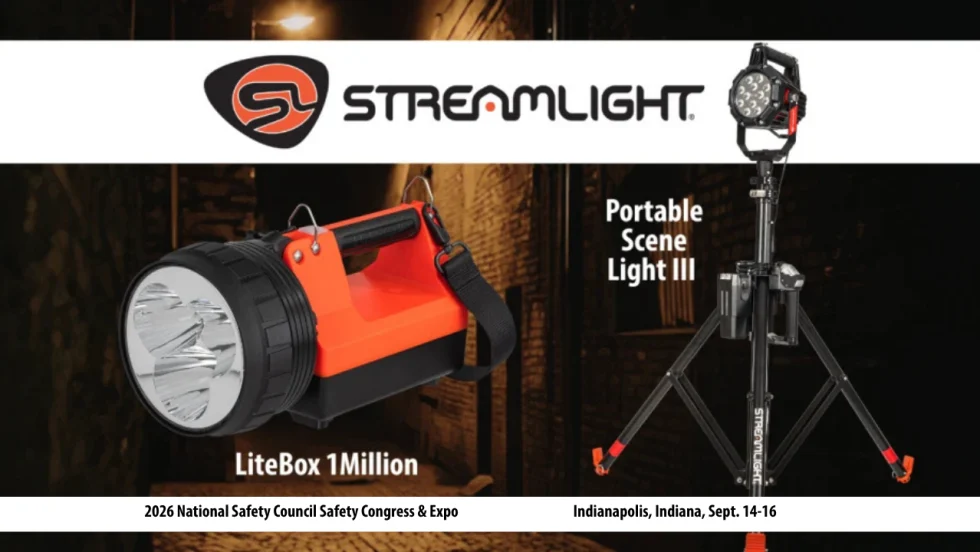
Streamlight to Showcase Newest Lighting Products at National Safety Council’s Safety Congress & Expo 2026
Streamlight will showcase its latest lights, including the Portable Scene Light III and the LiteBox 1Million, at the 2026 National Safety Council (NSC) Safety Congress & Expo.
Read More →
The 2027 World Police & Fire Games Set for Perth, Australia
The 2027 World Police & Fire Games (WPFG) will take place in Perth, Western Australia, from Friday, March 12 through Sunday, March 21, 2027.
Read More →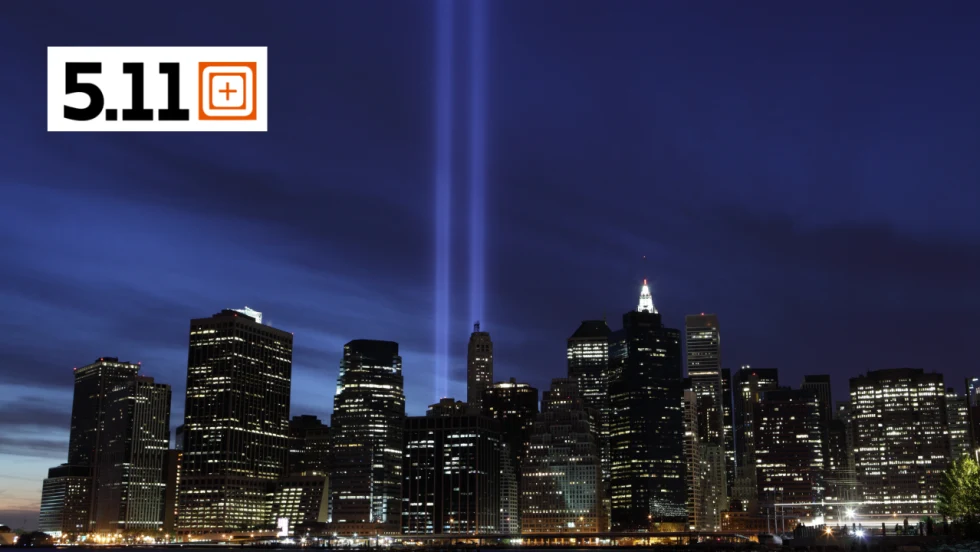
5.11 Partners with National Fallen Firefighters Foundation to Support #ForThe343
5.11 has joined the nationwide movement honoring the 343 New York City Fire Department firefighters lost on Sept. 11, 2001.
Read More →