



ALERRT Finds 3 Missed Opportunities That Could Have Stopped Uvalde School Shooter
The report says the UPD officer “was armed with a rifle and sighted in to shoot the attacker; however, he asked his supervisor for permission to shoot. The UPD officer did not hear a response and turned to get confirmation from his supervisor. When he turned back to address the suspect, the suspect had already entered the west hall exterior door.”

A report analyzing the school shooting in Uvalde, TX, reveals there were three missed opportunities to stop the gunman before he entered Robb Elementary School on May 24 and killed 19 students and two teachers.
The Texas Department of Public Safety asked the Advanced Law Enforcement Rapid Response (ALERRT) Center to assess the law enforcement response. ALERRT is known as the preeminent active shooter/attack response training provider in the nation, was recognized by the FBI in 2013 as the national standard in active shooter response training, and was recognized for its training efforts with a Congressional Achievement Award in 2016. The ALERRT Center, created in 2002, is located at Texas State University.
The 26-page report, titled Robb Elementary School Attack Response Assessment and Recommendations, identified three key issues before the gunman entered the school the day of the shooting.
First was the unlocked door the gunman used to enter the school. The report confirmed that a teacher had propped a door open with a rock and noted there were several painted rocks outside multiple school doors, giving ALERRT officials the sense that propping doors was a common practice at the school. However, when the teacher returned inside the school, she removed the rock and the door closed.
“After the teacher closed the door, she did not check to see if the door was locked. Perhaps this was because the door is usually locked. However, on this day the door was not locked, and because it was not locked, the attacker was able to immediately access the building,” states the ALERRT report.
There was a second missed opportunity to prevent the mass shooting. One of the first responding officers, a Uvalde Consolidated Independent School District officer, drove through the west parking lot where the shooter was hiding.
“If the officer had driven more slowly or had parked his car at the edge of the school property and approached on foot, he might have seen the suspect and been able to engage him before the suspect entered the building,” the report finds.
In the third opportunity, an officer saw the armed man at the school and did not fire. According to the report, a Uvalde Police Department officer was at the nearby crash site where the gunman had abandoned his vehicle, fired shots at individuals nearby, then walked toward the school. He saw the man was armed and walking outside the school.
The report says the UPD officer “was armed with a rifle and sighted in to shoot the attacker; however, he asked his supervisor for permission to shoot. The UPD officer did not hear a response and turned to get confirmation from his supervisor. When he turned back to address the suspect, the suspect had already entered the west hall exterior door.” The officer was approximately 148 yards from that door.
The ALERRT report says that distance was within the effective range of the officer’s AR-15 platform, but the officer commented that he was concerned if he missed the shot, rounds could have penetrated the school and injured children inside.
ALERRT also noted that current State of Texas standards for patrol rifle qualifications do not require officers to fire their rifles from more than 100 yards away from the target. It is, therefore, possible that the officer had never fired his rifle at a target that was that far away, the report states.
“If any of these three key issues had worked out differently, they could have stopped the tragedy that followed,” the analysis states. “First, had the exterior door been secured, the suspect may have never gained access to the building. At the very least, the suspect would have been delayed and responding officers would have had more time to find and stop the shooter before he entered the building. The UCISD PD officer might have seen the suspect had the officer not been driving as fast or if he had approached on foot. Lastly, had the UPD officer engaged the suspect with his rifle, he may have been able to neutralize, or at least distract, the suspect preventing him from entering the building.”
In addition to pointing out the three missed opportunities to stop the gunman, the ALEERT report details the response by law enforcement once officers entered the school building.
The ALEERT team also tested breaching tools at the school during the review. A Stanley Fat Maxx and a 10-pound sledgehammer were used to breach doors and walls at the school successfully. A Halligan tool was tested and found as a viable way to breach windows. The sledgehammer alone was found not to be a viable breaching option against the outward opening doors. But using the sledgehammer with the Stanley Fat Maxx to pry the door was successful.
ALERRT found the doors could be breached in three to four seconds using a pry technique combining the Stanley Fat Maxx and the sledgehammer.
“Although the breach was conducted quickly, and a positive breach was established, there was still a substantial risk of serious bodily injury or death to officers if this breach were to be performed without a ballistic shield,” the report advises.
The ALERRT team suggested a pry technique could have been successful if combined with distraction tactics. Plus, both tools tested quickly breached sheetrock walls and could have created a port hole opening allowing officers to engage the suspect through the opening while trying to pry the door.
The report also says, “the use of a 12-gauge shotgun and 00 buck is another viable breaching method that could have or may have been used with the proper equipment and training.”
In addition, the report addresses the use of a key to open the door, but cautions “it was clear that an unshielded officer faced imminent serious bodily injury or death if they were to attempt to unlock the door. This was proven during the initial responding officers’ first attempt to open the door. The breach point and inset locations in the south hall received heavy gunfire, and this breach method, alone, was untenable.”
But, door breaching may not have been needed. The gunman entered classroom 111 without a key and ALERRT learned through an investigating officer that the lock on room 111 had been reported damaged, multiple times, prior to the shooting. The analysis also found that officers in the hallway did not physically check to see if the doors to rooms 111 or 112 were locked. ALERRT believes the lock on the door to room 111 was never engaged, leaving the door unlocked during the entire event.
More Patrol

Streamlight to Showcase Newest Lighting Products for Law Enforcement Professionals at IACP 2026
Streamlight will showcase its newest lights for law enforcement at the International Association of Chiefs of Police Annual Conference & Expo. Featured lights will include the TLR-3 X, the PolyTac 1X, and more.
Read More →
Streamlight Portable Scene Light III Wins 2026 OH&S New Product of the Year Award
Streamlight’s Portable Scene Light III has won the 2026 Occupational Health & Safety (OH&S) New Product of the Year Award in the Lighting category.
Read More →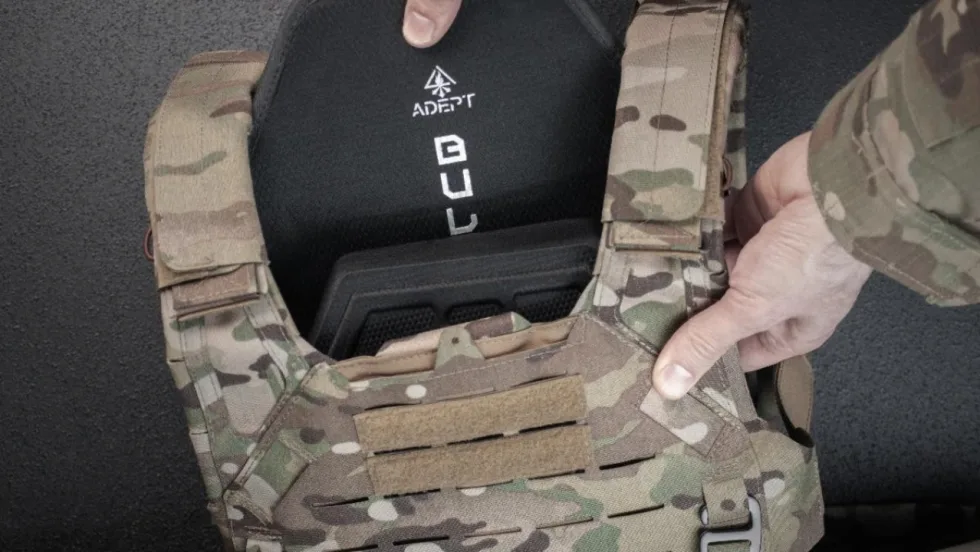
Adept Armor Introduces Two New Rifle Plates
Adept Armor has launched two new Level IV ballistic plates, the Emperor and the Archon Mark 2, which brings Adept Armor’s new Quatroid ceramic to the high-threat, performance-value center of the range at 5.2 pounds.
Read More →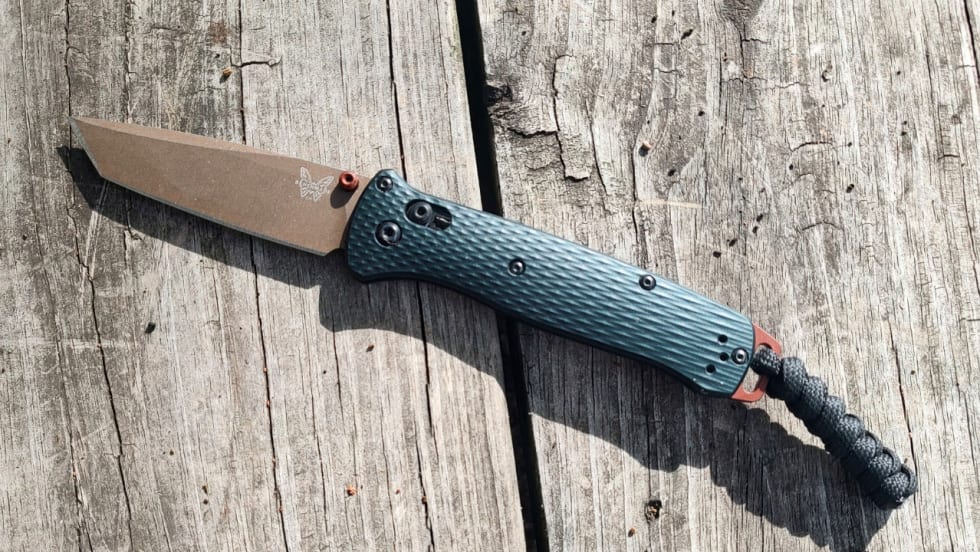
POLICE Product Test: Benchmade Bailout
The Benchmade Bailout is a slim, lightweight carry knife with a deep-ride pocket clip and comes in a variety of blade steels and scales. Here is a detailed review of the Taiga Green Bailout, released earlier this year.
Read More →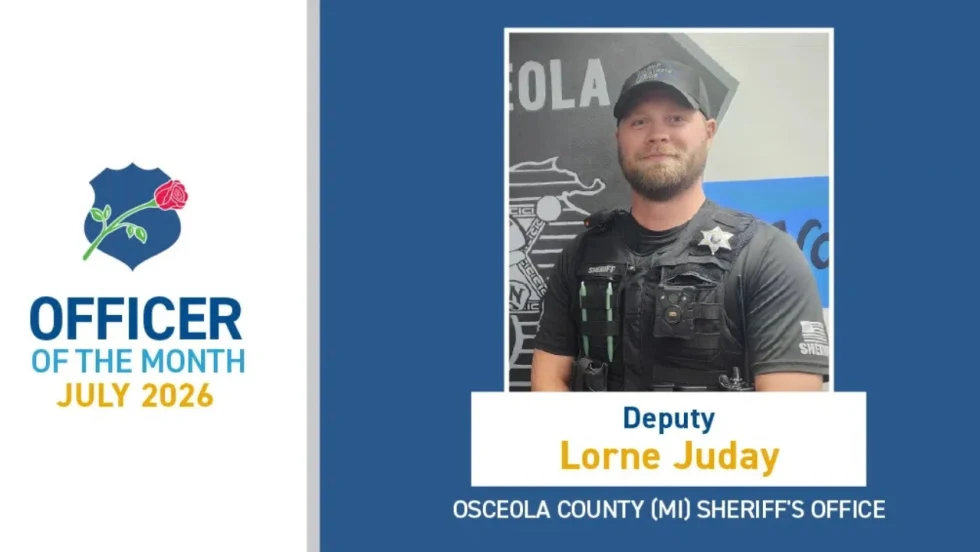
NLEOMF Announces July 2026 Officer of the Month
NLEOMF honored a Michigan deputy sheriff as the July 2026 Officer of the Month for rescuing a trapped driver from a burning vehicle following a Fourth of July crash.
Read More →
Streamlight to Showcase Newest Lighting Products at National Safety Council’s Safety Congress & Expo 2026
Streamlight will showcase its latest lights, including the Portable Scene Light III and the LiteBox 1Million, at the 2026 National Safety Council (NSC) Safety Congress & Expo.
Read More →
The 2027 World Police & Fire Games Set for Perth, Australia
The 2027 World Police & Fire Games (WPFG) will take place in Perth, Western Australia, from Friday, March 12 through Sunday, March 21, 2027.
Read More →
5.11 Partners with National Fallen Firefighters Foundation to Support #ForThe343
5.11 has joined the nationwide movement honoring the 343 New York City Fire Department firefighters lost on Sept. 11, 2001.
Read More →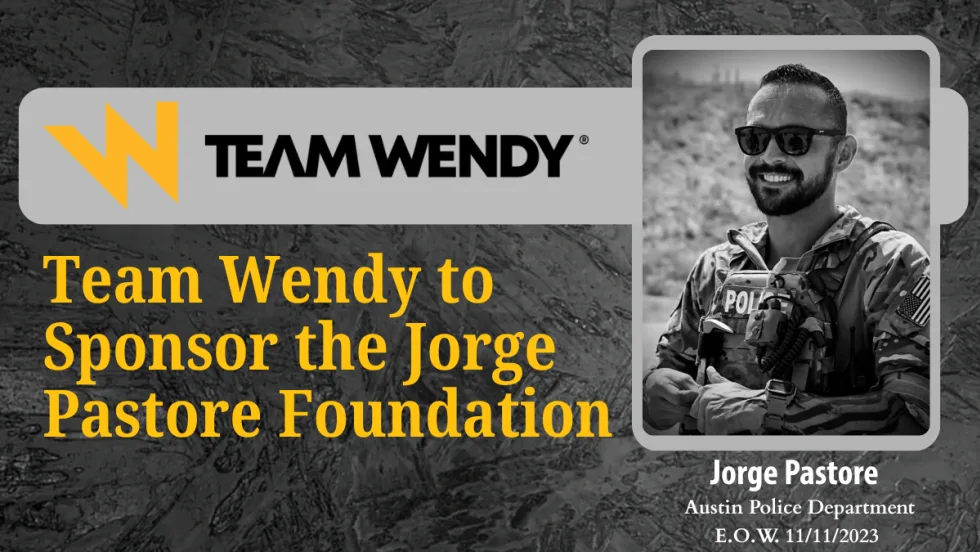
Team Wendy Announces Title Sponsorship of the Jorge Pastore Foundation
Team Wendy’s 3-year partnership with the Jorge Pastore Foundation expands access to programs that strengthen those who serve.
Read More →
National Law Enforcement Memorial and Museum Hosting 9/11 25th-Year Commemoration Ceremony
The National Law Enforcement Memorial and Museum is hosting a 9/11 25th Year Commemoration Ceremony on Sept. 11 at 4 p.m.
Read More →