



Cops Don’t Have to Take the First Punch
You would think that the average cop would know that he doesn’t have to get punched prior to using force. But having seen my fair share of patrol cops who got coldcocked and were laid out on the asphalt when the warning signs were in bold-capped Helvetica-font neon, I wonder.

Lunch time. School yard. I've been here before, facing off against another whose clinched hands conceal no olive branch. Most of the time, I'm lucky. No blows are exchanged. Interest wanes and both parties agree to let bygones be bygones.
But while no punch has been thrown as of yet, it’s enough of a sure thing to the minds of many on the sidelines that they want to make sure that nobody misses out on what will prove to be some good old-fashioned bloodletting.
“Fight! Fight! Fight!” they yell.
Despite their exhortations, my thirteen year-old mind is still gambling that common sense will prevail, and we’ll not accommodate our bloodthirsty peers with gladiator sport. But Randy is determined and the gathering throng about us only strengthens his resolve.
“Come on!” he yells. “Hit me!”
The prospect of throwing the first punch has even less appeal for me than being in a fight: I don’t want to get in trouble.
“No. You hit me first,” I say, hoping that some inhibiting sense of decency will prevent his doing so.
But neither a pacifist nor second hitter Randy be, and the moment I say it, the little asshole hauls off and nails me with a roundhouse to my right orbital. Like some Warner Bros. Cartoon character who has just been hit with a hammer, I see an explosion of cascading stars that fills my field of vision. Then it suddenly feels like someone has stuck a piece of tube steak under my skin and over my cheekbone.
I’m shocked and disappointed that my southpaw friend would so readily accommodate me. Part of me realizes it’s just business as usual.
Figuring he can’t hit my good eye if I’m behind him, I grab him by the throat, spin him around, and get him in an adolescent’s version of a carotid restraint.
With my chest pressed to his back and adrenaline as my guide, I force him facedown to the ground. Soon we’re in the dirt of smoker’s corner, rolling around where the stoners were spitting their loogies seconds before as a group of cholos—recognizing an open season ass-kicking when it’s offered—proceed to kick the crap out of both of us.
Who would have thought that a bunch of size 6 shoes could hurt so much?
Suddenly, the sea of Adidas part and I’m hoisted to my feet by unseen teachers that by my count are a good two minutes too late. Dragged off to the principal’s office and given medical treatment for my black eye, I’m asked for my side of the story.
The man’s reception to my explanation is as cool as the ice pack on my cheek.
Though I didn’t start the fight, it doesn’t matter. Randy and I share the same fate: Suspension from school.
It’s only years later that I’m enlightened as a cadet in the Sheriff’s Academy: You don’t have to let the other guy hit you first.
Did you get that?
YOU DON’T NEED TO LET THE OTHER GUY HIT YOU FIRST.
If I’d known this early on, I would like to think that I might have knocked young Randall on his skinny ass when he asked me to in the first place. As it was, I filed it away and decided that I would operate from a position of strength while working patrol. It was a posture that served me well.
Let me say it again as I think it bears repeating:
YOU DON’T NEED TO LET THE OTHER GUY HIT YOU FIRST.
One would hope this wouldn’t prove revelatory for cops. But having seen my fair share of patrol cops who got coldcocked and laid out on the asphalt when the warning signs were in bold-capped Helvetica-font neon, I wonder.
For when it comes to another’s aggression, cops need to recognize the inevitable for what it is. And they should react to it accordingly.
This means responding quickly in an effective manner that is commensurate to the threat.
I labored on that damn sentence. Because if you take nothing else from this, I hope it is these key words:
• Responding
• Quickly
• Effectively
• Appropriately
Cognitive dissonance is not your friend here; conscientious objectors need not apply. To respond to a threat, you have to recognize it and be willing to act on it. When the electricity in the air between you and Mrs. Jones ain’t affection, be prepared to take care of business.
Admittedly, responding effectively can be tricky. What might lay out King Kong could have as much effect on someone under the influence of PCP as a lecture on prudency would on Britney Spears.
The situation may call for some manner of escalation.
Now, you don’t want to use excessive force. With this in mind, know your department’s use of force options and make sure you’re in a position to deploy them (i.e., don’t be leaving your baton in the car where the only thing it’s apt to crack is your window).
Beyond knowing policy and weaponry, you have to be psychologically ready to use them.
Here it can really be tricky. For a collateral casualty of school ground vigilance by the last couple of decades of teachers and school administrators is that most people are ignorant of what it’s like to be in a fight.
East Coast force instructor and Police Advisory Board member Dave Young recently commented on this, saying that as years go by, he sees growing numbers of young men attending his “Fight For Life” seminars who haven’t played contact sports, let alone been in a fight. In an age where an increasing number of differently inclined men are gravitating to mixed martial arts and ground fighting, he sees these young and sometimes idealistic cops at a disadvantage.
“In life,” Young noted, “You’re the puncher or the punching bag.”
Like Young, I wonder how many rookie cops might have profited from an occasional scrap growing up. How many have been raised on pernicious “don’t hit back” sophistries popular with my own li’l cage fighter’s elementary teachers. Combine this with the implicit threats that come with being in one too many force incidents—a virtual inevitability with any aggressive (in the best sense of the word) street cop—and one can see where cops can hesitate at the moment of truth.
But I hope that the next cop who finds himself dealing with some guy who is hell-bent on not peacefully going along with the program will not hesitate. I hope he will do whatever he needs to do as soon as he needs to do it—quickly, effectively and appropriately.
And may the only “Fight! Fight! Fight!” you hear be that of your own inner voice willing you to persevere and come out on top.
More Blog Posts
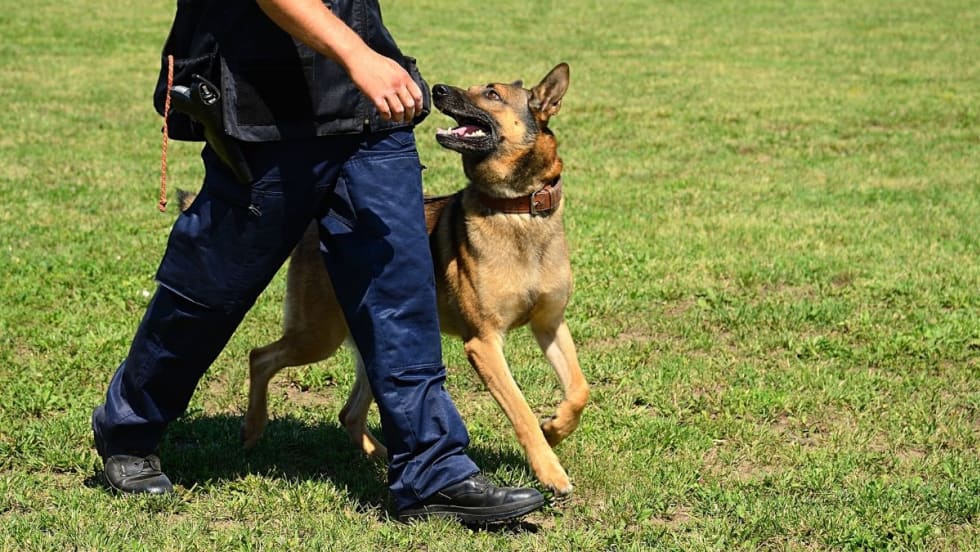
Preventing Heat Injury in Police K-9s
In the relentless heat of summer and even early fall in some parts of the country, officers face the important task of protecting their K-9 partners while working in sweltering temperatures. Recognizing changes in a dog’s behavior is the key.
Read More →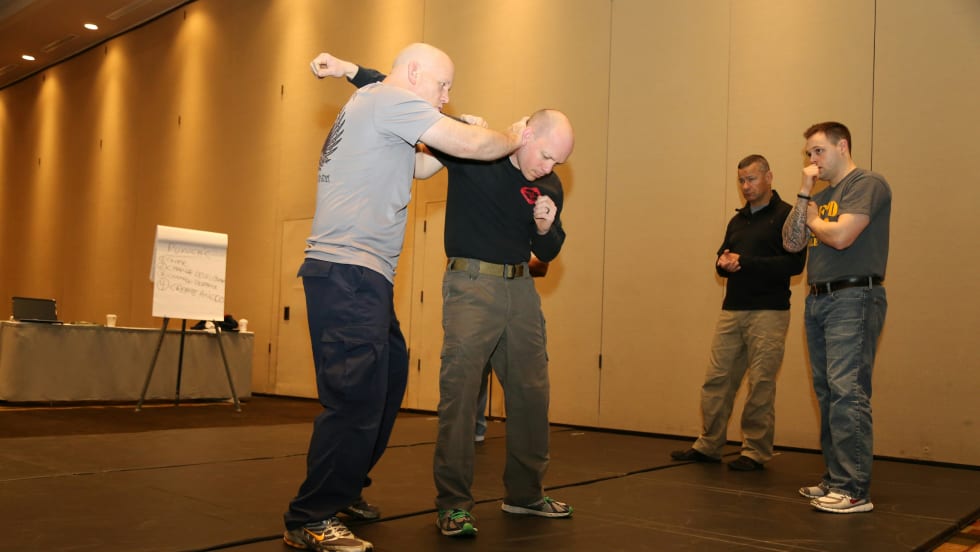
Why Your Agency Needs to Attend the ILEETA Conference
ILEETA is a complete resource for trainers to address trainers' needs. Its mission is to enhance the skills and safety of criminal justice practitioners while fostering stronger and safer communities.
Read More →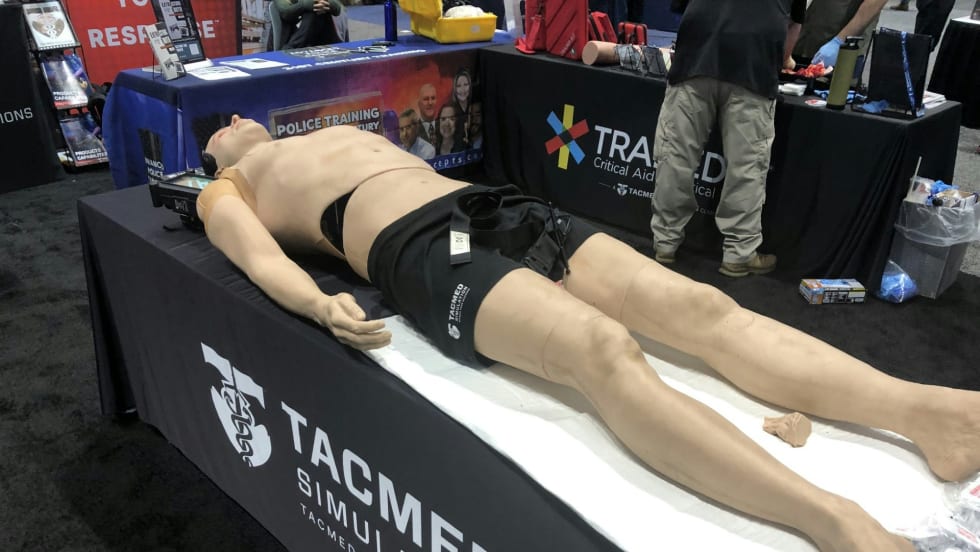
IACP 2023: New Training Products
Technologies for improving law enforcement training and training management were some of the highlights at this year's show.
Read More →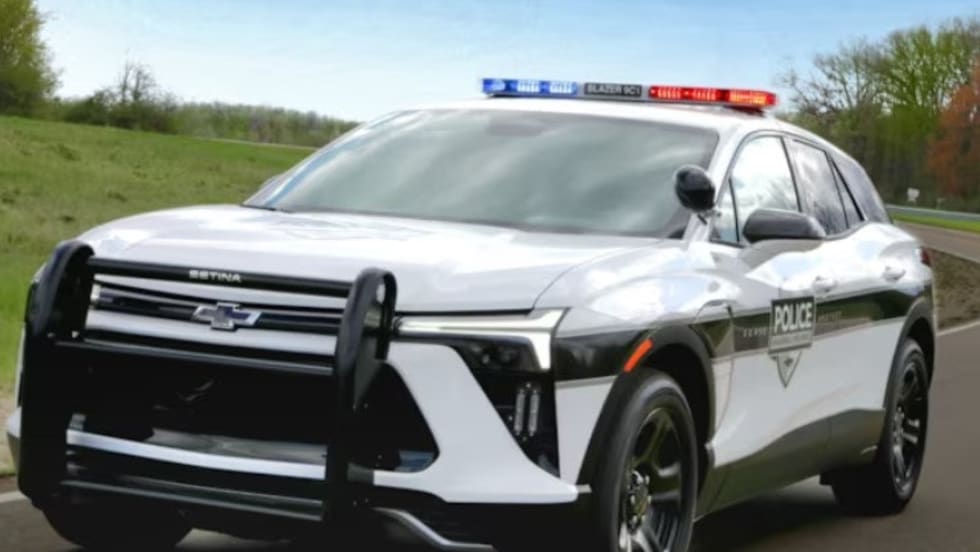
Initial Results Released from MSP 2024 Police Vehicle Testing
The 2024 pursuit-rated vehicles--all pickup trucks or SUVs, including two battery electric models the Chevrolet Blazer EV AWD and Ford Mustang Mach-E--were put through their paces.
Read More →
Officer Safety Considerations Related to Alternative-Fuel Vehicles
As more alternative-fuel and hybrid vehicles hit the road, police and other first responders need to understand that they are no more dangerous than conventional vehicles. However, there are certain safety considerations every cop should know.
Read More →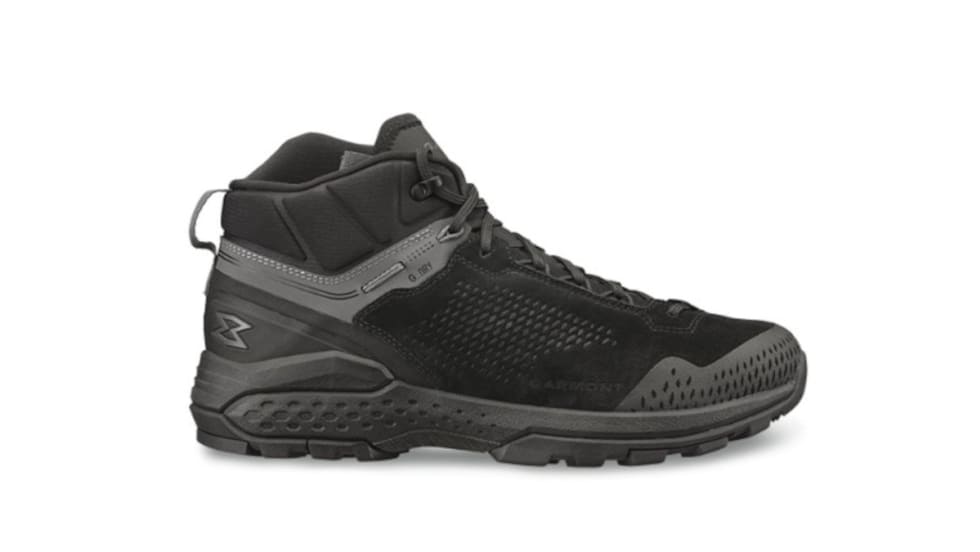
Garmont Working to Grow LE Market Presence
Garmont Tactical has found wide acceptance by military boot buyers, but now the company is trying to better respond to the needs of police officers. Many cops now are not fans of 8-inch boots, so Garmont is adapting.
Read More →
Publisher’s Note: Our Commitment to You
Through our magazine and website and our Police Technology eXchange event, we promise to provide you with information and access to resources to help you do your job safer and better.
Read More →
10 Tips for Responding to Mental Health Crisis Calls
The Harris County Sheriff's Office is a model for other agencies that want to learn about crisis intervention and mental health crisis response. Sgt. Jose Gomez shares the story of their programs and provides 10 tips for mental health crisis call response
Read More →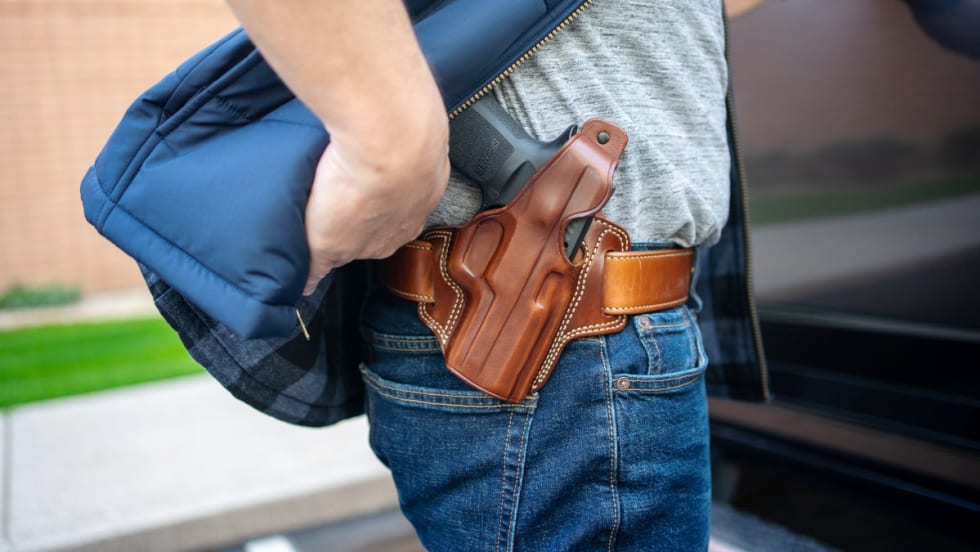
5 Things to Know When Buying Concealed-Carry or Off-Duty Holsters
Mike Barham, of Galco Holsters, shares five important considerations to keep in mind when you buy off-duty concealed or plain-clothes carry holsters.
Read More →
10 Tips for Reviewing Use-of-Force Reports
While the burden of accurately reporting use-of-force situations is on an individual deputy or officer, the person reviewing those reports shares in the responsibility of making sure the reporting is done properly, with clear details included.
Read More →