



Delaying, Delayed, and Good Ol’ Hamstrung Justice
As I like to bitch and gripe at the lack of novel approaches in the justice system, I should at least look at some when they do pop up. A couple of novel ideas were brought to my attention during the last couple of weeks, so I figured I'd share them herein.


As I like to bitch and gripe at the lack of novel approaches in the justice system, I should at least look at some when they do pop up. A couple of novel ideas were brought to my attention during the last couple of weeks, so I figured I'd share them herein.
Here's a link to the first one.
Sometimes I wonder how the rest of the country views some of the things we do here on the west coast. But the more I thought about this one, the more I thought it was not only defensible, but — taking the long term view — possibly a pretty decent idea.
My first response was that suspects were just being given the latest in a series of free passes — a "Get Out of Jail" card courtesy of any surrendered DNA (doubtlessly collected in a manner not to favored by the victims).
But the policy could be an asset — contingent upon certain concerns being addressed, of course.
For one, I would certainly hope it would be limited to first time non-violent, non-felony offenders. The last I heard, petty theft with a prior was still a felony here in California.
For another, I would hope the victim might have some say in the matter, not the least of which is making participation in the program contingent upon restitution being made to the victim (assuming there is one ... the dissenting point of view by a narco cop makes me think there's more than a few victimless crimes involved here).
Finally, I find it hard to believe that our financially compromised court system isn't losing money at letting these bozo's sign on at seventy-five bucks a pop. How does one reconcile such cost with the aggregate amount of time expended by dispatchers, cops, detectives, and other figures in the judicial system who have been imposed upon by them in dealing with each suspect from the get-go? I'd double that processing fee. At least. Even then it'd be a steal, a case of the suspect once more pigging out at the judicial trough.
As it stands, it all seems very much a win-win as court calendars for both defense and prosecuting attorneys will be winnowed and the usual slap on the wrist charades dispensed with. And face it, at a time when jails are closing cells and making early releases, it's as agreeable a concession as we're likely to get in this day and age. The fact that 4,000 people have taken advantage of the O.C's offer says something about the problem, too: Can you imagine how much it would cost to house all 4,000 of those suspects for even one of Tom T. Hall's weeks in a country jail?
The important thing is that by getting these guys DNA records in our database, we effectively have them, to some degree, forever on our radar. One need only look at the evolutionary implications of previous dirtbags' rap sheet to see the merit therein — that inevitable percentage that goes on to bigger and meaner things such as burglaries, assaults, rapes, and murder and can be more readily identified and more successfully prosecuted.
One disappointing suspicion is that the displacement of bodies via early release or diversionary justice will not have a demonstrative effect in keeping society's greater threats locked up any longer. One would hope that by cutting custodial overhead and freeing up space, longer commitments could be made for others. At the very least, that some of that money saved would be spent in training officers how to collect and preserve possible DNA evidence so that we may realize its potential when the need arises, or spent towards speeding up some of our existing back log of DNA cases.
Regarding delayed justice...
Kudos for San Diego PD for turning over some "cold case" files to student interns.
Their initiative paid off big time when a 23-year-old Grossmont College student, Gabrielle Wimer, found fingerprints from a bloody handprint found at the homicide crime scene 37 years ago. At Wimer's urging, officers ran the prints through a computerized database and discovered a match. Sixty-year-old Gerald Metcalf ended up being arrested and charged with the murder of Gerald Jackson, a postal carrier stabbed 50 times. Maybe some other agencies will consider similar steps in clearing some of their old cases.
Over in Arizona, Bill Richardson — the retired cop, not the scandal plagued-former presidential prospect from Nuevo Mexico — had an interesting blog suggesting how state and federal law enforcement agencies might want to follow Mesa PD's example in simultaneously reducing duplication of effort and cutting overhead while being more efficient. While he dispenses with much in the way of nuts and bolts in the piece, the basic premise of Richardson's contention makes sense to me - which means it probably won't go anywhere. I'd like to know how Mesa coppers feel about the changes Richardson alludes to as they relate to their department.
OK, so there's a couple of thinking outside the box things to consider. But here are a couple of examples where mayors were caught thinking decidedly inside the "cover our ass" box, the kind of mindset that leads to diminished prospects of justice, or peace.
Atlantic City Mayor Lorenzo Langford's decision to take 19 police K-9's off the streets reflects a "let's toss the baby out with the bath water" mentality. Langford bases his decision that some of the complaints he was getting about the dogs were "just crazy," which may very well be an apt description of the grievances and his own equally suspect decision.
In pulling the dogs from the field, he leaves police officers exposed to dangers that might otherwise be braved by the dogs. If nothing else, his policy reflects the same type of broad-stroking mentality that results in other asinine policies like no flashlight strikes, no backup guns, no shooting at vehicles and...
No foot pursuits. Fortunately, Mayor Sally Peake apparently saw the light and rescinded her own moratorium. Given her comments to the local news, I'm not so sure I'd want her as the mayor of my town. Or dogcatcher, for that matter.
This week's recommended read: "Profiling Violent Crimes: An Investigative Tool" by Ronald M. Holmes and Stephen T. Holmes.
Using case histories to illustrate how profiling is more of an art than science, Holmes' book is an excellent primer on profiling with lessons that expand beyond just violent crimes. Example: Look at how interrogations are tailored around the personality types of the suspect, and ask yourself how you might be able to exploit such knowledge in your own investigation.
I'll close with one of the greatest lines from any movie: "I won't be wronged, I won't be insulted, and I won't be laid a hand on. I don't do these things to other people and I require the same from them" -– John Wayne, "The Shootist" 1976.
If only the whole of society could abide by them...
More Blog Posts
Preventing Heat Injury in Police K-9s
In the relentless heat of summer and even early fall in some parts of the country, officers face the important task of protecting their K-9 partners while working in sweltering temperatures. Recognizing changes in a dog’s behavior is the key.
Read More →
Why Your Agency Needs to Attend the ILEETA Conference
ILEETA is a complete resource for trainers to address trainers' needs. Its mission is to enhance the skills and safety of criminal justice practitioners while fostering stronger and safer communities.
Read More →
IACP 2023: New Training Products
Technologies for improving law enforcement training and training management were some of the highlights at this year's show.
Read More →
Initial Results Released from MSP 2024 Police Vehicle Testing
The 2024 pursuit-rated vehicles--all pickup trucks or SUVs, including two battery electric models the Chevrolet Blazer EV AWD and Ford Mustang Mach-E--were put through their paces.
Read More →
Officer Safety Considerations Related to Alternative-Fuel Vehicles
As more alternative-fuel and hybrid vehicles hit the road, police and other first responders need to understand that they are no more dangerous than conventional vehicles. However, there are certain safety considerations every cop should know.
Read More →
Garmont Working to Grow LE Market Presence
Garmont Tactical has found wide acceptance by military boot buyers, but now the company is trying to better respond to the needs of police officers. Many cops now are not fans of 8-inch boots, so Garmont is adapting.
Read More →
Publisher’s Note: Our Commitment to You
Through our magazine and website and our Police Technology eXchange event, we promise to provide you with information and access to resources to help you do your job safer and better.
Read More →
10 Tips for Responding to Mental Health Crisis Calls
The Harris County Sheriff's Office is a model for other agencies that want to learn about crisis intervention and mental health crisis response. Sgt. Jose Gomez shares the story of their programs and provides 10 tips for mental health crisis call response
Read More →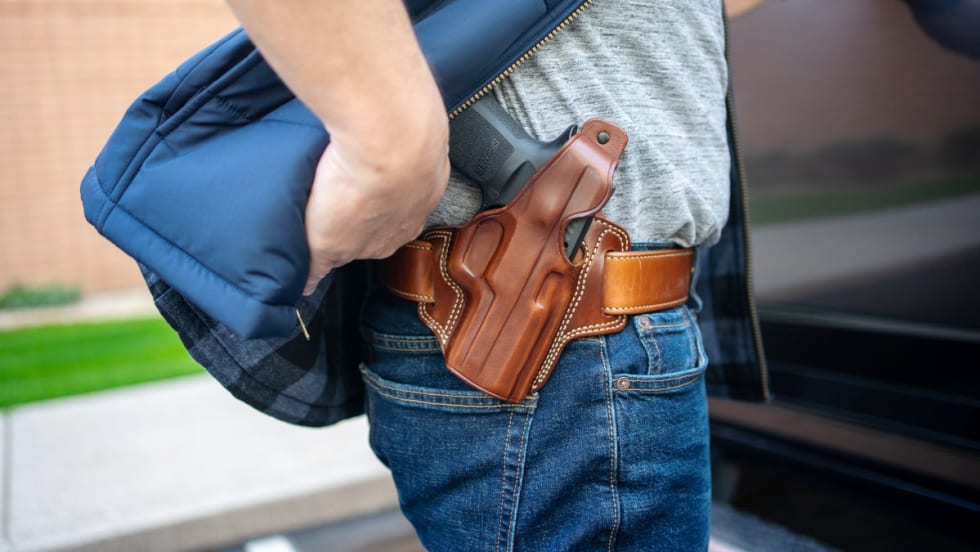
5 Things to Know When Buying Concealed-Carry or Off-Duty Holsters
Mike Barham, of Galco Holsters, shares five important considerations to keep in mind when you buy off-duty concealed or plain-clothes carry holsters.
Read More →
10 Tips for Reviewing Use-of-Force Reports
While the burden of accurately reporting use-of-force situations is on an individual deputy or officer, the person reviewing those reports shares in the responsibility of making sure the reporting is done properly, with clear details included.
Read More →