



Mexico's Deal With the Devil
The Mexican press estimates that 19.5% of the official ballot boxes were installed in areas controlled by the drug cartels. Many voters avoided the poles altogether in fear of intimidation and violence.

A politician is the devil's quilted anvil; he fashions all sins on him, and the blows are never heard.—John Webster
A high-tech war is being fought every day on both sides of the U.S.-Mexico border. Eagle-eyed Predator drones now defanged of their missiles and bombs search for narcotics and human traffickers from high above the desert floor. High above the drones, Russian and Chinese satellites watch the movements of our Border Patrol units and relay GPS locations to the Mexican cartel paramilitary lookouts on observation posts north of the border. Both the U.S. Border Patrol and their adversaries—the Mexican coyotes and halcones (hawks)—scan the terrain with night-vision equipment.
But the outcome of the war won't be determined by high-tech gear or the actions of soldiers, gangsters, or cops. It will be determined in Mexico City, in the halls of power. And it may just have been lost.
On July 1, the man who declared Mexico's war on narco traffickers back in December 2006, President Felipe Calderón of the National Action Party (PAN), was voted out of office. He will be replaced by Institutional Revolutionary Party (PRI) candidate Enrique Peña Nieto. In Mexico the difference between the PAN and the PRI candidates is profound.
The PRI has controlled Mexican politics for more than 70 years. Formed by revolutionaries with a socialist bent, the PRI's mission was to institutionalize the ideals of the Mexican Revolution (1910-'20). Several prior Mexican presidents who were members of the PRI party have acted against drug traffickers in various parts of Mexico since the first drug cartel, the Guadalajara cartel, was formed in the late 1970s by Miguel Angel Felix Gallardo, a former Mexican federal judicial police officer.
Following Mexico's first revolution, a religious persecution sparked a second revolution called the Cristeros War, which recently depicted in a motion picture titled "For Greater Glory." In 1939 Mexican political conservatives and Catholic church leaders formed the National Action Party (Partido Acción Nacional, PAN). It is one of the three main political parties in Mexico. The party's political platform is generally considered right-wing in the Socialist Mexican political spectrum. In 2000, the PAN party broke the PRI's long reign of control and since then the president of Mexico has been a member of this party.
The third Mexican political party is the Party of the Democratic Revolution (Partido de la Revolución Democrática, PRD). The PRD is a member of the Broad Progressive Front alliance, a socialist left-wing party, and one of two Mexican affiliates of the Socialist International.
During the PRI reign, Mexican presidents mostly targeted cartels that were rival cartels of the ones from their particular political supporters. The narco war in earnest really began in December 2000, when newly elected PAN President Vicente Fox sent federal troops to stem the violence between warring cartels in Nuevo Laredo. In December 2006, the second PAN party president, Felipe Calderon, sent 6,500 federal troops to Michoacán, and eventually would deploy 45,000 troops to fight the drug cartels.
The Mexican press estimates that 19.5% of the official ballot boxes in the recent election were installed in areas controlled by the drug cartels. Many voters avoided the poles altogether in fear of intimidation and violence.
In addition, violence and misbehavior were rampant nationwide during the election.
• Guerrero, eight were arrested for vote buying and coercion, and a PRI candidate for mayor was kidnapped and released.
• Chihuahua, gunmen prevented the delivery of ballot boxes.
• Chiapas, the names of PAN candidates were crossed out from the ballots.
• Nuevo Leon, gunmen stole the ballot boxes.
• Villaflores, Chiapas, 15 were arrested for stealing the ballot boxes.
• Sinaloa, the PRD party handed out free gas vouchers for votes.
• Mexicali, the state police arrested people buying votes for 500 to 600 pesos apiece.
• Yucatan, more than 100 were arrested in election violence.
• Veracruz, a gun battle erupted between the Mexican Army and gunmen outside the voting booths.
• Salto, Jalisco, gunmen murdered an official at the voting headquarters.
Tlacojalpan, the PAN party mayor was kidnapped, tortured, and murdered.
All this violence was above and beyond the "normal" murder and bloodletting of Mexican citizens, policemen, prosecutors, and crooked politicians. All three major parties were involved in some of these incidents. But the cartels were clearly involved in some of the most violent election tampering.
Just days before the election, two IEDs were detonated in front of PRD headquarters and the Mexican Government Federal Election Institute (IFE) in Mexico. On June 29, a vehicle-borne improvised explosive device (VBIED) exploded outside the Mayor of Nuevo Laredo's Office wounding seven. And on July 3 in the city of Victoria, Tamaulipas, another VBIED exploded outside the home of the Tamaulipas security secretary killing two policemen and wounding four others. There have been 10 car bomb incidents this year.
PRI candidate Enrique Peña Nieto has claimed victory against PRD candidate Andres Manuel Lopez and third place PAN candidate Josefina Vazquez Mota. According to reports in the Mexican press, President Peña Nieto has vowed to give no quarter to the cartels. But he also knows that he was elected partially because Mexican citizens were tired of the drug wars and the resulting years of unprecedented numbers of kidnappings and murders. And the PRI has a reputation of "negotiating" for peace with the cartels.
"There will be no pact or truce with organized crime," President Peña Nieto pledged. This was seen as an apparent response to critics in Mexico and the United States who fear the return of the PRI’s past tolerance of the drug cartels.
President Peña Nieto also informed the press that Colombian strong man, General Oscar Naranjo, touted as "the cop who downed Pablo Escobar" and "dismantled Colombia's cartels" would be appointed as an advisor to his administration. According to an Associated Press report, Naranjo "has been praised by U.S. officials for a strategy that Washington holds up as a model for other Latin American countries' fights against traffickers."
However, Colombia has suffered from the same public corruption problems that are systemic in Mexico. Recently a U.S. Court in Virginia issued an arrest warrant for fellow retired Colombian General Mauricio Santoyo, who had been the security chief for former Colombian President Alvaro Uribe. The Virginia court warrant charges Santoyo with drug trafficking.
I have several friends with sources who served in the military fighting the FARC and the drug cartels in Colombia. They tell me that General Naranjo had little or nothing to do with bringing down Pablo Escobar and that, like so many others in Colombia, he had as many associations with drug cartel members as with drug fighters. They do not express the same confidence in the general as the apparent sources in the Associated Press report.
Under PAN leadership, Mexico has been waging an all out war on Mexican Drug Trafficking Organizations (DTOs). This has cost them millions of dollars and more than 47,000 reported deaths since President Felipe Calderón's December 2006 offensive. The question now is: Will the Mexican people continue the struggle against these criminal gangs or will they return to the old PRI policy of appeasement?
Related:
More Blog Posts
Preventing Heat Injury in Police K-9s
In the relentless heat of summer and even early fall in some parts of the country, officers face the important task of protecting their K-9 partners while working in sweltering temperatures. Recognizing changes in a dog’s behavior is the key.
Read More →
Why Your Agency Needs to Attend the ILEETA Conference
ILEETA is a complete resource for trainers to address trainers' needs. Its mission is to enhance the skills and safety of criminal justice practitioners while fostering stronger and safer communities.
Read More →
IACP 2023: New Training Products
Technologies for improving law enforcement training and training management were some of the highlights at this year's show.
Read More →
Initial Results Released from MSP 2024 Police Vehicle Testing
The 2024 pursuit-rated vehicles--all pickup trucks or SUVs, including two battery electric models the Chevrolet Blazer EV AWD and Ford Mustang Mach-E--were put through their paces.
Read More →
Officer Safety Considerations Related to Alternative-Fuel Vehicles
As more alternative-fuel and hybrid vehicles hit the road, police and other first responders need to understand that they are no more dangerous than conventional vehicles. However, there are certain safety considerations every cop should know.
Read More →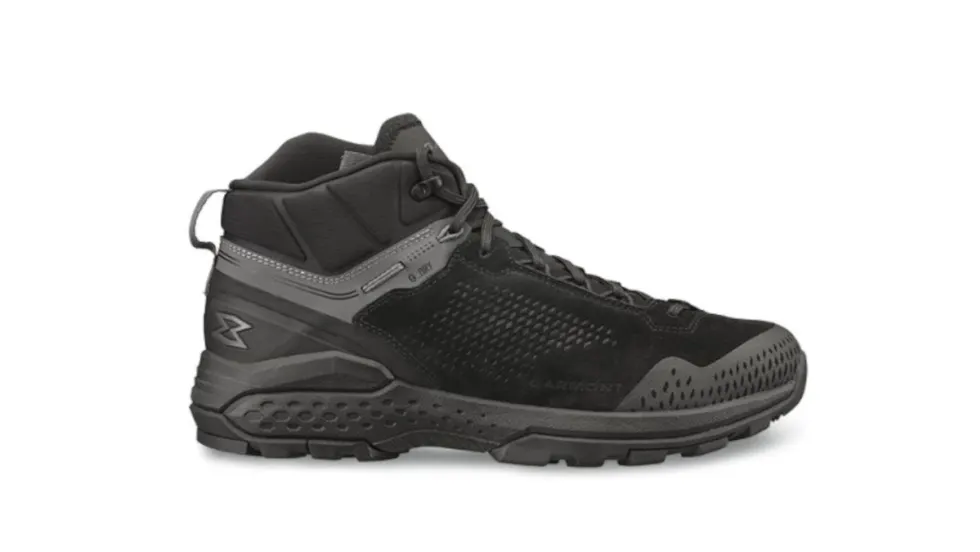
Garmont Working to Grow LE Market Presence
Garmont Tactical has found wide acceptance by military boot buyers, but now the company is trying to better respond to the needs of police officers. Many cops now are not fans of 8-inch boots, so Garmont is adapting.
Read More →
Publisher’s Note: Our Commitment to You
Through our magazine and website and our Police Technology eXchange event, we promise to provide you with information and access to resources to help you do your job safer and better.
Read More →
10 Tips for Responding to Mental Health Crisis Calls
The Harris County Sheriff's Office is a model for other agencies that want to learn about crisis intervention and mental health crisis response. Sgt. Jose Gomez shares the story of their programs and provides 10 tips for mental health crisis call response
Read More →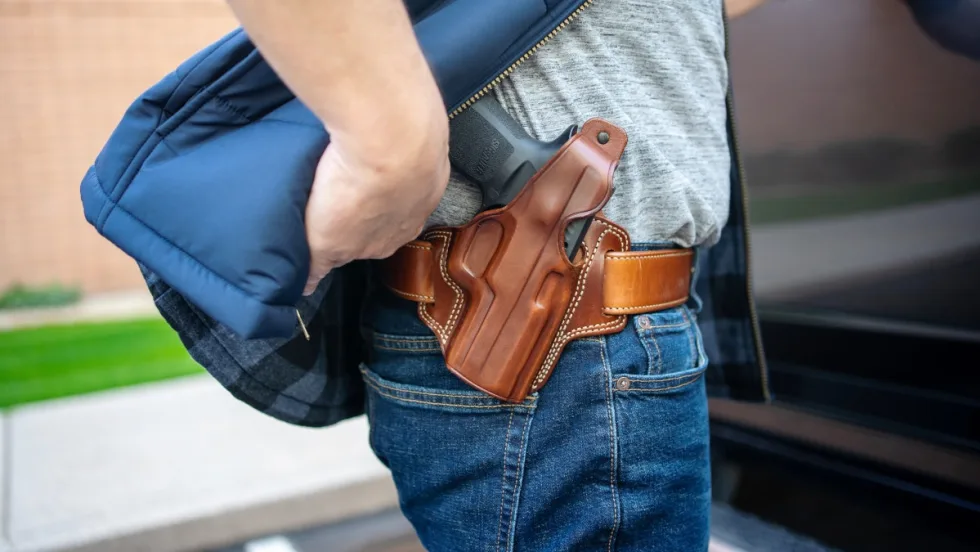
5 Things to Know When Buying Concealed-Carry or Off-Duty Holsters
Mike Barham, of Galco Holsters, shares five important considerations to keep in mind when you buy off-duty concealed or plain-clothes carry holsters.
Read More →
10 Tips for Reviewing Use-of-Force Reports
While the burden of accurately reporting use-of-force situations is on an individual deputy or officer, the person reviewing those reports shares in the responsibility of making sure the reporting is done properly, with clear details included.
Read More →