



In Praise of Condition Yellow
Being in Condition Yellow has allowed me to identify a thief before he acted on his intentions, a would-be assailant before he launched his attack. It has given me pause to re-evaluate the decision to pet a dog, or patronize certain establishments.


Photo via Wikimedia.
Of the legacies endowed to me by my law enforcement career, perhaps none have proven more profitable than living life in Condition Yellow.
Not that it's a 24/7 thing. But more than once I have been appreciative of a better-than-average ability to attune myself to my surroundings. Just as a spider evaluates the vibrations of the filaments of its web for threats and dinner, so, too, do I continually evaluate the atmospheric and environmental changes taking place around me.
Being in Condition Yellow has allowed me to identify a thief before he acted on his intentions, a would-be assailant before he launched his attack. It has given me pause to re-evaluate the decision to pet a dog, or patronize certain establishments. It has even prevented my unwilling participation in more than one traffic accident.
On one occasion I was en route to Las Vegas to finance a wing of the MGM Grand when something about the truck towing a boat in the lane next to me on Interstate 15 caused me to slow down. Less than 10 seconds later, its tire blew and the truck and its cargo jack-knifed and went flying off the roadway. Staring at bits of its desiccated tire pin-wheeling along the roadway behind it, I felt a profound sense of relief that I hadn't been in the same position that I'd been seconds before.
I experienced a similar response the night my wife was driving on Interstate 10 and something about the car in the adjacent lane to us (a slight in-lane weave?) registered with me. It found me telling the wife to slow down not three seconds before the vehicle suddenly swerved herky-jerky and turned 90 degrees before suddenly slamming into the center divider in front of us. Absent her slowing, we would have likely been center-punched by the car and my former employer would have had one less critic to worry about.
A beautiful thing about condition yellow is that it isn't that profound sense of dread that can inexplicably wash over a person. Indeed, there is nothing inexplicable about it. It is the mind's cognitive effort to attune itself to those sensory-derived cues that something out of the norm might soon take place. That telltale sign may be the sudden prompt of sound (dogs barking), or the equally disquieting onset of silence (crickets quieting)—either of which can signal the possible threat of an impending ambush. As such, they become the auditory equivalent of the sea's tsunami-generated retreat from shore that foretells the calamity to follow.
And rather than promote the kind of anxiety or startle response that other catalysts might, condition yellow actually avails you the opportunity to better respond to the situation at hand. It means less time figuring out what the threat is and a diminished likelihood of experiencing the kind of panic associated with an emotionally charged response to a lack of preparedness. True, you might not muster the detached air of the seismologist evaluating a tremor-in-progress ("Ah, yes, there's the P-wave...oh, and here comes the S-wave..."), but you'll be far better off than you'd be otherwise.
Skeptics dismiss intuitions as half-assed rationalizations for things that can't be rationalized. Like so many other things arbitrarily chalked up to an explanation that is invariably more arbitrary than the matter in question—I'm looking at you, "racial profiling"—I think that such intuitions have wholly defensible, while perhaps not easily articulable, explanations. The question is: Is anyone patient enough to listen to them?
There are different books that touch upon these things, and each affords a piece of the puzzle such as Gavin de Becker's "The Gift of Fear" or Malcolm Gladwell's "Blink" that touches upon some of the less desirable ends of sped-up processes such as the Amadou Diallo shooting.
I got to thinking about Condition Yellow while working on a Shots Fired article wherein the involved officer suppressed certain instinctual impulses to his detriment.
I understood his thought processes, as I have on occasion suppressed articulating a concern for the tertiary fear of being deemed paranoid or reactionary. In a profession where it’s all too easy to get terminally blindsided, isn't it best to listen to what our mind is telling us and to act accordingly as opposed to appearing paranoid to those without the benefit of our mindsets and experiences?
It might not be easy to adequately explain what it was that caused you to take some particular action that, in its absence, might have proven fateful for you. Isn't it better to squirm with the discomfort of having to explain yourself, than to lie insensate upon a slab?
More Blog Posts
Preventing Heat Injury in Police K-9s
In the relentless heat of summer and even early fall in some parts of the country, officers face the important task of protecting their K-9 partners while working in sweltering temperatures. Recognizing changes in a dog’s behavior is the key.
Read More →
Why Your Agency Needs to Attend the ILEETA Conference
ILEETA is a complete resource for trainers to address trainers' needs. Its mission is to enhance the skills and safety of criminal justice practitioners while fostering stronger and safer communities.
Read More →
IACP 2023: New Training Products
Technologies for improving law enforcement training and training management were some of the highlights at this year's show.
Read More →
Initial Results Released from MSP 2024 Police Vehicle Testing
The 2024 pursuit-rated vehicles--all pickup trucks or SUVs, including two battery electric models the Chevrolet Blazer EV AWD and Ford Mustang Mach-E--were put through their paces.
Read More →
Officer Safety Considerations Related to Alternative-Fuel Vehicles
As more alternative-fuel and hybrid vehicles hit the road, police and other first responders need to understand that they are no more dangerous than conventional vehicles. However, there are certain safety considerations every cop should know.
Read More →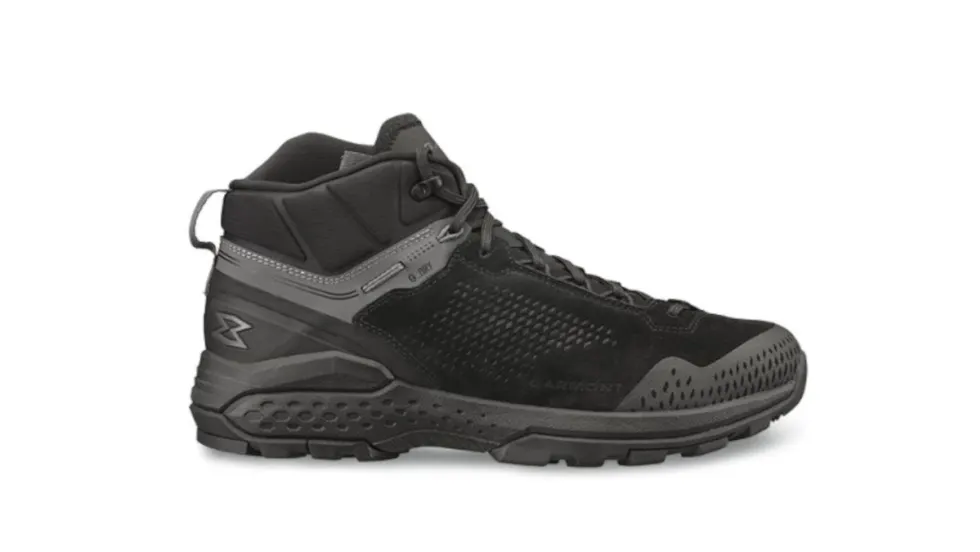
Garmont Working to Grow LE Market Presence
Garmont Tactical has found wide acceptance by military boot buyers, but now the company is trying to better respond to the needs of police officers. Many cops now are not fans of 8-inch boots, so Garmont is adapting.
Read More →
Publisher’s Note: Our Commitment to You
Through our magazine and website and our Police Technology eXchange event, we promise to provide you with information and access to resources to help you do your job safer and better.
Read More →
10 Tips for Responding to Mental Health Crisis Calls
The Harris County Sheriff's Office is a model for other agencies that want to learn about crisis intervention and mental health crisis response. Sgt. Jose Gomez shares the story of their programs and provides 10 tips for mental health crisis call response
Read More →
5 Things to Know When Buying Concealed-Carry or Off-Duty Holsters
Mike Barham, of Galco Holsters, shares five important considerations to keep in mind when you buy off-duty concealed or plain-clothes carry holsters.
Read More →
10 Tips for Reviewing Use-of-Force Reports
While the burden of accurately reporting use-of-force situations is on an individual deputy or officer, the person reviewing those reports shares in the responsibility of making sure the reporting is done properly, with clear details included.
Read More →