

Police Magazine

 MENU
 SEARCHMENUSEARCH

Law enforcement personnel have known for decades that the majority of gunfights involving police occur inside 10 feet. Critical Space shooting techniques take into account the close proximity officers must operate in with both citizens and suspects.

The great Bill Jordan once said: "There is no second-place winner in a gunfight." Even if you take nothing else away from this article, I ask that you train to win any gunfight that you become involved in, not survive it, but win it.
In this modern age of weapon design, there is no such thing as an “accidental discharge.” Law enforcement firearms of the 21st Century are designed so that the only way they will fire is to place a finger on the trigger and depress it.
Enhanced Worker Safety Through UV Lighting Technology
Sponsored by SoundOff Signal
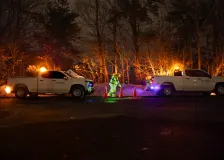
It’s an Ambush: How Ballistic Glass Redefines Patrol Vehicle Safety
Sponsored by Dana Safety Supply
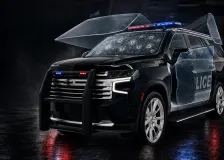
Safariland HOLLE Duty Belt System
Sponsored by Safariland
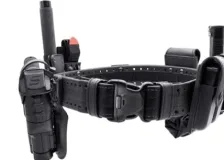
How Patrolfinder Uses Data to Make Streets Safer
Sponsored by Patrolfinder
The importance of force-on-force training in law enforcement and military operations cannot be overstated. Human beings learn in three ways: seeing, hearing, and doing.

If you believe the media, it would seem as if negligent shootings of law enforcement officers during training are almost a daily event. In actuality, such incidents are quite rare, but that doesn’t mean we shouldn’t take every necessary step to prevent these tragedies.

Law officers who face multiple (potential) opponents are in a perilous, if not deadly, situation. The proper response to multiple offender confrontations can be summed up as follows: avoid, evade, and counter.

Without bullets, a handgun is nothing more than an expensive paperweight. Reloading this paperweight with bullets quickly is a necessary skill.

History has shown over and over again that merely shooting a set course of fire, or qualification course, will not truly prepare you for an armed confrontation. Yet, agencies continue to schedule officers for firearms qualification only three to four times a year. Is it any wonder why our hit ratio in gunfights hovers at 20 percent?

You don't like doing it, I don't like doing it…no one I know likes shooting with one hand. But quite often, how you shoot determines whether or not you go back to the street or end up in an office job riding a desk.

The biggest problem is recognizing true cover and what isn't. There is a distinct difference between cover and concealment.