



Going Tactical
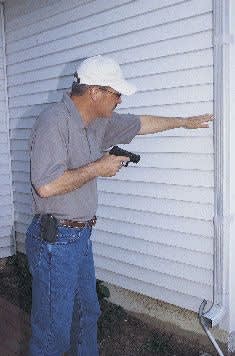
The biggest problem is recognizing true cover and what isn't. There is a distinct difference between cover and concealment.

"The difference between practical and tactical shooting is--that practical isn't and tactical is."
-Dennis Martin
CQB Services Ltd., Liverpool, England
The primary tactic to be employed in any gunfight is the use of cover. Proper cover offers a number of options. It buys time to evaluate the situation, and it buys time to determine the identity of the person shooting at you, the people who are no longer a threat to you, the responding police officers or other non-hostiles, or the additional hostiles other than the one who first shot at you. Finally it allows safe return fire from a position that will keep you from getting shot.
The biggest problem is recognizing true cover and what isn't. There is a distinct difference between cover and concealment. Concealment can be anything that can hide you from view. However, very few things that are concealing are true cover, because the definition of cover is that it will stop whatever bullet is headed in your direction.
Another problem is that there are different degrees of cover. What may be cover for a .22 handgun round may not be cover for a full-metal-jacket 9mm pistol bullet. And what may be cover from that 9mm, may not be cover from a round fired from a 7.62mm AK or SKS rifle. Without a doubt, looking for and being able to recognize cover is a primary survival skill.
Special Delivery
There has been a great deal of misinformation about cover. One of the biggest misconceptions that has been shown repeatedly over the years is the use of the mailbox. True, a mailbox is a metal receptacle, but it is a hollow metal receptacle. Most small arms ammunition can go through one side of a mailbox and out the other. If the mailbox is full from top to bottom with mail, i.e., paper; then it may have some potential for cover from handgun rounds. However, as a general rule, the mailbox is totally misrepresented as good cover. Any hollow metal object is probably not good for cover.
Another example of this type of misconception would be an automobile. With the exception of the engine block, the drive train, and the tires, an automobile is basically hollow metal through which most bullets can travel from one side to the other.
Discover for yourself what is solid cover. Determine the possible threats in the environment in which you work, then take the time to look around you and see what is the likely cover in those areas. If you can, collect some samples of these things and shoot them with the ammo threat you are likely to face. You may be somewhat concerned when you realize that they won't stop bullets as well as you thought they did.
Concealment
While you think about cover, do not underestimate the value of concealment. Many instructors downplay good concealment and how it can work to your advantage. But remember it is more difficult to shoot someone you cannot see. Think about the last time you went to the range and tried to hit a target in total darkness. And that was a target standing still. Try shooting at something that is moving that you can't see and you will see the value of concealment. Use it to your advantage.
Several years ago I talked to an undercover narcotics officer who told me of a situation in which he was in an adjoining motel room when a deal went bad. He determined later that the confidential informant he was using for the buy had turned him in to the dealer who then panicked and started shooting through the wall.
I have to commend this officer for being very "switched on." When he noticed that the rounds were coming through the wall at the other end of the room and were tracking in his direction, he moved toward the gunfire. He felt that it was unlikely that the suspect would fire back again at the end of the room where he started, so it was a safer place to be. He took a low position and moved to where the rounds had already come through the wall. He then quickly moved up on top of a table that actually put him in the location where the first rounds came through the wall. It was a calculated risk, but he figured it was all he had and it worked.
While I know this is an extreme example, at the same time it is an excellent example of using concealment to your advantage. By keeping a cool head and understanding the concept of concealment, this officer was able to be an active participant in his own rescue.
Shooting from around cover should be done as far back from the cover as practical. It should never be done any closer than arm's length. This gives you an enhanced field of vision, permits the use of an upright or kneeling shooting position, and keeps the gun from being exposed beyond the cover. Keep the gun back from the edge of the cover so that anyone on the opposing side cannot snatch it from your grasp.
Fire and Movement
Since getting to cover or concealment has been established as important, it makes sense that moving while engaged in a gunfight is critical to your survival. To believe that everything will be a "High Noon" type situation where you can square off with your opponent in the street and expect them to engage in "fair gunplay" is not reality. Your opponent is going to do everything he or she can to beat you.
When the situation begins, it is a good idea to not be where you were when your opponent first saw you. Thus, moving while shooting or moving to a better position to shoot is an excellent technique to know. Moving and shooting takes a certain degree of coordination, so you should attempt to do it in a fashion that is the same, or as similar as possible, to your normal movements.
Proper tactics will require you to move laterally, forward, and to the rear, depending on the circumstances at hand. While shooting on the move in many firearms training courses translates to moving straight toward a target, this is not the norm in many armed confrontations. Shooting while going toward the target is normally the province of a tactical entry team. This technique is used by tactical teams to run predetermined routes through a structure to get at a suspect or hostage taker.
In street level confrontations, shooting while moving toward your opponent is normally done to seek a position of advantage or greater cover. Otherwise, it is a good idea to try and disengage from the person who is trying to deliver bullets into your chest cavity. This normally means aggressive movement to the side or the rear.
Lateral movements of just a step or two are an excellent way to remove yourself from incoming fire. As a matter of fact, it is a good idea to incorporate a lateral step into your movement any time you draw your weapon.
Step Aside
Gunfights normally start when two people see one another and have reason to draw weapons. Your adversary will key on you and your location and direct hostilities in your direction. If you are suddenly not there, you have gotten "ahead" of him or her and now the bad guy must react to the action that you have taken, which he or she did not anticipate. A lateral side step may be all that is needed to turn the tide of such a battle in your favor.
Many people make the mistake of taking too wide a side step, trying to cover more distance than necessary. This large side step results in lowering your center of gravity too far for you to draw your weapon and efficiently get an accurate shot as it takes you off balance. Not only is a large side step inefficient, but it is also unnecessary to remove yourself from incoming fire.
A side step of only three feet to four feet is more than enough to remove yourself from the path of a bullet that is no more than a half-inch wide. In the interest of efficiency, two short lateral steps are better than trying to take on a large side step. If a large distance needs to be covered, you would be wise to actually turn your body in the desired direction and walk straight ahead, keeping your weapon pointed in the direction of the threat.
If the threat is to your strong side, use the one hand shooting technique of rotating your elbow downward. However, if the threat is to your support side, it is possible to hold the gun in a two-handed position stabilizing it for accurate fire. Both the side step and the sideways/forward-shooting platform should be practiced on a regular basis.
What is most likely to happen during a gunfight is that you will want to disengage from the suspect who is shooting at you. This will require a rearward movement while keeping your eyes on your opponent. Shooting on the move to the rear can be done with a great deal of accuracy, but like all things, it must be practiced.
The shooting schools that I have attended all teach shooting while retreating, utilizing a rearward step where the toes come down first, roll back to the heel and then the next step is taken. I disagree with this technique, as I don't feel that it will work as it is in direct contradiction to how the human body operates.
Humans are designed to walk forward with their heel, ball, and then their toes coming in contact with the ground and your center of gravity works this way. The problem with trying to walk in reverse is that your center of gravity will eventually overcome your feet and your body will fall back. Shooting on the move, going both forward and rearward requires your knees to be bent to act as a shock absorber. If you try to walk upright in a normal stride, there is too much bounce to stabilize the handgun properly and get any type of accurate fire.
Due to this requirement, when walking backward, your hips will be lower and will actually proceed the shoulders, chest, and head region to the rear. While this technique works great on a nice flat range when no stress is evident, in a time of life-threatening events, your body is going to move faster regardless of your desire.
When shooting on the move in a forward direction, normal footwork should be used, as it is always a good idea to do whatever you do normally. In the case of shooting on the move in a forward direction, you will merely bend at the knees and lower your center of gravity, which will stabilize the weapon outstretched in front of you, then walk across the ground in a heel, ball, toe configuration.
Remember that shooting on the move should be undertaken for a reason, normally to avoid incoming fire. So moving is probably 10 times as important as shooting accurately. Shooting will normally be done to keep your opponent engaged and to keep him or her from shooting back at you. But do not forsake rapid movement in the interest of trying to place a tight group on the bad guy.
Tactical gun skills are not magic. They just require some thought. You want to work this stuff out and plan your techniques on your own at the range under no stress. Trying to figure out some sort of tactical option when the bullets are flying over your head will tend to affect the efficiency of your thought processes.
“Going Tactical” is an excerpt from Dave Spaulding’s “Handgun Combatives,” published by Loose Leaf Law Publications, www.looseleaflaw.com.
Lt. Dave Spaulding of the Montgomery County (Ohio) Sheriff's Department is a Police Advisory Board member and a frequent contributor to Officer Survival.
More Patrol

Adept Armor Introduces Two New Rifle Plates
Adept Armor has launched two new Level IV ballistic plates, the Emperor and the Archon Mark 2, which brings Adept Armor’s new Quatroid ceramic to the high-threat, performance-value center of the range at 5.2 pounds.
Read More →
POLICE Product Test: Benchmade Bailout
The Benchmade Bailout is a slim, lightweight carry knife with a deep-ride pocket clip and comes in a variety of blade steels and scales. Here is a detailed review of the Taiga Green Bailout, released earlier this year.
Read More →
NLEOMF Announces July 2026 Officer of the Month
NLEOMF honored a Michigan deputy sheriff as the July 2026 Officer of the Month for rescuing a trapped driver from a burning vehicle following a Fourth of July crash.
Read More →
Streamlight to Showcase Newest Lighting Products at National Safety Council’s Safety Congress & Expo 2026
Streamlight will showcase its latest lights, including the Portable Scene Light III and the LiteBox 1Million, at the 2026 National Safety Council (NSC) Safety Congress & Expo.
Read More →
The 2027 World Police & Fire Games Set for Perth, Australia
The 2027 World Police & Fire Games (WPFG) will take place in Perth, Western Australia, from Friday, March 12 through Sunday, March 21, 2027.
Read More →
5.11 Partners with National Fallen Firefighters Foundation to Support #ForThe343
5.11 has joined the nationwide movement honoring the 343 New York City Fire Department firefighters lost on Sept. 11, 2001.
Read More →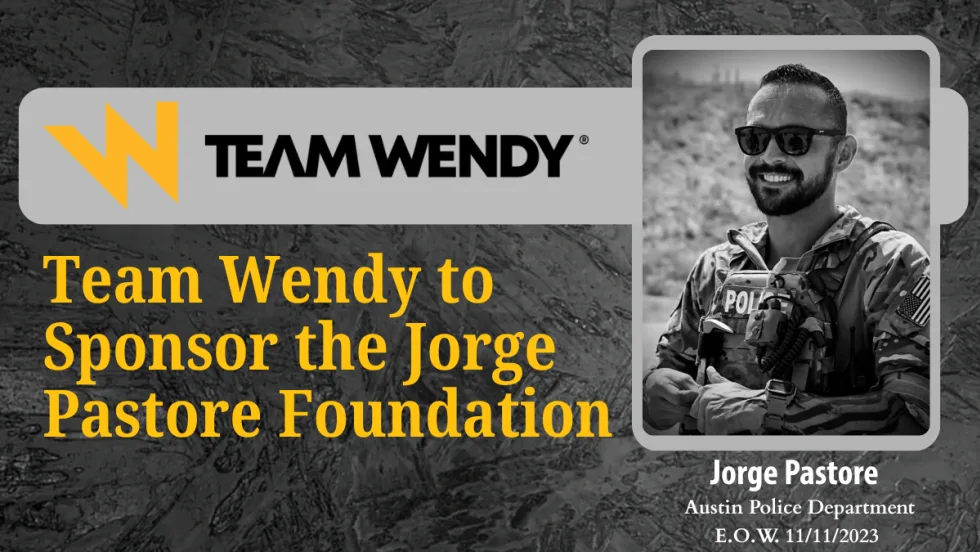
Team Wendy Announces Title Sponsorship of the Jorge Pastore Foundation
Team Wendy’s 3-year partnership with the Jorge Pastore Foundation expands access to programs that strengthen those who serve.
Read More →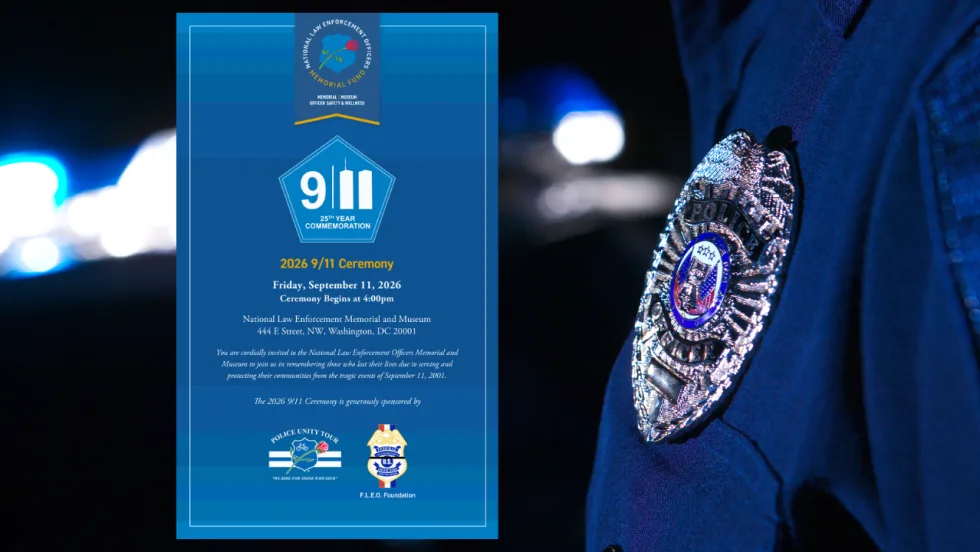
National Law Enforcement Memorial and Museum Hosting 9/11 25th-Year Commemoration Ceremony
The National Law Enforcement Memorial and Museum is hosting a 9/11 25th Year Commemoration Ceremony on Sept. 11 at 4 p.m.
Read More →
National Law Enforcement Officers Memorial Fund Announces June 2026 Officers of the Month
The National Law Enforcement Officers Memorial Fund (NLEOMF) named 15 officers of the Chico Police Department (California) as the Officers of the Month for June 2026 for their roles in responding to an active-shooter incident at a public library.
Read More →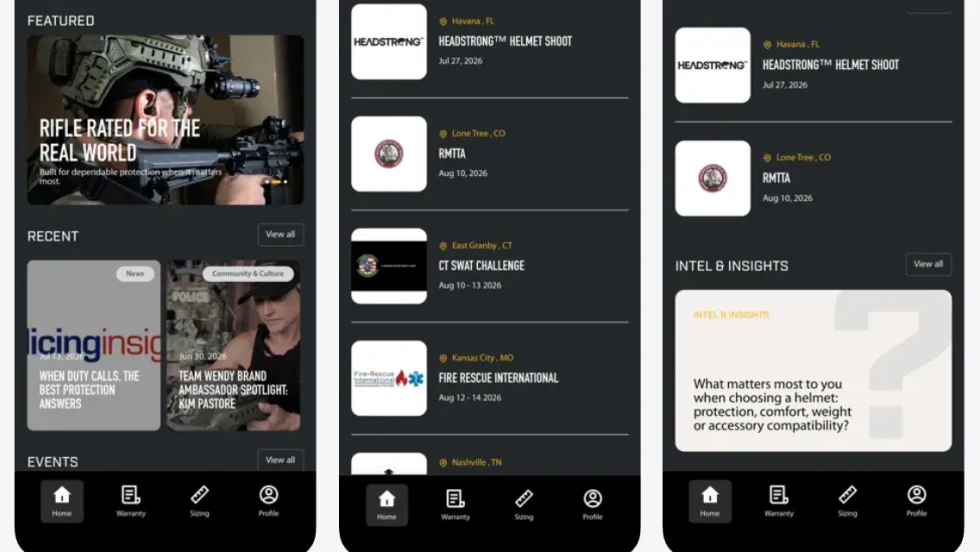
Team Wendy App Creates New Digital Hub for Helmet Owners
The Team Wendy Community App provides one location for warranty registration, size-fit tools, product updates, and community connection. For helmet owners, the new app creates a simpler path to the information and tools that matter most.
Read More →