



Your Worst Nightmare
Talk to Officer Don Gause, an eight-year veteran of the Myrtle Beach (S.C.) Police Department, and he'll tell you that a needle stick or accidental exposure to HIV, hepatitis, or any other bloodborne pathogen is absolutely his greatest fear.

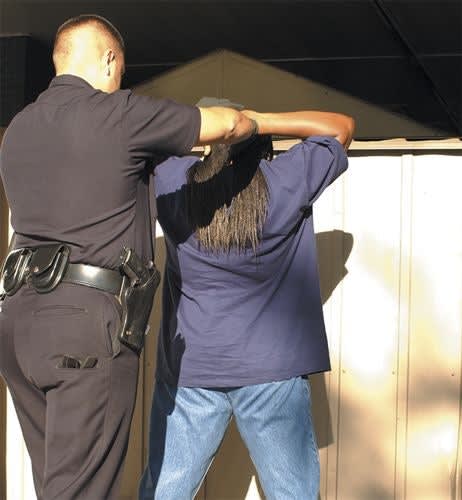
You might think that getting stuck by a needle in the course of a shift would be the least of an officer's worries, especially when there are so many other things to worry about: like how fast a traffic stop can go bad; the irrationality of the players in a domestic violence call; the stupidity of the guy who flees the police and the risks inherent in a chase.
But talk to Officer Don Gause, an eight-year veteran of the Myrtle Beach (S.C.) Police Department, and he'll tell you that a needle stick or accidental exposure to HIV, hepatitis, or any other bloodborne pathogen is absolutely his greatest fear.
"On a traffic stop, you know the potential is there to be shot. On a domestic violence call, you know how fast a complainant can become a defendant. But to be stuck by a needle on a pat down, that's something else. If you get shot, you know right away if you're going to be all right or not. With a needle stick, you won't know for six months. That's scary."
How scary? Just ask Cpl. Darryl Bolke, a 14-year veteran of the Ontario (Calif.) Police Department. He says getting stuck by a needle "ranks right up there with the worst thing I've had to go through in my life."
Bolke was stuck on the index finger while searching a man he'd arrested for solicitation of a prostitute. Although he asked if the man had any sharp objects in his pocket, and although he noticed an object on the initial pat down, the object didn't feel like a syringe. It felt, he said, like a crack pipe. Bolke put his hand in the man's pocket and was immediately jabbed by a needle sticking out of a small, 2-inch piece of plastic that had been fashioned into a homemade syringe.
What made Bolke's situation worse was that it happened 10 years ago, when there was less information about HIV and other bloodborne diseases, when there were no prophylactic drugs given post exposure, and when getting a blood sample from the source meant fighting your way through a battery of privacy laws, the courts, and the medical community.
"I had no intimate contact with anyone in my family for three months following the first blood test. The crook was treated like the victim by the courts and the medical community, and I had no rights at all. I felt like I'd been victimized twice," Bolke says.
Times have changed. Today's officers are offered immunization with drugs like GlaxoSmithKline's Twinrix for Hepatitis A and B; education in the prevention of and protection from exposure to bloodborne pathogens and tuberculosis; personal protective equipment; training in search techniques that use a baton or the blade of the hand; and post-exposure counseling and medical care.
In addition, there are now laws that require the source to provide a blood sample on request or through a court order. Finally, today's officers have available an abundance of reassuring statistics that detail exposure rates and the rarity of exposure converting to a disease.
High Frequency, High Risk
Such precautions have not dispelled many officers' continuing fears of exposure to HIV, hepatitis, or tuberculosis. One reason is that in the context of risk management, exposure comes from job duties that are considered high frequency: arrests and physical searches; vehicle searches; blood and body fluids at accidents and crime scenes, just to name a few. Because exposure and subsequent conversion can be fatal, these activities are also considered high risk.
Added to this deadly mix is the fact that an officer probably will, during the course of a shift, come into contact with an infected person.
In 1996, an estimated 98,000 to 145,000 HIV-positive inmates were released from prisons and jails. Also in 1996, between 1.3 million and 1.4 million inmates released from prison or jail were infected with hepatitis C. That same year, approximately 155,000 released prisoners had current or chronic hepatitis B, while 566,000 were released with latent TB infection. In addition, between 12 and 35 percent of the total number of people in the United States with some sort of communicable diseases passed through a correctional facility.
And the one thing many of these disease carriers have in common is further contact with police. According to a report from the Bureau of Justice Statistics, 67 percent of the nearly 300,000 people released (from 15 test states) in 1994 were rearrested for a new offense, almost exclusively a felony or serious misdemeanor. They had accumulated 4.1 million arrest charges prior to their most recent imprisonment and another 744,000 charges within three years of their release (an average of four new crimes each).
Given these figures, it doesn't take a rocket scientist to calculate that the inordinate number of infected releasees and the high rate of recidivism almost guarantees contact between an infected person and a police officer. Those numbers do not include contact with illegal aliens and the homeless, who often spend time in crowded, unventilated shelters that can be breeding grounds for diseases like tuberculosis and bacterial meningitis. It also doesn't include the drug addicted, a group that typically has little concern for health care or personal cleanliness, and even less concern for those who arrest them.
Lying in Wait
For years, the scariest of infectious diseases was HIV. Today's nemesis, however, is hepatitis C (hep C), a virus that is spread by contact with the blood of an infected person and eventually causes liver disease. While health officials estimate that about 1 million people in the United States are HIV infected, about 3 million to 4 million Americans are infected with hep C.
At least 75 percent of the people infected with hep C don't even know it, according to Debbie Borst, a registered nurse who does in-service health care training for South Carolina police agencies. Those numbers held true in a recent statewide study that required a hep C test for tattoo artists renewing their licenses. The study revealed that more than 60 percent of those tested were infected with hep C and completely unaware.
"I call it the stealth virus," Borst says. "It can lie dormant for five to 20 years, and while it's doing that it's eating the liver cells. You may have some flu-like symptoms in the beginning, but when those go away, you are generally symptom free. Then one day you wake up with jaundiced skin, orange urine, and yellow eyeballs, or you may have liver cancer."
Hepatitis C was a stealth virus for health care professionals as well. The disease has been around for 50 years, since its first transmission was documented through blood transfusions during World War II. But the virus was only clinically identified in the late '80s when technology finally caught up with it.
Several factors make hep C a deadlier adversary than HIV. For example, HIV cannot live outside the body, whereas the hep C virus can live outside the body for up to seven days. One drop of HIV-positive blood contains about eight live viral particles, while one drop of hep C-infected blood contains about 100, making transmission of the virus that much more likely.
Hepatitis A and B are equally virulent, but less likely to be transmitted. Although both can live for longer periods outside the body, public safety and health care employers are now required to offer immunization against hepatitis B. Hepatitis A, the oldest form of the virus, is spread by ingesting contaminated food or water. Although police officers are certainly not immune, their chances of exposure to hep A or hep B are smaller than those with hep C and HIV.
Tuberculosis and bacterial meningitis also have been pinpointed as problems for law enforcement officers. These are airborne diseases that are transmitted by breathing or coughing on someone. Among law enforcement officers, the most susceptible to these diseases are those who work in prisons and jails, since transmission generally requires that the bacterial count build to a certain level before infection.
According to Laura Herring, the occupational infectious disease nurse for the city of Portland, it would take longer than a ride to the stationhouse for someone to become infected with TB or bacterial meningitis. "The people who might be vulnerable would be those who have to have face-to-face interaction with an infected individual over a period of several hours," she says.[PAGEBREAK]
Fear vs. Reality
Which brings us to the real question: Exactly how vulnerable are you as police officers to contracting disease from a needle stick, a blood splash, or convict spit?
"The most important thing is to keep it in perspective," Herring says. "The way to do that is to be sure you have all the information about the diseases, how they are transmitted, and the rate of conversion or the likelihood of actually contracting the disease after exposure."
Conversion rates are actually strikingly low. According to the Centers for Disease Control, those exposed to HIV have a 0.3 percent chance (1 in 300) of becoming HIV positive. The risk after exposure from contact to the eye, nose, or mouth is approximately 0.1 percent, or 1 in 1,000. The risk after exposure of the skin to HIV-infected blood is estimated to be less than 0.1 percent. And a small amount of blood on intact skin probably poses no risk at all.
In fact, there has been no documented case of HIV transmission due to an exposure involving a small amount of blood on intact skin. The risk may be higher if the skin is damaged-for example, by a recent cut-or if the contact involves a large area of skin or is prolonged (for example, being covered in blood for hours).
The risk of conversion to hepatitis is slightly higher. Those who received hepatitis B vaccine and developed immunity to the virus are at virtually no risk for infection. For the unvaccinated person, the risk from a single needle stick or a cut exposure to hep B-infected blood ranges from 6 to 30 percent, and depends on the level of the virus and its antigens in the source's blood. Of those exposed to hep C from a needle stick or cut, the risk of infection is approximately 1.8 percent. The risk following a blood splash is unknown, but is believed to be very small.
But just because the conversion rates are low does not mean you shouldn't be cautious. Diseases like HIV, AIDS, and hepatitis are deadly and therefore should engender a certain amount of fear. "Fear is good. It keeps you alive," one officer said. "Panic is bad because you'll blow it."
"I know I have to be careful," adds Officer Skip Chatford, a patrol officer with the Corona (Calif.) Police Department. "But I don't worry about it every day. When I do a search, I don't stick my hands in people's pockets if I can help it. I pull at the top of the pocket and roll the liner out. I just keep rolling until the stuff inside comes out. If I know I'm going to a stabbing or a shooting, I stop and put on gloves before I get there. I stop and think before I do anything. I try to stay aware of what is happening and not rush in without thinking. I feel like I have the education and the equipment I need to protect myself. That's what has dispelled any initial fear I may have."
Things You Should Know About Bloodborne Disease
Think Twice About Post Exposure Treatment-According to the Centers for Disease Control, post exposure treatment may reduce the chance of HIV transmission, but it is not recommended for all occupational exposures because most exposures do not lead to HIV infection. Also, the drugs used to prevent infection may have serious side effects. Taking them for exposures that pose a lower risk for infection may not be worth the risk of the side effects.
Conversely, Debbie Borst and Laura Herring, both of whom are registered nurses who do in-service occupational training for police departments, reported that of the officers they have shepherded through post-exposure treatment, few complained of serious side effects, and most were able to work during the treatment.
The Eyes Have It-Many officers fear needle sticks, but eye splashes are far more frequent, with body fluid to non-intact skin running a close second. Remember, you don't need a court order to put a mask or hood on a spitting suspect.
Wash Your Hands-The hepatitis virus can live outside the body in any number of places, like the back seats of patrol cars, on a baton, a door handle, your clothes, inside the treads of your shoes, and most important, on your hands.
The best prevention is to keep your hands away from your face and its possible ports of entry (eyes, mouth, nose). Don't eat, smoke, or drink before washing your hands.
When washing your hands, remember that friction is the key to cleanliness. Not hot water. Not even soap. Scrub your hands for at least two minutes.
And never wear your patrol shoes home. Viruses can live in the treads, be deposited on the carpet, and infect your kids while they're lying around on the floor watching "SpongeBob Squarepants."
Know Your Local Burger Flipper-There is evidence that hepatitis B has been spread through fast-food restaurants. This can happen in places where parolees are hired by companies that have a 300 percent personnel turnover, and that don't do drug screens or background investigations, or require that employees wear gloves when handling food.
Some health care experts believe this kind of setting is perfect for a former inmate looking for revenge. He can contaminate an officer's order by spitting in it, or slipping in a bit of dirt or rat feces.
Another exposure route comes from hiring illegal aliens who come from countries where the standards of cleanliness are below those of the United States. Many of these cannot read English or Spanish and may not understand signs admonishing them to wash their hands before returning to work.
Viruses: The Shape Shifters-Viruses are structurally different than bacteria. Antibiotics will defeat most bacteria, but there is no known cure for a virus. A virus can invade the immune system and hide out, sometimes for years. The ability of the AIDS virus to alter its genetic pattern has defeated every attempt to create a vaccine; researchers can't even get close to mapping it because of the speed with which it mutates. This is why many believe finding an AIDS vaccine in our lifetime is impossible.
Trust No One-Universal precautions state that all health care and public safety workers should assume everyone with whom they come in contact is infected, and that general infection control measures should always be employed.
This is especially true for police who, unlike the health care worker operating in a sterile, controlled environment, work in bad lighting, at a frantic pace, and with a customer who is unpredictable and whose medical diagnosis is unknown.
The Good News is that You Probably Won't Get It-Show respect for what is clearly a retinue of deadly adversaries by donning your personal protective equipment, but remember that conversion rates are low.
"You would almost have to cut your palm open, stick it inside a body with AIDS, stir it around for an hour and maybe, just maybe, you might get AIDS," says Norm Kassoff, former director of operations for the Metropolitan Dade County Medical Examiner Department in Miami. "We are finding that the hype with regard to [contracting HIV] is preposterous. People are spending a great deal of money and time and energy to deal with something that common sense and simple precautions should deal with."
Protection
Searching a suspect for hidden weapons and drug paraphernalia can be a nerve-wracking and dirty task. But some departments and many individual officers are taking steps to make it safer.
One of the best weapons you can use against contamination is a good pair of patrol gloves.
BlackHawk Industries' PatrolStar offers protection from bloodborne pathogens via a viral/fluid barrier lining between the glove and your hand. The gloves look and feel exactly like any other rugged leather patrol glove, but they're designed to prevent a suspect's body fluids from reaching your skin.
Damascus Gloves' line of "Hand Armor" gloves is designed for hard duty in police and military operations. The Slashmaster models feature drum-dyed leather with Spectra and Kevlar liners for protection against blades.
Hatch Corp. is the distributor for the Gimbel Frisk and Search Glove, a product of Gimbel Glove Co. The Frisk and Search Glove is a disposable solution to protecting officers from puncture wounds and body fluids. Available in boxes of 50 pairs, the gloves are like a cross between surgical gloves and dishwashing gloves. They are comfortable and because they fit almost like a second skin, the wearer retains dexterity. The gloves offer protection in two ways: they cover the skin to guard against fluid contaminants, and there are special polymer mesh inserts in the fingertips to prevent needle sticks and razor cuts.
Warwick Mills' TurtleSkin gloves have earned a reputation for toughness in the field. The gloves are made of machine-washable leather with puncture- and cut-resistant material composed of tightly woven Kevlar.
BlackHawk industries
www.blackhawkindustries.com
Damascus Gloves
www.handarmor.com
Hatch Corp.
www.hatch-corp.com
TurtleSkin
www.warwickmills.com
Lois Pilant is the former editor of a law enforcement magazine, a writer for the National Institute of Justice, and a frequent contributor to POLICE.
More Patrol

Team Wendy Introduces the EXFIL Endurance Ballistic Helmet, Engineered to Reduce the Burden of Extended Wear
Team Wendy has launched its EXFIL Endurance, a new lightweight ballistic helmet engineered to deliver protection, comfort, and fit during demanding, extended operations.
Read More →
The First Responders Children’s Foundation National First Responders Day Roll Call of Heroes Ceremony Returns to Times Square, NYC
First Responders Children’s Foundation (FRCF), in collaboration with T-Mobile, will host the Roll Call of Heroes ceremony in Times Square to commemorate National First Responders Day on Wednesday, Oct. 28. During the event, FRCF will present 18 Hero Awards.
Read More →
Streamlight to Showcase Newest Lighting Products for Law Enforcement Professionals at IACP 2026
Streamlight will showcase its newest lights for law enforcement at the International Association of Chiefs of Police Annual Conference & Expo. Featured lights will include the TLR-3 X, the PolyTac 1X, and more.
Read More →
Streamlight Portable Scene Light III Wins 2026 OH&S New Product of the Year Award
Streamlight’s Portable Scene Light III has won the 2026 Occupational Health & Safety (OH&S) New Product of the Year Award in the Lighting category.
Read More →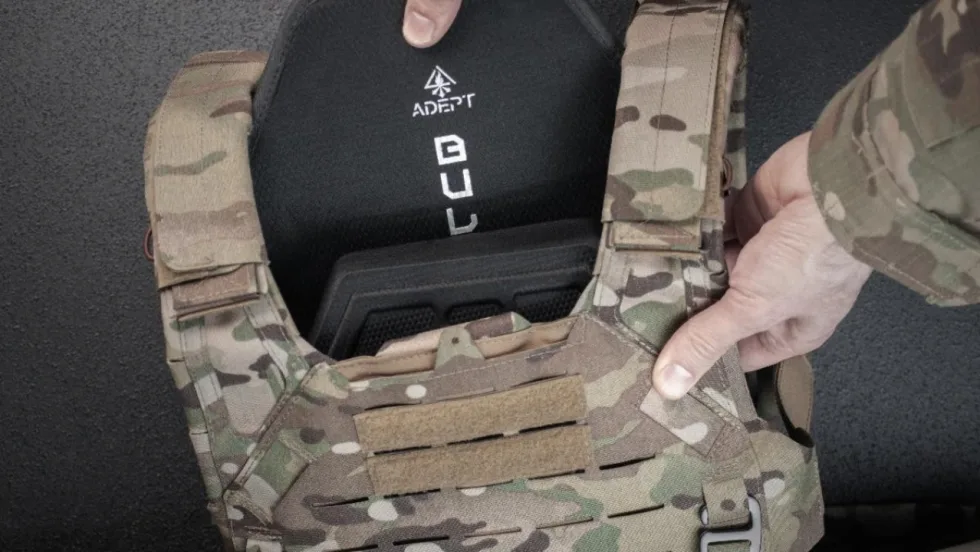
Adept Armor Introduces Two New Rifle Plates
Adept Armor has launched two new Level IV ballistic plates, the Emperor and the Archon Mark 2, which brings Adept Armor’s new Quatroid ceramic to the high-threat, performance-value center of the range at 5.2 pounds.
Read More →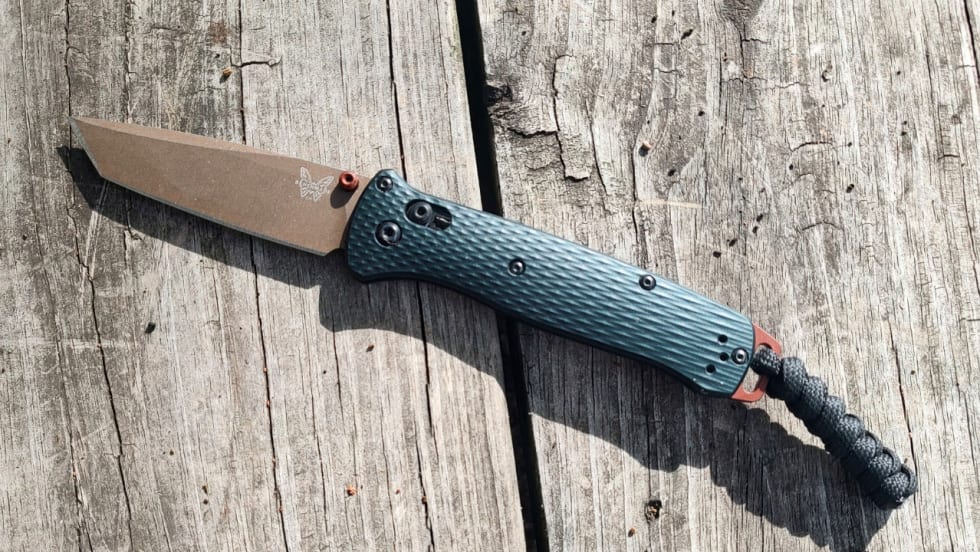
POLICE Product Test: Benchmade Bailout
The Benchmade Bailout is a slim, lightweight carry knife with a deep-ride pocket clip and comes in a variety of blade steels and scales. Here is a detailed review of the Taiga Green Bailout, released earlier this year.
Read More →
NLEOMF Announces July 2026 Officer of the Month
NLEOMF honored a Michigan deputy sheriff as the July 2026 Officer of the Month for rescuing a trapped driver from a burning vehicle following a Fourth of July crash.
Read More →
Streamlight to Showcase Newest Lighting Products at National Safety Council’s Safety Congress & Expo 2026
Streamlight will showcase its latest lights, including the Portable Scene Light III and the LiteBox 1Million, at the 2026 National Safety Council (NSC) Safety Congress & Expo.
Read More →
The 2027 World Police & Fire Games Set for Perth, Australia
The 2027 World Police & Fire Games (WPFG) will take place in Perth, Western Australia, from Friday, March 12 through Sunday, March 21, 2027.
Read More →
5.11 Partners with National Fallen Firefighters Foundation to Support #ForThe343
5.11 has joined the nationwide movement honoring the 343 New York City Fire Department firefighters lost on Sept. 11, 2001.
Read More →