



You Have the Right to Record
The Citizens Empowerment Act is an attempt to thwart criminal investigations by launching them into the court of YouTube. It would require federal officers to serve written notice to people under investigation that they are entitled to record interviews with the officers.


Photo via ClintJCL/Flickr.
Before retreating into their undeserved summer recess, Congress decided to launch a bill targeting federal law enforcement officers. The Citizens Empowerment Act (H.R. 2711) is an attempt to thwart criminal investigations by launching them into the court of YouTube.
H.R. 2711 would require federal officers to serve written notice to people under investigation that they are entitled to record interviews with the officers. The House majority attempted to minimize the import of this reckless proposal by asserting feds only have to provide notice if they hand "written materials" to the subject.
In response to this mind-numbing assertion, the Federal Law Enforcement Officers Association (FLEOA) attempted to go line by line with the bill's supporters as to why the bill is fatally flawed.
Starting on page 2, lines 16 and 18: The words "target of enforcement actions" are problematic. "Enforcement actions" refers to arrest and search warrant scenarios, surveillance, protection details, and certain undercover agent actions. The interview process does not necessarily entail any of the above enforcement actions, yet criminal investigators will routinely show documents to a subject. This is also true in the case of a witness who may become a subject based on evidence obtained during the investigation.
Are we expected to halt the interview process and allow the subject to run to Best Buy to purchase a recording device? I think the purpose of the bill, as written, is unclear as to its true intentions. The conduct of federal law enforcement officers is already investigated. So we don't need this.
Looking at Page 2, lines 22 and 23: Why not exempt federal law enforcement officers and prosecutors here. This would solve the problem in one sentence change.
On Page 3, line 4: we do not consent to the recording of our in-person or telephonic interaction. This will make a mockery of the investigative process. Sensitive investigations will wind up on YouTube. The potential harm this could cause an investigation is profound. The grand jury process is secretive for a valid purpose and should not be seen as reality TV. All of the evidence obtained by the government is already disclosed to the subject through discovery.
Going to Page 3, lines 7 through 16: what exactly is meant by "written materials provided?" If we're executing an arrest warrant and I hand a copy of the warrant to the subject, am I also supposed to hand that subject a written notice of the right to record our interaction? Do I pause the arrest and allow the subject to grab a recording device before attempting to speak to him? Does this bill intend to change the Miranda warning and now require us, in written form, to add "You have the right to record all of our interactions?" Does the same apply to the execution of a search warrant?
Timing is critical to interviews and enforcement actions, and can impact officer safety and investigative discretion. Once we serve the proposed written notice, a grand jury investigation transitions into a circus quest. The transmittal of an audio recording in the social media realm can impact the cooperation of prospective witnesses and affect the safety of officers and agents conducting related investigative acts in other states. It can also spur news media speculation that could taint a prospective jury pool.
What happens if during the post arrest process, a subject decides to cooperate but insists on taping the interview? During the interview, certain investigative disclosures may be made, as well as questions to ascertain the veracity of the subject's cooperation. Subsequent to the interview, if the subject changes his or her mind regarding cooperation or decides to exploit this recording process as a ruse to obtain additional information from investigators, how can we contain the damage a release of this recording may cause? We use a variety of interview techniques and we do not want this broadcast to the criminal element at large.
FLEOA has received no response from the bill's authors regarding these questions and concerns. If certain members of Congress are inclined to target the White House for questionable policies, practices, and actions, they shouldn't do so by smacking federal officers who risk their lives to keep our citizens and institutions safe.
More Technology

A police agency's guide to data-driven fleet management
Costs are rising and the public expects more transparency into how their tax dollars are spent. This e-book shows how police agencies can use fleet data to take control of fleet expenses while improving officer safety and demonstrating fiscal responsibility to the communities they serve.
Read More →
AI and analytics for law enforcement: Turning data into insights
Law enforcement agencies are managing more video, sensor data and digital evidence than ever before. Discover how AI and analytics can help turn that data into actionable insights that strengthen situational awareness, accelerate investigations and support more informed decisions.
Read More →
Vasco Electronics Adds Automatic Language Detection to Vasco Translator Q1
Vasco Electronics’ software update introduces hands-free language switching and expanded offline translation across 45 language pairs, empowering law enforcement, healthcare, and front-office enterprise teams
Read More →
North Miami Police Department Deploys Mark43
The North Miami Police Department has deployed Mark43 as part of its Five-Year Strategic Plan that represents its collective vision and goals for a more proactive police department, anchored by a core commitment to leveraging modern technology to enhance efficiency and public safety.
Read More →
Cellebrite Genesis for Enterprise Now Generally Available
Made available to the public sector in June, Cellebrite Genesis is serving a growing mix of national, regional, and local agencies worldwide, including some of the largest regional and metropolitan police departments. It is now available for enterprise organizations.
Read More →
2026 Vision FirstNet Users Summit to Host Emerging Leaders Training on Grassroots Advocacy for Public Safety
“Emerging Leaders Training: Understanding the Importance of Grassroots Advocacy for Public Safety," a session during the 2026 Vision FirstNet Users Summit, will offer a roadmap for unified advocacy at the federal level.
Read More →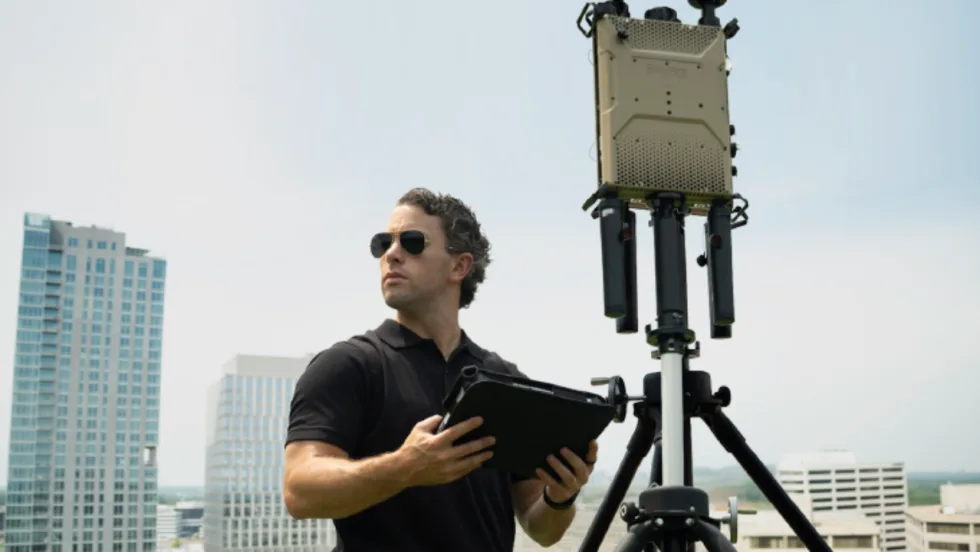
Motorola Solutions Completes Acquisition of D-Fend Solutions
Motorola Solutions has acquired D-Fend Solutions, an industry leader in counter-drone technology. This deal provides public safety and enterprise customers with access to advanced counter-unmanned aerial systems.
Read More →
ZeroEyes, Advantech & Camden Police Partner to Bring AI Gun Detection Technology to Delaware School District
ZeroEyes has partnered with Advantech and the Camden Police Department to deploy ZeroEyes’ AI gun detection and intelligent situational awareness platform at Delaware’s Caesar Rodney School District (CRSD).
Read More →
Leonardo U.S. Cyber & Security Solutions Introduces SignalTrace, the Next Evolution in Electronic Signature Detection Technology
SignalTrace reflects years of product refinement and a clearer expression of the technology’s purpose of recognizing and correlating electronic signatures in publicly broadcast wireless signals to reveal patterns, relationships, and trends that might otherwise go undetected.
Read More →
Pimloc Launches Secure File Sharing to Streamline Release of Redacted Video
Pimloc’s Secure File Sharing lets organizations deliver redacted video, audio, and documents through expiring, passcode-protected links, accelerating delivery while reducing security, compliance, and chain-of-custody risks.
Read More →