



What You Need to Know About Human Trafficking
The exploitation of people for unpaid labor and forced prostitution is a heinous crime that is much more prevalent in modern America than you think.


(Photo: getty/Kamionsky)
Human trafficking has become an epidemic affecting nearly every community in the United States. The Polaris Project, an organization committed to battling human trafficking and assisting human trafficking victims and survivors, says human trafficking is a $150 billion global industry that affects nearly 25 million people worldwide.
The worldwide consensus among human trafficking experts is the majority of human trafficking involves labor trafficking. But sexual exploitation trafficking is quite prevalent. Women and children are often used for sexual exploitation while men are usually forced into labor.
The National Center for Missing and Exploited Children (NCMEC) received more than 17,000 reports of possible child sex trafficking in 2020 in the U.S. In addition, NCMEC says that one in six of the 26,500 reports of missing children were likely victims of sex trafficking.
Local law enforcement officers are usually the first to encounter potential or active victims of human trafficking. Consequently, educating first responders about how to identify human trafficking victims and how to rescue those who are caught in the clutches of traffickers is paramount.
Defining the Crime
At its foundation, human trafficking is the criminal exploitation of another human being. Human trafficking can be defined as the use of force, fraud, or coercion to induce another person (despite their age, gender, or race) to provide labor or sell sex. Whether it be for sex, labor, money or some other intent, the trafficking of men, women, and children takes place in urban and rural areas and on tribal lands in the United States and worldwide.
Human trafficking is often confused with human smuggling, which involves transporting people illegally. While smuggling may be involved in transporting victims for the purposes of human trafficking, the two are considered separate crimes.
To many, human trafficking is commonly associated with seedy or underground organizations. However, according to The Polaris Project, it has been associated with restaurants, cleaning services, construction, and other businesses. Traffickers do not have a specific demographic or profile. They can look like anyone and fit into any group including private citizens, business owners, farmers, gangs, and more. This is a key aspect of human trafficking that makes it difficult for law enforcement to spot traffickers.
Research from the FBI’s Behavioral Analysis Unit further confirms traffickers are reportedly known to law enforcement even if the trafficking is not known at the time. Often, traffickers are able to maintain their operations because local law enforcement is aware that trafficking is occurring. Sometimes, the trafficking itself is so well hidden, police may only happen upon it via a drug or prostitution sting or a traffic stop.
A traffic stop for speeding in late November, led the Michigan State Police to rescue several females who were being trafficked for sexual exploitation. One of the victims was a 15-year-old runaway who was driving the vehicle. The MSP troopers were about to arrest her for giving false information then they realized something wasn’t right. They investigated and discovered the girl was being trafficked. The investigation also led to the rescue of two adult women victims. One person was arrested.
The COVID-19 pandemic has only exacerbated things as traffickers have adapted to the lockdowns and such by moving their operations online. According to an analysis of The Polaris Project’s hotline data, trafficking of farm workers increased during 2020 and more laborers were denied medical care. Sex trafficking overall during the lockdowns appears to have continued, shifting from street-based prostitution and escorts to online pornography, various social media sites and child porn.
Identifying Victims
Identifying child sex trafficking victims can be challenging for law enforcement officers. Child sex trafficking victims often fail to disclose abuse or identity traffickers out of fear. Victims do not report themselves even if they interact with law enforcement. In some cases, the victim may self-report that they are older than they are or that the offender is a boyfriend or family friend.
NCMEC and the Department of Homeland Security have identified the following common signs and indicators to help law enforcement officers identify and combat human trafficking:
• An adult accompanies the subject and prevents them from speaking with officers.
• Missing child located at or near hotels or clubs in area.
• Subject appears to be fearful.
• Subject does not have identification
• Subject has two or more cell phones.
• Subject has history with the juvenile court system or Department of Family and Children Services.
• Subject has tattoos or branding on their skin. These can be marks of ownership.
• Subject is in possession of a large amount of cash.
• Subject is living out of a hotel or car with a lack of personal items.
• Subject lies about their nameand age.
• Subject references being in other cities.
• Subject shows signs of neglect and or physical abuse.
• There have been three or more missing or runaway reports in an area.
While these signs can help police and other first responders recognize possible incidents of human trafficking, the National Human Trafficking Hotline offers the following examples of situations that could also lead to incidents of trafficking:
• A friend, family member, coworker, or student is developing a relationship that seems too close with someone they know solely on social media.
• A friend, family member, coworker, or student is newly showered with gifts or money or otherwise becomes involved in an overwhelming, fast-moving, and asymmetric (for example, large difference in age or financial status) romantic relationship.
• A friend, family member, or student is a frequent runaway and may be staying with someone who is not their parent or guardian.
• A friend, family member, or student lives with a parent or guardian and shows signs of abuse.
• A would-be employer collects fees from a potential worker for the “opportunity” to work in a particular job.
• A would-be employer refuses to give workers a signed contract or asks them to sign a contract in a language they can’t read.
Rescuing the Victims
Once an officer has encountered a trafficking victim, it is best to reach out to local victim services and non-profit organizations that can help a suspected victim recover and provide guidance. First, the Department of Homeland Security suggests the officer begin to establish rapport and trust by:
• Acknowledging the subject’s fears and explaining their desire to help.
• Being aware of cultural differences and language barriers.
• Conducting victim interviews after the victim’s basic needs have been met.
• Immediately connecting with a trained victim specialist who can connect them to support services.
Additionally, every local law enforcement agency has access to state and federal law enforcement agencies such as the FBI and DHS. Officers are encouraged to seek collaborative relationships and talk with specialized agents available to assist.
Training is key
Author Meghan McCann wrote an article for The National Conference of State Legislatures (NCSL) summarizing the “Preventing Sex Trafficking and Strengthening Families Act” and detailing the requirement mandating all states implement policies and procedures to identify, document and determine appropriate services for victims of trafficking.
The NCSL says the 2014 act requires states to develop policies and procedures to identify, document, screen, and determine appropriate services for children under the child welfare agency’s care and supervision, who are victims of, or at risk of, sex trafficking. States, at their option, may develop these policies and procedures for all young adults under 26 regardless of foster care involvement. There is no mention of mandatory training for law enforcement.
By educating and training officers, law enforcement agencies at the national, state, and local levels can increase their chances of identifying and rescuing trafficking victims.
Currently, many states and agencies do not require mandatory human trafficking training for their law enforcement officers, so very few offer this training. However, there are multiple nonprofit and professional organizations that offer training and information at no cost. The International Association of Chiefs of Police website offers several resources, including “The Crime of Human Trafficking: A Law Enforcement Guide to Identification and Investigation.” This guidebook includes information on federal law, tools for identification, investigation and response, and resources for victim assistance. Other agencies such as the Department of Homeland Security have free online training available to all law enforcement officers.
John O. Meekins reports that human trafficking is growing because some officers do not know how to recognize various signs of human trafficking or situations that might involve trafficking. Meekins, who works in corrections, says that recruitment for traffickers and victims alike often occurs inside jails and prisons, allowing some jailed offenders to continue trafficking.
An additional challenge facing mandatory training is the misconception that the training is already mandatory. Share Hope’s 2019 law enforcement survey findings reporting that Georgia, for example, is one of 27 states mandating the availability of human trafficking training and resources for law enforcement. However, after reviewing O.C.G.A. 35-16-1(a), one finds that it details the requirement that P.O.S.T. and Georgia Public Safety Training Center develop guidelines and training on sexual trafficking. While the requirement states that this training should be available online, but it is not mandatory in Georgia.
This article offers some pertinent information on signs and indications of human trafficking, but it is not intended as a replacement for full training on human trafficking. Officers are encouraged to seek training and skills to understand how to rescue victims of human trafficking. By doing so, officers can gain more confidence in investigating further when they encounter possible victims of human trafficking. Law enforcement officers should work with other agencies, other first responders and local support agencies to battle human trafficking and prevent this crime. Increased training and dialogue across all areas of emergency response will increase awareness of this heinous crime and reduce victimization.
Joanne Southerland has served 26 years as a law enforcement professional. She has worked with the Clayton County (Georgia) Child Abuse and Exploitation multi-disciplinary team, the Georgia Bureau of Investigations Internet Crimes Against Children Task Force, and the FBI’s Safe Child Task Force. She currently serves as the Clayton County Fire & Emergency Services Emergency Communications Officer and is a graduate of Columbia Southern University.
More Patrol

Adept Armor Introduces Two New Rifle Plates
Adept Armor has launched two new Level IV ballistic plates, the Emperor and the Archon Mark 2, which brings Adept Armor’s new Quatroid ceramic to the high-threat, performance-value center of the range at 5.2 pounds.
Read More →
POLICE Product Test: Benchmade Bailout
The Benchmade Bailout is a slim, lightweight carry knife with a deep-ride pocket clip and comes in a variety of blade steels and scales. Here is a detailed review of the Taiga Green Bailout, released earlier this year.
Read More →
NLEOMF Announces July 2026 Officer of the Month
NLEOMF honored a Michigan deputy sheriff as the July 2026 Officer of the Month for rescuing a trapped driver from a burning vehicle following a Fourth of July crash.
Read More →
Streamlight to Showcase Newest Lighting Products at National Safety Council’s Safety Congress & Expo 2026
Streamlight will showcase its latest lights, including the Portable Scene Light III and the LiteBox 1Million, at the 2026 National Safety Council (NSC) Safety Congress & Expo.
Read More →
The 2027 World Police & Fire Games Set for Perth, Australia
The 2027 World Police & Fire Games (WPFG) will take place in Perth, Western Australia, from Friday, March 12 through Sunday, March 21, 2027.
Read More →
5.11 Partners with National Fallen Firefighters Foundation to Support #ForThe343
5.11 has joined the nationwide movement honoring the 343 New York City Fire Department firefighters lost on Sept. 11, 2001.
Read More →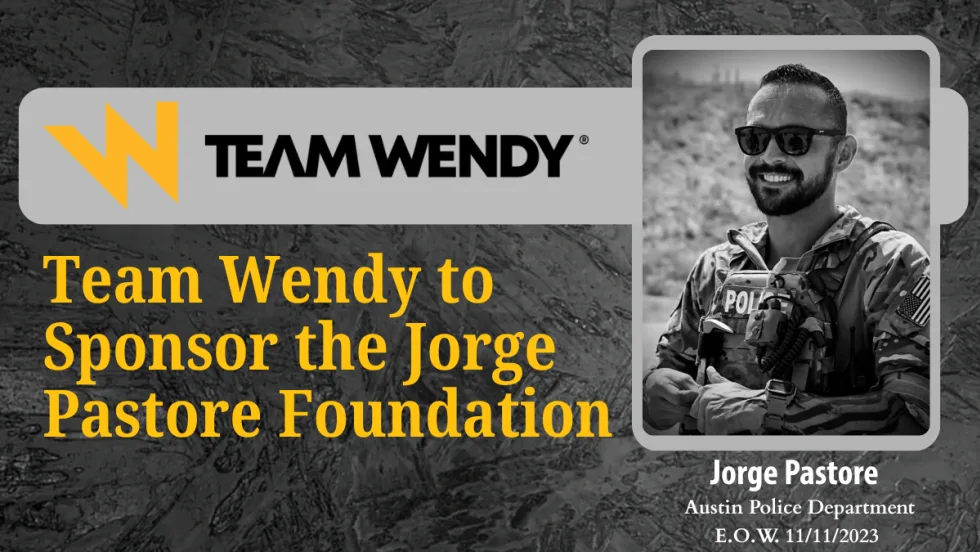
Team Wendy Announces Title Sponsorship of the Jorge Pastore Foundation
Team Wendy’s 3-year partnership with the Jorge Pastore Foundation expands access to programs that strengthen those who serve.
Read More →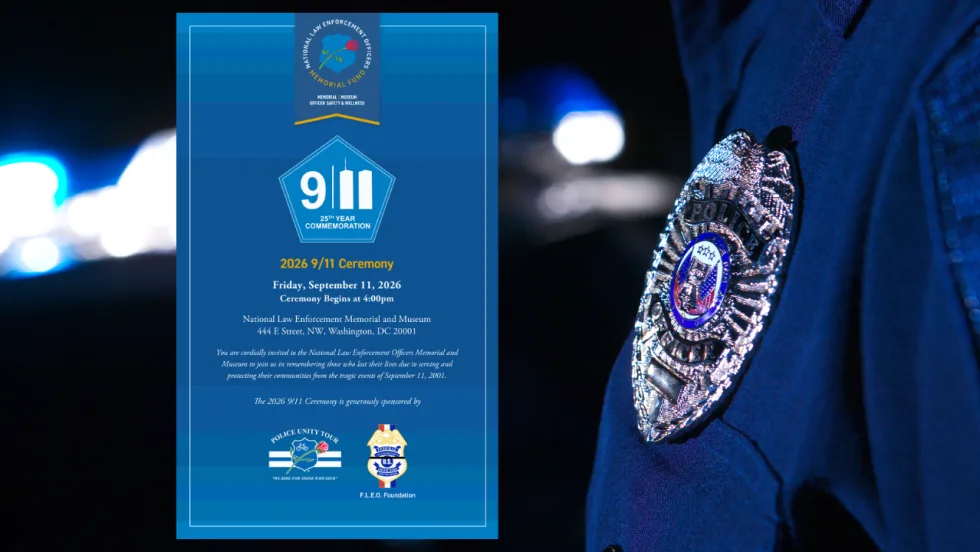
National Law Enforcement Memorial and Museum Hosting 9/11 25th-Year Commemoration Ceremony
The National Law Enforcement Memorial and Museum is hosting a 9/11 25th Year Commemoration Ceremony on Sept. 11 at 4 p.m.
Read More →
National Law Enforcement Officers Memorial Fund Announces June 2026 Officers of the Month
The National Law Enforcement Officers Memorial Fund (NLEOMF) named 15 officers of the Chico Police Department (California) as the Officers of the Month for June 2026 for their roles in responding to an active-shooter incident at a public library.
Read More →
Team Wendy App Creates New Digital Hub for Helmet Owners
The Team Wendy Community App provides one location for warranty registration, size-fit tools, product updates, and community connection. For helmet owners, the new app creates a simpler path to the information and tools that matter most.
Read More →